• Following Us

  • Categories

  • Check out the Archives


  • Awards & Nominations

New Podcast! The Movie Palace – “Summer of Psycho: Gus Van Sant’s Psycho”

I had the pleasure of joining the great and generous Carl Sweeney on his excellent classic Hollywood podcast The Movie Palace.

To mark the sixtieth anniversary of Alfred Hitchcock’s Psycho, The Movie Palace has dedicated a run of episodes to exploring elements of the iconic horror film. I was thrilled to rejoin Carl for a discussion of the infamous and divisive remake of the film, in which Gus Van Sant leveraged the success of Good Will Hunting to convince Universal to sign off on a full colour remake of Alfred Hitchcock’s classic, using a largely unchanged script and even emulating a lot of the same camera angles. The result was a critical and commercial failure, but remains an interesting experiment.

You can listen to the episode here, back episodes of the podcast here, click the link below or even listen directly.

New Escapist Column! On “The Terminator” as a Slyly Subversive Slasher…

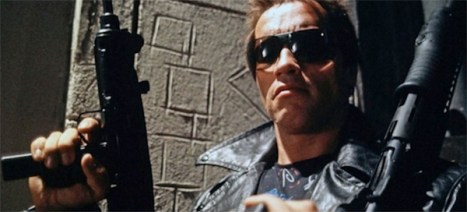
I published a new piece at The Escapist earlier today. I rewatched The Terminator recently, and got thinking about the film as a horror movie rather than a science-fiction film.

The Terminator is often considered a landmark science-fiction film, and understandably so. However, The Terminator also works as a horror movie. It’s a slasher movie about a relentless force chasing a young woman through a nightmarish Los Angeles lit in shades of neon blue and green, so as to evoke a sense of insomnia. However, Cameron does more than just embrace the tropes of the slasher movie. He engages with them, and puts a subtly subversive twist on the standard rules of the genre.

You can read the piece here, or click the picture below.

New Escapist Column! On “The Snyder Cut” and Superhero Apocrypha…

I published a new In the Frame piece at The Escapist this evening. Over the weekend, some new details came to light about Zack Snyder’s plans to restore his original vision for Justice League, particularly the assertion that it would not be “canon” with Warners’ other superhero films.

To a certain extent, this is obvious. There is no way to make Snyder’s version of Justice League fit with the films that followed, like Aquaman or Shazam! However, it’s a somewhat bolder statement. Since the emergence of the Marvel Cinematic Universe, the shared universe has been treated as a romantic ideal towards which these films should aspire. Indeed, a large part of the justification for recutting Snyder’s film was to protect the brand. As such, it seems appropriate that The Snyder Cut rejects the idea of the canon for apocrypha.

You can read the piece here, or click the picture below.

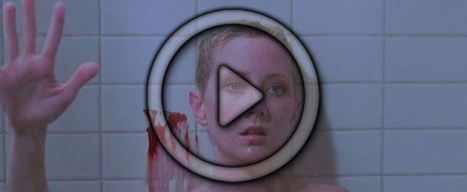
New Podcast! The Movie Palace – “Summer of Psycho: The Shower Sequence”

I had the pleasure of joining the great and generous Carl Sweeney on his excellent classic Hollywood podcast The Movie Palace.

To mark the sixtieth anniversary of Alfred Hitchcock’s Psycho, The Movie Palace has dedicated a run of episodes to exploring various elements of the iconic horror film. I was thrilled to join Carl for a discussion of the movie’s infamous shower scene, one of the famous memorable and distinctive sequences in the history of cinema. So we discuss what it means and how it works, both in the context of Psycho and outside of it.

You can listen to the episode here, back episodes of the podcast here, click the link below or even listen directly.

Non-Review Review: She Dies Tomorrow

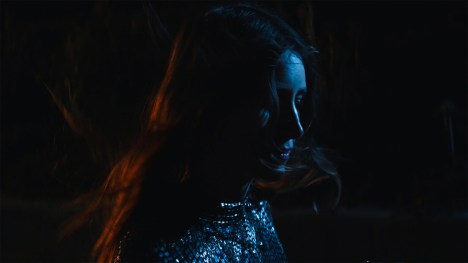
She Dies Tomorrow is very much a modern indie horror movie, in that’s decidedly absurdist and surrealist, and perhaps scariest in a vague existential sense.

It’s interesting to consider the development of this particular strand of modern horror cinema. In some ways, it reflects the development of the indie comedy in the early years of the twenty-first century, once it became clear that these sorts of films could be financially and critically successful. This led to a strange situation where movies that were essentially off-kilter dramas were marketed as comedies, films like A Serious Man, Nebraska or The Kids Are All Right. (This approach to comedy arguably even spilled out into television, where even comedies adopted a prestige sheen.)

It’s not the end of the world…

Something similar has been happening in terms of prestige horror. A large part of this is due to the emergence of smaller studios supporting genre fare from writers and directors with strong visions – Jennifer Kent’s The Babadook, Jordan Peele’s Get Out, Trey Edward Shults’ It Comes at Night, Ari Aster’s Hereditary. These films blended the sly aesthetics and stylistic sensibilities of independent cinema with the trappings of horror, producing a strand of horror that was reasonably successful, highly praised, and strongly distinctive.

Of course, all of those films are drawing from the genre’s rich history. Hereditary is perhaps the most obvious example, and it’s possible to draw a clear line between Hereditary and New Hollywood experiments with the genre in films like The Exorcist or Don’t Look Now. As such, it isn’t that this is an entirely new approach to horror that came out of nowhere. Instead, it is a logical extrapolation of certain trends and sensibilities, pushed to their logical extremes.

Looking out for herself.

She Dies Tomorrow clearly fits within that framework of modern indie horror cinema, along with films like The Lodge or The Lighthouse. However, She Dies Tomorrow pushes itself much mroe confidently towards the rhythms and structures of a blackly comic psycho drama. She Dies Tomorrow is a film about existential loneliness, the frustrating death drive, and suffocating dinner parties populated by people who can barely stand one another. It is very much a standard low-budget indie drama. It’s just flavoured with a dash of existential horror.

It’s a cocktail that doesn’t quite work. Writer and director Amy Seimetz offers a film that is intentionally disjointed and disconnected, but one that is ultimately more frustrating than it aims to be. She Dies Tomorrow has a number of striking images and interesting ideas, but punctuates them with scenes that play almost as a parody of arthouse drama.

Dial it back.

Continue reading

New Escapist Column! On the Future of Cinemas…

I published a new piece at The Escapist earlier today. With the summer effectively lost, the future of cinema is a subject of much discussion.

Will cinemas open soon? If they open soon, what will they show? If they have films to show, will audiences turn up? If audience show up, how will basic safety measures like social distancing and masks impact their financial bottom line? Will cinemas be among the attractions that people are most eager to revisit when the chance presents itself? More than that, what will a visit to cinemas actually be like? To answer these questions, I actually took a trip to a recently reopened cinema in Ireland.

You can read the piece here, or click the picture below.

New Escapist Column! On “Hamilton” Bringing the Theatre Home…

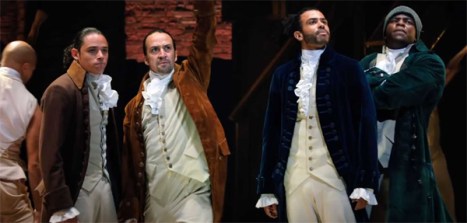
I published a new In the Frame piece at The Escapist this evening. Hamilton was released earlier in the month on Disney+, and has managed to reignite all manner of debate about the musical.

In the case of the streaming release, one of the most heated discussions concerns the question of whether Hamilton is actually a movie in the conventional sense. This misses the point somewhat, as it’s immediately clear that Hamilton is not packaging the story for audiences, it is instead trying to offer a simulacra of the experience. It’s designed to replicate, as faithfully as possible on screen, the texture and tempo of a theatrical performance. Ironically, this is something that cinema has been trying to do for years, so it’s fascinating to see streaming pull it off so strongly.

You can read the piece here, or click the picture below.

“The Best Sword is Kept in its Sheath”: Akira Kurosawa’s “Sanjuro” and the Reluctant Samurai…

I got to write about Akira Kurosawa earlier this week for The Escapist, which was great. However, having rewatched a bunch of his films at the weekend, I had some more in-depth thoughts I wanted to share on them. One in particular. I recorded a podcast on Sanjuro last year, which might also be of interest.

Sanjuro is something of an oddity in the filmography of director Akira Kurosawa.

The film is one of only two sequels in Kurosawa’s filmography, following on from Sanshiro Sugata, Part Two seventeen years earlier. It is also the last of Kurosawa’s black-and-white samurai films. While Kurosawa did make other black-and-white period films, such as his last collaboration with Tushiro Mifune in Red Beard, he would not return to stories of warlords and swordsmen until Kagemusha and Ran in the eighties.

Sanjuro is somewhat underseen among Kurosawa’s black-and-white samurai films, which is interesting. It is the sequel to one of Kurosawa’s most influential films. Yojimbo famously inspired one of the formative spaghetti westerns, A Fistful of Dollars, and so helped to inspire a renaissance in American westerns. It introduced a basic plot that was often emulated, leading to remakes like Last Man Standing. When Sanjuro is discussed, it is often in terms of its striking final scene, in which the eponymous samurai strikes down an opponent, resulting in a geyser of blood.

This is a shame, because there’s a lot of interesting stuff happening in Sanjuro, particularly in relation to the forms and conventions of the samurai genre. Kurosawa’s samurai films are at once archetypal and deconstructive. To a lot of international audiences, films like Rashomon, Seven Samurai and The Hidden Fortress are shorthand for the Japanese samurai films of the fifties. However, they are also surprisingly critical of the idea of the samurai. They draw on the cinematic language of John Ford westerns, but predict the cynicism of Sergio Leone westerns.
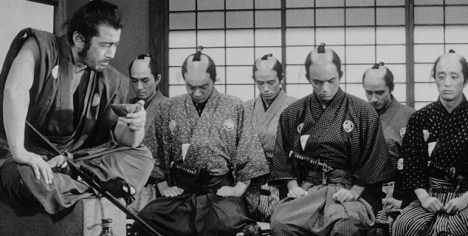
This is perhaps no more obvious than in Sanjuro. The film originated as an adaptation of Shūgorō Yamamoto’s short story Peaceful Days. Kurosawa had been working on an adaptation of the story before Yojimbo, but the success of Yojimbo saw the studio approaching Kurosawa to make a sequel. Kurosawa took an interesting approach. He wrote the character of Sanjuro into the story of Peaceful Days, replacing the unskilled-with-a-blade ronin from the source novel. Kurosawa also turned up the humour in the script.

The result is fascinating. Watching Sanjuro, it often feels like the title character has wandered into a situation that its protagonists have mistaken for a romantic historical epic: a story of virtue triumphing over corruption. Sanjuro spends a lot of the film openly ridiculing the nine samurai at the centre of the film, picking apart their understanding of how the world works, and generally rolling his eyes at the heightened melodramatic elements of the narrative. Sanjuro is the story of a samurai whose blade is so sharp that it cuts at the narrative that contains him.
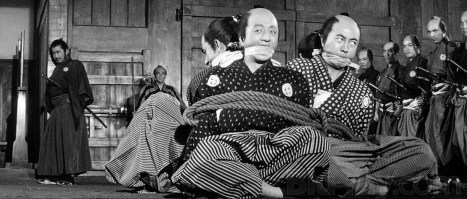
Continue reading

New Podcast! The X-Cast – Fight the Future Minute #83 (“Well-Manicured Truth II”)

So The X-Cast reached the end of the show’s fifth season, and approached The X-Files: Fight the Future. This naturally meant it was time for another breathtakingly ambitious project, so the podcast is going literally minute-by-minute through the first X-Files feature film. I’m joining the wonderful Kurt North for two brief stretches featuring the Well-Manicured Man.

You know what’s better than exposition? Even more exposition. More than that, exposition that isn’t actually even in the finished film. This is a fun minute of Fight the Future, in large part because it tries to fit about five years worth of exposition into a single minute of screen time while also trying to simultaneously build tension to keep the audience engaged. It’s notable that this sequence was the point at which Carter tacitly acknowledged he could only go so far while pleasing both casual viewers and die-hard fans, which makes it fun to explore.

You can listen to the episode here, or click the link below.


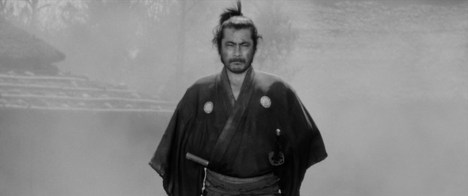
New Escapist Column! On the Lasting Appeal of Akira Kurosawa’s Samurai Films…

I published a new In the Frame piece at The Escapist this evening. Since The Escapist is a video game website, and since Ghost of Tsushima was released this weekend, I thought I’d take a look at one of the big influences on that smash hit video game.

Akira Kurosawa directed far more than samurai films, but his samurai films made an indelible mark on popular culture. Even more than half-a-century removed from most of them, Kurosawa’s samurai films remain vibrant and vital. Part of this is down to their complexity; they are at once Japanese and universal, they draw from Old Hollywood while also inspiring New Hollywood, they codify the samurai archetype while also deconstructing it. Kurosawa’s films bristle with compelling contradictions and perfect paradoxes, demonstrating a richness that endures to this day.

You can read the piece here, or click the picture below.