• Following Us

  • Categories

  • Check out the Archives


  • Awards & Nominations

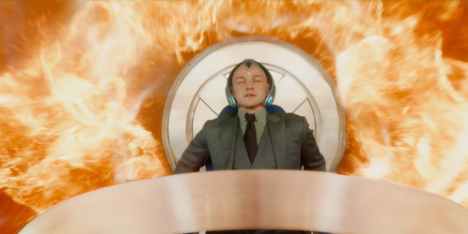
New Escapist Column! On “Dark Phoenix” Taking the X-Men Into the MCU…

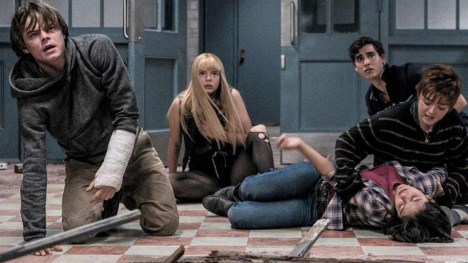
I published a new In the Frame piece at The Escapist this evening. With New Mutants limping into cinemas this week and drawing the shutters down on the X-Men Cinematic Universe, it seemed like an appropriate opportunity to reflect on the dying days of a shared universe.

Dark Phoenix is not a great film by any stretch of the imagination, but it is a fascinating one. It is a movie that embodies the strange listlessness of the X-Men franchise in the wake of X-Men: Days of Future Past, reflecting on the failed attempt to turn the series into a generic superhero franchise in X-Men: Apocalypse. It is a movie about the nightmare of stripping out any sense of identity from the merry mutants and packaging them as conventional and straightforward superheroes.

You can read the piece here, or click the picture below.

New Escapist Video! Introducing “In the Frame”…

For about a year now, I have been writing the In the Frame column twice weekly at The Escapist on Mondays and Fridays. Today, we have a very special announcement. We are looking at launching a companion video series, In the Frame. Hopefully it’ll be releasing on Mondays, but you can get a sense of what we have planned by taking a look at the teaser below or watching the video here.

New Escapist Column! On “TENET” and the Return of the Discourse…

I published a new piece at The Escapist earlier today. With the release of TENET bringing life back to American multiplexes next week, it also seems to be resurrecting “the discourse.”

TENET is the first major theatrical release of the summer. It is the first such release since Birds of Prey. There have been direct-to-video releases like Hamilton or Greyhound or Palm Springs. However, none of these have managed to catch the conversation in a way that a big theatrical release does. For the first time in almost half a year, there is a movie that strangers can shout at one another about on the internet. TENET has not even been released in American cinemas, but it is already generating highly charged shouting matches.

This is simply how people talk about films these days, with intensely impassioned positions and aggressive stances, stakes on the moral high ground and narratives predetermined. In hindsight, the six months without a release large enough to spark such online debate, the pandemic offered something of a reprieve from the shouting and the screaming. I missed cinemas, but I did not miss “the discourse.”

You can read the piece here, or click the picture below.


New Escapist Review! “The New Mutants”…

Normally, I would review The New Mutants for this blog. However, given the state of the pandemic in the United States, The Escapist did not feel comfortable asking its writers to attend cinema screenings. As I am based in a country that is dealing with the crisis (relatively) well, I have stepped into the gap to provide written reviews for movies not receiving a streaming release.

This is unlikely to be a long-term dynamic, but I was flattered at the invitation and was happy to substitute in for this particular situation. This is a very unusual time. The review is much more conventional and concise than the reviews on this site, and even has a numerical score attached. I feel like a proper film critic. You can read the review here, or click the picture below.

Non-Review Review: I’m Thinking of Ending Things

“There is no objective reality,” explains Jake late in I’m Thinking of Ending Things. “You know there’s no colour in the universe, right? Only in the brain.”

This seems to be as close to a thesis statement at I’m Thinking of Ending Things dares to offer. Charlie Kaufman’s latest work is a dense and surrealist exploration of the fragility of memory and identity, and the blurred boundaries that exist between the inside and the outside. The story is relatively simple. A young woman accompanies her boyfriend on a trip to have dinner with his parents. She needs to get home, but there is a snow storm. As the couple journey into rural America, things begin to slowly but surely unravel.

Snow escape.

There’s been an abundance of cinema recently about the collapse of time and reality, the sense of a universe folding into itself – Palm Springs, TENET, Bill and Ted Face the Music. These films are made all the more uncanny for having been produced long before the current global pandemic unravelled our sense of space and time, but seem to speak perfectly to it. That anxiety that all of history is happening at once and that “cause” and “effect” are unmoored as reality itself contorts and bends.

I’m Thinking of Ending Things stands apart from these other films, as one might expect of a Charlie Kaufman project. I’m Thinking of Ending Things has a greater interiority. The film seems to unfold in vast snowy wilderness, but it seems just as accurate to suggest that it unfolds in the writer’s imagination. Perhaps it isn’t time and reality that contort, but simply the protagonist’s understanding of these concepts. Then again, do these ideas exist in some absolute and objective form somewhere, or are they just concepts that people label so as to feel more comfortable?

Table discussion for later.

Continue reading

New Escapist Column! On The Riddler….

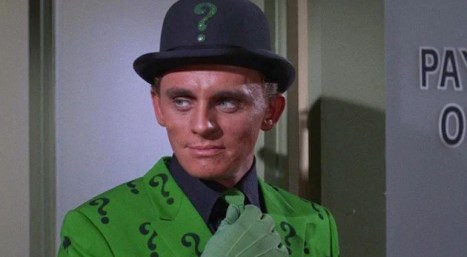
I published a new In the Frame piece at The Escapist this evening. With DC’s Fandome event unveiling a new trailer for The Batman at the weekend, it seemed like a good time to take a look the Riddler.

The Riddler is an interesting character for a number of reasons. He is considered one of the most iconic Batman villains out there, but he’s also a character who is difficult to write; who disappears for extended periods of the Caped Crusader’s history. His prominence is largely due to the work of actor Frank Gorshin in Batman!, but Gorshin’s performance has gone on to be hugely influential on later iterations of the Joker. As a result, the Riddler occupies a strange place. He is the ghost of Batman’s Silver Age, which makes him an interesting antagonist for the modern Dark Knight.

You can read the piece here, or click the picture below.

Non-Review Review: Bill & Ted Face the Music

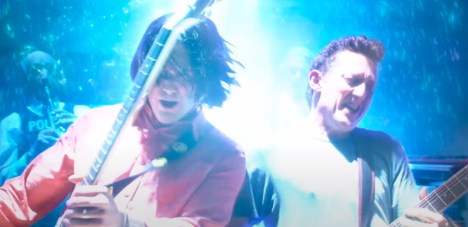
Bill and Ted Face the Music is a solid legacy sequel, if not a spectacular one.

The third Bill and Ted movie has been in the works for a long time. It has been gestating for years in various states, driven by the enthusiasm of writers Chris Matheson and Ed Solomon, and stars Keanu Reeves and Alex Winter. Bill and Ted’s Bogus Journey had the relative good fortune to arrive only two years after Bill and Ted’s Excellent Adventure, but Bill and Ted Face the Music emerges after a thirty-year gap in which the original films have gone from charming curiosities to bona fides cult classics.

Old friends.

This is to say that Bill and Ted Face the Music faces a challenge that is every bit as impossible as that facing the eponymous heroes. Providing a fitting capstone to a franchise that has grown from humble beginnings to legendary status is a monumental task, on par with trying to unite the world through music. Indeed, perhaps the smartest thing about Bill and Ted Face the Music is the way in which it recognises that the task it has set itself and its two leads is insurmountable.

Bill and Ted Face the Music is a charming film, one that largely coasts on the delightful ironic earnestness of its two lead protagonists and a sincere affection for all of its characters. It’s hard to resist Bill and Ted Face the Music, with its playfulness and its breezy sensibility. However, the film doesn’t entirely work. It struggles with pacing, it struggles to anchor its ensemble together, and it often feels like it is trying to do far too much within its modest (but nimble) eighty-minute runtime. Bill and Ted Face the Music won’t save the world, but might make it a little happier.

Music to my ears.

Continue reading

New Escapist Column! On James Gunn’s Upcoming “The Suicide Squad”…

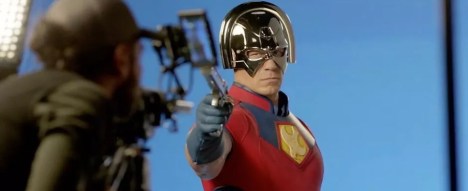
I published a new In the Frame piece at The Escapist earlier in the week. With DC’s Fandome event at the weekend, it seemed like a good time to take a look at one of their upcoming projects: James Gunn’s The Suicide Squad.

Gunn didn’t actually premiere too much material from The Suicide Squad, primarily unveiling the cast roster and screening some behind the scenes footage. However, the announcement was interesting, marking a clear delineation from David Ayer’s Suicide Squad. In these brief snippets, Gunn suggests an understanding of what has historically made the Suicide Squad such a compelling concept: its status the island of misfit toys in larger DC continuity.

You can read the piece here, or click the picture below.

Non-Review Review: TENET

NOTE: I live in Ireland. Our cinemas are open. Evidence suggests that it is (relatively) safe for people to attend the cinema if they take the necessary precautions. However, I am aware that it is not safe in every country to do so, and I also understand that many readers may not feel safe attending their local cinema even in areas where the evidence suggests it is safe. As this seems to be a hot-button issue with all theatrical releases during the pandemic – but with TENET in particular – it feels important to stress this outside the body of the review itself.

This should go without saying, but given the nature of the current pandemic it is worth repeating: No movie is worth risking your life for. If you feel – or if information from sources you trust suggest – that it is unsafe to go to the cinema, then please do not go. I loved this film. I will see it in cinemas again at least twice within the next week, because it is safe for me to do so. This review should not be taken as an endorsement that the reader should feel they have to (or are expected to) risk their lives to see this film. With that in mind, here is the review.
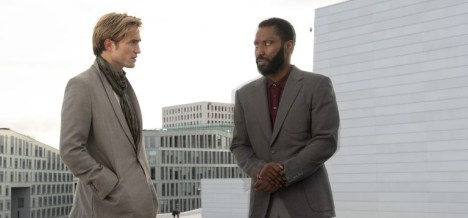
“Time isn’t the problem,” insists Neil early in TENET. Like a lot of things that the shady operator says over the course of the film, this is not exactly true.

There is a lot riding on TENET. Almost none of this was intended when the film was conceived and produced. As the first major theatrical release since the coronavirus pandemic, TENET effectively shoulders the burden of saving cinema – particularly with a death of major releases between now and Wonder Woman 1984 and with the planned release of Mulan on Disney+. It’s a lot of weight for a film like TENET to carry. Time will tell whether it can succeed or not, but it makes a valiant effort.
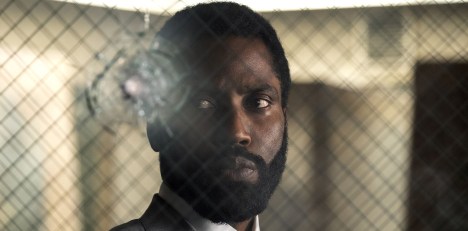
Shattering the release window.

TENET rises to this challenge in a couple of ways. Most obviously, TENET is quite simply a triumph of blockbuster filmmaking. Director Christopher Nolan has boasted about how much of the film was completed using in-camera effects and how carefully choreographed it all was. TENET is a movie that showcases the power of spectacle, whether in its delightfully complicated action sequences or even in Hoyte Van Hoytema’s breathtaking establishing shots. TENET is a movie that demands as big a screen as possible, reminding audiences of the scale of such filmmaking.

However, there’s more to it than that. TENET is a film that feels curiously attuned to this cultural moment. It is a film that deals with many of Nolan’s pet themes and obsessions, but in a way that feels very much in step with the modern moment. It’s hard to summarise TENET without spoiling the movie, without revealing too much in terms of plot mechanics or character motivations, but TENET is a film about the breakdown of time itself. It is a film about the collapse of chaos and effect, and a world in which the future and the past are a war over the present.

A career highlight?

It’s an ambitious film. Nolan’s movies are frequently driven by high-concepts and abstract ideas, and the director is remarkable in his ability to build crowd-pleasing blockbusters around concepts like time dilation in Inception and the theory of relativity in Interstellar. If anything, TENET seems to push that idea to breaking time. As Neil repeatedly points out over the course of the film, he has a degree in quantum physics and he struggles to make sense of the film’s internal logic. Perhaps the film’s protagonist (known simply as the Protagonist) sums it up best, “Woah.”

TENET is an interesting film from Nolan in a number of ways. The villainous Russian oligarch Andrei Sator is probably the director’s scuzziest character since Insomnia or Memento. The film itself is perhaps Nolan’s most emotionally repressed since The Prestige. These sensibilities are blended with his more modern high-concept blockbuster aesthetic, and flavoured with a surprising amount of self-awareness. The result is a heady cocktail that is occasionally overwhelming, but never unsatisfying.

Well, masks are recommended at cinema screenings.

Note: Warner Brothers have specifically requested that reviews avoid spoilers. As a result, this review will talk rather generally about TENET. However, if you want to see it completely unspoiled, it is perhaps best to just take our word for it: it is good. It is probably even the best film we’ve seen this year. That is a very short review.

Continue reading

New Escapist Column! On How “The Dark Knight Rises” Abolished Its Billionaire to Build a Better Batman…

I published a new In the Frame piece at The Escapist this evening. TENET reviews are dropping in under an hour, and DC Fandome is happening this weekend, so it seemed an appropriate time to take a look back at Christopher Nolan’s The Dark Knight Rises.

The Dark Knight Rises is a particularly interesting project in the current climate. It’s become common to criticise the idea of Batman as a billionaire who spends his fortune to dress up as a bat instead of actually using it to help the poor and impoverished of Gotham. In that context, The Dark Knight Rises is a work ahead of its time. It’s a story about how Bruce fails Gotham in his role as a billionaire, how maybe Batman shouldn’t be “a man from privilege” and a story in which Bruce donates his family home to the city’s “orphaned and at-risk youth.”

The Dark Knight Rises is the rare superhero story to posit an actual and meaningful ending for its protagonist, and The Dark Knight Rises argues that the only possible happy ending for Batman is for Bruce to lose his fortune and be declared dead, understanding that maybe the mantle of Batman should go to another person who is more keenly aware of what it means to live in Gotham. It’s a very clever and very insightful commentary on the Batman mythos, and one that has aged remarkably well.

You can read the piece here, or click the picture below.