• Following Us

  • Categories

  • Check out the Archives


  • Awards & Nominations

Non-Review Review: Stardust (2020)

Stardust is not just a terrible movie, it often feels like a very direct insult to its subject.

To some extent, Stardust was inevitable. The commercial and awards success of Bohemian Rhapsody had cemented the musical biopic as an organic extension of the jukebox music genre that had enjoyed popular success with Mamma Mia and Mamma Mia: Here We Go Again. Given that the logical extension had been to move from a Freddie-Mercury-centric biopic to an Elton-John-centric biopic with Rocketman, it seemed that iconic British musical artists from the seventies were ripe for this sort of treatment.

“But the film is a saddening bore.
For she’s lived it ten times or more.
She could spit in the eyes of fools.
As they ask her to focus on…”

David Bowie loomed large in that line-up, so a Bowie biopic seemed the next logical step. Of course, there are two fundamental problems with Stardust. The first is one of genre. Whether fairly or not, the musical biopic has a certain structure and rhythm to it. This was the case with the early iterations of the genre like Ray and Walk the Line, and it was spoofed mercilessly with Walk Hard. That formula is evident in Bohemian Rhapsody and Rocketman, unironically reiterated. That formula has its uses, but David Bowie was an artist who defied those sorts of tropes and beats.

However, the second fundamental issue with Stardust is particular to the movie. A large part of the appeal of musical biopics is the soundtrack, with the plot often feeling like a set of hooks on which the movie might hang iconic and beloved songs. The soundtrack album is a huge part of the commercial appeal of these projects. Rocketman arguably pushed this idea to its extreme by embracing the cinematic language of the musical, but it was there in Walk the Line and Bohemian Rhapsody.

“Time takes a cigarette, puts it in your mouth.
You pull on your finger, then another finger, then cigarette.
The wall-to-wall is calling, it lingers, then you forget.”

With that in mind, it is notable that Stardust is effectively a jukebox musical biography without any jukebox music. The Bowie estate declined to license Bowie’s music for the film, which should have been enough to stop the project dead or at least require a major rethink of the approach to it. Without a killer Bowie soundtrack, trying to emulate Bohemian Rhapsody and Rocketman would be a fool’s errand. There is probably a way to tell the story of David Bowie’s life without including his music, but a formulaic musical biopic is not it.

One almost has to admire the stubbornness in committing to a format almost wholly reliant on a soundtrack that is legally unavailable to the film in question. Almost.

“Making love with his ego,
Ziggy sucked up into his mind,
Like a leper messiah.”

Continue reading

New Escapist Column! On How Christopher Nolan Became the Internet’s Villain…

I published a new In the Frame piece at The Escapist this evening. Last week, the cinematic wold was shaken by the announcement that Warner Bros. would be releasing their entire cinematic slate day-and-date on HBO Max. This drew a lot of discussion and debate, but also demonstrating one of the internet’s weird cinematic fault lines: the strong hatred of director Christopher Nolan.

Nolan is one of the most interesting directors working the day. He is the last director who can approach a major studio with an original idea and secure hundreds of millions of dollars to realise it with minimal interference. In his early career, Nolan was a critical and internet darling, with a strong online following. However, since around 2012, Nolan has become a figure of a vocal and persistent derision online, much of which is anchored in the portrayal of the director as an old-fashioned auteur with a distinct sensibility.

This hatred of Nolan – which seems to bubble over in relation to anything from Anne Hathaway sharing chat show anecdotes about working with him to his reasonable critique of Warner Bros. failing to inform any of their directors or collaborators about the move to HBO Max – is interesting because it tied to other cultural trends that overlap. The internet’s passionate dislike of Nolan reflects broader shifts in the embrace of an intellectual-property- and corporate-identity-driven fandom. This hatred of Nolan often feels like a hatred of what he represents as a filmmaker.

You can read the piece here, or click the picture below.

Non-Review Review: Songbird

Perhaps the most surprising thing about Songbird is how tame and lifeless it is.

The trailer arrived in a multimedia firestorm, positioning the movie as a piece of “pandemic-xploitation”, set against the backdrop of a hypothetical future where the current global pandemic had raged for four years. In this climate, public health officials have begun abusing their power, the black market thrives, the government has set up ominous and secretive “Q-zones” to house those affected. “Once you go to the Q-zone, you don’t ever really leave,” an influencer remarks early in the film. The United States operates under “marshal law”, as virus has “mutated” to attack the brain.

Sick privilege, bro.

All of this sounds very crass and very charged, something similar to what happened with the release of The Hunt earlier in the year. Songbird and The Hunt are movies that position themselves as genre pieces with biting resonance to a highly charged and combustible situation. However, like The HuntSongbird is ultimately something of a damp squib. It makes grand gestures towards the current moment, importing all manner of iconography and language associated with the pandemic to give it a patina of relevance, but ultimately ties it to a fairly conventional story.

This is perhaps the biggest difference between something like The Hunt and something like Songbird. The Hunt was ultimately a standard genre movie that disguised itself as something more relevant, but it was reasonably well constructed. In contrast, Songbird is an absurdly slipshod production. The film often feels like it was cobbled together over a weekend to ensure that it would be released at a point where it was still relevant and timely. The result is a shoddily made and vapid piece of work, that somehow feels even more vulgar than a full-throated exploitation film might.

Cooking up a Stormare…

Continue reading

Non-Review Review: The Midnight Sky

The Midnight Sky is an ambitious and sporadically interesting mess.

There are a lot of individual elements that work relatively well in George Clooney’s most recent directorial effort. Indeed, the most surprising thing about this apocalyptic space drama is the way in which is eschews a lot of the stylistic trappings of the recent “sad astronaut” subgenre. Conceptually, The Midnight Sky feels like a companion piece to films like GravityInterstellarThe Martian, First Man, and Ad Astra. It is a story about isolation and about a space mission with the potential to go horribly wrong. However, Clooney gives the film a distinct texture, brighter and bolder.

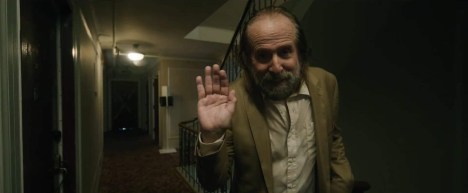
Drinking it all in.

However, The Midnight Sky never coheres in a satisfying manner. Part of this is simply structural, with Clooney having to consistently cut between two sets of characters in radically different situations in a way that constantly undermines momentum. However, part of this is also narrative, with The Midnight Sky essentially built around a powerhouse closing twenty minutes that are obvious from the opening ten, but have to be delayed and postponed with a series of tonally disjointed episodic adventures to prevent the film from ending too soon.

This is a shame. There are hints of a much better movie in The Midnight Sky, but the film itself gets lost in space.

“Nuke the sky from orbit. It’s the only way to be sure.”

Continue reading

New Escapist Video! On Sam Raimi and What it Means to be a Good (Spider-)Man…

So, as I have mentioned before, I am launching a new video series as a companion piece to In the Frame at The Escapist. The video will typically launch with the Monday article, and be released on the magazine’s YouTube channel the following week. This is kinda cool, because we’re helping relaunch the magazine’s film channel – so if you can throw a subscription our way, it would mean a lot.

With that in mind, here is last week’s episode. With the release of Spider-Man: Miles Morales, we thought it might be fun to take a look back at Sam Raimi’s Spider-Man trilogy, and the central stakes of the film: the question of what it means to be a good man, Spider- or otherwise.

New Escapist Column! On “Flash Gordon” and “Dune” as Biblical Epics for a Secular Age…

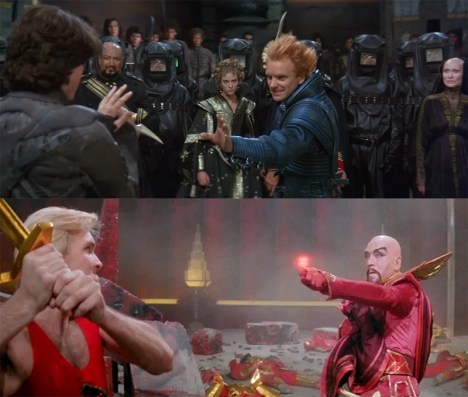
I published a new In the Frame piece at The Escapist this evening. As this week marks the fortieth anniversary of Flash Gordon and this month would have seen the release of the next cinematic adaptation of Dune, it seemed like a good time to talk about Dino DeLaurentiis’ science-fiction epics.

Flash Gordon and Dune exist in the shadow of George Lucas’ Star Wars, but they are markedly different films. While Lucas drew heavily from classic science-fiction serials, he adopted modern techniques in production and editing. In contrast, Dune and Flash Gordon are more old-fashioned in their storytelling. More than that, with the death of New Hollywood and the emerging blockbuster film market, it seems like the studios leaned rather heavily into the kind of epic that they knew how to make. As a result, Dune and Flash Gordon feel rather like biblical epics… in space!

You can read the piece here, or click the picture below.

New Escapist Column! On “The Mandalorian”, Continuity and Brand Synergy…

I published a new In the Frame piece at The Escapist this evening. There’s been a lot of Star Wars continuity dropped into the second season of The Mandalorian, with Boba Fett returning to the show following his apparent death in Star Wars: Episode VI – Return of the Jedi, and the live action introduction of characters like Bo Katan and Ahsoka Tano from The Clone Wars.

This is interesting, in large part because the first season of The Mandalorian was comfortable aiming for a broader sort of Star Wars nostalgia, things that looked like existing elements of continuity, rather than things that were existing elements of Star Wars continuity. The second season is much more heavy of Star Wars cross-promotion, populated with references designed to push viewers towards supplementary material. This is a nice illustration of transmedia storytelling in the streaming age, where it isn’t enough to attract fans, services have to retain them.

Streaming services hold on to existing subscribers by adding value, and Disney appear to have figured out that continuity offers its own added value. In its second season, The Mandalorian increasingly feels like an advertisement for the other riches that the streaming service has to offer, and a promise that any subscriber who doesn’t cancel once the season is over will have a treasure trove of archival material to binge at their leisure.

You can read the piece here, or click the picture below.

Non-Review Review: The Prom

The Prom arrives on Netflix as part of director Ryan Murphy’s deal with the streaming service, similar to the adaptation of The Boys in the Band.

On one level, The Prom is perfectly suited to Murphy’s aesthetic as a director. It is an adaptation of a Broadway musical about Broadway musicals, one that collides with a stereotypical depiction of the American heartland in a way that invites a heightened and almost caricatured version of both. The Prom is a larger than life production, and feels very much of a piece with Murphy’s output as writer, director and producer – from American Horror Story to Ratchet to Glee. There is no sense that any approach to The Prom could ever be “too much”, and so it’s a good fit for Murphy.

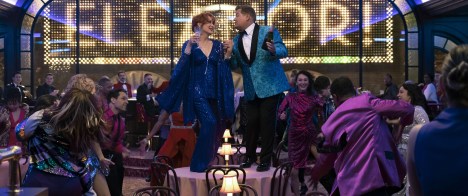
Making a whole production of it.

At the same time, The Prom ultimately feels rather empty. Murphy is very good at offering stylised hyperreal worlds, but The Prom feels like a hollow confection. This problem is compounded by a tonal issue; the movie is never entirely sure how cynical or how earnest it wants to be, and so is frequently caught halfway between extremes. The Prom never seems entirely sure whether it’s a brutal parody of feel-good nonsense or a triumphant example of escapist entertainment, so it never works in either register.

This is a shame, given the talent involved in the production and the occasional momentum that the film manages to build through its high-energy song-and-dance numbers and its game cast. Sadly, though, it never manages to hit the high notes that it needs to.

It’s a bit Broad(way)…

Continue reading

“It Will Always Be Broken!” The Strange Melancholy of Martin Scorsese’s “Hugo”…

The podcast that I co-host, The 250, has been running a season of coverage of director Martin Scorsese. Last weekend, we discussed Scorsese’s Hugo. It’s a fun, broad discussion. However, watching the film and talking about the film got me thinking about the film’s strange melancholy.

Martin Scorsese is a more complex and nuanced filmmaker than a casual glimpse at his filmography might suggest.

The clichéd depiction of Scorsese is largely shaped and defined by his most popular movies: Taxi Driver, Raging Bull, Goodfellas, CasinoGangs of New York, The Departed, The Wolf of Wall StreetThe Irishman. Based on these films, there is a tendency to pigeonhole Scorsese as a director who makes violent films about violent men, usually filtered through the lens of the seedy underbelly of organised crime or urban decay. This does not quite capture the breadth and the scope of Scorsese’s interests.

Indeed, Scorsese is a much more interesting filmmaker than that list of classics might suggest, reflected in films as diverse as Alice Doesn’t Live Here Anymore, New York, New York, The Last Waltz, After Hours, The Colour of Money, Age of InnocenceThe Last Temptation of Christ, Kundun and The Aviator. However, even allowing for that range, Hugo stands out as an oddity in Scorsese’s filmography. The film was something of a flop when it was released opposite The Muppets, and is often glossed over in accounts of Scorsese’s career and history.

This is shame. Hugo suffers slightly from arriving in the midst of a late career renaissance for Scorsese that includes some of the best and most successful films that the director ever produced: The Departed, Shutter Island, The Wolf of Wall Street, The Irishman. In the context of that body of work, Hugo is often overlooked. This is a shame, as it’s a magical and wonderful film. It manages to be a children’s film as only Martin Scorsese could produce, suffused with a melancholy and introspection that is rare in the genre.

Continue reading

“Saint Rose” is in Irish Cinemas This Weekend!

Obviously release schedules have been a bit of mess this year with the pandemic on-going. As a result, international release dates are staggered. Irish cinemas are reopening for the first time in months, and Saint Maud is now screening.

Rose Glass’ blackly comic horror film is one of my favourite films of the year to date, and so is deserving of a shoutout. You can read the original review from the Dublin International Film Festival here, or you can pick the picture below.