Shelteris a horror with an intriguing original premise. However, it’s also packed with tonnes of other premises, some of which are remotely interesting, while others are quite mundane. It’s an uneven film, which actually works best when it paces itself more as a thriller or a mystery than an out-and-out horror, but there are weaker choices out there.
Note that this article contains spoilers for Green Lantern. So I waited until the movie was released to post it. They aren’t exactly huge spoilers, but consider yourself warned.
It really doesn’t take a rocket scientist to tell that Sinestro is going to end up evil. Created in the sixties, the character was introduced to fans as a rogue Green Lantern, so he wasn’t ever designed to be seen as a good guy in four-colour style. In fact, the guy is red, has an evil moustache and is played by Mark Strong. Although the name Sinestro could arguably refer to the fact he wears his ring on his left hand, it isn’t exactly a name that inspires implicit trust. So his path to the dark side in the intended-franchise-launcher Green Lantern shouldn’t be a surprise.
However, it really demonstrates a lot of the key flaws with the movie.
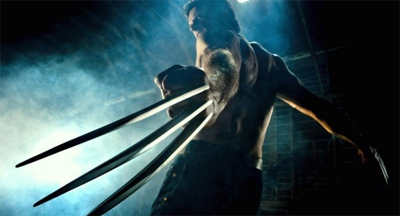
I was actually really anticipating what Darren Aronofsky could bring to The Wolverine, the sequel to the rather lackluster X-Men Origins: Wolverine. So I was actually genuinely disappointed when it was announced – rumoured to be for the inevitable creative reasons – that Aronofsky would not be directing the film after all. While it’s great that this affords Aronofsky complete creative freedom on the next film he works on, and while I certainly don’t want a film that has been subject to Fox’s executive meddling, I can’t help but regret what might have been.
Lawrence Kasdan is probably more famous as a writer than a director. The talent behind such classics as Star Wars: The Empire Strikes Back, Raiders of the Lost Ark and… er, Clash of the Titans, Kasdan has made a name for himself as the writer of all manner of big-budget spectacle. However, he has also established himself as a director of much quieter fare, such as The Big Chill and Grand Canyon, an early nineties ensemble drama built around the notion that all of life’s troubles seem relatively small if put in the proper perspective. Occasionally just a little bit too heavy-handed for its own good, it’s still an interesting little piece with a nice cast.
I think the charm of Death at a Funeralis the fact that it feels very much like a classic comedy of errors. Sure, there are some scatological moments thrown in, but it really feels like an old-fashioned slapstick comedy of manners, based around putting its characters through a variety of hilariously awkward little subplots, playing out against the backdrop of what should be a classy and respectful family occasion. If nothing else, the movie is a charming and affectionate homage to that style of comedy I had feared might be dearly departed.
Green Lantern is solidly middle of the road as far as superhero movies go. Perhaps in a less crowded (and less high quality) summer action season it would seem a stronger contender, but the film really shows as Warner Brothers’ first major attempt to produce a big-budget superhero film not directly related to Supermanor Batman. It’s perfectly functional, managing to do everything it sets out to in a relatively efficient manner, but there’s never really a sense that the film exists as anything more than a series of plot points that need be checked in order for the movie to cross the finish line. Given the potential of the source material, as well as its relatively unique nature amongst the slew of generic superheroes, a functioning and formulaic adventure can’t help but feel like a bit of a disappointment.
Hal Jordan: Space Cop? It has a nice ring to it...
Stake Land is a B-movie. It’s pure schlock, with a hefty amount of cheese thrown in on top. That might sound like a criticism, but it’s more of a fact. The movie itself is well-made, a little bit sharp, not so insecure as to take itself overly seriously, and delivers something akin to an old-school creature feature with a hint of the social conscience one expects from horror. It’s not amazing, but it’s a solid addition to the slew of post-apocalyptic movies we’ve seen of late, with a refreshing awareness of its pulp roots.
One of the things about having a blog is the fact it takes a significant amount of self-confidence to publish. I mean, even if you’re just doing it for own sake, it still takes a great deal of faith to put something out there for others to see and read. To be honest, I’m not sure I properly consider myself a “critic” and certainly not an “expert”, at least not in a sense that requires big inverted commas. I don’t like to think that I make statements of cinema, and I hope (perhaps with a hint of arrogance) that I might contribute in some way to some discussion about cinema somewhere. Still, I’m always a little bit embarrassed at all the great films I haven’t seen. I feel like it diminishes me in some way, not even as a blogger or any nonsense like that, but as a film fan.
It occurred to me as I was watching the trailer for Lucky, the upcoming black comedy starring Colin Hanks and embedded below. I was actually thinking of Colin Hanks as a name in his own right, rather than “the son of Tom Hanks, who also acts.” I mean, of course I knew his name, and I also respected his work, but there had always been this rather pronounced association between Colin and his father. I don’t mean anything to diminish Colin’s work, and I know it isn’t fair, but that was pretty much how I had – to a large extent – defined the young performer. I don’t even think I did it consciously. However, in watching the trailer for his upcoming film, I actually found myself thinking of Colin in his own right. Even though he is – honestly – the spitting image of his father, I had to consciously drag that association into my head in order to make it. It got me thinking, when does the child of a successful actor come into their own?
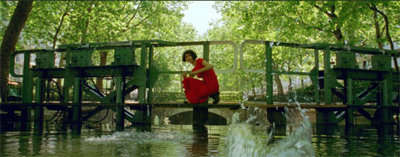
I feel a little bit heartless in confessing this, but Amélie (or Le fabuleux destin d’Amélie Poulain, to use its original title), never really connected with me. Don’t get me wrong, I can appreciate the film’s wonderful visual style, and those amazing opening scenes with a young Amélie growing up the way she did thanks to the strange and particular set of circumstances around her, but I couldn’t maintain that emotional connection through the film. Which is a shame, because the movie is a wonderful technical accomplishment, from its heavily saturated primary colours through to its distinctive score, and the manner at which it plays with the fourth wall.