• Following Us

  • Categories

  • Check out the Archives


  • Awards & Nominations

New Podcast! The Scannain End of Year Podcast 2017

I was thrilled to join Niall Murphy, Grace Duffy and Jason Coyle for the Scannain End of Year Podcast 2017, a podcast looking back at the best and worst in film in the Irish calendar year of 2017. Included is a discussion of the biggest films at the Irish box office, the worst films of the year, and each individual’s top ten films.

We’re hoping to get recording the podcast with a bit more regularity in the new year, but, in the meantime, check out the podcast below.

Non-Review Review: All the Money in the World

All the Money in the World is an intriguing and uneven anthropological study of wealth.

Ridley Scott’s drama documenting the abduction of Paul Getty treats its subjects as members of a different species. In an introductory voice-over, the character of Paul Getty explains that the truly rich may as well come from “another planet.” They might look the same, but they are fundamentally different from ordinary people. At one point, John Paul Getty recalls an argument on how a publisher tried to change the title of his book from How to be Rich to How to Get Rich. Getty complains, “Getting rich is easy. Any fool can get rich. Being rich, that’s something else entirely.”

A Plum(mer) Role.

This idea simmers through All the Money in the World, the notion that there is something more than just a bank balance that separates the wealthy from the poor. “Money is never just money,” reflects advisor Fletcher Chase, and All the Money in the World suggests as much repeatedly. Throughout the film, journalists and paparazzi stalk the Getty family like wildlife photographers trying to snap a picture of some rare beast in its natural habitat. The Getty’s stand apart, and that sense of otherness is compounded by some measure beyond a balance in any account.

All the Money in the World is fascinating in its exploration of this idea, but it suffers from a lack of focus and clarity. All the Money in the World feels more like a series of vignettes than a single narrative story, a set of compelling sequences that never add up to a fulfilling whole. There is something intangible missing, as if the figures don’t quite add up. Then again, that flaw seems perfectly suited to the characters at the centre of the narrative.

Oil’s well that ends well.

Continue reading

Dublin Film Critics Circle Awards, 2017

It’s the most wonderful time of the year!

Snow! Christmas! Terrible but enjoyable music! End of year “best of” lists!

I’m a member of a couple of critics’ organisations, so we’ll be releasing a couple of these lists upon which I voted. I’ll also hopefully be releasing my own top ten as part of a Scannain end-of-year podcast some time next week.

In the meantime, the Dublin Film Critics Circle have released their end of year awards. Thrilled to be a part of the group, who are voting on films released in Ireland during the calendar year of 2017. As such, it will be a different pool of films than the Online Film Critics Society awards.

A massive thanks to the wonderful Tara Brady for organising the awards this year, balloting members and collating results.

Anyway, without further ado…

Continue reading

Non-Review Review: Star Wars – Episode VIII: The Last Jedi

Star Wars: Episode VIII – The Last Jedi is visually sumptuous, thematically rich, but narratively clumsy.

There is a lot to love in The Last Jedi. Most notably, the gamble that Disney took on director Rian Johnson has paid off. The Last Jedi looks and feels like no other Star Wars movie. It is not simply the intimacy with which Johnson stages conversations separated by half a galaxy, nor the high quality visual effects. There is an endearing and appearing sense of wonder to The Last Jedi, as if watching a small child playing with action figures and humming the lightsabre noise to himself. The Last Jedi feels like the work of somebody continuing and expanding a story, more than just recreating it.

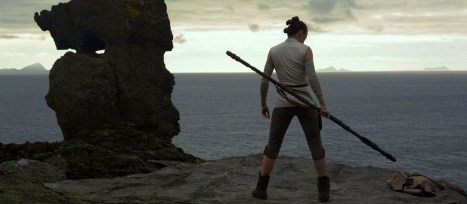
Rey of Hope.

Indeed, the best moments in The Last Jedi struggle to reach beyond what audiences have come to expect from the franchise. Some of this is inherited from the ambition of Rogue One: A Star Wars Story, particularly in early scenes that emphasise the human cost of this galactic struggle. However, there are other more ponderous moments in The Last Jedi when it seems like Johnson and his characters are asking profound questions of the franchise itself, poking at the underlying assumptions that power this box office behemoth.

This was essential for the success of The Last Jedi. Star Wars: Episode VII – The Force Awakens was an exercise in nostalgia that worked so well because of three factors; it was a palette cleanser after the prequels, it innovated by pushing background characters to the narrative foreground, and it was released more than a decade after Star Wars: Episode III – Revenge of the Sith. Nostalgia is not enough to sustain a franchise that will be releasing one major motion picture a year for the foreseeable future. The Last Jedi needs to find something interesting to say about a forty-year-old franchise.

Seeing red.

In its best moments, it seems like The Last Jedi is lining up its arguments. It looks at the Star Wars universe through new sets of eyes, often in a literal sense. Johnson is not a director in the vein of Lucas or Abrams. Johnson is not a director who feels entirely comfortable with spectacle and scale. Instead, Johnson offers a tighter and closer glimpse at the universe and the people who inhabit it. There is a lot of focus on faces in The Last Jedi, shadows moving across them, eyes either focused or trying desperately to look away.

However, The Last Jedi ultimately lacks the courage of its convictions. The bolder and more provocative suggestions at the heart of the narrative remain just that, nothing more than implications or subtext. The Last Jedi has intriguing and bold ideas, but lacks the resolve to follow them through to their logical conclusions. Although undoubtedly less nostalgic than The Force Awakens, The Last Jedi remains too trapped by its own past to fully chart its own course and map its own destiny.

Shore thing.

Continue reading

Non-Review Review: Lady Bird

Lady Bird is a sweet and charming little film, one anchored in two great central performances from Saoirse Ronan and Laurie Metcalf.

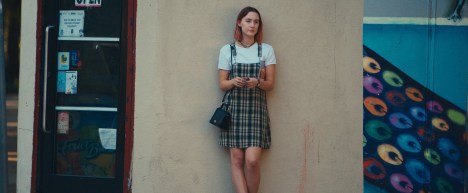
Lady Bird is relaxed and casual, a story of teenage anxiety unfolding at its own pace without any tangible sense of stakes or scale. Lady Bird is a refreshingly quiet and sincere movie, one that captures a lot of the listlessness associated with youth, the obliviousness to the reality of the outside world, the struggle to define a unique identity. For all the film is anchored in its Californian surroundings, Lady Bird is a universal coming of age story.

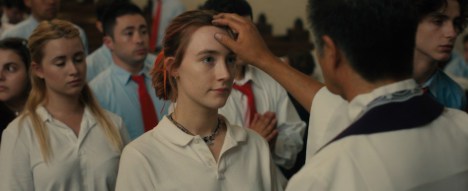
Blessing in disguise.

Like its protagonist, Lady Bird is smart and wry, if a little directionless and unsure of itself. However, the movie works in large part because of the decision to build its emotional core around the relationship between the eponymous character and her mother. Ronan is phenomenal here, but Metcalf is just as able to match her co-star. Both actors deliver raw and genuine performances that perfectly capture the push-and-pull of any real-life familial dynamic.

Lady Bird is perhaps a little too eccentric and a little too whimsical in places, drawing its supporting cast in broad strokes and leaning a little too heavily into stereotypes of adolescence, but the film has a warm and beating heart that sustains it for its ninety-three-minute runtime.

Bye, bye, birdie.

Continue reading

Non-Review Review: Darkest Hour

Darkest Hour is a powerhouse performance nested inside a fairly formulaic film.

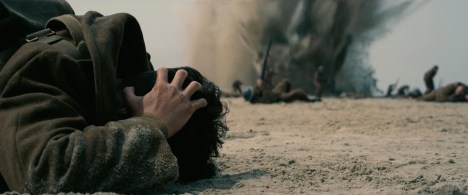
In terms of plot, Darkest Hour is very much a familiar cinematic biography. Building off the template cemented by writer Peter Morgan on The Deal, The Queen, The Special Relationship and Rush, this is a film that explores its subject through the lens of a single event. The plot of Darkest Hour unfolds across May 1940, in the shadow the Second World War. It charts the life of Winston Churchill from the resignation of Prime Minister Neville Chamberlain to the evacuation of Dunkirk. It is tightly focused, and perhaps the better for that.

Winston, Loseton.

In many ways, Darkest Hour feels like a collection of pop culture standards. Churchill is such an iconic part of European history, and this month was so crucial, that audiences have almost reached saturation point with narratives documenting key moments in the life of the statesman. Darkest Hour cannot help but evoke shades of everything from The King’s Speech to The Crown to Dunkirk, all of which share some sense of the same time and place. Darkest Hour simply combines a lot of pop culture Churchill into what amounts to a “greatest hits” package.

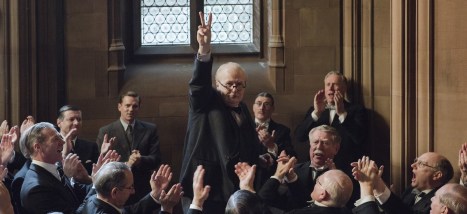
With that in mind, it should be no surprise that Darkest Hour is elevated by the central performance from an almost unrecognisable Gary Oldman. If pop culture has synthesised Churchill’s history to a collection of “greatest hits”, then it is the delivery that truly matters. Oldman carries the film home.

Two-finger salute.

Continue reading

Non-Review Review: Jumanji – Welcome to the Jungle

Jumanji: Welcome to the Jungle is a weird and interesting experiment, in part because it is a nostalgic and belated sequel that remains caught between its past and the present.

Welcome to the Jungle joins a long (and perhaps undistinguished) line of twenty-first century franchise revivals for beloved nineties properties. The original Jumanji was a hardly a breakout hit, even if it did make an impression on a younger generation who would have grown up on it as part of Robin Williams’ nineties family-friendly oeuvre along with Hook or Ms. Doubtfire. Indeed, Jumanji is arguably the nineties Robin Williams film most perfectly suited to a revival like this, in that it involves a premise that can be divorced from its iconic and beloved star.

Franchises find a way.

At the same time, Jumanji is undoubtedly near the bottom of nineties adventure films in need of a revival, lurking in the shadow of other resurrected blockbusters like Independence Day or Jurassic Park. Perhaps because of this distance, and perhaps because of the lack of a true cult iconography, Jumanji serves as an interesting control case. This is a film with one leg in the present, aimed at what modern families expect from blockbuster entertainment. The other leg it planted firmly in the past, harking back to certain aspects of formula that seem almost quaint.

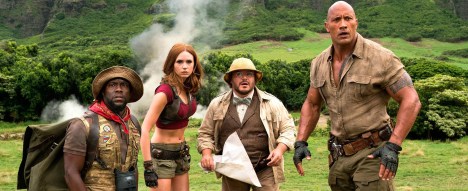
Welcome to the Jungle is not a particularly good film, but it is an interesting one. It serves as a prism through which certain aspects of nostalgia might be deconstructed and explored.

Players.

Continue reading

Non-Review Review: The Post

The Post is clean, efficient and timely.

Even to those unfamiliar with the historical events that inspired the film, there will be very little in The Post that is surprising. The Post follows a very clear trajectory for a prestige picture coming into awards season, setting up its character arcs and trajectories in a very straightforward manner and following them all on their clearly defined paths towards the end credits. It is very easy to see where the story will end up, and there are surprisingly few twists and turns in the narrative as it develops.

Food for thought.

However, there is something endearing in this efficiency. The Post famously came together in a hurry while director Steven Spielberg was waiting for postproduction work on Ready Player One, and the film serves as a showcase for the effectiveness of the creative talent involved in the production. The Post is unlikely to become a defining or signature film for anybody involved in its production, but instead exists as a testament to the sheer technique and craft of that production team.

The Post is not a masterpiece or a classic, but it is a sleek and well-made film.

Old news.

Continue reading

CinÉireann – Issue 2 (December 2017)

The new issue of CinÉireann had just been released.

I’m honoured to have a piece about modern film criticism in the magazine, along with wonderful work by Jay Coyle and Ronan Doyle among others. It’s a fantastic line-up of Irish film criticism talent writing about a fantastic line-up of Irish film, and it’s exciting to be a part of it.

As ever, thanks to the fantastic Niall Murphy over at Scannain for letting me be a part of it.

You can read CinÉireann as a digital magazine directly. You can even subscribe and get future issues delivered to you directly. Or click the picture below.

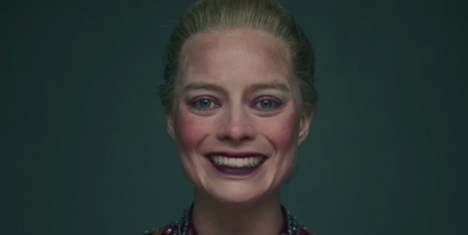
Everyone’s a Winner, Baby: “I, Tonya”, “The Disaster Artist” and the Modern Biopic

Watching certain genres over a number of years, patterns emerge.

A lot of this is down to success and influence. A lot of studio output is driven by what worked in the genre in recent years. This is why so many studios have tried to fashion their blockbusters into a “shared universe” after the success of The Avengers, or why so many franchise reboots went dark and gritty after The Dark Knight. However, other genres also shift in response to trendsetters, albeit in more subtle and nuanced manners. Some of these shifts can be attributed to critical response or awards success.

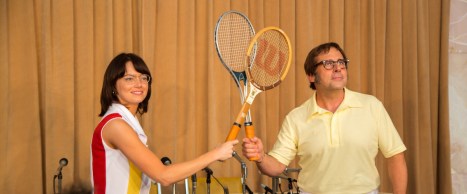
For example, following the success of Peter Morgan’s intimate and tightly-focused biographical scripts for The Queen or Frost/Nixon, a lot of biographies adopted a similar approach to their subjects, focusing on one particular incident in a life (or in two lives) that could provide a microcosm through which to explore big issues. This led to other biographies that tended to be built around specific events in the lives of their subjects rather than adopting a more holistic approach, like RushMy Weekend with MarilynHitchcock, Elvis and Nixon, Battle of the Sexes.

In the past two years, an interesting trend has emerged in terms of biographical pictures. Historically, biographies have tended to focus on historically noteworthy individuals who accomplished great things; Gandhi, The Aviator, My Left Foot, Milk. Even more ambivalent biographies were usually defined by the sense that those characters had changed the world; Nixon, J. Edgar, The Social Network. However, the last few years have seen an interesting shift away from characters who actually accomplished tangible change, and those who tried and failed.
To be fair, there have always been biographies that acknowledged the valour of a failed attempt. Cool Runnings was a film about a the Jamaican bobsled team in which the characters did not even finish their Olympic event. Even in terms of fictional sports films, Rocky famously ended with the title character defeated after struggling for the entire film. However, in these cases, the film often acknowledged the valour in the attempt. The Jamaican bobsled team were competing for the first time and changing preconceptions about their country. Rocky was trying to pull himself out of poverty.

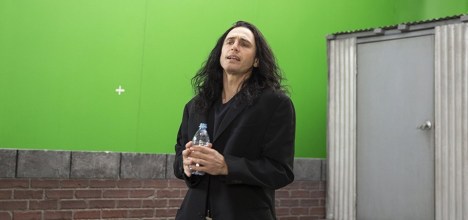
In contrast, more modern biographies seem willing to engage with the idea of failure to the point of mockery, exploring characters who have arguably been reduced to pop culture punchlines. Florence Foster Jenkins is the story of a socialite who cannot sing who dreams of performing in front of a rapt audience. Eddie the Eagle is the story of an awful skier who dreams of making it to the top of his profession. The Disaster Artist is the story of an eccentric with delusions of grandeur who through sheer force of will makes what might be the worst movie of all time.
This represents an interesting shift away from many of the conventions of the biographical feature film, providing a sharp contrast with the high-profile prestige pieces that garnered awards and glory in the twentieth century. After all, these movies are not spoofs or comedies. They are not subversions of the biopic in the same way that Walk Hard might be considered to be, nor are they broad comedies adapted from real events like Thirty Minutes or Less. While these films include comedic elements, they are very clearly intended as serious works intended for serious contemplation.

So, what does this shift actually mean?
Continue reading