• Following Us

  • Categories

  • Check out the Archives


  • Awards & Nominations

My 12 for ’18: “Widows” & Pulp Artistry

It’s that time of year. I’ll counting down my top twelve films of the year daily on the blog between now and New Year. I’ll also be discussing my top ten on the Scannain podcast. This is number seven.

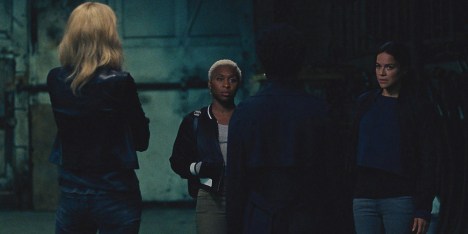
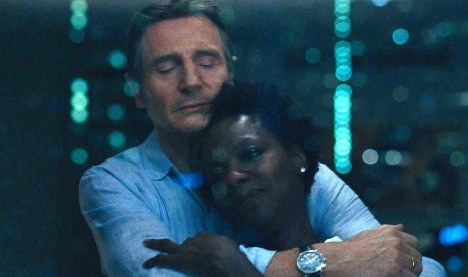
Widows is unashamedly pulp fiction.

There is no way around it. It is a heist thriller in which a bunch of women who have never even held guns before use a notebook provided by one of their dead husbands in order to conduct a daring robbery. There are secrets, there are betrayals, there are reversals. There is violence, there is brutality. It is a very effective example of form, an illustration of the kind of pulpy “movie for adults” that simply does not exist any more.

Widows of opportunity.

However, there is something interesting bubbling beneath the surface of Widows. Written by Gillian Flynn and directed by Steve McQueen, Widows is a film that has a lot on its mind. It finds room to meditate on modern Chicago, on white anxiety about shifting demographics, about power and influence. More than that, it also explores questions of complicity and consent, the manner in which people choose to blind themselves to what they simply do not wish to see.

Widows does all of this without sacrificing any of the beats and rhythms of a pulpy crime thriller. It is a deft balancing act, and one that Flynn and McQueen pull off perfectly.

Continue reading

My 12 for ’18: “You Were Never Really Here” & What You Never Really Saw

It’s that time of year. I’ll counting down my top twelve films of the year daily on the blog between now and New Year. I’ll also be discussing my top ten on the Scannain podcast. This is number eight.

The premise of You Were Never Really Here suggests a certain type of film.

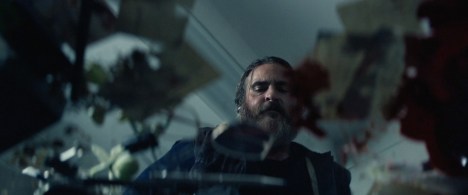
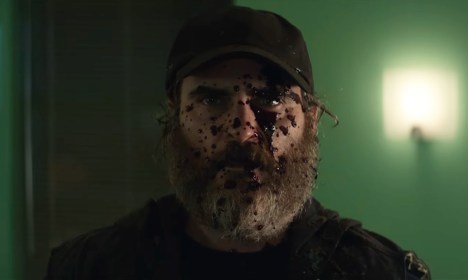
Joaquin Phoenix stars as Joe. The audience learns very little about Joe explicitly through exposition of dialogue, his back story and motivations suggested by quick cut flashbacks. As with a lot of You Were Never Really Here, director Lynne Ramsay understands something that may seem counter-intuitive to cinema, the notion that what is unseen might be as important as what is explicitly shown. Joe hunts down paedophiles and rescues children from their clutches.

That description suggests a thriller or an action movie, rooted in visceral and tangible violence. It might work as a direct-to-video exploitation film starring some actor with which mainstream audiences have no familiarity. It might also play well as a Liam Neeson release in early January, something akin to an even grittier Taken. At the more extreme end of the scale, it could play like a cousin to Joel Schumacher’s weird and overlooked 8mm.

What is so refreshing about You Were Never Really Here is that it doesn’t play like any of those, and is instead very much its own thing.

Continue reading

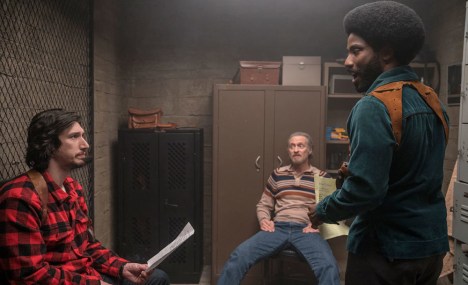
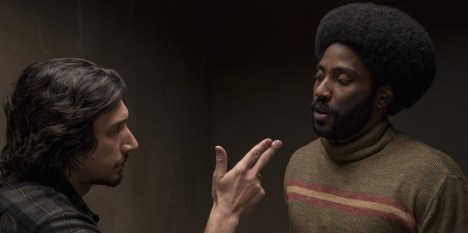
My 12 for ’18: The (Black) Power of Stories in “BlacKkKlansman”

It’s that time of year. I’ll counting down my top twelve films of the year daily on the blog between now and New Year. I’ll also be discussing my top ten on the Scannain podcast. This is number nine.

At its core, BlacKkKlansman is a story about the power of stories. In particular, the power of cinema.

This is no real surprise. Spike Lee is an avowed cinephile with an incredible hunger and passion for the medium. Lee knows the history of cinema, and understands the historical context of cinema. BlacKkKlansman is alternately a loving homage to blaxploitation and a discussion of blaxploitation. It is a film that is fundamentally about the way in which the stories that people tell influence and shape the world in which they live.

At the heart of BlacKkKlansman is a sequence in which real-life Civil Rights icon Harry Belafonte plays a fictionalised activist. He recounts, in gory detail, the story of a horrific lynching that he witnessed as a child. He contextualises this attack by reference to the success of Birth of a Nation, which he describes using the (anachronistic) term “blockbuster.” This sequence is intercut with the induction of new members into the local branch of the Ku Klux Klan, while gleefully rewatching (and cheering) Birth of a Nation.

The most interesting idea within BlacKkKlansman is the implication that it might be possible to counter-programme this. If narratives of hatred and violence can be perpetuated through cinema, then perhaps stories about collaboration and empathy can also be spread in that manner. Clever and self-aware, BlacKkKlansman feels like an attempt to construct one such narrative.

Continue reading

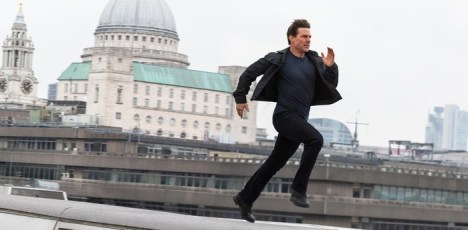
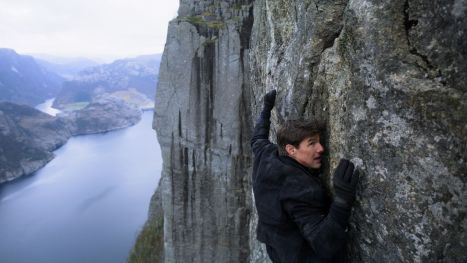
My 12 for ’18: Holding Out for a Hero in “Mission: Impossible – Fallout”

It’s that time of year. I’ll counting down my top twelve films of the year daily on the blog between now and New Year. I’ll also be discussing my top ten on the Scannain podcast. This is number ten.

Mission: Impossible – Fallout was released around the tenth anniversary of The Dark Knight.

In fact, the week after I caught the preview of Fallout, I attended a tenth anniversary screening of The Dark Knight. This is important, because Christopher McQuarrie’s second Mission: Impossible film undeniably exists in conversation with Christopher Nolan’s epoch-defining blockbuster. It is impossible to watch Fallout without thinking of The Dark Knight, from Lorne Balfe’s propulsive score to the sight of an armoured truck sinking slowly into a river.

However, McQuarrie does something interesting with Fallout, in relation to The Dark Knight. Too many of the films influenced by that iconic piece of cinema opted for shallow and superficial homage. Thor: The Dark World and Teenage Mutant Ninja Turtles: Out of the Shadows and Transformers: Dark of the Moon and Transformers: The Last Knight settled for borrowing influence from the title. Law Abiding Citizen tried to embrace moral ambiguity. Man of Steel attempted to emulate that serious grounded approach to other properties.

In contrast, Fallout understands that the best thing that most films could learn from The Dark Knight is simple craft and professionalism. Fallout understands that top-notch production, an emphasis on in-camera effects and a propulsive sense of momentum are the most applicable lessons that most films could take from The Dark Knight. As such, Fallout takes those lessons and applies to them to Mission: Impossible, leading to the year’s most impressive embrace of the concept of heroism.

Continue reading

My 12 for ’18: Quiet Please in “A Quiet Place”

It’s that time of year. I’ll counting down my top twelve films of the year daily on the blog between now and New Year. I’ll also be discussing my top ten on the Scannain podcast. This is number eleven.

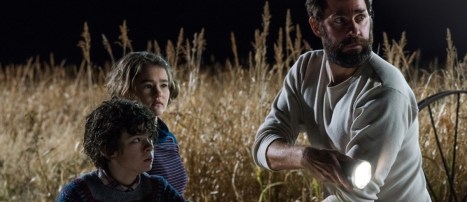
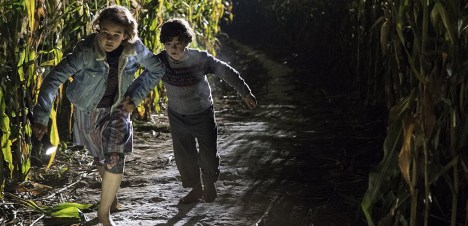
Much has been made of A Quiet Place as an old-fashioned horror throwback, and justifiably so.

There is a lot to like about A Quiet Place, especially for audiences who are maybe a little cynical about the modern cinematic landscape. It is an original property. It is not a sequel, reboot, prequel or remake. It is not even based on a book or a comic. It does not exist as part of a shared universe. It is not a story drowned out by the cacophony of end-of-the-world stakes. It is not a story that struggles under the weight on unnecessary exposition. It is a solid, mid-tier, old-fashioned horror film. It is the kind of respectable mainstream genre film that doesn’t really exist anymore.

However, there is something that separates A Quiet Place from the year’s other nostalgic prestige horror offerings like Hereditary. Hereditary was a film that largely succeeded as a nostalgic throwback to the classic horror films of the seventies, tapping into the same fears of familial dissolution as Don’t Look Now or The Exorcist. In contrast, A Quiet Place is a thoroughly modern film. It is a movie that very much reflects the modern world, although not necessarily in terms of theme or story. Indeed, trying to work out the politics of A Quiet Place is bound to be an exercise in frustration.

Instead, A Quiet Place is a modern film in the way that it engages overtly with and makes the characters complicit in the act of watching a horror movie. It is a horror film that is consciously designed in order to heighten and emphasise the manner in which people watch films.

Continue reading

My 12 for ’18: Empathy in Any Language & “Isle of Dogs”

It’s that time of year. I’ll counting down my top twelve films of the year daily on the blog between now and New Year. I’ll also be discussing my top ten on the Scannain podcast. This is number twelve.

2018 has been a long year, but one that moves at a whirlwind pace.

It’s a bit of a paradox. Time moves so quickly that it seems impossible to keep up with everything that is unfolding. Stories that would have dominated the news cycle for months are now played out in the space of an afternoon, buried beneath the next big story and the next shocking revelation. However, despite how fast everything is moving, this has a numbing effect. The constant barrage of news and information makes things feel so much slower and longer than they would otherwise. 2018 moved so fast that it was impossible to keep up, but it also seemed to last an eternity.

As a result, seemingly ordinary periods of time can be stretched and distorted. The window between theatrical release and home media roll out has been getting shorter and shorter for most films, occasionally to the consternation of cinema chains. There are only a few scant months between the premiere of a film and its release as digital download or hard copy. Normally, that is not a long or extended period of time. In 2018 terms, it is an eternity. So much can change in that window.

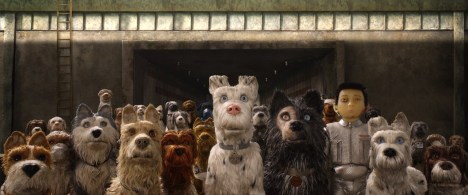
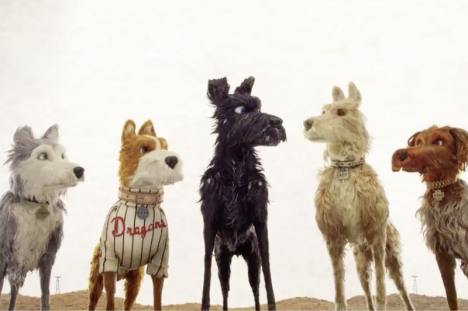
I first saw Isle of Dogs in a crowded cinema during the Audi Dublin International Film Festival. The snow was falling outside. Although I did not realise it from the safety of the cinema, buses were being cancelled. Getting home afterwards would be an oddity, and I would spend the next four days locked in my house, staring at idyllic and unspoiled white snow. At the time, I really loved Isle of Dogs. It stayed with me, haunting and beautiful. The imagery was arresting, the compositions impressive, the simple story at the heart of the film an engaging appeal to empathy in a world increasingly bereft of it.

Continue reading

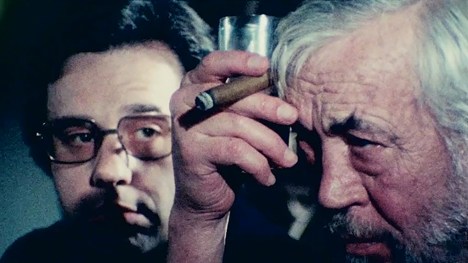
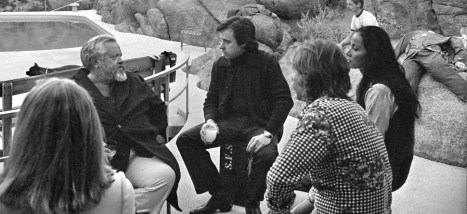
All’s Welles That Ends Welles: “The Other Side of the Wind” and a Sense of Seventies Timelessness…

There is a tendency to think of the current moment as the most important moment; call it “modernity bias.”

There is a certain egocentricism inherent in this premise, in the idea that this moment when we exist will always be the most important moment. On a purely philosophical level, there may some truth in the idea. After all, this is the one moment when we actually get to make a decision and exercise agency, this is the one moment where a course of action can be changed. Of course, people have made decisions in the past and can plan for the future, but this is the moment that exists right now. It’s understandable to think of the current moment in such terms.

Sometimes this can make it hard to engage with popular culture outside of those terms. Of course, a lot of popular culture is defined by the moment in which it was released. It would be hard to separate All the President’s Men (or even conspiracy thrillers like The Conversation or The Parallax View) from the cultural paranoia of the seventies, just as it would be hard to divorce films like Fight Club (or The Matrix) from the pre-millennial anxieties that informed them. This is not to suggest that these movies lack relevance outside their moments, but instead to acknowledge they are rooted in their times.

In most cases, works are released relatively close to the time at which they were produced, meaning that audiences and critics respond to these films in the context in which they were made. Audiences reacting to films like All The President’s Men or Fight Club were very much in step with the culture that informed it, and so there was a strong communion between what the film was saying and what the audience was hearing. Indeed, any critical reevaluation of these works exists in conversation with the original evaluation, and so the cultural conversation about these works of art tends to move forward from a fixed point.

However, this creates a challenge in assessing works that exist outside of that template. “Lost” works that have been recovered. “Incomplete” works that have been finished. Even older works that have been revisited. It is, for example very hard to separate Doug Liman’s reworked 2018 director’s cut of his 2010 film Fair Game from the context of its later release, specifically President Donald Trump’s pardoning of a key official involved in the events depicted in the film. It becomes an even bigger challenge when dealing with a work that is seeing the light of day for the first time years removed from its original context.

Is The Other Side of the Wind a lost seventies film, or is it a film for the closing of the second decade of the twenty-first century? Is it both? Is it neither? Is it something else entirely?

Continue reading

Not the Alt-Right Stuff: “First Man” and the Postnationalist Depoliticised Space Myth…

There is something uniquely American about the space programme.

Of course, America is not the only country that went into space. China has successfully launched a man into space, and India is planning to launch another person within a few years. America was not even the first country to launch a man into space. Many of the important “firsts” in space travel were claimed by the Soviet Union; the first dog launched into space, the first man launched into space, the first orbit of the planet, the first space-walk. In hindsight, America’s claim to winning the space race might not be that they went first, but that they went furthest.

Nevertheless, the space race is an important and defining part of American identity. It might be because the United States won the Cold War, and this sort of journey is perfectly representative of a symbolic victory in an ideological war. It might be because the space race sits so perfectly within the American self-image, the logical extension of distinctly American concepts like the limitless (whether “new” or “final”) frontier or “manifest destiny.” It may simply be that the United States is a country very keenly focused on its future, and that reach towards the sky is the ultimate push towards the future.

It is almost impossible to separate the space race, at least historically, from American identity. Even the utopian postnational future of the Star Trek franchise is very consciously filtered through an American lens. (Jean-Luc Picard, the franchise’s only non-American lead, is a delightfully hazy mix of vague European clichés including a taste for tea and British accent, against a French name and ownership of a vineyard.) To be fair, modern space-set stories like The Europa Report or Doctor Who or Sunshine tend to place a greater emphasis on international cooperation, but space is till seen as a primarily American concern.

When British-American director Christopher Nolan decided to make a movie about the space race in Interstellar, he steeped it in Americana. The film was not only about a mission organised by NASA, but the entire film was steeped in Americana that suggested the whole enterprise was inseparable from American identity; baseball games, tales of the Great Depression, the corn fields of rural America, even the soothing Texas accent of Matthew McConaughey. A charming piece of retrofuturism, of nostalgia for how we used to look at the future, Interstellar was an ode to the space race as a defining part of American identity.

This makes sense. Many of the images and signifiers of space are still tied specifically to the United States. After all, it is estimated that almost fifteen percent of the world’s population watched the moon landing, a defining moment of American triumph. The image of the American flag planted on the lunar surface is one of the most iconic images of the twentieth century, inexorably tying the moon mission to ideas of nationalist endeavour and triumph. Like Antarctica, the moon might theoretically exist beyond the claims of any one government, but it’s also impossible to separate it from that image of the flag.

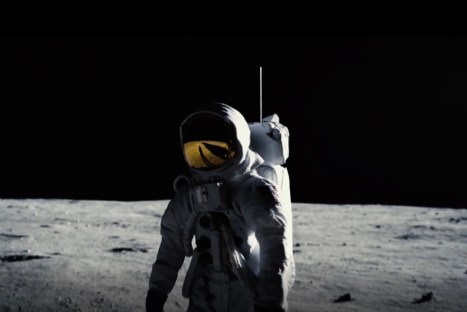
This perhaps explains why the decision not to show the planting of that flag in First Man has been so controversial, quite aside from the general (and exhausting) trend towards politicisation of everything. The moon landing is so casually and so straightforwardly accepted as a triumph of American nationalism that even eluding a part of the story that everybody knows anyway is treated as an affront. The response to this artistic decision treats it as a betrayal to American identity and an attempted erasure of what is a fundamental part of this story.

However, there is something very interesting in the way that First Man approaches the nationalism inherent in the space race, and the movie’s decision to place its emphasis elsewhere feels like a very pointed (and very timely) shift of focus on one of the defining narratives of the American century.

Continue reading

“Maybe It’s Time To Let the Old Ways Die…”: “A Star Is Born” and Baby Boomer Rock Nostalgia…

It takes a lot to change, it takes a lot to try,

Baby, it’s time to let the old ways die.

A Star is Born would seem to be a massive success, before it has even been released.

The film has an impressive score on both Rotten Tomatoes and MetaCritic. The film has also been named as the presumptive Best Picture frontrunner by publications as diverse as Forbes, Playlist, Vulture and Vanity Fair. Of course, that may not actually mean much; presumptive Best Picture frontrunner status doesn’t always translate into ownership of that little gold statue. Just ask La La Land, the presumptive Best Picture frontrunner from two awards seasons back, a film that literally had the award snatched out of its hand by the underdog that could, Moonlight.

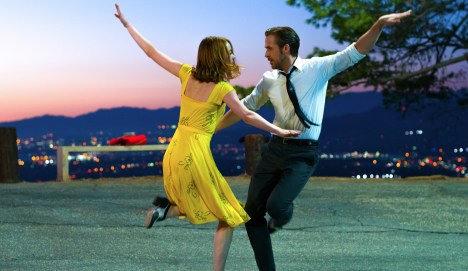
The comparison to La La Land is interesting. In many ways, A Star is Born is effectively the movie that many critics claimed to see in La La Land. By its nature, La La Land evoked nostalgia for a long-lost version of Hollywood, blending a story of an ascendant star with a cynical hipster, filtered through the lens of old-school musicals. Many read the film as the ill-judged story of a white guy saving jazz, glossing over the fact that it was instead a tragic story about a guy who kept an outdated notion of jazz alive in a basement club while shunning the opportunity to work with an African American artist to bring it to the masses.

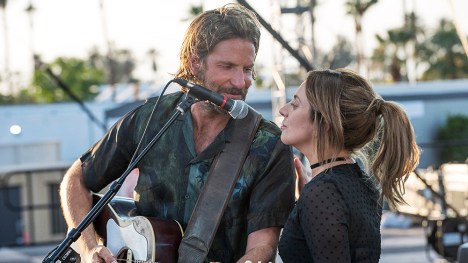
What is striking about A Star is Born is how it embraces many of the controversial aspects of La La Land and pursues them with uncritical earnestness. A Star is Born is a film steeped in seventies notions of authenticity, reflected not only in the past-his-glory stylings of rock daddy Jackson Maine, but also in the stylistic influences of Bradley Cooper who aspires towards the glory days of the New Hollywood movement. At the core of A Star is Born is a suggestion that popular culture was never more “real” than it was during the seventies, and that modern artists should look back to that authenticity, not craft their own identities.

A Star is Born is inevitably going to be nostalgic. It is the forth iteration of this particular fairytale to use the title, although the story itself has been reworked and reimagined in countless iterations over the past century. Fans were already identifying callbacks and homages to early versions of the story from the trailer. Much was made of the the passing of the torch, whether it was Kris Kristofferson allowing Bradley Cooper to use his set at Glastonbury to film a key sequence from the movie, or his and Barbra Streisand’s visit to the set. Nostalgia was woven into the fabric of A Star is Born.

However, A Star is Born is in theory about more than nostalgia. It is about evolution. It is about a dying star elevating a new voice from obscurity, providing a young artist with a platform from which they might launch themselves. A Star is Born is a tale of succession, of perpetual reinvention, of the passing of the torch from one generation of celebrity to another. This is why the story inevitably focuses on an over-the-hill rocker who discovers a startling young talent. It is a story about how celebrity changes and evolves. It is about acknowledging the future, and allowing the past to legitimise that future.

There are certainly shades of that in A Star is Born. There are certain songs that recur throughout the film, suggesting both potential hit singles from the soundtrack and important thematic markers. Shallow is one hell of a pop-rock love ballad, full of power and emotion. However, Jackson Maine keeps coming back to his own folksy country ballad Maybe It’s Time to Let the Old Ways Die. It seems like an important statement of purpose for the film, an exploration of what is actually happening when this aging crooner plucks young Ally out of obscurity and pushes her towards celebrity.

Unfortunately, the movie itself seems less concerned about letting the old ways die, and instead is much more anxious about what it sees as the lack of authenticity within popular culture. When A Star is Born positions Jackson Maine as an aging rock god, it is entirely sincere. It might accept the man’s flaws, but it heralds his message. A Star is Born is a story about how “real” celebrity looks like a bearded rocker with a guitar thrown over his shoulder singing about lost love, while more stylised modern pop culture is just vacuous nonsense. A Star is Born is a prestige picture celebration of baby boomer rock nostalgia.

Continue reading

The Great Inception, and the Movies that Made Us…

This week, the podcast I host, The 250, will be marking its one hundredth episode with a look at Christopher Nolan’s “Inception.” I’m very much looking forward to it. It’ll be available on Saturday from 6pm UTC. I also have a book coming out on Christopher Nolan, titled “Christopher Nolan: A Critical Study of the Films.” This is a much more personal (and much less detailed) discussion of Inception than the one in the book. So, if you like this piece, it might be worth a look.

I’ve always been somewhat wary of Inception.

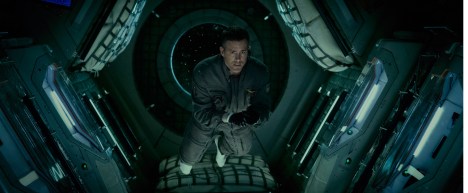
I mean, Inception is a fantastic movie. There is a reason that it is so beloved and so highly regarded. It is perhaps one of the four core Christopher Nolan films, along with Memento, The Prestige and The Dark Knight. It is the rare big budget blockbuster with no longstanding association to established intellectual property, and one of the few to succeed on that sort of level. Indeed, the only other comparable examples on a similar scale are Interstellar and Dunkirk, both directed by Christopher Nolan.
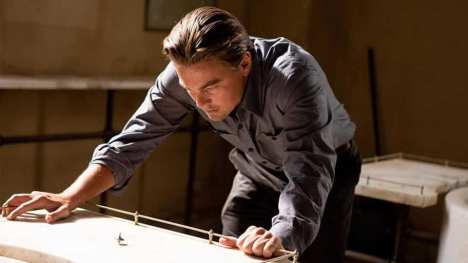
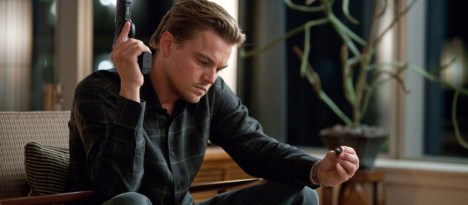
More than that, Inception has permeated the popular consciousness. It is a film that has become part of the broader conversation. It seems that barely a few months can go by without another hot take on that closing scene, with news coverage of commencement speeches or interviews with actors. More than that, the film itself has become something of a critical and popular shorthand. It is a stock comparison for any movie or television show with a vaguely similar concept. Maniac is the most recent example, even inviting the comparison with an elaborate hallway action scene in its penultimate episode.

And yet, in spite of that, Inception is a movie of which I’ve had a somewhat strained relationship. I still adore it, as I adore most of Nolan’s filmography. I think its reputation is well-earned, and I think it excels by every measure that it sets itself. It delivers on just about every front, showcasing Nolan as a director with incredible command of both the form itself and the audiences watching these films. Inception is a big and broad crowdpleaser that is also a surprisingly intimate and personal film, which works as both a story and as a showcase. It is thrilling, it is engaging, it is compelling.

However, there’s something underneath the surface that makes me feel a little uncomfortable. A large part of this is simply down to the fact that it’s a movie that is fundamentally about movies. This is nothing new of itself. All of Nolan’s movies are about stories, whether personal or cultural. In fact, it could be argued that the central trilogy of Nolan’s work is actually The Prestige, The Dark Knight and Inception, a trilogy of films that seem to be about the challenges of constructing and maintaining spectacle, arriving at a point in the director’s career where Nolan was transitioning from smaller films to high-profile epics.

Inception is the most transparent of these films, exploring most directly the mechanics of how storytelling works within a cinematic framework. There are even scenes of characters discussing in relatively clinical terms the mechanics of catharsis and how best to emotional manipulate their target audience. Inception feels very much like Nolan is stopping and deconstructing his stopwatch storytelling for the benefit of the audience, revealing how the trick is done and how the pieces fit together. As with everything Nolan does, he does this with a great deal of skill and nuance. However, it can’t help but feel a little cynical.
Continue reading