• Following Us

  • Categories

  • Check out the Archives


  • Awards & Nominations

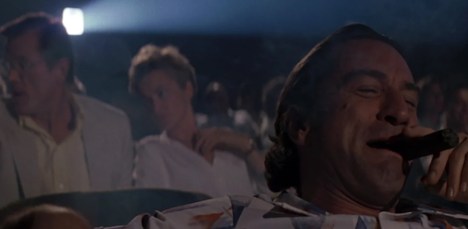
“There’s Nobody Here to See Us”: The Untamed Frontier in Martin Scorsese’s “Casino”…

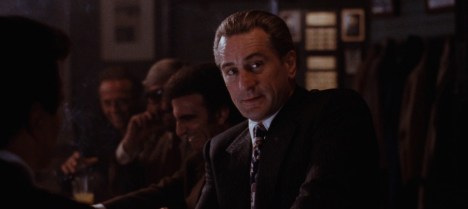
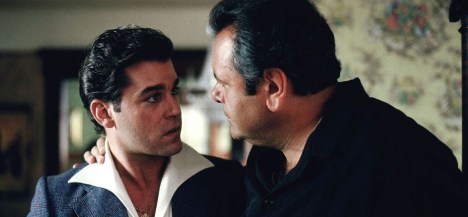
The podcast that I co-host, The 250, continued our belated Summer of Scorsese last week with a look at Goodfellas. This week, we’re looking at Casino. It is a fun and broad discussion that is well worth your time, but it spurred some of my own thoughts about Martin Scorsese’s 1995 gangster classic.

When Casino was released, it experienced something of a minor backlash.

Part of this backlash was motivated by the film’s perceived similarities to Goodfellas – Scorsese had made another soundtrack-heavy period-piece mob movie starring both Robert DeNiro and Joe Pesci, adapted from the work of Nicholas Pileggi. To a certain extent, this was fair. There were legitimate concerns that Scorsese was simply repeating himself, and that any comparisons to Goodfellas did not flatter Casino.
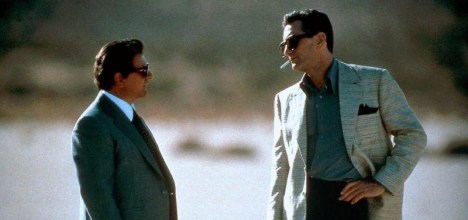
These problems were compounded by content. At time of release, Casino was Scorsese’s longest movie, clocking in at just shy of three hours. That is a lot of mobster movie, particularly if that movie felt in anyway derivative of the appreciably shorter Goodfellas. There were also rumblings of the movie’s brutality and violence, which was seen as being particularly excessive and graphic. These complaints circulated even before Casino hit cinemas. Peter Travers summarised the mood, “Even before Casino opened, the black cloud of letdown hung over Scorsese’s epic tale.”

However, time has been kind to Casino. Although the film undoubtedly still exists in the shadow of Goodfellas, it has come to be recognised as one of the great crime films and to merit some appreciation on its own terms. Casino is a fascinating piece of work. It is bold and ambitious, epic and sweeping. However, what is most striking about Casino is not how it compares to Goodfellas, but how it contrasts. The differences are instructive.
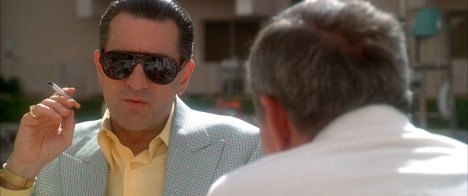
Casino is often categorised as a mob movie, and it is definitely that. It is a story about gangsters and organised crime. However, it is also a western. It is perhaps the closest that Scorsese has come to making a traditional western in his entire cinematography. More than that, while Goodfellas is anchored in the character of Henry Hill, Casino lacks a similar hook. Both Sam and Nicky are much more oblique characters than Henry; Sam is less proactive, and Nicky is much more brutal. They are harder to invest in, tougher to root for.

However, this allows Casino to take a much wider view of this world and the people that inhabit it. Casino is arguably a religious parable, a story about mankind’s destruction of paradise and the inevitable exile that followed. In that sense, Casino feels like more of a bridge between Goodfellas and Scorsese’s more overtly religious-tinged parables like Bringing Out the Dead or Silence than it initially seemed. This is a story about heaven on earth, and the fallen sinful human beings who turn that heaven into a nightmarish hell.

Continue reading

“Your Reminiscence”: Martin Scorsese’s “Cape Fear”, Nostalgia, and Parental Anxiety…

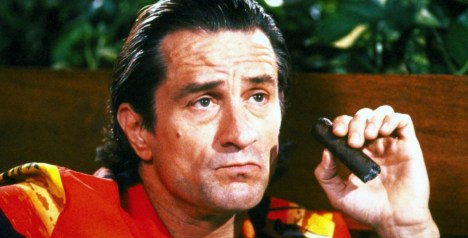
The podcast that I co-host, The 250, continued our belated Summer of Scorsese last week with a look at Goodfellas. This week, we’ll looking at Casino. It is a fun and broad discussion that is well worth your time, but the season skips over large swathes of Scorsese’s filmography. So I thought it might be worth taking a look back at Cape Fear.

Cape Fear is often overlooked in terms of Martin Scorsese’s filmography.

It falls in the gap between the instant classic Goodfellas and the sleeper masterpiece Casino. It shares that gap with The Age of Innocence, which is one of the films in Scorsese’s filmography that has been begging for a reappraisal and seems more likely to receive critical attention than a trashy remake of a pulpy sixties thriller. (The Age of Innocence recently received a re-release as part of the high-end Criterion Collection.) Indeed, Cape Fear seems designed to be seen as disposable in the context of Scorsese’s filmography.

At best, Cape Fear is typically seen as a curiosity – and potentially a worrying one. While Roger Ebert praised the film, he lamented “a certain impersonality in a film by this most personal of directors.” There was a whiff of moral panic to Kenneth Turan’s review, which asked, “Are we, perhaps, too quick to heap praise on films just because they are expertly done, shrugging off the troubling nature of the content? Is an audience’s increasing avid addiction to increasingly twisted thrills any justification for cheering on the people who provide them?”

However, there’s a lot interesting happening in Cape Fear. Most obviously, the film is a vehicle for Scorsese’s love of a certain style of directorial technique. The original Cape Fear had been directed by J. Lee Thompson, who had worked as a dialogue coach under Alfred Hitchcock. The film arrived two years after Alfred Hitchcock’s Psycho, and the influence of Hitchcock is obvious on Thompson’s work; it’s scored by Hitchcock collaborator Bernard Herrmann, editted by Hitchcock veteran George Tomasini and features art direction from Robert Boyle and Alexander Golitzen.

However, what’s particularly interesting about Cape Fear is the way in which it actively translates the original movie from the early sixties to the early nineties, playing not only on the same underlying fears that informed the original, but also understanding that they existed in a different context during the nineties. It’s a movie that cannily and shrewdly transposes those two times, tapping into the same fears, but in a way that demonstrates both how those fears have evolved – and also how they haven’t.

Cape Fear is a lurid b-movie thriller, but in the most interesting and unsettling ways. It is a film fascinated by what lurks beneath the surface.

Continue reading

New Escapist Video! On How the “Star Wars” Sequels Didn’t Need a Plan, “The Rise of Skywalker” Needed a Vision…

So, as I have mentioned before, I am launching a new video series as a companion piece to In the Frame at The Escapist. The video will typically launch with the Monday article, and be released on the magazine’s YouTube channel the following week.

With that in mind, here is last week’s episode, covering the frequent argument that Disney needed a “plan” for the sequel trilogy, when in fact Star Wars: Episode IX – The Rise of Skywalker just needed a vision. You can watch the pilot video here, and read the companion article here.


New Escapist Column! On the Joker’s Attempts to Hijack “The Dark Knight”…

I published a new In the Frame piece at The Escapist this evening. Because the Monday column is now published with a companion video, we thought it might be worth trying something a bit more visual than usual. Because TENET is still in wide release, we thought it might be interesting to try something visual that was related to Christopher Nolan.

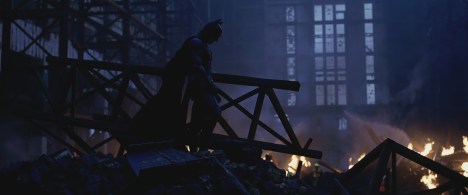
The Dark Knight is an interesting film for a number of reasons. Interestingly, it is the rare Christopher Nolan movie that is almost entirely linear. Nolan’s other films tend to jump around a lot in time, but The Dark Knight progresses quite clearly from beginning to end. This is interesting, because it serves to provide an interesting and compelling contrast to the Joker. Because The Dark Knight is so linear, there’s an interesting tension as the Joker struggles to take control of the narrative and bend the view to his perspective. Sometimes in a very literal manner.

You can read the piece here, or click the picture below.

New Escapist Video! On the Childish Wonder of “Black Panther”…

So, as I have mentioned before, I am launching a new video series as a companion piece to In the Frame at The Escapist. The video will typically launch with the Monday article, and be released on the magazine’s YouTube channel the following week.

With that in mind, here is last week’s episode, covering Ryan Coogler’s use of childish wonder in Black Panther. You can watch the pilot video here, and read the companion article here.

New Escapist Column! On the Planning of Disney’s “Star Wars” Sequel Trilogy…

I published a new In the Frame piece at The Escapist this evening. Because the news cycle around Star Wars: Episode IX – The Rise of Skywalker never dies, it seemed like an appropriate time to look at the famous refrain that Disney needed a “plan” for their Star Wars sequel trilogy.

In truth, this is at best a simple solution to a complex problem. After all, fans have hardly proven themselves willing to offer movies the benefit of the doubt because they were “planned” in advance. The Star Wars prequel trilogy was not greeted with any greater warmth or understanding because George Lucas knew where he was going. Instead, the problem is that The Rise of Skywalker needed a strong vision of what it wanted to be and what it wanted to say.

You can read the piece here, or click the picture below.

Holy Camp, Batman: The Redemptive Queerness of “Batman & Robin”…

The podcast that I co-host, The 250, will be looking at Batman and Robin this weekend. It is a fun discussion, well worth a listen, and I hope you enjoy. However, I had some thoughts that I wanted to get down before specifically about the film.

Batman and Robin is not a good movie, by any stretch of the imagination.

However, it is somewhat unfairly vilified. This is particularly true in comparison to its direct predecessor, Batman Forever. Very few people would attempt to argue that either Batman Forever or Batman and Robin were good films on their own terms, but the consensus seems to have formed around the idea that – to paraphrase Edward Nygma – Batman Forever was bad, Batman and Robin was worse. This calcified into the idea that Batman and Robin is among the very worst comic book movies ever, and Batman Forever is not.

It is interesting to speculate on why this might be. Batman Forever and Batman and Robin are both cynically constructed blockbusters aimed at the youngest and least discerning audiences, eschewing concepts like plot and characterisation in favour of cheap thrills and terrible jokes. Both films offer incredibly condescending exposition, betraying the sense in which they have been constructed for audiences with the shortest possible attention span. However, while Batman and Robin embraces this cynicism, Batman Forever clumsily tries to disguise it.

Much has been made of the fact that director Joel Schumacher wanted to make a better movie than Batman Forever. He singled out Batman: Year One as the Batman movie that he wanted to make. Traces of this better movie occasionally surface in discussions of Batman Forever and are often framed in reference to the film’s admittedly darker and more artistic deleted scenes. There is a clear sense that Batman Forever harboured something resembling ambition before it was brutally bent and broken into its final released form.

However, Batman Forever also offers its audience condescending and trite pop psychology. The result is a veneer of faux profundity that suggests hidden depths that the movie is unwilling and unable to explore. Batman Forever vaguely touches on the question of whether Bruce feels responsible for the death of his parents and the trouble he has reconciling the two halves of himself, but in no real depth. Two-Face is one of the primary antagonists of Batman Forever, and the film can’t even be bothered to make that thematic connection.

It’s interesting to wonder if Batman Forever has a slightly warmer reputation because of this unearned grasp at weightiness, these small gestures towards the idea of “psychological complexity” and “psychological nuance” in the most trite manner imaginable. After all, Batman Forever is a movie that has Bruce Wayne dating a psychologist, and feel inordinately proud of that idea. It’s easier to pass off Batman Forever as more mature or more considered than Batman and Robin, because it gestures broadly at ideas that are a little darker and more complex.

This is strange, because there’s a lot more interesting stuff happening in Batman and Robin. Unlike its direct predecessor, Batman and Robin makes no broad gesture towards profundity or insight. It is a profoundly stupid movie, and it is cognisant of both that stupidity and the audience’s relationship to that stupidity. However, there’s something much more interesting going on underneath the surface of Batman and Robin, in direct response to Batman Forever.

Batman Forever feels like a moral panic picture, a direct response to some imagined public outrage about certain earlier interpretations of the Caped Crusader. As such, it aims to produce the most generic and vanilla iteration of the character, the most boring and the most normative. What makes Batman and Robin so interesting is that it represents a firm rejection of that conservativism, and actively works to inject a lot of the queerness back into the Batman mythos. It doesn’t do this especially elegantly or smoothly, but it does it nonetheless. The results are compelling and engaging.

Continue reading

“It Had Nothing to Do With Me”: The Moral Sloth of Henry Hill in “Goodfellas”…

The podcast that I co-host, The 250, continued our belated Summer of Scorsese last week with a look at Raging Bull. This week, we’re looking at Goodfellas. It is a fun and broad discussion that is well worth your time, but it spurred some of my own thoughts about Martin Scorsese’s 1990 gangster classic.

There is a long-running debate concerning the films of Martin Scorsese, one that arose most recently around The Wolf of Wall Street.

To his critics, Scorsese is seen as a director who glorifies and venerates a certain form of toxic masculinity. There’s a certain logic to this argument. After all, whatever Scorsese’s intentions may be, there is no denying that his films attract a certain unironic fandom that gets swept up in these stories of tough men who do terrible things. This is reflected in everything from the ubiquity of Goodfellas as a “dorm room poster” to celebrations of its depiction of masculinity to the fact that real-life gangsters reportedly love it.

This criticism largely derives from the fact that Scorsese effectively surrenders control of the film’s narrative to his central characters. His movies are often literally narrated by their central characters: Henry and Karen Hill in Goodfellas, Ace Rothstein and Nicky Santoro in Casino and Jordan Belfort in The Wolf of Wall Street. These characters are given ample room to espouse their worldview and their philosophy, to craft the story that they want to tell.

Scorsese undoubtedly pushes back against his characters in interesting ways – often ironically juxtaposing their conceited monologues with brutal imagery to underscore the dissonance between their narrative of events with the reality of the situation. However, Scorsese largely avoids overtly moralising. He avoids the easy route of having external characters comment too obliquely or too loudly on the moral decadence at play. Indeed, the most interesting thing about Karen Hill is her own complicity in Henry’s immorality rather than any condemnation of it.

To be fair, there’s a lot to recommend this approach. American cinema has come a long way since the days of the Hays Code and the Breen Office, and there is a lot to be said for the importance of treating an audience as mature enough to grapple with complicated ideas or giving them room to reach conclusions on their own terms. Psycho is a classic piece of American cinema, but it suffers greatly from a closing scene where a new character shows up to lecture the cast (and implicitly the audience) on the film that they just watched.

Indeed, this is ultimately the beauty of Scorsese’s approach to these characters. Scorsese gives them all the room that they need, and they still manage to incriminate themselves. Their robust attempts to glorify and mythologise themselves inevitably backfire. Like a good detective or lawyer, Scorsese shrewdly just allows characters like Henry Hill to talk and talk and talk, knowing that they have been given enough rope with which they might hang themselves.

Continue reading

New Escapist Column! On Kat as the Emotional Heart of “TENET”…

I published a new piece at The Escapist on Sunday. With the release of TENET, Christopher Nolan has been subject to the familiar criticisms of his work: that he is humourless, cold, emotionless. However, these criticisms miss the fact that Nolan’s films are often underpinned by deep reservoirs of emotion.

Elizabeth Debicki’s Katherine Barton is the beating heart of TENET. She also represents a clear evolution of how Nolan writes female characters. If TENET is a James Bond pastiche, than Kat is introduced as a disposable love interest – the character that the hero seduces to get closer to the villain, and is ultimately killed for her betrayal. She is also positioned in Nolan’s filmography so as to suggest one of Nolan’s “dead wives.”

However, as the film progresses, Kat becomes the emotional protagonist of TENET. It is her story that drives TENET. More than that, she assumes the narrative space that is usually reserved for Nolan’s male protagonists like Cooper in Interstellar and Cobb in Inception: that of a parent fighting desperately to be reunited with their lost children. As such, Kat is a fascinating character in Nolan’s filmography, both a deconstruction of the way that Nolan writes his women characters and a clear step forward.

You can read the piece here, or click the picture below.

New Escapist Video! On Disney’s Chinese Gambit with “Mulan”…

So, as I have mentioned before, I am launching a new video series as a companion piece to In the Frame at The Escapist. The video will typically launch with the Monday article, and be released on the magazine’s YouTube channel the following week.

With that in mind, here is last week’s episode, covering Disney’s ambitions to bring Mulan to China and the story of how Hollywood became so fascinated with that market. You can watch the pilot video here, and read the companion article here.