• Following Us

  • Categories

  • Check out the Archives


  • Awards & Nominations

Non-Review Review: One Night in Miami

The past year has seen an interesting resurgence in old fashioned stage-to-screen adaptations.

It is been a common criticism that screen adaptations of classic stage plays tend to be “stagey” rather than traditionally “cinematic.” After all, many plays are written in such a way as to play to the strengths of theatre as a medium, built around core characters delivering monologues on standing sets in an intimate scale. One of the more common criticisms of movies like Doubt is that they fail to fully translate the material so that it is optimised to work in the language of cinema. As a result, quite a few adaptations will try to disguise their theatrical origins.
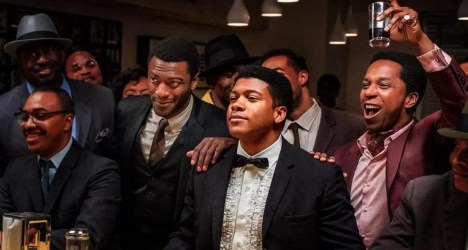
The cast is great, bar none.

However, this past year has seen a number of high-profile stage performances adapted for film, completely unashamed of their roots. Hamilton was not a conventional cinematic adaptation of the hit musical, but instead a recording of a performance pieced together in such a way as to attempt to recreate the experience of watching the show in a theatre. On Netflix, The Boys in the Band and Ma Rainey’s Black Bottom made no effort to disguise their theatrical roots. Even Ryan Murphy’s The Prom embraced the hyperrealism of Broadway.

One Night in Miami is another example of this trend, with playwright Kemp Powers adapting his own play for the screen. Director Regina King never tries to make One Night in Miami seem especially cinematic or epic in scope, instead opting to focus on what made Powers’ play such a success in the first place. One Night in Miami is a piercing and biting snapshot of an ongoing argument in progressive minority circles, powered by sharp dialogue and a set of winning performances. It is perhaps a little too stagey for its own good, but it still works a treat.
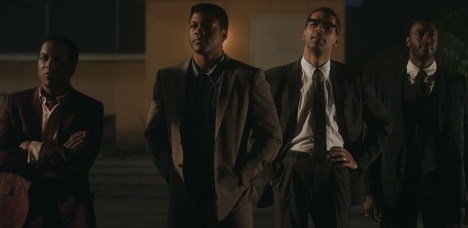
Raising the roof…

Continue reading

Non-Review Review: Wild Mountain Thyme

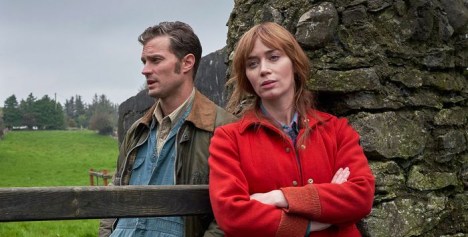
“Welcome,” narrates Christopher Walken in the opening moments of Wild Mountain Thyme. “Welcome to Ireland. My name’s Tony Reilly. And I’m dead.”

Even before it as released, Wild Mountain Thyme had positioned itself as a viable candidate for the “best bad movie of 2020”, a title that merits some distinction from actually and actively bad movies like Artemis Fowl or Songbird. There is something inherently performative about the idea of “best bad movies”, which requires them to be inherently entertaining in decidedly unconventional ways. Of course, Cats is perhaps the great example of this is recent memory, a terrible movie that has been swiftly reclaimed as a cult classic.

Fifty shade of green.

The premiere of the trailer for Wild Mountain Thyme immediately grabbed the internet’s attention, as did news about the plot of the play from which writer and director John Patrick Shanley was drawing. There was something about the combination of factors at play: the terrible accents, the twee portrayal of rural Ireland obviously written from an outsider’s perspective, Shanley’s interview comments about the Irish, and rumours about an insane third act twist. There was some anticipation that this could be an equivalent to something like Steven Knight’s Serenity.

Of course, the truth is that competing at this level, drawing that sort of interest and fascination, requires a certain spark. For all the problems with Serenity, it was not a film that lacked for ambition. Knight followed his impulses unwaiveringly and unquestioningly, and there’s something intoxicating in watching a film steer itself so confidently towards a premise so completely insane, with no real idea of how to execute the twists that it wants to employ. Sadly, Wild Mountain Thyme lacks that energy and vigour. Indeed, the worst thing about it is how dull it is.

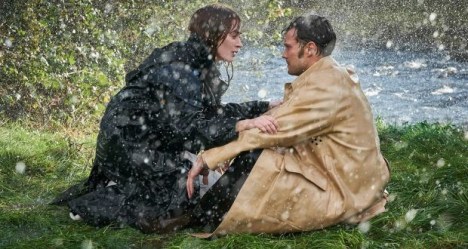
Making a splash.

Continue reading

Non-Review Review: Nomadland

Nomadland is essentially two competing and irreconcilable films.

The first, and more successful film, is a character study of its protagonist. Frances McDormand plays Fern, a widow who has embarked on a life on the road following the death of her husband and the destruction of the community in which she lived. Fern is a wanderer, a restless soul who finds herself trapped between the harsh demands of life on the road and the freedom that such a lifestyle affords her. She is a restless soul wandering across the vast open plains of the United States of the America.

Fern From Home.

The second, and irreconcilable, film is a snapshot of a particular class of people that developed in the aftermath of the Great Recession. As jobs were destroyed and houses were repossessed, large numbers of people found themselves dispossessed and force to live an itinerant existence largely dependent upon the gig economy to keep their heads above the ever-rising tide. There is something almost documentarian about this film, drawing as it does from Jessica Bruder’s non-fiction book and featuring many actual “nomads” in supporting roles.

Nomadland quite rightly refuses to condescend to the people who have found a way to survive on the margins. However, the decision to focus on a character like Fern robs the movie of a lot of its potential sting and insight. Watching Nomadland, there’s something almost empowering about the way that Fern’s existence plays out, a sense in which Fern is living the way that she always wanted to on some level. This feels rather cynical and calculated in the context of the very real and devastating trauma of the financial crisis and the destruction that it wrought.

Continue reading

Non-Review Review: News of the World

News of the World is a gentle and sweet modern western, albeit more than a little disjointed.

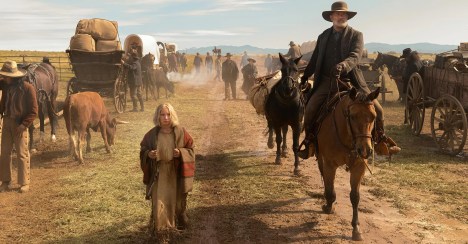
Adapted from Paulette Jiles’ novel of the same name, News of the World is essentially an update on the classic western template exemplified by The Searchers. Captain Jefferson Kyle Kidd is a veteran of the Civil War who makes his living travelling through the Southern United States, reading the news to assembled crowds. On one journey, Kidd comes across a carriage that has been destroyed. Its driver has been killed, and its sole occupant – a young girl – abandoned.

“Jo, hanna! Time to go!”

Kidd determines that the young girl is named Johanna. She was taken from her parents when she was very young and raised by the Kiowa tribe. She was recently recovered, and the army is attempting to send her back to her last surviving relatives. Of course, with her escort killed and the Union forces scattered trying to manage Reconstruction, Kidd finds himself tasked with caring for the young woman and ferrying her across the nation to reunite her with her mother’s extended family.

There’s a surprising and endearing warmth to News of the World, which largely comes from casting Tom Hanks in the lead role. In some ways, this feels like the movie’s most telling update to that classic western formula, replacing John Wayne’s true grit with Tom Hanks’ hanksian decency. News of the World is perhaps a little too episodic and too uneven for its own good, occasionally feeling like a more mainstream counterpart to something like The Sisters Brothers, but it works largely thanks to the central performances of Tom Hanks and his co-star Helena Zengel.

Horsing around.

Continue reading

Non-Review Review: Soul

Soul is ambitious and well-crafted.

If Onward had been positioned as the populist Pixar film this year, then Soul is a counterproint. It is a prestige piece for the company, something similar to Inside Out or Wall-E. After all, Soul is the latest project from Pete Docter. Docter has been part of the Pixar brain trust since its earliest days, even working on the stories for Toy Story and Toy Story 2. However, Docter’s most recent high-profile work has been his scripting and directing duties on Up and Inside Out, two Pixar films to have been nominated for Best Picture and to win Best Animated Feature.

The afterlife and all that jazz.

The premise of Soul is suitably abstract. Joe Gardner is a music teacher who always dreamed of being a successful stage musician. One day, a former student gets in contact with him, offering a gig with jazz legend Dorethea Williams. Joe manages to land the gig, and is convinced that his fortunes are about to change for good. Naturally, dramatic irony strikes, and Joe finds himself sent to the afterlife. Refusing to accept that his life is over, Joe commits to doing whatever it takes to get back to Earth and live his dream. “I’m not dying today,” he vows. “Not when my life just started.”

Soul deals with very big ideas in a remarkably clever way. The film creates a compelling and fascinating imaginary world that recalls both Riley’s internal life from Inside Out and even the afterlife depicted in Coco. Docter also uses the story as a meditation on weighty subject matter like death, dreams and disillusionment. It’s bold and striking, and the film largely works as a showcase for the company’s imagination. However, Soul does stumble slightly in its final act, pulling its punches ever so slightly as the film reaches its denouement.

Continue reading

New Escapist Video! “Ma Rainey’s Black Bottom – Review in 3 Minutes”

I’m thrilled to be launching 3-Minute Reviews on Escapist Movies. Over the coming weeks and months, I will be joining a set of contributors in adding these reviews to the channel. For the moment, I’m honoured to contribute a three-minute feature film review to the channel, discussing Ma Rainey’s Black Bottom, which features the last major live-action performance from Chadwick Boseman.

Non-Review Review: Wonder Woman 1984

Wonder Woman 1984 is ambitious and messy.

In many ways, the original Wonder Woman could be said to be the first true blockbuster of the Trump era, in much the same way that The Dark Knight was the closing blockbuster of the Bush era and Star Trek was the opening blockbuster of the Obama era. It is not a literal or a chronological distinction, but instead that acknowledges the film’s place as a cultural marker. The original Wonder Woman spoke to the question of what it meant to be good in a world that is not, which resonated in the second half of the decade.

No spoilers.

As such, it feels appropriate that Wonder Woman 1984 will be the last blockbuster of the Trump era. Part of this is simply down to factors outside the film’s control – it was originally meant to release earlier in the year, and Warner Brothers had originally planned for Dune to take the Christmas release slot that ultimately went to it. Still, it’s hard to watch Wonder Woman 1984 without getting a sense that director Patty Jenkins has a lot to say about the current moment. Even insulated by its mid-eighties setting, Wonder Woman 1984 is a movie anchored firmly in the present.

There’s a lot of rich thematic material here and grand ideas. Indeed, Wonder Woman 1984 might just be the first superhero blockbuster that serves as a metaphor for the idea of an economy. However, the execution is a little too broad and too clumsy. Wonder Woman 1984 works best when it is anchored in its characters and giving them room to breathe. It struggles a bit when it tries to position itself as a brand extension of a recognisable franchise.

Continue reading

New Escapist Video! “Wolfwalkers – Review in 3 Minutes”

I’m thrilled to be launching 3-Minute Reviews on Escapist Movies. Over the coming weeks and months, I will be joining a set of contributors in adding these reviews to the channel. For the moment, I’m honoured to contribute a three-minute feature film review to the channel, discussing Tomm Moore and Ross Stewart’s Wolfwalkers.

Non-Review Review: Let Him Go

Any plot summary of Let Him Go inevitably does the film a disservice.

After all, the basic narrative of Let Him Go invites comparisons to the “da’ction” genre that was popularised by Taken. (In fact, Honest Thief is in cinemas at the moment, proving that even the pandemic cannot kill the Liam Neeson midlife action film.) At its core, Let Him Go is a story about an older couple who embark on a journey to rescue their lost daughter-in-law and their grandson from an increasingly ominous set of circumstances. It becomes obvious as the film progresses that George and Margaret are mounting a rescue mission in hostile territory.

Peak Da’ction? (Or “Dad-ction”, for our American readers?)

In reality, Thomas Bezucha’s film is a much more meditative and contemplative affair than that description suggests. Let Him Go offers a quiet and introspective character study of an elderly couple venturing through the wilds of the American heartland, navigating their shared grief offer the loss of their son in a freak accident as much as their anxieties around the possible fate of their grandson. Much of Let Him Go consists of George and Margaret trying to navigate a strange world, but also one another.

The results are compelling. Let Him Go features flashes of violence and brutality, but it works best as something of a mood piece. It’s a melancholy reflection on a warped and hostile landscape, playing as an update on the classic western template for the modern era.

Bucking the trend.

Continue reading

Non-Review Review: Songbird

Perhaps the most surprising thing about Songbird is how tame and lifeless it is.

The trailer arrived in a multimedia firestorm, positioning the movie as a piece of “pandemic-xploitation”, set against the backdrop of a hypothetical future where the current global pandemic had raged for four years. In this climate, public health officials have begun abusing their power, the black market thrives, the government has set up ominous and secretive “Q-zones” to house those affected. “Once you go to the Q-zone, you don’t ever really leave,” an influencer remarks early in the film. The United States operates under “marshal law”, as virus has “mutated” to attack the brain.

Sick privilege, bro.

All of this sounds very crass and very charged, something similar to what happened with the release of The Hunt earlier in the year. Songbird and The Hunt are movies that position themselves as genre pieces with biting resonance to a highly charged and combustible situation. However, like The HuntSongbird is ultimately something of a damp squib. It makes grand gestures towards the current moment, importing all manner of iconography and language associated with the pandemic to give it a patina of relevance, but ultimately ties it to a fairly conventional story.

This is perhaps the biggest difference between something like The Hunt and something like Songbird. The Hunt was ultimately a standard genre movie that disguised itself as something more relevant, but it was reasonably well constructed. In contrast, Songbird is an absurdly slipshod production. The film often feels like it was cobbled together over a weekend to ensure that it would be released at a point where it was still relevant and timely. The result is a shoddily made and vapid piece of work, that somehow feels even more vulgar than a full-throated exploitation film might.

Cooking up a Stormare…

Continue reading