• Following Us

  • Categories

  • Check out the Archives


  • Awards & Nominations

The X-Files – Firewalker (Review)

This August (and a little of September), we’re taking a trip back in time to review the second season of The X-Files. In November, we’ll be looking at the third season. And maybe more.

Firewalker is a perfectly solid episode of The X-Files.

The problem is that Firewalker needs to be so much more than “solid.” It’s the first show of the season that has Mulder and Scully working together on an X-file. Nine episodes into the season, the show has finally put the two characters together and dropped them into a regular episodic adventure plot. Scully is back. There is no Cigarette-Smoking Man, no Skinner, no Krycek. The show had waited more than two months to get back to the familiar formula, so there was a palpable sense of anticipation.

Burn, baby, burn...

Burn, baby, burn…

To be fair to Firewalker, there’s a lot to like here. It’s a nice paranoia thriller, one that could easily serve as a text book example of a stand-alone X-Files episode. As you might expect from a script by Howard Gordon, Firewalker is also a nice character study for Mulder. It has a phenomenal guest cast – featuring actors like Bradley Whitford, Leland Orser and Shawnee Smith. On paper, Firewalker is a great episode of The X-Files. Divorced from context, it holds up rather well.

Unfortunately, Firewalker can’t be divorced from context. The episode has quite a few glaring problems. It seems a little disappointing that the first episode after Gillian Anderson’s return to full-time work on the show is a character study of Mulder. The plot is just a little too archetypal, feeling like a retread of Ice from the first season. The episode tries to get back to business as usual without bother to unpack everything that has happened since The Erlenmeyer Flask.
Into darkness...

Into darkness…

Continue reading

X-Over: The X-Files & Steven Moffat’s Doctor Who

It goes without saying that The X-Files was a massively influential television show. As early as its second season, the show had launched all manner of imitations and copycats, both inside and outside the Fox Network. It seems quite likely that Fox invested two-and-a-half million dollars in the failed Doctor Who relaunch of 1996 in the hopes of spinning off another cult/mainstream science-fiction hit like The X-Files. It was launched as a two-hour television movie, failing to earn the rating necessary to spin it off into a weekly series.

However, although the 1996 telemovie provides an obvious point of intersection between The X-Files and Doctor Who, the influence of The X-Files can perhaps be most keenly felt in Steven Moffat’s work on the relaunched television series. Moffat is credited as the producer who helped the show to “break” America during his second year as showrunner, and he did so in a number of ways. Perhaps the most interesting is that he leaned rather heavily on The X-Files as a point of cultural intersection.

Shades of greys...

Continue reading

Robin Williams

Robin Williams passed away.

It took a moment to let that sink in, to accept that we would be talking about Robin Williams in the past tense. Although the news broke in the evening time in the United States, it was announced in the middle of the night in Irish and European time. Over here, most of us fell asleep in a world where Robin Williams was a perpetual and much-loved screen presence, only to wake up in a world where Robin Williams was gone. It is very strange and very difficult piece of information to process, and something very hard to wake up to.

insomnia2

Continue reading

The X-Files – One Breath (Review)

This August (and a little of September), we’re taking a trip back in time to review the second season of The X-Files. In November, we’ll be looking at the third season. And maybe more.

If there were ever any doubt that The X-Files is fundamentally about faith in the nineties, One Breath should put the matter to rest.

An astounding, moving, staggering and thoughtful piece of work, One Breath not only wraps up the arc that opened the second season, it also provides closure to the themes that writers Glen Morgan and James Wong had been seeding throughout this first stretch of the season. One Breath bookends the meditation on faith that began in Little Green Men and serves as a counterpoint to the paranoia of Blood and the nihilism of 3.

One Breath is a tremendous piece of work, the best episode of the season and one that deserves to be mentioned among the very best the show ever produced.

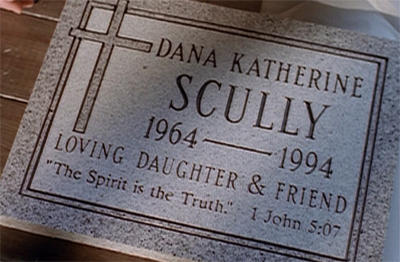
Grave stakes...

Grave stakes…

Continue reading

Non-Review Review: The Expendables 3

There is something almost laudable about The Expendables as a movie franchise. Like science-fiction conventions do for other genre performers, The Expendables provides retirement planning and income for a bunch of performers who might otherwise have passed their sell-by date. It’s vaguely reassuring to know that sometimes life (and ass-kicking) begins at fifty, and The Expendables is endearingly sincere and upfront about this function – giving action stars who might seem over the hill one last go around.

That goodwill is stretched to breaking point with The Expendables 3. Nobody expects a particularly insightful or well-constructed script for a film like this, but the screenplay is a mess. Structurally speaking, The Expendables 3 feels like it is being held together by rubber bands – rubber bands that are being stretched to breaking point with the film’s two-hour runtime. There is a tighter and exciting movie to be found in The Expendables 3, but the movie awkwardly lumbers past earnest and into indulgent.

Going to town on this one..

Going to town on this one..

Continue reading

The X-Files – 3 (Review)

This August (and a little of September), we’re taking a trip back in time to review the second season of The X-Files. In November, we’ll be looking at the third season. And maybe more.

3 is the first absolute misfire from the second season of The X-Files.

It’s easy enough to account for the problems with 3. The production on the episode was a mess. It was the first episode produced without one of the show’s two lead characters. It existed to plug a hole in the schedule caused by factors outside the control of the production staff. Writers Glen Morgan and James Wong were working on both this and One Breath simultaneously. And it’s also a traditional monster story, which is something that The X-Files had struggled with and would struggle with again.

Vamping it up...

Vamping it up…

To be fair, 3 does what it says on the tin. It is the episode between Ascension and One Breath, a forty-five minute breather that fills a broadcast slot and allows the show to continue on while Gillian Anderson takes maternity leave. The fact that there was only one slot to fill without Anderson is a testament to both the production team’s organisational skill and Anderson’s work ethic. Really, all that 3 needs to do is exist.

Even with that in mind, 3 still feels like a disappointment. Given how Anderson’s pregnancy managed to spur the production team to create a compelling long-form story for the show, culminating in stories like Duane Barry and One Breath, it’s disappointing that her absence doesn’t inspire the same creativity. Seeing The X-Files without Scully should be the opportunity for a fascinating adventure or insightful character study; it could play with audience expectations or the show’s rigid format. Instead, the result is just a mess.

"All by myself..."

“All by myself…”

Continue reading

Non-Review Review: Spider’s Trap

Spider’s Trap is a rather heavy-handed film. There are points where this works to the movie’s advantage – the stark black-and-white cinematography lends itself to exaggeration and effect. There are also points where the movie feels a little overly-earnest and awkward as it fashions its own noir tale about second chances and long-planned revenge. Beautifully shot by director Alan Walsh, Spider’s Trap is often endearing and charming, if not quite consistently brilliant. There are a few notable missteps, but there is also a lot to like.

Things aren't so black-and-white...

Things aren’t so black-and-white…

Continue reading

The X-Files – Ascension (Review)

This August (and a little of September), we’re taking a trip back in time to review the second season of The X-Files. In November, we’ll be looking at the third season. And maybe more.

Ascension is effectively a giant chase sequence and an epilogue to the first six episodes of the second season. While lacking the tight focus of Duane Barry, Ascension moves fast enough and provides enough plot momentum that it feels like a satisfactory conclusion. For an episode that was essentially written to deal with a cast member’s unexpected pregnancy, it’s a pretty fantastic piece of television.

Keep watching the skiis... er, skies!

Keep watching the skiis… er, skies!

Continue reading

The X-Files – Duane Barry (Review)

This August (and a little of September), we’re taking a trip back in time to review the second season of The X-Files. In November, we’ll be looking at the third season. And maybe more.

Duane Barry is Chris Carter’s directorial début on The X-Files, and it’s a staggering confident piece of work. From the opening scene where Carter’s camera stalks through Duane Barry’s run-down house through to the memorable abduction sequences and decision to play the episode’s big action sequence against a black screen, Duane Barry looks very impressive. It’s an episode that stays with the viewer, one that is every bit as visually distinctive as Blood earlier in the year.

It’s also a demonstration of how versatile The X-Files actually is. The show has already proven its horror bona fides, carving out a niche for itself on the Friday night line-up on Fox with a variety of spine-tingling adventures. While Duane Barry retains the show’s alien mythology, it arguably works best as a straight-up hostage suspense thriller. Mulder is drafted in to assist with a hostage crisis, and then finds himself getting more and more caught up in the story told by the raving gun man.

Duane's world...

Duane’s world…

This is pretty far outside the “procedural” format that has been loosely established by the show, and Duane Barry plays out rather differently than any of the earlier cases-of-the-week. Of course, The X-Files would go on to get more and more experimental in later seasons, but Duane Barry sees the show consciously stepping outside the box. This is a demonstration of how strong the show’s foundations are, proof that it can carry itself as a legitimate drama. Duane Barry is an episode that argues The X-Files is not cult television, but just good television.

It’s no wonder that Duane Barry picked up the show’s first two Primetime Emmy nominations and a significant number of Creative Emmy nominations on top. It’s also a damn fine piece of television.

The Truth is up there...

The Truth is up there…

Continue reading

Non-Review Review: The Rover

The Rover isn’t quite a post-apocalyptic road movie. A title card places the story “ten years after the collapse”, but it’s never clear what exactly “the collapse” is. Buildings still stand. Trains still run. Telegraph polls are still connected. Cars still drive. Military units still offer some small semblance of law and order. This isn’t a world that has collapsed, it is the decaying structure of a world still struggling to stand.

The Rover is a starkly beautiful and haunting film, one that says a lot with only a few scattered words. It’s unsettling not in its portrayal of a world that is dead, but instead in its attempt to capture a world struggling to keep breathing.

As the world burns...

As the world burns…

Continue reading