• Following Us

  • Categories

  • Check out the Archives


  • Awards & Nominations

Star Trek – Spock’s World by Diane Duane (Review)

The first Star Trek pilot, The Cage, was produced in 1964. To celebrate its fiftieth anniversary, this December we are reviewing the second season of the original Star Trek show. You can check out our first season reviews here. Check back daily for the latest review.

One of the more interesting aspect of Star Trek tie-in media during the eighties was the sense of freedom enjoyed by those working on the line.

One of the more infamous examples concerned DC’s attempts to publish a monthly comic during the release cycle of Star Trek II: The Wrath of Khan, Star Trek III: The Search for Spock and Star Trek IV: The Voyage Home. The three films tended to build off one another, forming a tight continuity, but that did not stop the comic book company from trying to build off the ending of each of the films, leading to a variety of weird continuity hijinks. Spock left to work on a Vulcan ship; Kirk took command of the Excelsior; a Klingon joined the crew.

Writers working on the tie-in novels enjoyed a similar amount of freedom. By the time that Spock’s World was published in 1989, Diane Duane had been able to firmly establish her own supporting cast of characters in her various tie-in novels. Spock’s World includes appearances from Duane regulars like K’s’t’lk and Harb Tanzer, introduced in The Wounded Sky; even Lia Burke from My Enemy, My Ally puts in an appearance. It really feels like Duane has carved out her own space within the larger Star Trek universe.

However, perhaps that freedom finds its strongest expression in the fact that Duane was able to map an entire cultural and social history unto the planet Vulcan. Spock’s World reads almost like a biography of a fictional planet – charting the history of Vulcan from the planet’s earliest days through to the twenty-third century. It is a delightfully bold and intriguing Star Trek book, one utterly unlike any other tie-in ever published.

Continue reading

The X-Files – Avatar (Review)

This November (and a little of December), we’re taking a trip back in time to review the third season of The X-Files and the first (and only) season of Space: Above and Beyond.

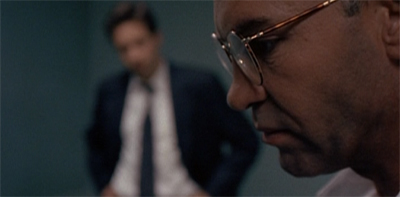
Avatar is really the first time that The X-Files relies on a member of its supporting cast to carry a story all by themselves.

Later seasons will get a bit more adventurous when it comes to sharing screen time. Musings of a Cigarette-Smoking Man and En Ami both offer viewers a glimpse at the man behind the cigarette. The Lone Gunmen prepare for their own spin-off with The Unusual Suspects and Three of a Kind. Even Skinner gets a couple more character-centric episodes with Zero Sum and S.R. 819. In a way, Hungry is a day-in-the-life episode of a monster of the week.

Pushing Mulder to the background...

Pushing Mulder to the background…

Avatar is an episode that demonstrates that these kinds of stories are possible – that The X-Files can lift the focus off of Mulder and Scully for a week and flesh out those characters who exist at the periphery of the series. Just under two years after he was first introduced, Mitch Pileggi has proven himself invaluable to the series. Asking him to carry an episode like this demonstrates the show’s faith in the character.

Avatar is a bit rough around the edges, struggling to decide whether it is part of the show’s conspiracy mythology or a stand-alone monster tale in a season that has worked hard to delineate the two types of show. Still, it’s an ambitious late-season installment that makes a lasting impression on what The X-Files can be.

Don't look now...

Don’t look now…

Continue reading

Watch! Terminator Genisys Trailer!

Well, I guess Dawn of the Planet of the Apes demonstrated that Jason Clarke is the guy you go to for your post-apocalyptic franchise films.

To be fair, Terminator films not directed by James Cameron feel like a risky proposition – it feels like so much of the first two films was tied up in Cameron, that any subsequent attempt is imitation rather than innovation. It is, perhaps, quite telling that the most surreal sequences in the new trailer for Terminator: Genisys featured a version of the T-1000 not played by Robert Patrick.

And, nevertheless, there is something interesting here. A story about how time travel has muddled and muddied a narrative universe so much that the story seems to reboot and remix itself feels like a self-aware take on the contemporary fascination with reworking and retooling classic franchises. Terminator: Genisys looks like a self-aware cocktail of the most iconic bits and pieces of the first two Terminator films.

That self-awareness could be the key; after all, trying to mimic James Cameron feels like a fool’s errand. However, a more playful approach just might work. Terminator: Genisys probably has an uphill battle ahead of it, but this trailer’s not a bad start.

Star Trek – Who Mourns For Adonais? (Review)

The first Star Trek pilot, The Cage, was produced in 1964. To celebrate its fiftieth anniversary, this December we are reviewing the second season of the original Star Trek show. You can check out our first season reviews here. Check back daily for the latest review.

In many respects, Who Mourns for Adonais? is a formative episode for Star Trek as a franchise. It’s a show that really informs a lot of the franchise that would follow, even beyond the confines of the original television show. It’s an episode that represents the first clear articulation of a strand of thought that has been bubbling away through the first season of Star Trek and into the second, exploring the religious side of the Star Trek universe and mankind’s place in the cosmos.

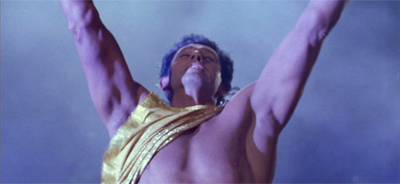
The episode is iconic and memorable. It is packed with images that are familiar to even the most casual of fans. “Kirk confronts a Greek god in deep space!” is a catchy premise. “A giant hand grabs the Enterprise and threatens to crush the ship!” is the type of delightfully insane visual that ranks with “Captain Kirk as a Nazi!” or “space Lincoln!” when it comes to Star Trek visuals that stick with people outside the context of the show itself. Coupled with the distillation of those themes, this is a “big” episode.

"Jack, I'm flying!"

“Jack, I’m flying!”

Unfortunately, Who Mourns for Adonais? is also a deeply troubling episode. It has problems heaped upon problems. Some of those problems are inherited from the general aesthetic of the show, and are not specific to this episode. However, some of those problems are explicitly articulated here. Who Mourns for Adonais? is an episode that embodies quite a few of the very serious problems that run through the original Star Trek and haunt the franchise for quite some time.

The fact that these problems come baked into an iconic and memorable episode is disappointing.

"Oh, your gods..."

“Oh, your gods…”

Continue reading

Space: Above and Beyond – Sugar Dirt (Review)

This November (and a little of December), we’re taking a trip back in time to review the third season of The X-Files and the first (and only) season of Space: Above and Beyond.

The end is nigh.

There is a generally funereal atmosphere to the last few episodes of Space: Above and Beyond, creating the sense that the show was well aware of – and had perhaps come to terms with – its own inevitable cancellation. Stardust had assured viewers (and the show itself) that the dead can be heroes too. Sugar Dirt seems a lot angrier about the series’ situation. It is the story of our heroes surrounded and outgunned on all sides; abandoned to their fate by those in authority.

Sadly, McQueen couldn't quite save the show...

Sadly, McQueen couldn’t quite save the show…

Continue reading

Non-Review Review: Birdman (or, The Unexpected Virtue of Ignorance)

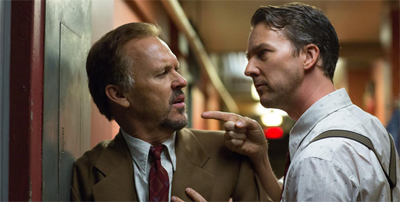
Birdman is a staggeringly cynical piece of work.

Alejandro González Iñárritu’s showbusiness satire has its knives out from the opening sequence, and never puts them away. It is a movie that is relentlessly snarky and bitter about just about any facet of the artistic process. The movie seldom pulls its punches, lawing into its targets with a vengeance. There are points where it almost seems too much, where it feels like Iñárritu might be better served to pull back or ease off for a moment as the film becomes just a little bit too much.

Showtime!

Showtime!

Then again, Iñárritu turns the film’s relentlessness into a visual motif, structuring Birdman as one long unbroken take. This structure is only slightly disingenuous. While there are any number of “cheats” that allow Birdman to stitch together multiple takes, the end result is still a hugely ambitious and impressive piece of work. Even viewers as cynical as the film itself may find themselves marvelling at some of the incredibly fluid transitions and extended sequences. Birdman‘s anger might occasionally come close to suffocating, but its energy is infectious.

That is to say nothing of the performance at the centre of the film, with Michael Keaton playing a washed-up has-been celebrity desperately (and pathetically) fighting for artistic credibility after a career spent in blockbuster cinema. One of the more interesting aspects of Birdman is that it seems just as dismissive of the attempts at artistic rehabilitation as it does of the original “sell out” work. Birdman is a wry, clever and vicious piece of work. It is also a phenomenal accomplishment.

You wouldn't like him when he's angry...

You wouldn’t like him when he’s angry…

Continue reading

Space: Above and Beyond – Stardust (Review)

This November (and a little of December), we’re taking a trip back in time to review the third season of The X-Files and the first (and only) season of Space: Above and Beyond.

Stardust was the second episode of Space: Above and Beyond to air on a Friday, as had originally been planned.

Of course, it was too late to help the show. By this point in its run, Space: Above and Beyond was a dead show walking. Stardust seems to wryly acknowledge as much. It opens with an inmate on death row, watching the clock tick down to midnight. The show is essentially about sacrifices made by the already-dead, and it’s hard not to get a sense that it captured the mood of the staff on the show as well. A wry wink at the audience, like all the introspective reflection in the earlier episodes.

Cold wars...

Cold wars…

It is also interesting how Stardust positions itself as a possible companion piece to The X-Files. The X-Files casts a pretty significant shadow over Space: Above and Beyond. It was very much an attempt by Fox to capitalise on the success of The X-Files as a genre show. It drafted in two of the most reliable executive producers working on The X-Files. The first two episodes were directed by a veteran of The X-Files. David Duchovny had popped by R & R as something of a goodwill ambassador.

Space: Above and Beyond had played with these comparisons before. The Farthest Man From Home had teased a conspiracy narrative about alien and government cover-ups. Level of Necessity featured a riff on Mulder, with a tall dark-haired paranormal investigator wandering into the show. Stardust makes the connection more explicit, riffing on some of the themes that The X-Files had pushed to the fore at the end of its second season and into the third, exploring links between Native Americans and extraterrestrials.

The honoured dead...

The honoured dead…

Continue reading

Star Trek – Friday’s Child (Review)

The first Star Trek pilot, The Cage, was produced in 1964. To celebrate its fiftieth anniversary, this December we are reviewing the second season of the original Star Trek show. You can check out our first season reviews here. Check back daily for the latest review.

Errand of Mercy was a highlight of the first season. A wry script from producer Gene L. Coon introduced the Klingons as an antagonist for the Federation. Made up to look like space!Mongols, the Klingon Empire was presented as an imperial force hell-bent on expanding its sphere of influence. In case the parallels were a little too subtle, they were locked in a Cold War with the Federation. As such, they were the perfect stand-ins for Communist aggressors trying to undermine American foreign policy.

Of course, Errand of Mercy was brutally cynical in its depiction of the Federation. The episode suggested quite heavily that the Federation was just as imperialist and adversarial as the Klingons. They might couch their foreign policy in friendly language and polite overtures, but their end goals are quite similar. Smaller political entities are nothing but pieces shuffled around a board in a deadly game of chess. Errand of Mercy was not flattering in its portrayal of Kirk, presenting him as little more than a warmonger.

"Damn dirty Klingon!"

“Damn dirty Klingon!”

Errand of Mercy was a massive success. It remains a fan favourite to this day. In some respects, that is due to the introduction of the Klingons, but it is also an exceptional hour of scripted science fiction. So it makes sense that the show would return to the Klingons when it was renewed for a second season. Friday’s Child was the third episode produced during the second season, and returns to quite a few themes hit on by Errand of Mercy. Those themes would recur.

Friday’s Child demonstrates the obvious risks of an episode like Errand of Mercy. It’s an episode that essentially takes the “Klingons as space!Communists” seriously.

We come in peace...

We come in peace…

Continue reading

The X-Files (Topps) #14 – Falling (Review)

This November (and a little of December), we’re taking a trip back in time to review the third season of The X-Files and the first (and only) season of Space: Above and Beyond.

Falling is a delightfully nasty piece of work.

It is, to be fair, something that has been gestating for quite a while in Petrucha and Adlard’s extended run on The X-Files. If their first year on the title explored the loose boundary between reality and unreality, their final few issues shifted to more grounded and cynical themes. Most explicitly, the idea that humanity makes the best monsters. It is a gleefully subversive twist on one of the core elements of The X-Files: the idea that monsters are real.

Falling to pieces...

Falling to pieces…

Petrucha and Adlard had broached this before. This was the key point in Big Foot, Warm Heart, where the eponymous creature shows more humanity than the human antagonist of the story. One Player Only featured a delightful red herring when it suggested a murderous artificial intelligence had driven a developer to a killing spree at a software company, only to reveal that the developer’s actions were entirely his own. It will be taken to the logical extreme in Home of the Brave, essentially the duo’s grand finalé.

Blending together the Americana and nostalgia of Stand By Me with the brutal cynicism of Lord of the Flies, Falling is a compelling and unsettling read.

If a tree falls in the woods...

If a tree falls in the woods…

Continue reading

The X-Files – Jose Chung’s “From Outer Space” (Review)

This November (and a little of December), we’re taking a trip back in time to review the third season of The X-Files and the first (and only) season of Space: Above and Beyond.

Then there are those who care not about extraterrestrials, searching for meaning in other human beings. Rare or lucky are those who find it. For although we may not be alone in the universe, in our own separate ways, on this planet, we are all alone.

– Darin Morgan takes his bow

It came from beyond the stars...

It came from beyond the stars…

Continue reading