• Following Us

  • Categories

  • Check out the Archives


  • Awards & Nominations

Millennium – Wide Open (Review)

This February and March, we’re taking a trip back in time to review the fourth season of The X-Files and the first season of Millennium.

The middle stretch of the first season of Millennium is preoccupied with suburban horror.

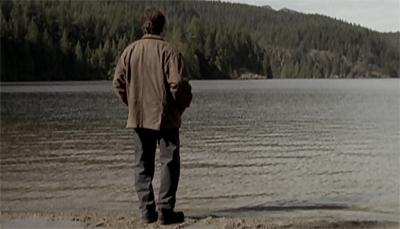
In The Well-Worn Lock, Wide Open and Weeds, Millennium presents the audience with threats to supposedly “safe” suburban families. In each case, the threat is shown not to come from outside these homes, but is instead nestled snugly inside. In The Well-Worn Lock, Joe Bangs is a respected family patriarch and a monster. In Weeds, Edward Petey is both an active member of his gated community and a predator. Wide Open is perhaps a little more sensationalist, featuring a serial killer who sneaks into houses that are on display, hiding inside until after dark, and then brutally murdering any adults in the home.

Home (in)security...

Home (in)security…

There is an intriguing thematic continuity here between what might loosely be termed “the suburban trilogy.” Indeed, Weeds was shuffled around in the broadcast order so it would not air directly after Wide Open, perhaps because of this similarity. This thematic continuity is quite striking, like the presence of Scully proxies and surrogates in the stretch of the second season of The X-Files running from One Breath to Irresistible or the subtle fixation on “cancer” from the end of the third season into the fourth season of The X-Files.

Like The Well-Worn Lock before it and Weeds after it, Wide Open is not particularly elegant in its meditations about suburbia under siege. The story is a bit clunky, prone to the same trashy exploitative excess that can be found in some of the weaker moments of the first season. Nevertheless, Wide Open largely works – it manages to tap into a fairly universal fear in a decidedly unsettling manner, inviting the audience to wonder whether there may actually be monster lurking in their own closets or under their own beds.

Standing guard against the world...

Standing guard against the world…

Continue reading

Non-Review Review: Focus

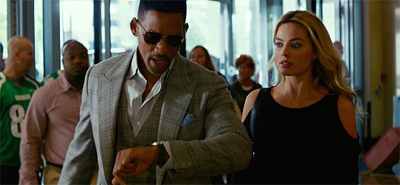
Focus is a fun old-fashioned heist movie that suffers from the lack of a central plot.

In some respects, Focus plays as a con itself. While movies about con artists are inevitably built around charismatic rogues and antiheroes, the stories practically structure themselves. Cons are visually interesting and dynamic, they are fun and exciting. Watching characters trying to out-wit one another in rapidly-escalating situations creates instant dramatic tension, and it is easy to see why the genre has remained popular. The beats are familiar – the “big one”, the “revenge con”, the “try to get alive game.”

Off the clock...

Off the clock…

Focus keeps teasing the audience with possible plot hooks that might sustain a two-hour film, diverting the audience’s focus and keeping them off-balance. “So what about the big con?” Margot Robbie’s Jess teases Will Smith’s Nicky. “You mean the one where we all make so much money we all retire?” Nicky teases back, dismissively. What makes Focus so interesting – and what also arguably prevents it from working as well as it might – is that it consciously plays against these recognisable elements. There is no big con, there is no story.

This is the long con that Focus plays – and plays very well. For all that it teases the plot-driven trappings of a caper movie, Focus is a good old-fashioned star-driven drama, a movie built around Will Smith’s movie icon charisma. It is one hell of a gamble, and one that doesn’t play off as well as it might, Focus‘ unwavering commitment provides a charm and energy that carries movie through. Offering advice to Jess, Nicky insists, “You never drop the con. Never break. Die with the lie.” It seems that Focus lives by its own words.

A star vehicle...

A star vehicle…

Continue reading

Millennium – The Well-Worn Lock (Review)

This February and March, we’re taking a trip back in time to review the fourth season of The X-Files and the first season of Millennium.

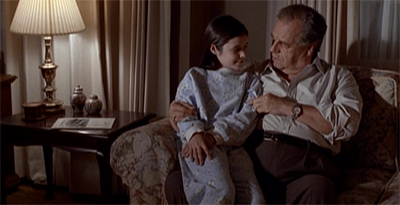
The Well-Worn Lock is trying to say something important.

As easy as it is to mock Chris Carter for being a little heavy-handed in his writing, he tends to wear his heart on his sleeve. There is an honesty and an earnestness to his writing that is quite endearing – a sense that he has some things that he wants to say, and that he will say them. The Well-Worn Lock is a tough and grueling episode, with some pretty harrowing things to say. It confronts the types of issues that are often overlooked or ignored, because they are so uncomfortable to examine head-on. There is a lot to admire here.

Happy families...

Happy families…

However, The Well-Worn Lock is also clumsy and ham-fisted. It is so committed to saying what it wants to say that it occasionally gets caught up in itself. It has been argued that Carter constructed Millennium as a vehicle to examine the nature of evil in the modern world, and there are points where the series feels more like a pulpet that a television show. The Well-Worn Lock is an episode about an insidious and oft-ignored evil, but there are points where it has the depth and complexity of a life-action cartoon.

The problem is not that the episode’s antagonist is a monster – after all, it is hard to describe anybody who commits this sort of abuse as anything but a “monster” – but that he seems a grotesquely exaggerated and one-dimensional caricature. Tackling a subject that requires considerable tact and grace, The Well-Worn Lock often has the emotional nuance of a sledgehammer.

The world according to Catherine Black...

The world according to Catherine Black…

Continue reading

The X-Files – Paper Hearts (Review)

This February and March, we’re taking a trip back in time to review the fourth season of The X-Files and the first season of Millennium.

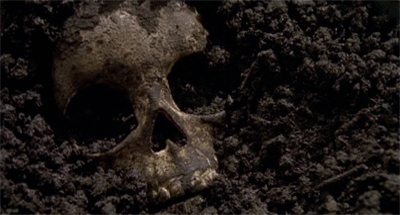
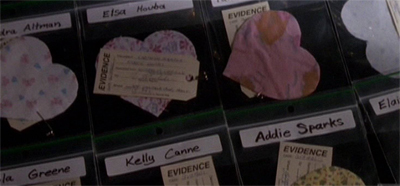
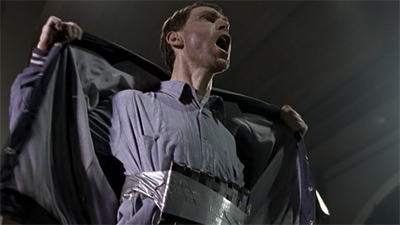
Paper Hearts is one of the best scripts that Vince Gilligan would write for The X-Files, and one of the best episodes of the fourth season. This is enough to put it in the frontrunners of any possible “best episode ever” ranking.

The episode is spectacular. It works on just about every conceivable level. It has a great script from a great young staff writer. It has a great guest star in Tom Noonan. It features a great performance from David Duchovny. Rob Bowman does a spectacular job directing. Mark Snow is one of the most consistent composers working in nineties television, and his score for Paper Hearts manages to be simple, effective and memorable. It is thoughtful, atmospheric, emotional and compelling. It is the perfect storm.

The truth is buried...

The truth is buried…

However, the real cherry on Paper Hearts is just how easy it would be to mess up an episode like this. On paper, Paper Hearts seems like a disaster waiting to happen. It is an episode that teases the audience with a potentially massive reversal of one of the show’s core truths. It posits an alternative theory for the abduction of Samantha Mulder that would shake the show to its very core. If Paper Hearts followed through on that basic premise, everything would change. Much like Never Again, this is an episode with the potential to poison the show.

Which makes it inevitable that Paper Hearts will back away from its potentially game-changing premise, which brings its own challenges. It is one thing to up-end the apple cart; it is another to pretend to up-end the apple cart only to restore the status quo at the end of the hour. On paper, and from any synopsis, Paper Hearts seems like the biggest cheat imaginable. “Everything is different!” it seems to yell. “And then it’s not!” The real beauty of Paper Hearts is the way that the episode works almost perfectly even with these huge hurdles to clear.

The heart of the matter...

The heart of the matter…

Continue reading

Non-Review Review: The Second Best Exotic Marigold Hotel

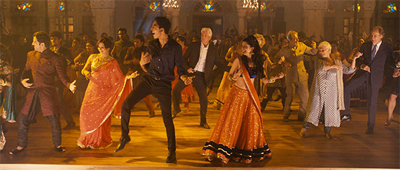
The Second Best Exotic Marigold Hotel takes a formula that worked well enough the first time, and tries to figure just how much it can add in on top without throwing everything out of a balance. When producing a sequel, the tendency is to double down on what worked before – to commit to the bits to which the audience responded, sometimes missing the fact that moderation might have been some of the appeal. The Second Best Exotic Marigold Hotel commits to its cast, putting the various star through a wide variety of sitcom premises that look like they might have been lifted from a UK Gold marathon.

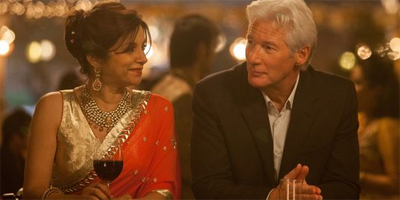
In some ways, The Second Best Exotic Marigold Hotel feels a little bit like the ambitious construction and renovation project planned by Sonny Kapoor: sprawling, excessive, unwieldy, overly elaborate. The main cast are not clustered as they were the first time around, meaning that The Second Best Exotic Marigold Hotel feels disjointed at best and haphazard at worst. Richard Gere arrives to lend some extra prestige (and some international appeal) to the film, but seems almost like a distraction from the thespians around him.

Getting into Gere...

Getting into Gere…

There are points where it feels like The Second Best Exotic Marigold Hotel might collapse under its own weight. The character plots don’t really intersect or overlap, so the ensemble frequently finding themselves fighting for space as the movie tries to figure out who warrants the most attention. (The relative name recognition seems to offer a convenient deciding factor, which is a shame in some respects.) While director John Madden does not keep as tight a rein on the film as he might, he prevents the film from completely dissolving into a series of interconnected sitcom episodes.

Still, despite these problems, The Second Best Exotic Marigold Hotel delivers what it promises: a familiar framework for veteran actors to demonstrate that they can still carry a light and entertaining film.

No need to make a song and dance about it...

No need to make a song and dance about it…

Continue reading

Millennium – Blood Relatives (Review)

This February and March, we’re taking a trip back in time to review the fourth season of The X-Files and the first season of Millennium.

Blood Relatives is the best episode of Millennium to air within the first half of the first season. It is an episode that seems to recognise the potential of a show like Millennium to be more than just a formulaic procedural, acknowledging that the show needs to find its own unique narratives in the same way that The X-Files did during its first season. Blood Relatives adheres rather loosely to the serial-killer-of-the-week format, but is rather more interested in the stories of the characters around the murders than in the murders themselves.

Blood Relatives is also notable as the first Millennium script written by Chip Johannessen. Johannessen would go on to become one of the defining voices of the show’s run, writing some of the best episodes of the first two seasons and steering the show through its troubled two years. Johannessen was good to Millennium, and Millennium was good to Johannessen. It transitioned the writer from shows like Married… With Children, Beverly Hills 90210 and The Monroes towards 24, Dexter and Homeland.

Not cut out for all this...

Not cut out for all this…

As with his next script, Force Majeure, Johannesson hones in quite beautifully on the potential of Millennium. Blood Relatives is an episode of television that is almost perfectly tailored for Millennium. While it retains the elements of a procedural, it is hard to image the episode working on something like Law & Order or CSI, more rigidly-structured television shows with clearer boundaries. Indeed, it seems like Johannessen recognised Millennium as a show spun out of Irresistible, and chose to play Blood Relatives on the same sort of themes about loss and dysfunction.

Blood Relatives is a superbly constructed piece of television, one that marks Johannessen as a talent to watch going forward.

Wading in...

Wading in…

Continue reading

The X-Files (Topps) #24 – Silver Lining (Review)

This February and March, we’re taking a trip back in time to review the fourth season of The X-Files and the first season of Millennium.

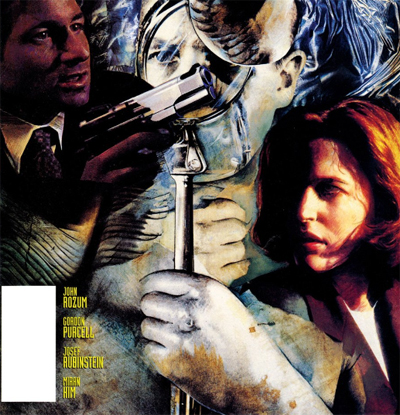
After the wacky and delightful excess of Donor, John Rozum steers the comic back into much more traditional fare.

There is little in Silver Lining that the comic hasn’t touched on quite recently. Guest writer Kevin J. Anderson already wrote a “vampiric object” story about a killer camera the two-part Family Portrait story only a few months earlier. John Rozum had already drafted a “haunted object drives a man to kill, but the voices are only in his head” story for The Silent Blade, a short story written specifically for The X-Files Magazine. As a result, Silver Lining feels a little overly familiar. There is nothing here that the reader hasn’t seen before; and recently, too.

Fashioning a story...

Fashioning a story…

Silver Lining reinforces the sense that Topps and Ten Thirteen are making a conscious effort to frame The X-Files as a classic horror comic book. Certainly, Silver Lining adopts the same basic storytelling elements associated with those pulpy adventures from the fifties; there is a scientist who unwittingly unleashes a horror upon the world, a physically deformed villain, a moral about how beauty is only skin deep and that vanity is called a “deadly” sin for a reason. There’s even a poetic justice to the story, where the guest villain finds themselves tormented in an ironic fashion.

There’s nothing particularly objectionable about Silver Lining, beyond how repetitive it feels. It feels like The X-Files has taken something of a step backwards since Topps and Ten Thirteen decided to part ways with writer Stefan Petrucha. The first sixteen issues of The X-Files felt like something of a Vertigo comic book, an ambitious horror anthology with no shortage of big ideas. Now the comic feels very much like an old E.C. comic without the nostalgia factor. The decline is quite striking, but no less disheartening for it.

Moral decay...

Moral decay…

Continue reading

The X-Files – Terma (Review)

This February and March, we’re taking a trip back in time to review the fourth season of The X-Files and the first season of Millennium.

Tunguska and Terma borrows the structure that made the show’s early mythology episodes so effective. Tunguska is full of intriguing and compelling questions, implications that would seem to broaden or deepen the mythology. However, instead of resolving any of the major threads, Terma simply turns itself into a roller-coaster thrill ride. A cynical observer might compare the weaker mythology episodes to a shell-game: the potential of an interesting premise, lost in a shuffle designed to disorientate and catch the viewer off-guard.

It is an approach that has served the show well. Ascension avoided answering too many of the questions posed by Duane Barry, barrelling along with the momentum of a runaway freight train. Similarly, End Game did not dwell too heavily on the questions posed by Colony, instead serving as a series of high-momentum chase sequences with Mulder following the Alien Bounty Hunter to the ends of the Earth. Paper Clip moved so quickly that the viewers never wondered why the documents recovered in Anasazi were no longer earth-shattering, but merely macguffins.

Things are really heating up...

Things are really heating up…

The X-Files is very good at this sort of dynamic mile-a-minute plotting. The production team are very good at what they do. There is a sleek professionalism to these episodes that makes them easy to watch. Although filmed in Vancouver, there were few shows in the nineties ambitious enough to send their character to a Russian gulag for human experimentation. However, the cracks are starting to show. Herrenvolk demonstrated how frustrating a lack of answers could become. Terma struggles to balance a number of potentially interesting plot threads.

There are a lot of elements of Terma that might have worked well, if they had been given more room to breath. Sadly, the episode spends most of its run time trying to build up momentum towards the inevitable scene where proof narrow slips through Mulder’s fingers one more time.

Evil oil...

Evil oil…

Continue reading

Non-Review Review: Suite Française

Suite Française is the name given to a planned series of five novels written by Irène Némirovsky during the Second World War. Living in France during the conflict, Némirovsky was Ukrainian and Jewish descent. She completed the first two novels in the series (Tempête en Juin and Dolce) and had outlined the third (Captivité) before she was arrested as a Jew in 1942. Némirovsky was detained at Pithiviers, before she was transferred to Auschwitz. She died in Auschwitz in August 1942.

The two novels were undiscovered for more than half a century; her daughter – Denise Epstein – only discovered the novels in the nineties. They were written microscopically inside journals. The 140 pages that Némirovsky had written expanded to more than 500 printed pages. There is some evidence that even the two “completed” manuscripts were not quite finished. Notes suggested that Némirovsky was considering revisions to Dolce so as to change the fate of a featured character. More than six decades after her death, Suite Française was eventually published in 2004.

An officer and a gentleman...

An officer and a gentleman…

Adapting any novel for the screen is tough job, let alone a sequence of five novels – only two of which were ever finished, and published posthumously. Part of the intrigue of Suite Française was the fact that these were novels depicting incredible historical events as they actually occurred. It is impossible to quite convey that sense of urgency and vitality after decades of storytelling about the Second World War. Although it is an adaptation of a novel published only a decade earlier, Suite Française has the weight of considerable expectations baring down on it.

Even allowing for the difficulties with this particular adaptation, Saul Dibb and Matt Charman’s script still feels quite clumsy in execution; despite excising most of Tempête en Juin, the finished script feels curiously over-written. Monologues tend to meander and wander, as if the script doesn’t trust the cast to convey deep emotion through their performances, as if the writers are afraid the audience might miss the key philosophical or moral points of the script. This is a shame, as Suite Française is beautifully acted and looks quite wonderful.

The good German...

The good German…

Continue reading

Millennium – Kingdom Come (Review)

This February and March, we’re taking a trip back in time to review the fourth season of The X-Files and the first season of Millennium.

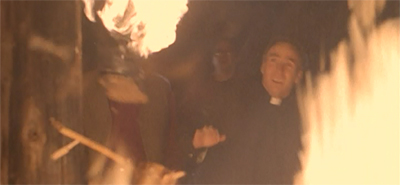
Kingdom Come is a horrible misjudged episode of Millennium, and the show’s first truly spectacular misfire.

Kingdom Come was notably the first episode to air out of production order. It had been produced as the fourth episode following The Pilot, between Dead Letters and The Judge. However, the episode was broadcast as the sixth episode of the television season, after 5-2-2-6-6-6 and before Blood Relatives. The official reason given for this delay was the death of Cardinal Joseph Bernardin in mid-November 1996, following a long and public battle with cancer. It was suggested that an episode about a serial killer targeting religious figures would have been in poor taste at the time.

A light in the darkness...

A light in the darkness…

Still, whatever the official reason given, it cannot help but feel like the production staff were hoping to bury a stinker a little deeper into the season. Kingdom Come is an episode that does not work on any number of levels, offering a rather patronising and condescending view of religious faith as explained through stilted exposition and trite cliché. The show’s observations about faith and hope feel more like sentiments from Hallmark greeting cards than observations on the human condition.

The result is an episode that embodies the worst traits of Millennium, feeling just as crass and sensationalist as it does hollow and superficial.

The episode really bombed...

The episode really bombed…

Continue reading