• Following Us

  • Categories

  • Check out the Archives


  • Awards & Nominations

Harve Bennett

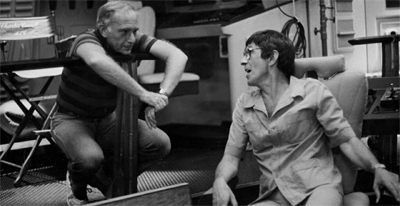
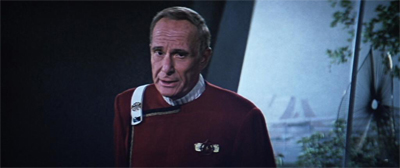
Although he will likely be best remembered by genre fans for his work on the Star Trek film franchise, Harve Bennett was a super-producer. His career began in the fifties – with his first credited work on Now is Tomorrow, a television movie starring actors Robert Culp and Sydney Pollack. However, Bennett really came into his own as a producer of seventies television. He helped to create The Mod Squad and The Invisible Man. However, he is perhaps most noted in geek circles for his work on Star Trek II: The Wrath of Khan.

Along with director Nicholas Meyer, Harve Bennett effectively reinvented Star Trek. Taking over the reins from Gene Roddenberry after that creator’s bloated (if ambitious) work on Star Trek: The Motion Picture, Bennett stumbled upon an ingenious idea. Instead of trying to hide the fact that the cast and crew were getting older, he would embrace it. Bennett effectively came up with the idea of allowing the characters to grow older, coming up with an approach that would help to distinguish the Star Trek films from their source material.
harvebennett

It would be too much to suggest that Harve Bennett was the first writer to reinvent Star Trek, paving the way for creators like Michael Piller or Ira Steven Behr or Brannon Braga or Manny Coto. After all, Star Trek had already been reinvented by Gene L. Coon and D.C. Fontana before Bennett come on board. However, Bennett was part of the first creative team to reinvent Star Trek in a very overt and very conscious way. Meyer and Bennett were the first creators to be overt (rather than subversive) in how they were updating and revising the Star Trek canon.

Bennett was part of the creative team that oversaw the first truly seismic transition in what Star Trek actually was, the first without any major behind-the-scenes continuity. In doing so, Bennett was one of the first creators to demonstrate the versitility and the potential of Star Trek. In shepherding the movie franchise, Bennett was a vital part of keeping Star Trek alive long enough for the franchise to prove that it could be self-sustaining and self-perpetuating. Bennett is a much bigger figure in Star Trek history than he is given credit for.
harvebennett3

Continue reading

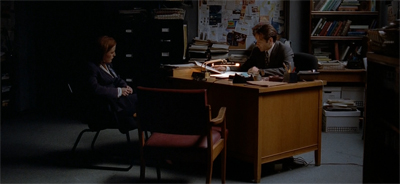
The X-Files – Never Again (Review)

This February and March, we’re taking a trip back in time to review the fourth season of The X-Files and the first season of Millennium.

Not everything is about you, Mulder. This is my life.

Yes but it’s m–

– Glen Morgan and James Wong take their bow; David Chase eat your heart out

...

Continue reading

Millennium – Loin Like a Hunting Flame (Review)

This February and March, we’re taking a trip back in time to review the fourth season of The X-Files and the first season of Millennium.

Loin Like a Hunting Flame represents the peak of a particular type of Millennium story.

It is an episode towards which the season seems to have been building. It is an episode that rather explicitly and candidly ties together two of the show’s favourite subjects: sex and violence, in harmony together. Loin Like a Hunting Flame is something of a stalking horse for the rest of the season; it is the first season episode that most obviously embodies the excesses of any show like Millennium. Fetishised violence has been baked into Millennium since The Pilot opened with a stripper dancing in her own blood; here, it reaches a logical end point.

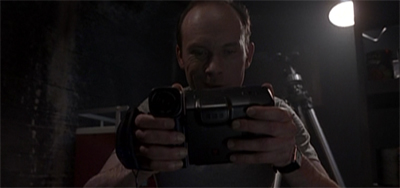
Candid camera!

Candid camera!

Loin Like a Hunting Flame is an episode that is guilty of just about any criticism that might be thrown at it. It is gratuitous; it is sensationalist; it is excessive. It tries to have things both ways, titillating the viewer with glimpse of “exotic” sexual liberation while warning them that those sexually liberated individuals will be punished for their perceived transgressions. Yes, Loin Like a Hunting Flame tries to say something a bit more nuance, but it flails around for most of its forty-five minute runtime like a dying fish.

In many respects, this could be treated as a catharsis for the series. After this point, Millennium turns a corner. The rest of the first season is a lot more ambitious in tone and scope. As much as Loin Like a Hunting Flame closes off a particularly evolutionary line of Millennium, Force Majeure and The Thin White Line push forwards towards a more adventurous show. Loin Like a Hunting Flame just has to work these issues out, once and for all, to their logical (and unsatisfying) conclusion.

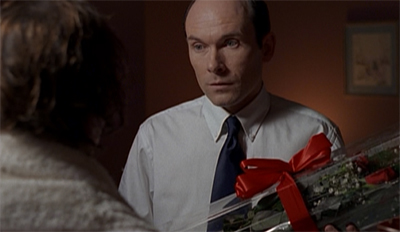
Wholesome family fun...

Wholesome family fun…

Continue reading

The X-Files – Leonard Betts (Review)

This February and March, we’re taking a trip back in time to review the fourth season of The X-Files and the first season of Millennium.

Leonard Betts is a big one. In fact, it may just be the biggest one.

Leonard Betts attracted the largest audience in the history of The X-Files, with almost thirty million people tuning in to watch the episode. This audience was largely carried over from Superbowl XXXI, but it arrived at a fortuitous moment for the series. The X-Files was exploding into the mainstream. Chris Carter and Frank Spotnitz had spent Christmas 1996 in Hawaii plotting The X-Files: Fight the Future, a blockbuster movie based on the series. The week before, Mulder and Scully had paid a visit to Springfield in The Springfield Files.

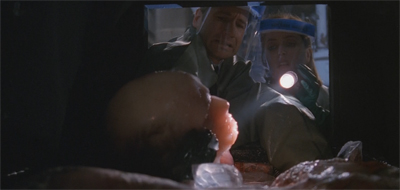
What a waste...

What a waste…

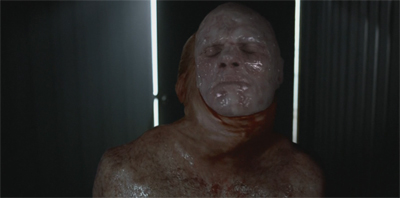
The show’s moment had arrived. Leonard Betts makes for quite the moment. It might not be the best episode in the history of the show; it might not even be the best episode of the season. However, it ranks with Pusher as one of the great archetypal episodes of The X-Files. The show captures so much of what makes The X-Files great, almost perfectly distilling the appeal of the show into a tight forty-odd minute package. It is a beautifully-crafted piece of television that checks all of the right boxes. This is a pretty fantastic introduction to the show and its world.

Leonard Betts is an episode that has been put together with incredible skill, one that demonstrates why The X-Files had such an impact on the popular consciousness.

Comfortable in his skin...

Comfortable in his skin…

Continue reading

Millennium – Weeds (Review)

This February and March, we’re taking a trip back in time to review the fourth season of The X-Files and the first season of Millennium.

Weeds concludes the loose “suburban trilogy” running through the first season of Millennium. In fact, Weeds was filmed directly after Wide Open, but was pushed back in the broadcast schedule so as to air after The Wild and the Innocent. While this change in broadcast and production order is nowhere near as confusing as the scheduling hijinx happening with The X-Files at the same time, it does give an indication that the production team recognised the potential similarities between Weeds and Wide Open.

Both episodes are about the violation of a supposedly “safe” space, bypassing and subverting all the potential security put in place to keep the home secure. In Wide Open, the killer visits open houses and hides in wardrobes until the family go to sleep that night; in doing so, he avoids setting off any alarms. In Weeds, a secure and gated community discovers that they cannot keep their children safe; someone within the community is preying on the residents’ children. As with The Well-Worn Lock, there is a sense that families are not safe, even when they think that they are.

Community watch...

Community watch…

As with Wide Open, Weeds feels just a little bit sensationalist. It is the kind of episode that attracts criticisms about gratuitous violence or exploitation. Millennium was never quite as excessive or as sadomasochistic as its critics would suggest, but there are definite tendencies towards those extremes on display at certain points in the run. While Millennium is very clearly driven by a core moral philosophy, it can occasionally seem a little too comfortable with its brutality or depravity.

Indeed, Weeds hits on quite a few of the stock fears that run through the first season of Millennium: children are victimised by a person in a position of trust and authority; there is biblical quotation; there is sadistic (and disturbing) torture filmed in a heavily stylised manner. There is something almost cynical and calculated about how Weeds hits these familiar buttons; these impulses towards excess haunt the first season of Millennium, and are building to something of a catharsis in Loin Like a Hunting Flame.

There will be blood...

There will be blood…

Continue reading

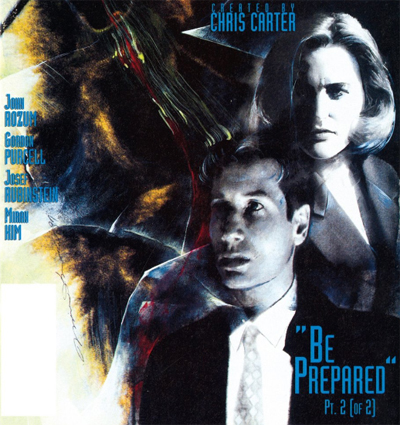
The X-Files (Topps) #25-26 – Be Prepared (Review)

This February and March, we’re taking a trip back in time to review the fourth season of The X-Files and the first season of Millennium.

What’s interesting about Be Prepared is how much it feels like an episode of The X-Files.

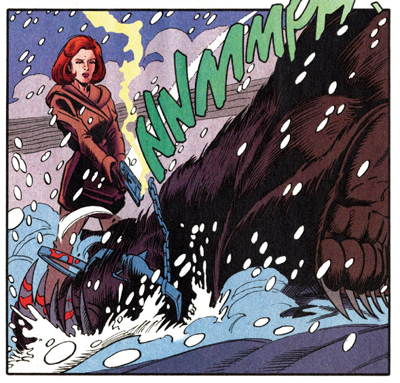
A lot Rozum’s earlier scripts felt like Mulder and Scully had wandered into old E.C. horror stories, cautionary supernatural tales about vengeful ghosts and poetic justice. In contrast, Be Prepared feels very much in tune with the aesthetic of the show itself. Mulder and Scully investigate a uniquely American piece of folklore, finding themselves in an isolated location dealing with human monstrosity at least as much as any paranormal element.

If you go down to the woods today...

If you go down to the woods today…

Indeed, Be Prepared feels very much like an episode from the first two seasons of the show, evoking stories like Ice or Darkness Falls or Firewalker. Indeed, Be Prepared arguably sits comfortably alongside Topps’ range of Season One comics – feeling like a lost episode from the show’s early years. Be Prepared feels like the first time that Rozum is constructing a story specifically from tropes associated with The X-Files, rather than from horror tropes in general.

The result is a fun little adventure that feels more like The X-Files than the comic has in quite a while.

The right to bear arms...

The right to bear arms…

Continue reading

The X-Files – El Mundo Gira (Review)

This February and March, we’re taking a trip back in time to review the fourth season of The X-Files and the first season of Millennium.

The X-Files is a show that sometimes has difficulties when it comes to portraying minorities.

There are lots of episodes that offer insightful and thoughtful explorations of isolated subcultures, without veering into offensive stereotypes or awkward cliché. Fresh Bones and Hell Money are two examples of the kinds of stories that do offer those sorts of interesting and respectful depictions of minorities. In contrast, the show can sometimes seem a little close-minded and xenophobic. Excelsis Dei, Teso Dos Bichos and Teliko are episodes with somewhat questionable depictions of other cultures.

Illegal aliens.

Illegal aliens.

Writer John Shiban likes his horror tropes. He adores the classic horror movie trappings, and revels in a very old-school approach to scary stories. Unfortunately, the horror genre has an unfortunate history of exploitation and racism when it comes to the portrayal of “the other.” The easiest way to make something scary and unknown is to make it foreign, suggesting that the outside world is filled with horrors and monstrosities. Shiban would hit on this trashy exploitation vibe repeatedly during his tenure on The X-Files.

El Mundo Gira is very much a companion piece to Shiban’s other stories about foreign monsters – the indigenous cat-people of Teso Dos Bichos and the butt-dwelling Indian fakir of Badlaa. It is a not a story set in the world of Mexican-American immigrants; it is a story set in a clumsy stereotypical depiction of the world of Mexican-American immigrants, as channelled through unfortunate racial stereotypes.

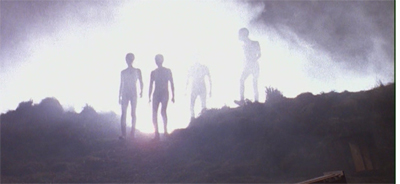
Green haze...

Green haze…

Continue reading

Leonard Nimoy

Leonard Nimoy passed away today.

Nimoy is an interesting figure. He is an actor and director with a long a prolific career, who seldom wanted for steady work. He did a lot of quality work in front of (and behind) the camera. Nimoy was a series regular on the sixties version of Mission: Impossible, taking over from Martin Landau. He played a major role in the 1978 remake of Invasion of the Body Snatchers with Donald Sutherland. He also directed both Three Men and a Baby. He worked quite regularly and quite frequently. His body stretches over half a century.

leonardnimoy1

However, all of this work (and it is great work) is inevitably overshadowed by a single role. To an entire generation of people – not just fans, not even just casual television viewers – Leonard Nimoy was Spock. With his pointed ears, memorable catchphrases and iconic Vulcan salute, Nimoy was enigmatic half-human half-Vulcan who served as the first officer of the USS Enterprise. His work spans the franchise, from the unbroadcast original pilot (The Cage) to the most recent JJ Abrams feature (Star Trek Into Darkness).

This was the conflict at the heart of Nimoy, the extremely professional performer who worked pretty consistently throughout his life and the one role that he turned into a screen icon across television and film. Nimoy was a complex character. He famously published an autobiography declaring I Am Not Spock, only to follow it up with I Am Spock. It is a credit to the actor’s complexity and nuance that both could seem to be true in the same instant.

tos-amoktime12

Continue reading

The Simpsons – The Springfield Files (Review)

This February and March, we’re taking a trip back in time to review the fourth season of The X-Files and the first season of Millennium.

A young network hungry to find its place in the American television market, Fox managed to produce two of the television shows that defined the nineties. Both The X-Files and The Simpsons were bold and innovative television shows that captured the zietgeist perfectly. Both shows offered an insightful, innovative and occasionally subversive look at American pop culture in the last decade of the twentieth century. Both have endured quite well, speaking to a generation that came of age in the nineties.

While The X-Files wound itself up in 2002, The Simpsons endures. The show has been running for almost a quarter-of-a-century at this point, and there is no sense that it will ever let up. While there are stock criticisms to be made about how The Simpsons is not as funny as it once was, the series has continually and perpetually reinvented itself. The success of these various iterations has varied. The Simpsons was a different show in 1989 than it was in 1992 or 1996 or 2000.

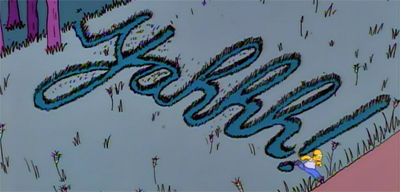
"Mulder and Scully. FBI."

“Agents Mulder and Scully. FBI.”

However, the show was in the middle of an incredible hot streak in January 1997. The show was in its eighth season, and on the cusp of overtaking The Flintstones as the longest-running prime-time animated series in the United States. This was a phenomenal accomplishment, and there was no indication that the show was in decline. Although fans will argue about exactly how long the so-called “golden age” of the Simpsons actually lasted, the series was still in the middle of it by January 1997.

So The Springfield Files makes a lot of sense as an obvious overlap between the two most important weekly shows airing on Fox at this moment in time. The Springfield Files was treated as a big deal at the time. It aired two weeks before Superbowl XXI, which would help give The X-Files its highest-ever ratings with Leonard Betts. It was sent to the press for review before it aired, to help generate word of mouth. The result is a delightfully satisfying intersection of two massively successful and influential shows.

Reading the scene...

Reading the scene…

Continue reading

Millennium – The Wild and the Innocent (Review)

This February and March, we’re taking a trip back in time to review the fourth season of The X-Files and the first season of Millennium.

The Wild and the Innocent is an ambitious piece of television.

It is not a piece of television that works as well as it might, the execution of the central ideas leaving a little to be desired, but it is an episode that commits whole heartedly to something unique. In I Want to Believe, Robert Shearman refers to The Wild and the Innocent as “a plot more suited to Cormac McCarthy than Chris Carter.” He’s not wrong. The Wild and the Innocent is a story about cycles of violence and abuse in the American south, a grim road movie with some very harsh conclusions about the way that the world works.

That sinking feeling...

That sinking feeling…

It still fits within the milieu of Millennium. After all the classic “serial killer road movie” is still a serial killer story, and Millennium has already carved out that niche for itself. However, the image of Frank Black and Peter Watts following a trail of bodies from Missouri down through Arkansas suggests a different show than the one that has been airing since The Pilot. In many respects – with its heavy philosophical voice-over, its country-tinged soundtrack, its fixation on the outlaw couple – The Wild and the Innocent feels almost like some old American folk tale.

There’s something decidedly old-fashioned here, with the episode playing more like a western than a police procedural. In the documentary Order in Chaos, Carter described Frank Black as character from a story “like Shane, like any cowboy, any good movie, Western movie.” As such, he fits in quite comfortably with this new type of story.

Road warrior...

Road warrior…

Continue reading