• Following Us

  • Categories

  • Check out the Archives


  • Awards & Nominations

Star Trek: Voyager – Rise (Review)

Rise is in many ways a very typical episode of Star Trek: Voyager.

It is an episode that certainly has an interesting premise. For all its myriad flaws, Voyager tended to have a genuine interest in playing with science-fiction concepts. At its worst, this attitude manifested itself through the various “anomaly of the week” stories that followed a familiar pattern of the ship encounter some sort of strange phenomenon with predictable results. Often this phenomenon involved time travel or interstellar dust clouds, a trend that could be traced back to early episodes like Time and Again or The Cloud.
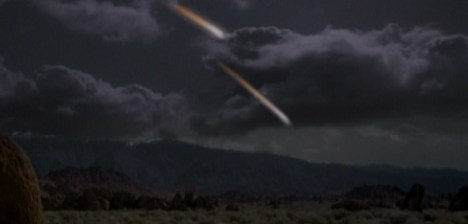
That crashing feeling.

That crashing feeling.

However, Voyager did occasionally use its interest in science-fiction storytelling to construct interesting stories. Deadlock might have set a damning precedent for the show, but it was compelling television. Blink of an Eye is a very clever little story. In true Star Trek fashion, Voyager would even use these science-fiction ideas to construct engaging allegories like the exploration of holocaust denial in Remember or the meditation on creationism in Distant Origin.

These concepts gave the series a sense of texture. They served to distinguish the show from its siblings. For example, Star Trek: Deep Space Nine was generally less interested in science-fiction high concepts than in characterisation and politics. When those sci-fi elements did show up, they were usually to torture O’Brien in episodes like Whispers, Visionary, Hard Time and Time’s Orphan. Of course, Deep Space Nine had sci-fi concept-driven stories like Playing God or One Little Ship, but they tended to stand out more from the series around them.

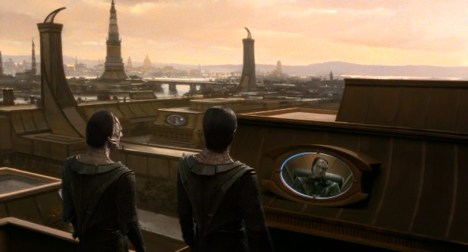
Up on the roof's the only place I know...

Up on the roof’s the only place I know…

Rise has a suitably high concept, a core idea that could easily have been lifted from the pages of the same pulp magazines that inspired The Cloud Minders. The episode is essentially a paranoid thriller unfolding within a confined space, but that confined space just happens to be a giant elevator that stretches from the surface of the planet into orbit. The premise is ridiculous, feeling like it was lifted from forties or fifties periodicals with giant insects and half-naked men on the cover. In other words, it feels of a piece with Innocence or The Thaw or Tuvix.

It is too much to argue that Rise has a brilliant concept, but it at least has an intriguing one. While it might be hard to use the basic elements of Rise to construct a classic, it should be relatively straightforward to construct a thrilling episode of television. Unfortunately, Rise simply does not work. More than that, Rise does not work for the most boring of reasons. As with a lot of Voyager, the episode is an interesting premise undercut by both a deeply flawed (and half-hearted) execution and the show’s own long-standing structural weaknesses. This happens all too often.

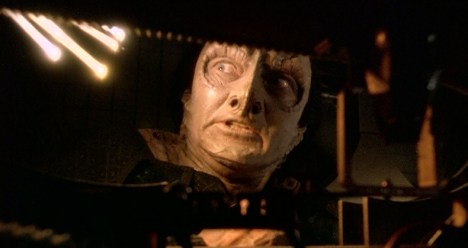
A dark moment for the series.

A dark moment for the series.

Continue reading

Non-Review Review: Allied

There is something of the uncanny about Allied, a pervading sense of “not-quite-right-ness” that pervades the film.

In some ways, that vague feeling of uncanniness recalls director Robert Zemeckis’ work in stop-motion computer animation in the earlier years of the century. There was something deeply uncomfortable about the director’s work on films like The Polar Express or A Christmas Carol, a sense of strange lifelessness beneath meticulously and painstakingly crafted exteriors. Zemickis’ computer-generated experiments often felt like they were trying too hard to mimic something organic and spontaneous.

Casa closed.

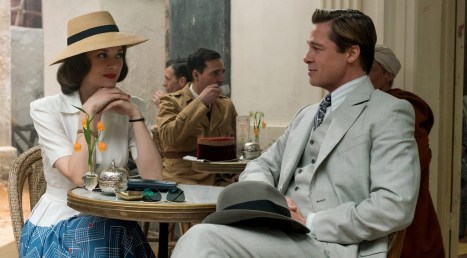
Marryin’ Marion

There is a similar sentiment to Allied, which plays very much as a love letter to classic Hollywood cinema. Indeed, the opening forty minutes of the film are dedicated to a very stylish couple operating out of “French Morocco.” Inevitably, their clandestine dealings bring them to a version of Casablanca that seems rooted more in Hollywood history than in reality. Unfolding against the backdrop of the Second World War, dealing with themes of love and betrayal, and starring a bona fides movies star, Allied feels very much like an approximation of a classic movie.

However, it never quite gets there.

Marryin' Marion.

Casa closed.

Continue reading

Non-Review Review: The Edge of Seventeen

The Edge of Seventeen is a fantastic coming of age film from writer and director Kelly Fremon Craig.

The script sparkles, the casting is spot-on, the humour is well-observed. Like so many great coming of age comedies, The Edge of Seventeen understands that familiar teenage angst where the entire world seems to have been constructed as a sadistic (and highly targetted) Rube Goldberg machine for the sole purpose of torturing one single individual. The Edge of Seventeen balances this all very deftly, creating a set of circumstances that understandably feel like the end of the world to the lead character, but which seem comical to a more matured detached audience.

Teenage wildlife.

Teenage wildlife.

However, the true strength of any coming of age film lies in the casting. Easy A was a fantastic film, but it was cleverly elevated by the shrewd casting of Emma Stone as its wry protagonist. The Edge of Seventeen places Hailee Steinfeld at the centre of its teenage universe. Steinfeld delivers a pitch-perfect performance that meticulously walks the line between sardonic and vulnerable. The Edge of Seventeen has the luxury of a well-crafted and well-observed script, but it lives or dies by its central performance.

Steinfeld is phenomenal.

Animated discussion.

Animated discussion.

Continue reading

Star Trek: Deep Space Nine – Doctor Bashir, I Presume (Review)

Doctor Bashir, I Presume is a strange little episode.

It directly follows In Purgatory’s Shadow and By Inferno’s Light, a two-part story in which it was revealed that Doctor Julian Bashir had been abducted by the Dominion at some point during the fifth season and replaced with a changeling infiltrator. Although the maths can be a little difficult to work out, it is suggested that Bashir was replaced by a changeling at some point before Rapture. With that in mind, it seems strange that the very next episode of Star Trek: Deep Space Nine should reveal that the recently returned Julian Bashir is himself an imposter.

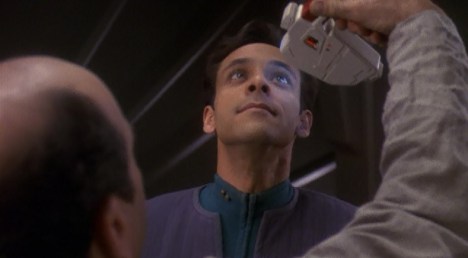
"Oh, shiny."

“Oh, shiny.”

However, even on its own terms, Doctor Bashir, I Presume is a very odd piece of television. The hook of the episode is a guest appearance from Robert Picardo as Lewis Zimmerman. Picardo is making a crossover appearance from Star Trek: Voyager where he played the EMH, who had also made an appearance in Star Trek: First Contact. Picardo is a fine dramatic actor, but the character is notable for being comic relief. Doctor Bashir, I Presume begins as a light-hearted quirky piece, turning sharply at the half-way point to become a gritty science-fiction family drama.

All of this is quite jarring. However, Doctor Bashir, I Presume works surprising well. A large part of that is down to how strange the episode is, often feeling like an intimate family drama about recrimination and disappointment set against the backdrop of a massive science-fiction franchise.

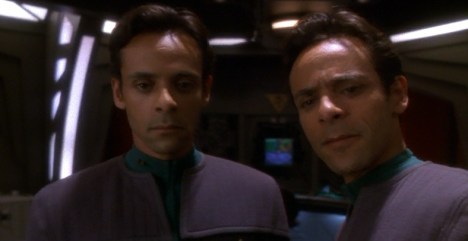
A selfie with himself.

A selfie with himself.

Continue reading

8. Arrival – This Just In (#101)

Hosted by Andrew Quinn and Darren Mooney, This Just In is a subset of the fortnightly The 250 podcast, looking at notable new arrivals on the list of the 250 best movies of all-time, as voted for by Internet Movie Database Users.

This time, Denis Villeneuve’s Arrival.

podcast-arrival

Continue reading

Star Trek: Voyager – Darkling (Review)

There is something to be said for the pulpier side of Star Trek: Voyager, the aspect of the show that plays like a cheesy sci-fi b-movie.

Brannon Braga is very much the driving force behind this aspect of the show, as evidenced by his scripts for the belated Cold War body-swapping horror of Cathexis or the psychological nightmare of Projections or the trashy psychedelic terror of Cold Fire or even the weird evolutionary anxieties of Threshold and Macrocosm. These sorts of episodes often feel like they belong in a late night movie slot reserved for forgotten horror flicks from the fifties and sixties. Of course, Braga is not alone in this; episodes like Meld and The Thaw also fit the pattern.

Blurred lines.

Blurred lines.

Of course, these episodes do not always hit the mark. Charitably, it could be argued that they land about half the time and misfire spectacularly about one third of the time. However, there is something strangely compelling about these episode. They feel distinct from what audiences expect from Star Trek. Even if they are arguably just an extension of late Star Trek: The Next Generation episodes like Sub Rosa or Genesis or Eye of the Beholder, they feel like something different from the show’s more conventional “let’s do archetypal Star Trek” plotting.

Darkling is an episode that doesn’t quite work, but which is oddly endearing in its dysfunction. It is a ridiculous central premise executed in a deeply flawed (and occasionally uncomfortable) manner. However, there is something weirdly compelling about wedding the show’s science-fiction premise to gothic horror through the fractured psyche of a computer program.

Patchy.

Patchy.

Continue reading

Non-Review Review: Fantastic Beasts and Where to Find Them

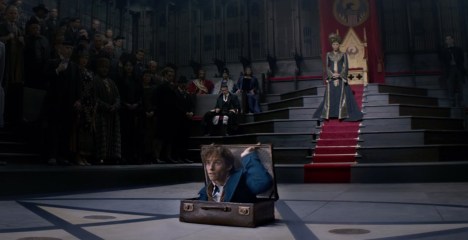
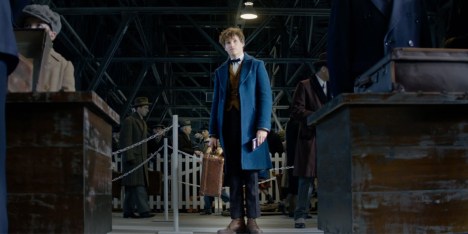
Fantastic Beasts and Where to Find Them is a solid piece of popcorn entertainment.

It is, to be clear, just a little overstuffed. Its cast is so large that it borders on unwieldy. Its runtime is just a little bit bloated. It devotes far too much time and energy to setting up movies that will be released over the next couple of years. It is a surprisingly dark movie for a film that seems to set a whimsical tone. Its central metaphors get a little muddled. Its version of America feels like it has been stitched together by a collection of anthropologists who have access to well-worn copies of King Kong and Citizen Kane.

Suits you, sir!

Suits you, sir!

Still, there is an undeniable charm to Fantastic Beasts and Where to Find Them, a movie that luxuriates in the chance to explore a familiar universe through a different perspective. Given the success of the franchise in all media, it was inevitable that audiences would get “an American Harry Potter.” In fact, it could be argued that there have been any number of ill-fated attempts over the years including films like Mortal Instruments. If “an American Harry Potter” was to be inescapable, there are worse options than Fantastic Beasts and Where to Find Them.

Fantastic Beasts and Where to Find Them never quite matches the height of its parent franchise, but occasionally manages to recapture some of the magic.

Wizzing around the world.

Wizzing around the world.

Continue reading

Star Trek: Deep Space Nine – By Inferno’s Light (Review)

In Purgatory’s Shadow and By Inferno’s Light represent a fantastic accomplishment for Star Trek: Deep Space Nine.

The two-parter demonstrates the care and skill that went into characterisation on the show. The later Star Trek series often struggled to define their core ensembles as effectively as this series defined its secondary players. Star Trek: Voyager often reduced its characters to cogs within a plot-driven machine, capable of whatever a given plot required from them at a given moment. The same was true of Star Trek: Enterprise, which spent most of its first two years slotting cookie-cutter characters into very conventional narratives.

"I, for one, welcome our new Dominion overlords."

“I, for one, welcome our new Dominion overlords.”

In contrast to Voyager and Enterprise, the bulk of plotting on Deep Space Nine seemed to flow from the characters themselves rather than forcing the characters to conform to the demands of the plot. All the big storytelling decisions on Deep Space Nine are rooted in the agency of the characters in question, to the point that the fate of the entire Alpha Quadrant seems to hinge upon the fragility of Gul Dukat’s ego. It is a very clever (and very ahead of its time) approach to plotting a science-fiction series, just one reason that Deep Space Nine has aged so well.

As a result, In Purgatory’s Shadow and By Inferno’s Light are both rooted in what the audience already knows about the characters populating Deep Space Nine. All the decisions that are taken feel very much in character, and in keeping with what the audience knows about these individuals. This only serves to make it all the more impressive that the two-parter so radically revises the show’s status quo.

Leave a light on.

Leave a light on.

Continue reading

Star Trek: Voyager – Unity (Review)

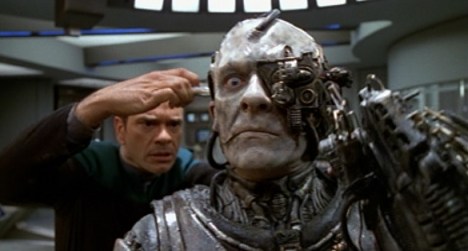
The autopsy of the Borg corpse is underway.

– Janeway about sums it up

If the third season of Star Trek: Voyager is about the show embracing its place in the shadow of Star Trek: The Next Generation, then it makes sense that the third season would bring the crew into conflict with the Borg. The first two seasons of Voyager had leaned rather heavily upon the mythology of The Next Generation, featuring guest appearances from Q and Riker in Death Wish or Barclay in Projections, not to mention a recurring Cardassian foe and enemies heavily influenced by The Next Generation era Klingons.

However, the first two seasons had made an effort to introduce new and exciting foes for Voyager, new recurring species to reflect that the ship was traveling through an unknown part of space. For all the show featured guest appearances from Romulans and Ferengi, the first two years at least tried to do their own thing. The Kazon might have been a questionable idea horribly executed, but at least they were a new species. The Vidiians were underutilised and remain one of the most fascinating recurring aliens in the entire franchise.

The brains of the operation.

The brains of the operation.

The third season only features a few token appearances of the recurring Delta Quadrant species. The Kazon disappear from the show after Basics, Part II. The Vidiians appear within a nightmarish time loop in Coda. A lost Talaxian pops up on a space station in Fair Trade. However, these aliens are no longer a recurring presence. There is an obvious vacancy that needs to be filled. Voyager needs a new recurring alien species. With that in mind, it is telling that the third season does not create a new alien menace like the Hirogen or the Malon.

The third season of Voyager decides that the Borg are to be the shows recurring adversaries. It makes a certain amount of sense. After all, the Borg are arguably the most iconic and effective aliens created by The Next Generation. They were a massive part of the spin-off really coming into its own with The Best of Both Worlds, Part I and The Best of Both Worlds, Part II. They were also a major part of the hugely successful feature film Star Trek: First Contact. There was definitely an appetite for more Borg stories. There always would be.

Corpsing...

Corpsing…

At the same time, the presence of the Borg feels very much like a concession or a surrender. This is Voyager effectively surrendering itself to becoming a pale imitation of The Next Generation, acknowledging that it will never create any alien species as memorable or as iconic as the Borg. That is not an unreasonable thing to accept. After all, Star Trek: Deep Space Nine did fantastic work with the Dominion, but that collection of alien species could never hope to have the same cultural penetration as the Borg.

Still, it is disheartening to see Voyager give up on itself so completely. Indeed, Unity is not even a particularly innovative Borg story, feeling very much like a retread of their last television story in Descent, Part I and Descent, Part II. This is a recurring problem for the third season of Voyager, which has spent a lot of time emulating various Next Generation episodes. However, there is also a sense that Voyager is not terrible at this imitation, even as it is lessened by it. Unity is a flawed episode, but an intriguing one.

Just what every Borg story needs! A Chakotay romance!

Just what every Borg story needs! A Chakotay romance!

Continue reading

New Podcast! The X-Cast – Season 2, Episode 6 (“Ascension”)

Previously on the X-Cast…

Just a quick link to another recent guest appearance over on The X-Cast, a great X-Files podcast run by the prolific Tony Black.

I got to return to the show to talk about the second part of the series’ (and the podcast’s) first two-part episode, Ascension. Wherein we discuss the unrelenting forward momentum of the second part of X-Files two-parters, the recurring sense that Krycek thinks all of this is just a little bit beneath him, and the joy of Roger Moore style stunt sequences. As ever, it was my pleasure to appear on the show, and Tony was as wonderful a host as ever. Check it out the episode here, or click the link below.

podcast-accension

Continue reading