• Following Us

  • Categories

  • Check out the Archives


  • Awards & Nominations

New Podcast! Scannain Podcast (2018) #36!

It’s time for the latest Scannain podcast!

This week, I join Jason Coyle, Grace Duffy and Ronan Doyle to discuss the week in film. As usual, we talk about the top ten and the new releases, as well as what we’ve watched this week. In this episode, we discuss the appeal of Tony Scott’s (arguably) underrated late film Domino, which Jay claims as a cinematic classic and Ronan watched while hung over. We talk about the true horror lurking in Ghost Stories. We debate whether Karyn Kusama’s The Invitation is a Sacha Baron Cohen show as a horror movie.

We also talk about the films that the “young ones” will be watching as part of the back-to-school programme at the Irish Film Institute, the ongoing Dublin Festival of History and the first look deal between Element Pictures and Fox Searchlight that speaks to the viability of Irish film as award fare.

In terms of the top ten, there’s in-depth discussions of both Black ’47 and The Little Stranger, all four panelists having seen those films.

The top ten:

  1. Hotel Transylvania 3: A Monster Vacation
  2. The Predator
  3. Christopher Robin
  4. The Little Stranger
  5. Mile 22
  6. The Nun
  7. A Simple Favour
  8. Crazy Rich Asians
  9. Black ’47
  10. The House With A Clock In Its Walls

New releases:

You can download the episode here, or listen to it below.

New Podcast! The X-Cast – Season 3, Episode 17 (“Pusher”)

I’m back on The X-Cast this week, to cover a very special episode. Pusher is host Tony Black’s favourite episode, and we recorded this close to his birthday. So no pressure, then.

Pusher has long been a favourite of mine as well, a crackerjack suspense-filled episode from the powerhouse team of writer Vince Gilligan and director Rob Bowman. It’s an episode that works very well both within the confines of The X-Files itself and beyond. Even more than Soft Light, it is an episode that informs a lot of Gilligan’s core themes and ideas going forward. There is a surprising amount of Breaking Bad and Better Call Saul to be found in the episode, for example.

The truth is in here. You can listen to the episode here, or click the link below.

Continue reading

New Podcast! The Pensky File – Star Trek: Deep Space Nine, Season 4, Episode 10 (“Our Man Bashir”)

The Pensky File will return…

Thrilled to join Wes and Clay over at The Pensky Podcast for another episode of their look at Star Trek: Deep Space Nine. The dynamic duo are fast approaching the midpoint of the fourth season, one of the greatest seasons of television in the Star Trek canon and probably one of the greatest twenty-odd episode seasons of television ever produced.

I was particularly excited to join the pair for a discussion of Our Man Bashir, an episode in which Bashir and Garak become embroiled in a life and death struggle while playing out one of Bashir’s spy fantasies. My position on Our Man Bashir is pretty out there, but I genuinely believe that it’s one of the best episodes of Star Trek ever produced. Do I manage to convince Wes and Clay? You’ll have to listen to find out.

Along the way, we discuss everything from the popularity of James Bond in America, to the evolution of Julian Bashir as a character, to the economics of the holosuite to Avery Brooks’ distinctive performance style. It was, as ever, a huge pleasure and privilege to join the two for the discussion.

You can find more from The Pensky Podcast here, and listen to the podcast by clicking the link or just listening below.

Continue reading

Non-Review Review: Night School

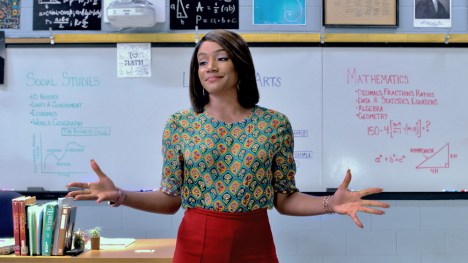
Night School works better than it probably should, while never quite escaping its fundamental flaws.

Night School suffers from a lot of the structural issues that affect modern studio comedies. Most obviously, the film feels over-extended. It’s not just the run time, which clocks in at a muscular one-hundred-and-ten minutes, which is asking a lot for a broad comedy with a very simple premise. It is the individual jokes within the comedy, which are often stretched to breaking point and beyond. Perhaps the most egregious example is an early gag about finding hair in food at a restaurant, which goes on for what feels like five minutes built around the same standard social set-up.

To teach’s own.

There are very few major surprises in Night School. There are a few small and smart ideas buried in the mix, but they often feel crowded out by the broad jokes and the familiar clichés. There’s a recurring sense that Night School doesn’t always play to its strengths, at least below the headline. At the same time, the film understands that it lives or dies by the chemistry between its two leads, offering a conventional persona-driven conflict of manners that places Kevin Hart and Tiffany Haddish in opposition to one another before inevitably moving them into alignment.

Night School is diverting, if unsatisfying. It manages a passing grade, if little more.

Hart to Hart.

Continue reading

The Great Inception, and the Movies that Made Us…

This week, the podcast I host, The 250, will be marking its one hundredth episode with a look at Christopher Nolan’s “Inception.” I’m very much looking forward to it. It’ll be available on Saturday from 6pm UTC. I also have a book coming out on Christopher Nolan, titled “Christopher Nolan: A Critical Study of the Films.” This is a much more personal (and much less detailed) discussion of Inception than the one in the book. So, if you like this piece, it might be worth a look.

I’ve always been somewhat wary of Inception.

I mean, Inception is a fantastic movie. There is a reason that it is so beloved and so highly regarded. It is perhaps one of the four core Christopher Nolan films, along with Memento, The Prestige and The Dark Knight. It is the rare big budget blockbuster with no longstanding association to established intellectual property, and one of the few to succeed on that sort of level. Indeed, the only other comparable examples on a similar scale are Interstellar and Dunkirk, both directed by Christopher Nolan.
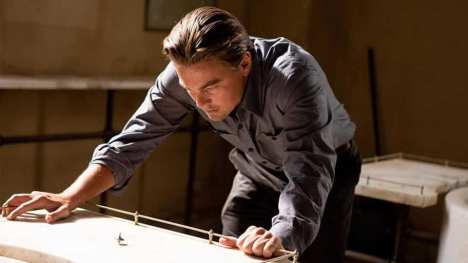
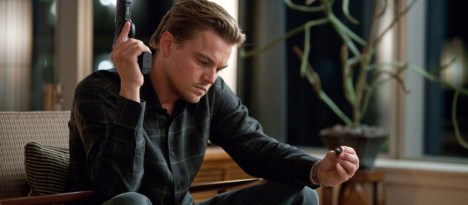
More than that, Inception has permeated the popular consciousness. It is a film that has become part of the broader conversation. It seems that barely a few months can go by without another hot take on that closing scene, with news coverage of commencement speeches or interviews with actors. More than that, the film itself has become something of a critical and popular shorthand. It is a stock comparison for any movie or television show with a vaguely similar concept. Maniac is the most recent example, even inviting the comparison with an elaborate hallway action scene in its penultimate episode.

And yet, in spite of that, Inception is a movie of which I’ve had a somewhat strained relationship. I still adore it, as I adore most of Nolan’s filmography. I think its reputation is well-earned, and I think it excels by every measure that it sets itself. It delivers on just about every front, showcasing Nolan as a director with incredible command of both the form itself and the audiences watching these films. Inception is a big and broad crowdpleaser that is also a surprisingly intimate and personal film, which works as both a story and as a showcase. It is thrilling, it is engaging, it is compelling.

However, there’s something underneath the surface that makes me feel a little uncomfortable. A large part of this is simply down to the fact that it’s a movie that is fundamentally about movies. This is nothing new of itself. All of Nolan’s movies are about stories, whether personal or cultural. In fact, it could be argued that the central trilogy of Nolan’s work is actually The Prestige, The Dark Knight and Inception, a trilogy of films that seem to be about the challenges of constructing and maintaining spectacle, arriving at a point in the director’s career where Nolan was transitioning from smaller films to high-profile epics.

Inception is the most transparent of these films, exploring most directly the mechanics of how storytelling works within a cinematic framework. There are even scenes of characters discussing in relatively clinical terms the mechanics of catharsis and how best to emotional manipulate their target audience. Inception feels very much like Nolan is stopping and deconstructing his stopwatch storytelling for the benefit of the audience, revealing how the trick is done and how the pieces fit together. As with everything Nolan does, he does this with a great deal of skill and nuance. However, it can’t help but feel a little cynical.
Continue reading

Non-Review Review: Rosie

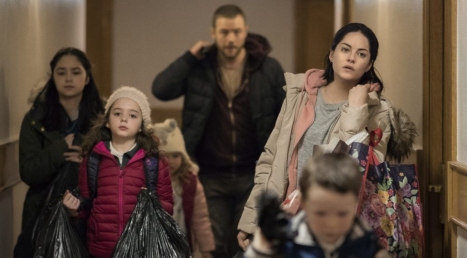
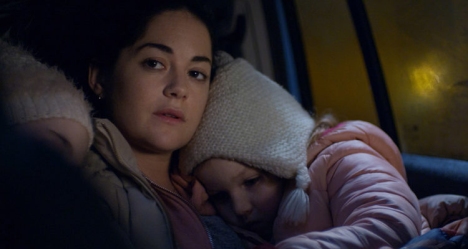
Rosie is a a very timely piece of Irish cinema, but one that never loses sight of the humanity of this national crisis.

From beginning to end, Rosie is infused with an endearing humanity. Writer Roddy Doyle and director Paddy Breathnach keep the story tightly focused on one particular family caught in the midst of the homeless crisis. Breathnach often literalises this, with a handheld camera that keeps the film literally centred on the face of the eponymous protagonist. Even in wide open spaces, even in public, even when she’s the only adult crossing a green or a schoolyard, Rosie is so tightly focused that it feels claustrophic and almost suffocating.

This is the point, of course. Rosie is a very visceral film, and with good reason. Doyle and Breathnach work hard to ensure that the audience feels ever minor crisis, and that it understands precisely how precarious the situation facing this family happens to be. A delayed lunch break seems catastrophic, a child spending time with a friend seems like a disaster. Time is fleeting, and always slipping through the fingers of its protagonist. When life seems to unfold moment to moment, there is no opportunity to catch her breath or to worry about the bigger picture.

Rosie is a fascinating piece of Irish cinema, both timely and intimate, both reflecting contemporary culture and telling its own story within that framework. It’s an impressive piece of work.

Continue reading

99. Rang de Basanti (#195) – Indian Summer 2018

Hosted by Andrew Quinn and Darren Mooney, and this week with special guest Giovanna Rampazza and Babu Patel, The 250 is a (mostly) weekly trip through some of the best (and worst) movies ever made, as voted for by Internet Movie Database Users. New episodes are released every Saturday at 6pm GMT, with the occasional bonus episode thrown in.

This year, we are proud to announce Indian Summer, a fortnight looking at two of the Indian films on the list. We hope to make this an annual event. This year, we’ll be covering Rajkumar Hirani’s PK and Rakeysh Omprakash Mehra’s Rang De Basanti. This week, we’re discussing the second of those two films, Rang de Basanti.

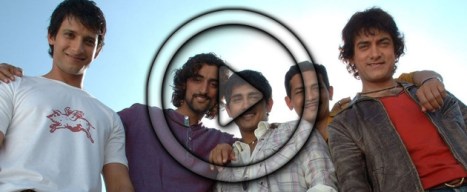
A documentary filmmaker Susan travels to India in order to produce a documentary about the daring Kakori Train Robbery in August 1925. While there, she strikes up a friendship with an unlikely group of listless young students who are looking for purpose and meaning within their own lives.

At time of recording, it was ranked the 195th best movie of all-time on the Internet Movie Database.

Continue reading

Non-Review Review: Hold the Dark

“Do you have any idea what’s outside these windows? How black it gets?”

An enlightening piece of work.

In the American consciousness, the frontier is a haunted place.

In some ways, it is a concept distinct to the United States, at least in contrast to Europe. The boundaries within Europe were established centuries ago; although they might shift and bend, the contours of the continent have been known to the people who inhabited it for millennia. In contrast, to the settlers who arrived from Europe, the North American frontier was a mystery and an enigma. The frontier is distinct a border space. A border implies a point of collision that might be crossed, the neatly delineated boundary between one place and another.

Let Bisons be Bisons.

The frontier is something entirely different. It represents the edge of reason, and limit of what is knowable. To reach the end of the frontier is to reach the end of “the West.” In geographical terms, off the western shore of the North American continent lies “the East.” In more abstract terms, the American frontier is an imaginary space rather than a literal one. After all, Jeremy Saulnier’s previous film – Green Room – suggested that the frontier could be found somewhere  surprisingly close to urbanity, only a few hours away from the familiar comforts of Portland.

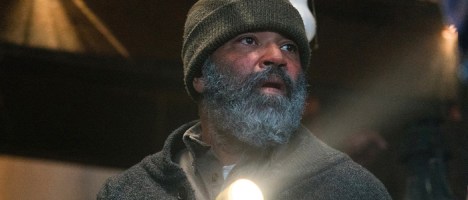
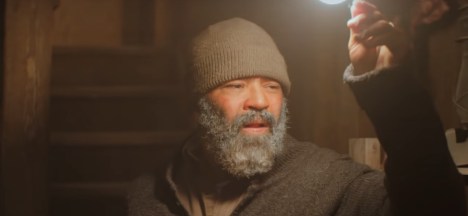
Hold the Dark takes place in a decidedly more remote environment, against the snow backdrops of Alaska. Saulnier goes to great lengths to illustrate the isolation of that environment, paying particular attention to how long it takes Russell Core to reach the small Alaskan town that serves as the starting point of the story before venturing out into the real wilderness. At another point, Vernon Slone stops by an old hostel on his travels. Asked for his point of origin, he’s informed that there was no road connecting the two places. “Not directly,” he clarifies.

Shedding some light on the matter.

As with the snow-covered western wilderness in Wind River, there is a sense that Hold the Dark unfolds against the very limit of the American frontier, at the point where the continent has ceased to provide for the settlers and instead has become something harsh and unforgiving. It is a place that has been settled by humans, but is perhaps untouched by humanity. If Green Room allowed Saulnier to explore the vipers coiled underneath familiar rocks, then Hold the Dark is a story about the animals that hunt at the very edge of civilisation.

Green Room was effectively a cynical and grim take on the familiar horror plot that warned of the dangers lurking off the backroads, just out of sight. Hold the Dark is the story of a hunt for a dangerous predator in a harsh environment. In both films, the monster looks very familiar.

Mask appeal.

Continue reading

New Podcast! Scannain Podcast (2018) #35!

It’s time for the latest Scannain podcast!

This week, I join Jason Coyle and Ronan Doyle to discuss the week in film. As usual, we talk about the top ten and the new releases, as well as what we’ve watched this week. In this episode, the celebration of Agnès Varda continues, dovetailing into the release of her new film Faces Places. We also discuss the Toronto International Film Festival, the masculinity of Clint Eastwood, the strange reception of A Wrinkle in Time and the appeal of the classic Disney animated canon.

We also mark the passing of Irish film critic Stephen Coffey (who wrote under the name of Gar Cremona). Details of the memorial service can be found here, and his books are available for sale here.

The top ten:

  1. King of Thieves
  2. Hotel Transylvania 3: A Monster Vacation
  3. Mamma Mia: Here We Go Again
  4. Christopher Robin
  5. BlacKkKlansman
  6. The House With A Clock In Its Walls
  7. The Predator
  8. Crazy Rich Asians
  9. The Nun
  10. Black ’47

New releases:

You can download the episode here, or listen to it below.


New Podcast! The X-Cast – Season 3, Episode 16 (“Apocrypha”)

I’m back on The X-Cast this week, to cover the second-part of the late third-season mythology two-parter Apocrypha.

Picking up where Piper Maru left off, this conclusion finds Mulder and Scully continuing their separate investigations. Mulder is chasing down the missing tape from Anasazi, The Blessing Way and Paper Clip while Scully is dealing with the fallout from the assassination attempt on Assistant Director Walter Skinner that brings her face-to-face with the man who killed her sister. Justice, legacy and guilt are all major preoccupations, tying into the broader themes of the season as a whole.

Once again, a pleasure to substitute in for Tony Black as host of The X-Cast for an episode, and absolutely thrilled to be joined by the great Christopher Irish from The X-Files Lexicon.

The truth is in here. You can listen to the episode here, or click the link below.

Continue reading