• Following Us

  • Categories

  • Check out the Archives


  • Awards & Nominations

New Podcast! The X-Cast – Season 5, Episode 8 (“Kitsunegari”)

Last year, I was extremely privileged to get to discuss the wonderful Pusher with the sensational Tony Black on The X-Cast. For those who don’t know, Pusher is Tony’s favourite episode ever – and comfortably sits around the edge of my top ten. So no pressure.

As such, it was a delight to get to join Tony for Kitsunegari, the fifth season sequel to Pusher. Outside of the mythology, it was relatively rare for The X-Files to do direct sequels to earlier episodes – even popular ones. Kitsunegari is an entry in a very select club that includes Tooms and Orison. However, it is also an episode with which I’ve had a very complicated relationship. It often feels like a parody of a sequel to Pusher rather than an entirely earnest follow-up, and as such as always felt like it belongs to the fifth season’s broader preoccupations with monstrous progeny as a metaphor for the show’s unexpected evolution and direction. Of course, I’ve always worried that I read too much into it.

As ever, you can make up your own mind. You can listen to the episode here, or click the link below.
Continue reading

New Escapist Column! On Sixties Throwback Qualities of Chris Chibnall’s “Doctor Who”…

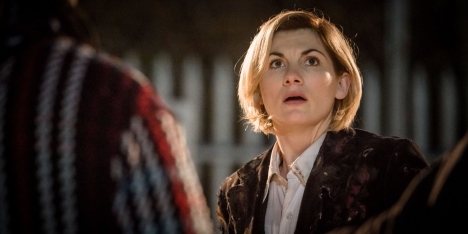
I published a new In the Frame piece at Escapist Magazine this evening, looking at Chris Chibnall’s Doctor Who, which kicked off its second season with Spyfall, Part I and Spyfall, Part II last week.

Cosmetically, Chibnall has done a lot to modernise the show – the way it looks, the way it sounds, the way it’s structured. However, one of the most striking aspects of Chibnall’s era has been the way that it has drawn so heavily and so consciously from the show’s earliest days. Certain vocal segments of Chibnall’s Doctor Who complain that it is too modern and too disconnected from the show’s roots. This has always seemed a strange criticism to level at a showrunner who arguably owes as much to Terry Nation as he does to Russell T. Davies.

You can read the piece here, or click the picture below.

New Escapist Column! On “The Witcher” and True Monstrosity…

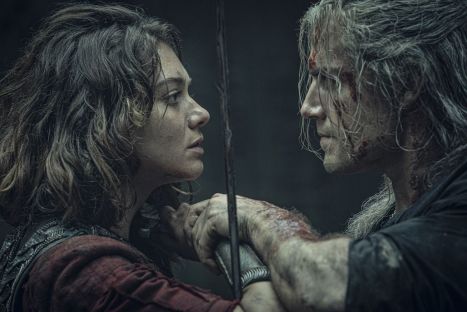
I published a new In the Frame piece at Escapist Magazine last week, looking at the Netflix streaming show The Witcher.

The Witcher is an interesting show, the story of a monster hunter who drifts through a magical world that seems caught on the cusp of war. The first season is very broad and largely episodic, but it does have a clear thematic through line. The series plays with the tropes and conventions of the fantasy genre, but most pointed with the idea of monstrosity. The Witcher is the story of a man who kills monsters, but also a story about how sometimes true monstrosity comes in human form.

You can read the piece here, or click the picture below.

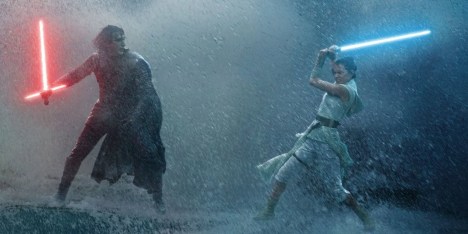
New Escapist Column! On Servicing the Wrong Fans in “The Rise of Skywalker”…

I published a new In the Frame piece at Escapist Magazine a few weeks back, looking at the ways in which Star Wars: Episode IX – The Rise of Skywalker worked so hard to erase Star Wars: Episode VIII – The Last Jedi, and in doing so played to the worst aspects of fandom. It proved controversial.

It is hard to determine exactly what The Rise of Skywalker is about, beyond the vague hope of parents that their radicalised children might be redeemed. Indeed, The Rise of Skywalker is largely defined by reaction. It exists primarily as a rejection of The Last Jedi, often feeling as though it was written from a beat sheet punctuated by angry replies to Rian Johnson over the past two years. The result is a movie that knows what it isn’t, but desperately unsure of what it actually is.

You can read the piece here, or click the picture below.


New Podcast! The X-Cast – Season 5, Episode 3 (“Unusual Suspects”)

Think of it as a prequel podcast for a prequel episode. Before I recorded the podcasts for Redux I and Redux II, I actually joined Sarah Blair on The X-Cast to discuss Unusual Suspects. Appropriately enough, given the episode’s production history, it was the first fifth season podcast that I recorded.

Unusual Suspects is one of my low-key favourite episodes of The X-Files. Gun to my head, whether pressed by a lone gunman or not, it is one of the most underrated episodes in the show’s entire eleven-season run. Notably, it is the only time (barring collaborations on Memento Mori or Emily) that Vince Gilligan takes a proper shot at writing a conspiracy or mythology episode. As such, he gets a chance to put his mark on some of the most coveted toys in The X-Files toy chest. The results are suitably Gilliganian, a story about little men and uncontrollable chaos stemming from the law of unintended consequence.

You can listen to the episode here, or click the link below.

Continue reading

New Escapist Column! On the Use of Long Takes in “1917”…

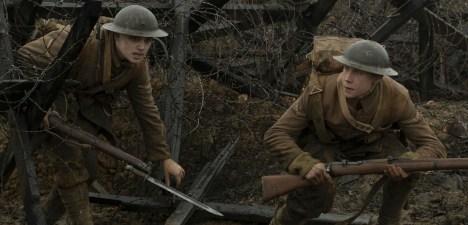
I published a new In the Frame piece at Escapist Magazine a little while ago, looking at the use of long takes within 1917.

The long take is an interesting cinematic technique. Most obviously, it’s a dazzling display of craft and technical proficiency. It’s a power move that exists largely so a director can flex their muscles. However, it also serves a compelling paradoxical purpose. The longer that a director holds a take, the more that the audience drifts away from reality. Cuts allow the audience to ground themselves, to process what they have seen. Removing cuts forces the audience to hold a single long gaze. In 1917, Sam Mendes uses that gaze to collapse time and space. In doing so, he captures some of the insanity of war.

You can read the piece here, or click the picture below.

New Escapist Column! On the Need of “Star Wars” to “Grow Beyond” the Skywalkers…

I published a new In the Frame piece at Escapist Magazine last night, looking at the future of the Star Wars brand.

While there is still some ambiguity about where Disney will take the cinematic franchise following the release of Star Wars: Episode IX – The Rise of Skywalker, a clean break might be the best course of action. Modern franchises are too beholden to fan service and familiarity, to retreading old ground in order to avoid offending or challenging existing fans. This prevents franchises from growing and embracing new ideas and new possibilities. It leaves them stagnant, and ultimately does little to appease fandoms with very strong ideas of how characters or ideas should be portrayed.

You can read the piece here, or click the picture below.

Online Film Critics’ Society Awards, 2019

Christmas is over, but awards season keep right on truckin’.

I’m a member of a couple of critics’ organisations, so we’ve been releasing a couple of these lists upon which I voted. You can also see my own end-of-year list as a Twitter thread.

In the meantime, the Online Film Critics’ Society have released their end of year awards. Thrilled to be a part of the group, who are voting on films released internationally during the calendar year of 2019. As such, it will be a different pool of films than the Dublin Film Critics Circle awards.

Anyway, without further ado…

Continue reading

“So, Your Son is a Nazi”: Modern Hollywood’s Weird Fixation on Feel-Good Stories About Fascists…

JoJo Rabbit is supposed to be an “anti-hate satire”, but what exactly is it satirising?

To be fair to director Taika Waititi, JoJo Rabbit is a well-made and charming crowd-pleaser. It manages something genuinely impressive, offering a feel-good coming of age comedy set against the backdrop of Germany in the dying days of the Second World War. It belongs the awkward, saccharine genre that produced films like Jakob the Liar or Life is Beautiful or The Day the Clown Cried. It is impossible to overstate how thin a razor blade Waititi is dancing, and how remarkable it is that he maintains his balance. The film never feels too sombre or too dark, but never as tasteless as something like The Book Thief.

Of course, Waititi largely manages this through cinematic sleight of hand. He avoids dwelling too heavily or for too long on the victims of fascist oppression in Nazi Germany. JoJo Beltzer finds a young Jewish girl hiding in his attic, but the film never details the horrors of the Final Solution. The characters are repeatedly confronted with the sight of bodies hanging in the public square, but the camera never really lingers on them. Instead, it focuses on JoJo’s reaction to them. The audience’s gaze is fixated on his gaze. The question isn’t how the audience feels about the horror, but how they feel about how JoJo feels.

This raises an interesting and slightly unsettling question about the recent wave of Hollywood films exploring the emergence of the modern extreme right and the resurgence of fascist ideology. Who exactly are these films for? What is the intended audience of JoJo Rabbit, and what exactly is it saying to them?

Continue reading

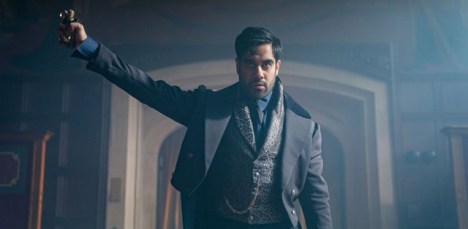
Doctor Who: Spyfall, Part II (Review)

Spyfall, Part II certainly takes a sharp turn.

In hindsight, despite its literal holiday trappings, it seems fair to position Spyfall, Part I as a “holiday special.” It is consciously designed as a “romp” or a “runaround”, with a whole host of homages to something that audiences enjoy. In the case of Spyfall, Part I, that piece of pop culture happens to be the James Bond franchise. In Voyage of the Damned, it was The Poseidon Adventure. In A Christmas Carol, it was… well, guess. In The Doctor, the Widow and the Wardrobe, it was The Chronicles of Narnia. In The Return of Doctor Mysterio, it was generic superhero films.

Master of his domain.

It is retroactively possible to identify Spyfall, Part I as part of the show’s “holiday episode” genre because of the sharp way in which Spyfall, Part II pivots away from the defining features of the preceding adventure. Director Jamie Magnus Stone is replaced by Lee Haven Jones, which is most likely a result of production block scheduling. That production block scheduling reflects the distinctions between Spyfall, Part I and Spyfall, Part II, because Spyfall, Part I needs to use South Africa as a shooting location while Spyfall, Part II is produced in a more traditional manner.

However, Spyfall, Part II distinguishes itself from Spyfall, Part I in more than just its production choices. The episode marks a very sharp departure from Spyfall, Part I. For all its flaws, Spyfall, Part I knew what it was doing. It was doing Doctor Who as an elaborate homage to James Bond, while flooding the screen with production value, a star-studded cast, some exotic locations and a big “moment” on which it might hang a cliffhanger. Spyfall, Part II lacks even that sense of purpose, to the point that it’s hard to tell exactly what the episode is meant to be about.

Hangaround.

Continue reading