• Following Us

  • Categories

  • Check out the Archives


  • Awards & Nominations

“The Price You Pay for Being Successful”: How “The Empire Strikes Back” Was One of the First Blockbusters of the Eighties…

Star Wars is often discussed in the context of the late seventies, whether the political context of the Vietnam War or George Lucas’ status as an up and coming director alongside the likes of Francis Ford Coppola or Steven Spielberg or even just the way in which it shifted movie-making away from the new Hollywood model towards the blockbuster template.

Despite all of this, it is often overlooked just how firmly Star Wars: Episode V – The Empire Strikes Back is rooted in the context of the early eighties. There are obviously any number of reasons for this. Most obviously, Star Wars: Episode VI – Return of the Jedi consciously retreated back to the late seventies trappings of the original film, right down to its decision to restage the Vietnam War with adorable toyetic teddy bears in the place of the Viet Cong. There’s also a sense in which the cultural markers of The Empire Strikes Back are more subtle than those of Star Wars.
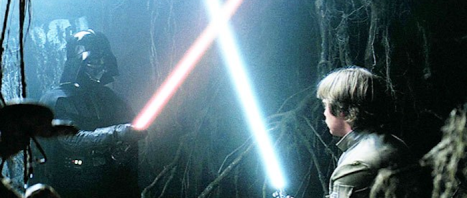
Sabre-rattling.

Watched from a modern perspective, The Empire Strikes Back seems to herald the arrival of the new decade. Like all great sequels, it broadens both the scale and scope of Star Wars, but it also pushes the franchise forward. Even beyond the now iconic revelations about family lineage and power dynamics, The Empire Strikes Back radically redefines what it means to be a Star Wars film. It is no longer about navigating the moral ambiguity of an uncertain time, wrestling with the spectre of American might. It is instead about exploring social power structures, of finding one’s place in system.

The Empire Strikes Back might just be the first truly great eighties movie.
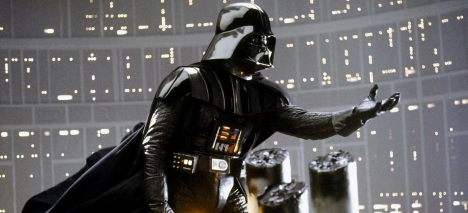
A little father-son outreach.

Continue reading

New Escapist Column! The “Hiatus” After “The Rise of Skywalker”…

I published a new In the Frame piece at Escapist Magazine last night, looking at what follows Star Wars: Episode IX – The Rise of Skywalker.

Disney have announced that there will be a three-year gap between The Rise of Skywalker and the franchise’s next theatrical release. However, is this really a hiatus? In the nineties and even into the twenty-first century, franchises like Batman and X-Men routinely went three or four years between new releases. Each of the original Star Wars films were separated by three years. It perhaps speaks to the heightened nature of modern franchise production that the idea of going three years without a Star Wars film feels like a really long time – even with The Mandalorian on the air.

You can read the piece here, or click the picture below.

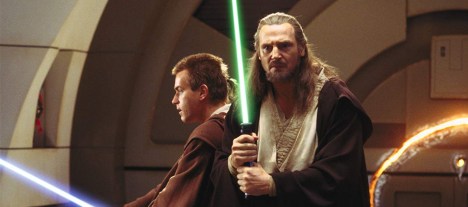
“Can You Help Him?” The Millennial Malaise of “The Phantom Menace”…

It is almost a cliché to say it, but 1999 was an amazing year for movies.

No, really.

Of course, everything is subjective and different people have very different tastes, but there was something special about that year. There were traditional crowd-pleasers like The Green Mile and The Cider House Rules. There were young poppy disruptors like Go! or Run Lola Run. There were formative films from era-defining directors like The Sixth Sense, Magnolia or Election. There were epoch-defining hits like The Matrix or Fight Club. There was a wave of teen movies serving an underserved audience like Cruel Intentions, 10 Things I Hate About You or The Virgin Suicides.

And there was Star Wars: Episode I – The Phantom Menace. It was comfortably the most anticipated movie of the year, to the point that its teaser trailer became a cinematic event that arguably inflated the box office of Meet Joe Black. It seemed perfectly timed. The generation of fans who had grown up with Star Wars were now old enough to have their own families, with which they might share the experience. The public’s appetite had been whetted by theatrical re-releases of the original films to prove that there was still a hunger out there for the franchise.

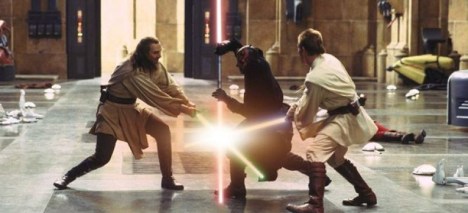
Not quite a duel in the franchise crown.

However, The Phantom Menace is very rarely discussed in the context of the cinematic marvel of 1999, despite being crowned the year’s box office champion. There are plenty of reasons for that, of course. Most obviously, it wasn’t very good. Perhaps more importantly, it aggressively upset the established fanbase who promptly made very silly statements about how George Lucas had “raped their childhood” by continuing to make films that weren’t to their specifications. As such, The Phantom Menace is primarily notably as a failure and disappointment, which it undoubtedly is.

That said, there is something very interesting happening beneath the surface of The Phantom Menace, and something that perhaps merits discussion in the specific context of its original release. The Phantom Menace was the only Star Wars film to be released in the nineties, serving as both the cornerstone and the capstone of what Star Wars looked like during the decade. The films that would follow were shaped by the concerns of their own era, warped and informed by the War on Terror. However, in hindsight, The Phantom Menace is very much a 1999 movie, through and through.

Anakin, not Anakin’t.

Continue reading

René Auberjonois

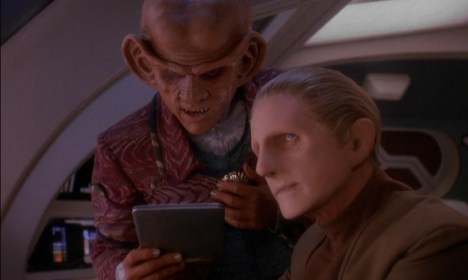
René Auberjonois passed away at the weekend.

Auberjonois was a tremendously prolific and talented performer. Indeed, one of the most striking things about his passing has been the sheer diversity among his fans. It seems like everybody has a different memory of Auberjonois, a different role with which they associate him. Some people remember him from M*A*S*H, some people remember him from Benson, others associate him with cult roles like King Kong. However, it seems like everybody remembered Auberjonois in one form or another.

I have a long and deep attachment to Auberjonois. He was an accomplished voice actor, and I knew him well from various cartoons that I would have watched as a child and even beyond that; Chef Louis in The Little Mermaid, Flanagan in Cats Don’t Dance, his vocal turns in Justice League and Justice League Unlimited. However, perhaps unsurprisingly, the part that I most associate with Auberjonois is his work as Constable Odo on Star Trek: Deep Space Nine. It is a performance with which I grew up and to which I have frequently returned.

It is a performance which has seemed richer every time that I have watched, a fantastic demonstration of the actor’s talent.

Continue reading

Non-Review Review: Jumanji – The Next Level

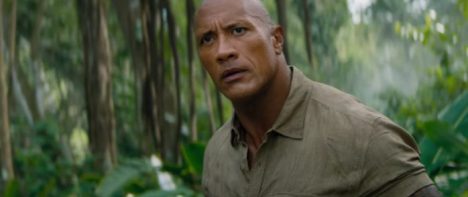
Jumanji: The Next Level is a deeply weird and uneven film, but one that works much better than it really should.

To be fair, a lot of the more serious problems with The Next Level are the problems that face many blockbuster sequels. The film scales upwards from its predecessor, Jumanji: Welcome to the Jungle. Given than Welcome to the Jungle was already somewhat overstuffed, The Next Level is bursting at the seams. Not only does the film bring back the entire primary cast from the previous film and bulk up the material for characters in supporting roles, it also adds at least three new major actors to the cast and attempts to maintain the same setpiece-driven pacing that kept Welcome to the Jungle moving.

Game on.

However, this doesn’t capture just how weird The Next Level allows itself to become. The film’s final act features one of the most bizarre emotional pivots in recent memory – a plot resolution that includes a terminal cancer diagnosis, a flying horse and Awkwafina doing her best impression of Danny DeVito. This isn’t even the primary plot. This is the pay-off to a secondary storyline that has, by this point in the narrative, been pushed into the background. None of this should work. Truth be told, it doesn’t really work. However, it is strangely committed. The Next Level never wavers as its plot leads to these strange places.

Like Welcome to the Jungle before it, The Next Level benefits from a propulsive approach to storytelling. To dwell on any of its plot points or character beats or emotional pay-offs would invite madness, and so the film never really does. The Next Level never settles down long enough to let the audience really appreciate how surreal or unusual its framing of these conventional tropes actually is, because there’s always something more to see or to do. The result is a messy and convoluted piece of blockbuster cinema that openly frays at the edges (and throughout), while holding together better than it should.

Solid as The Rock.

Continue reading

New Podcast! The Time is Now – Season 2, Episode 9 (“Jose Chung’s Doomsday Defense”)

With Christmas coming up, The Time is Now is firing up again. This week, I finally got to talk about a Darin Morgan episode, joining I was flattered to join Paige Schector and Kurt North to discuss Jose Chung’s “Doomsday Defense.” It remains one of my favourite episodes of television ever, in one of my favourite seasons of seasons of television ever.

If you have never watched Millennium, this is actually the perfect opportunity to dip your toe in the waters. Jose Chung’s “Doomsday Defense” is an episode of Millennium through and through, suitably “millenniumistic” and concerned with the themes of the show around it, but it is also an accessible Darin Morgan script feature Charles Nelson Reilly reprising his iconic role from Jose Chung’s “From Outer Space.” It is playful, funny and deeply moving. It is all that one could want from an episode of television.

As ever, you can listen directly to the episode here, subscribe to the podcast here, or click the link below. I really hope you enjoy.

Continue reading

New Escapist Column! The Incredible Expansiveness of “Star Wars”…

I published a new In the Frame piece at Escapist Magazine this evening, getting ready for the release of Star Wars: Episode IX – The Rise of Skywalker.

One of the most interesting and compelling aspects of the larger Star Wars mythos has always been its expansive nature, the extremely detailed world that George Lucas created to tell a very simple story. That complexity allows for imagination to run wild, for fans to populate that world with their own readings and speculation. However, there’s also an underlying tension at play; in that it exists as part of a marketing machine, it leads to the clutter of the prequels, and it occasionally leads fans to get over-invested with their version of these characters.

You can read the piece here, or click the picture below.

New Escapist Column! “Charlie’s Angels” and the Franchise-ification of Everything…

I published a new In the Frame piece at Escapist Magazine a little while back, looking at the recent Charlie’s Angels film.

Elizabeth Banks’ Charlie’s Angels is a mess of a film, one that struggles with a variety of problems. Its biggest problems are tonal, with the movie unsure of exactly how it wants to pitch itself: is it a gritty reboot or a campy adventure? There’s a tension at the heart of the film, one which traps it between past and future. Banks clearly wants to reinvent Charlie’s Angels, but she’s also unable to escape the franchise’s history. This is an interesting push-and-pull, one that arguably illustrates the tension of modern franchise film-making.

Most obviously, is it really necessary for a campy seventies sexy spy series to have a “canon”, and is it really necessary for a cinematic adaptation to be beholden to that “canon”? You can read the piece here, or click the picture below.

159. Gone With the Wind – Winter of ’39 (#165)

Hosted by Andrew Quinn and Darren Mooney, and this week with special guests Grace Duffy and Rioghnach Ní Ghrioghair, The 250 is a fortnightly trip through some of the best (and worst) movies ever made, as voted for by Internet Movie Database Users. New episodes are released Saturdays at 6pm GMT.

So this week, Victor Fleming, George Cukor and Sam Wood’s Gone With the Wind.

A tale of revolution, romance and redemption set against the backdrop of the Civil War, Gone With the Wind remains one of the most sweeping epics ever produced by the studio system. The decades-long love affair between Scarlett O’Hara and Rhett Butler unfolds against the backdrop of the fall and rise of Scarlett’s family fortune.

At time of recording, it was ranked 165th on the list of the best movie of all time on the Internet Movie Database.

Continue reading

New Podcast! The X-Cast – Season 5, Episode 2 (“Redux II”)

It’s a bit of a change up on The X-Cast this week. Last week, I joined Tony Black to discuss the first part of the fifth season premiere Redux I. This week, Tony swapped out with Russell Hugo, whom I joined to discuss Redux II.

Redux II is an interesting beast. I am actually appreciably fonder of Redux II than I am of Redux I. I think the second part of the premiere does a lot of the stuff that the first half attempts, but in a much more interesting and compelling manner. It’s not quite as good as Gethsemane at the end of the fourth season, but it’s still a surprisingly ambitious and adventurous story for The X-Files to tell at this point in its run – the moment at which the series is at the peak of its popularity and The X-Files: Fight the Future is looming large in the horizon. I hope this was a fun and interesting discussion.

You can listen to the episode here, or click the link below.

Continue reading