• Following Us

  • Categories

  • Check out the Archives


  • Awards & Nominations

New Podcast! The X-Cast – Season 4, Episode 1 (“Herrenvolk”)

I’m back on The X-Cast this week, covering Herrenvolk with the one and only Tony Black, kicking off the podcast’s fourth season coverage.

Herrenvolk is an interesting episode, arriving at a pivotal time in the history of The X-Files. Chris Carter’s attention was divided over the fourth season, split between the first season of Millennium and the pre-production on what would become The X-Files: Fight the Future. As a result, the fourth season is a particularly disjointed and unfocused point in the show’s run, but one that contains no shortage of treasures.

It was, always, a delight to talk over the episode with Tony. I’m always honoured to be asked back. We also talk a little bit about the fourth season of the series as a whole, about its reputation and legacy and about where it would rank personally. I hope you enjoy it.

The truth is in here. You can listen to the episode here, or click the link below.

Continue reading

Spoiling for a Fight: Thoughts on Contemporary Spoiler Culture…

It’s happening again.

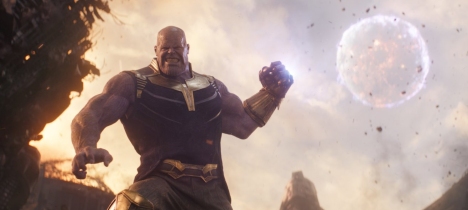
Last year, to mark the release of Avengers: Infinity War, Thanos demanded your silence. This year, to mark the release of Avengers: Endgame, audiences are being told not to spoil the endgame. These campaigns are indicative of how a lot of modern pop cultural discourse works; for example, discussions around Game of Thrones or Star Wars: Episode IX – The Rise of Skywalker. There’s a strong push in modern pop culture towards the concealing plot details from these big monumental works, these pop cultural events. There is a strong push to preserve surprise and to avoid direct discussion of the material in any real detail, for fear that such discussions might possibly reach the eyes of somebody who would rather remain uninformed of any details about these phenomena.

To be fair, it is possible to sympathise with such a position. People want to enjoy media on their own terms. People do not want to have their responses to media shaped by outside factors like the opinions of others or the details of the plot. While one can readily cite studies suggesting that spoilers can actively improve enjoyment of a film, it is also entirely possible to find studies that argue the exact opposite. More than that, it is increasingly difficult for a person to avoid coming into contact with media talking about these pop cultural phenomenon; social media is built on the concept of immediacy and relevance, and so anybody connected in anyway to the internet is bound to have some contact with Star Wars, Game of Thrones or Endgame.

At the same time, there is something slightly suffocating in all of this. There has always been mass culture. There have always been people writing about mass culture. There has always been media that could be spoiled. There have always been press screenings. There was a seven month gap between the premiere of The Usual Suspects at Sundance and its release to the American public, and its twist remained a surprise to the general public. Generally speaking “just use your common sense” has always been good advice when talking about a particular film or television show. As such, the modern panic over “spoilers” seems unnecessary and counterproductive.

Note: This article contains a variety of spoilers, most heavily for Avengers: Infinity War and Captain Marvel. Put proceed at your peril.

Continue reading

Not So Super, Hero: What Modern Superhero Blockbusters Could Learn From “Akira”…

This Saturday, as part of the annual “Anime April”, I’ll be discussing Akira on The 250, the weekly podcast that I co-host discussing the IMDb’s Top 250 Movies of All-Time. However, I had some thoughts on the film that I wanted to jot down first. You can listen to last week’s episode on Nausicaa of the Valley of the Wind here. You can listen to our episode on Akira here.

Akira is a startlingly influential film.

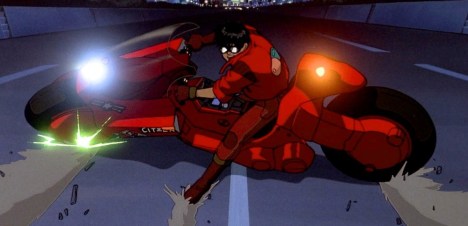
Even if a person hasn’t seen Katsuhiro Otomo’s animated masterpiece, they have undoubtedly felt its influence rippling through popular culture in various media. In music, Kanye West cites it as his “biggest creative inspiration”, to the point that his video for Stronger is almost a shot-for-shot remake. Rian Johnson has cited Akira as a major influence on his own Looper. Josh Trank and Max Landis’ Chronicle has a number of obvious similarities to Akira. Even outside of these direct references, individual elements of the film continue to have an outsized influence on American popular culture. The iconic red bike pops up in Ready Player One. Even individual shots have been mimicked and imitated, such as the fantastic “Akira bike slide” from early in the film.

Inevitably, there has been much talk of a potential Americanised remake of Akira. After all, there have been other big-budget live action adaptations of cult Japanese projects like Ghost in the Shell or Alita: Battle Angel, and so it is surprising it has taken so long. There were rumours of an adaptation by Albert Hughes that might star Morgan Freeman. (James Franco might have headlined.) More recently, Jordan Peele declined the invitation to direct the adaptation, despite his affection for the source material. The most recent rumours suggested that Leonardo DiCaprio might be producing a version directed by Taika Waititi, which would shift the action from Neo-Tokyo to Neo-Manhattan. There were other significant changes made to the source story.

There are a variety of reasons why Akira has been so difficult to adapt. Most optimistically, it may simply be a case that so much of what made the original film iconic has already been filtered through to audiences in the movies indebted to it, like Looper or Chronicle; this is the challenge adapting John Carter of Mars following the success of films like Star Wars or Flash Gordon. More pragmatically, Akira is a story rooted in a very specific cultural context. It is not an American story, it is a story anchored very specifically in eighties Japan. Of course, this is not necessarily a problem; samurai films like Shichinin no Samurai or Yojimbo could be reworked for American audiences as cowboy films, their cultural context shifted in the journey across the Pacific. Still, it is a challenge.

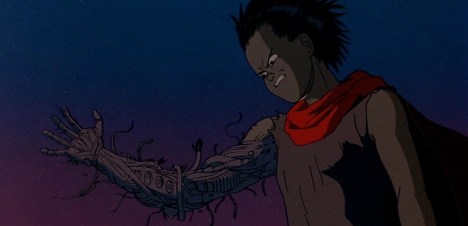
However, this challenge of cultural translation suggests one of the fundamental issues with adapting Akira for American audiences. It is hard to define Akira in terms of a single genre; it is a coming of age science-fiction deconstruction of masculinity infused with a psychedelic sensibility. However, in terms of visual style and narrative flow, the movie’s closest relatives in contemporary American cinema are superhero films. Superheroes are, after all, the dominant American cinematic mode of the twenty-first-century to date. Indeed, a modern audience approaching Akira might be tempted to read it in the context of that genre. If Chronicle is to be considered “the American Akira”, it is notable that it uses the language of the superhero genre to translate the story.

However, there is something fundamentally different about the way in which Akira approaches the idea of the superhero figure as compared to mainstream superhero films, and this difference might demonstrate why an adaptation of Akira for American cinema might pose such a challenge.

Continue reading

126. Kaze no tani no Naushika (Nausicaä of the Valley of the Wind) – Anime April 2019 (#216)

Hosted by Andrew Quinn and Darren Mooney and with special guests Graham Day and Marianne Cassidy, The 250 is a (mostly) weekly trip through some of the best (and worst) movies ever made, as voted for by Internet Movie Database Users. New episodes are released every second Saturday at 6pm GMT, with the occasional bonus episode between them.

This year, we are proud to continue the tradition of Anime April, a fortnight looking at two of the animated Japanese films on the list. This year, we watched a double feature of Hayao Miyazaki’s Kaze no tani no Naushika and Katsuhiro Ôtomo’s Akira.

This week, the first part of the double bill, Kaze no tani no Naushika, celebrating its thirty-fifth anniversary.

Unofficially and retroactively folded into the Studio Ghibli canon, Nausicaä of the Valley of the Wind was only Hayao Miyazaki’s second film. Nevertheless, it demonstrated remarkable confidence. It also signalled a lot of the director’s interests, with its tale of a strong young woman navigating the aftermath of a horrific environmental disaster and trying to prevent a new war from breaking out.

At time of recording, it was ranked the 216th best movie of all time on the Internet Movie Database.

Continue reading

New Podcast! Scannain Podcast (2019) #14!

It’s time for the Scannain podcast!

This week, I join Jay Coyle and Luke Dunne from Film in Dublin to discuss the week in film.  As usual, we talk about what we watched this week, including an in-depth discussion of Unicorn Store, the charm of Grosse Point Blank, a reflection on the two sequels to The Matrix, the power of Little Woods and the inevitability of remaking Akira. In terms of film news, the big news of the week is the launch of Criterion Channel, which is now streaming classic movie content online. There is also the passing of veteran character actor Seymour Cassel. And a nice bracing dose of tax reform, with revisions made to Section 481.

All of this plus the top ten and the new releases.

The top ten:

  1. What Men Want
  2. Five Feet Apart
  3. The Sisters Brothers
  4. Missing Link
  5. Captain Marvel
  6. Us
  7. Peppa Pig: Festival of Fun
  8. Pet Sematary
  9. Shazam!
  10. Dumbo

New releases:

  • Wonder Park
  • Hell Boy
  • Don’t Go
  • Little
  • mid90s
  • Wild Rose

The Great Regression: “Little”, “Shazam!”, “Unicorn Store” and the New Cinema of Arrested Development…

It’s always fun to pick at trends in contemporary cinema, especially when so many movies with similar ideas arrive in such rapid succession.

Film production is a long and arduous process. This is part of what distinguishes it from television. Films spend years in development and then production, their releases carefully managed and synchronised. As a medium, mainstream cinema often lacks the urgency suggested by the churn of television. It is harder to immediately react to trends. This is why, for example, the feature film Slender Man arrived more than half-a-decade after the character had taken the internet by storm and arguably after culture’s attention had wandered in other directions. Similarly, the success of movies like Iron Man and The Avengers led other studios to pursue that model of film-making, but it’s telling that the DCEU lagged roughly half a decade behind with Man of Steel and Justice League.
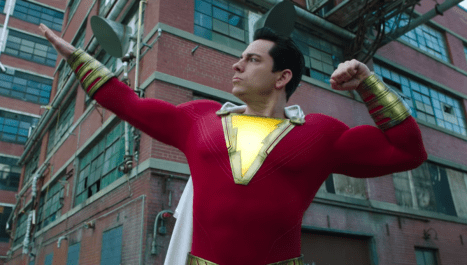
This is why it is particularly interesting when movies tackling the same big ideas happen to be released around the same time; Deep Impact and Armageddon, The Prestige and The Illusionist, Capote and Infamous. These films arrive so quickly that they are unlikely to exist in response to one another. Instead, they suggest similar ideas developed in parallel, perhaps hinting at some deeper motivating factor that spurred these similar ideas into development. Recent weeks have seen the release of three relatively distinct films operating in three very different genres; Shazam! is a superhero story, Little is a broad nostalgic comedy, Unicorn Store is a quirky independent film. However, each of those three films gets at the same idea.

Shazam!, Little and Unicorn Store are all stories about the intersection of childhood and adulthood. Shazam!, Little and Unicorn Store all feature adults who become children, in a manner of speaking. Of course, Unicorn Store is rather less literal than the other two examples, with Kit content to simply recapture her childhood dreams rather than to physically transform herself into a child. While Shazam! might more accurately be described as the story of a child who becomes an adult, the story’s central thrust is that Billy Batson needs to lean to be comfortable being a child and that he cannot remain an adult superhero forever. (Indeed, the primary plot of Shazam! features an adult trying to reclaim “the power of Shazam”, with the film insisting that it belong to a child.)
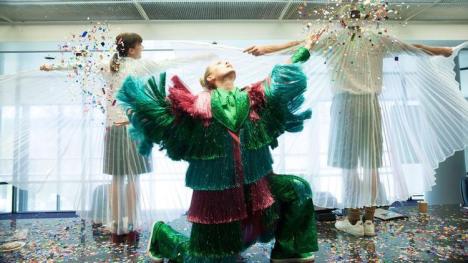
Still, taken together, these films suggest an interesting trend within contemporary pop culture. They hint at the awkward relationship that exists between childhood and adulthood in modern society, and the difficult that many individuals face in navigating the boundaries between the two. In Little, a forty-year-old tech entrepreneur finds herself transformed into her teenage self so that she might live the childhood that she previously denied herself. In Shazam!, a superhero is able to transform into a child with the mere mention of the title word, able to retreat from the responsibilities of heroism into the comforts of a warm and loving family environment. In Unicorn Store, Kit still lives in her parents’ house and sleeps in her childhood bedroom, dreaming of owning a unicorn.

These films are rather strange, in large part because they run counter to so many of the beloved stories with which they might otherwise be compared. During the eighties and even into the new millennium, children dreamed of the freedom that being an adult might afford them. In recent years, many of those children grew into adults who longed for the relative safety and security of childhood.

Continue reading

Non-Review Review: Little Woods

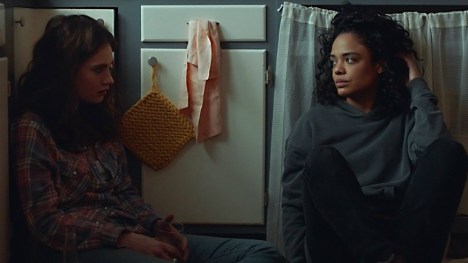
Little Woods is a slow and somber film that never rushes, perhaps because it understands that its characters have no place to go.

There’s a strong central irony built into Little Woods, a story that unfolds against the north-western frontier of Washington State. Ollie lives on what is effectively the edge of the frontier, that great American wilderness. However, manifest destiny has not delivered. The frontier is not as vast as it might seem. Instead, Ollie finds herself trapped on the edges, pressed against the limits of the United States. Little Woods is a story about the boundaries on the extremes of the American Dream. It is no coincidence that Nia DaCosta’s theatrical debut opens and closes at the Canadian border; it is a story of character who are pressed and squeezed against the margins, at the end of everything that they know.

The circumstances Tessa-t her.

There is a compelling stillness to Little Woods, anchored in a fantastic central performance from Tessa Thompson. Little Woods works well in several different modes: as a character study, as a crime drama, as a frontier story. The film is suspenseful when it needs to be, capable of making the audience squirm when it wants them to. However, it is most effective in its relative stillness. Little Woods never feels sensationalist or absurd. It never feels exploitative or stylised. Instead, there is something very effectively grounded and mundane in the portrait that the film traces of those people trapped on the margins. There is something very matter-of-fact about the way in which Little Woods portrays the choices (or, more importantly, the lack of choices) afforded its characters.

Little Woods is an evocative, effective and atmospheric about characters living in a liminal space.

Sister act.

Continue reading

Non-Review Review: Little

Little overcomes some big problems.

There are a number of very obvious flaws with Little. On a very superficial level, the film suffers from the problem that affects a lot of comedies. Little is simply not as funny as it thinks that it is. The jokes are not bad, and don’t fall flat, but also don’t land as efficiently as they might. Even beyond that, Little suffers from some very serious structural issues. The film has a short attention span, often allowing its focus to wander without a clear sense of purpose or motivation. More than that, Little often struggles to decide which of its two primary plots (and leads) to focus upon.

A Little goes a long way.

These are serious issues, and they prevent Little from working as well as it might otherwise. However, the film works much better than these issues would suggest. There is something surprisingly endearing about Little, a genial quality that prevents the film from ever crashing too hard. It isn’t just the relatively simple (bordering on simplistic) central thesis about childhood and playfulness, it is also the empathy that the film feels for most of its cast, especially those introduced as comedic fodder. Little is a very pleasant film, particularly by the standards of studio comedy.

However, the film’s ace in the hole is its fifteen-year-old star Marsai Martin, perhaps best known for her work on Blackish. Martin produced Little as a vehicle for her talent, and it is an effective showcase. Martin carries a surprising amount of the film with a surprisingly nuanced performance for what is a deliberately broad comedy. Martin is not only game for the film’s jokes, but also capable of handling the broad emotional range (and swift emotional transitions) that the script demands of her. Little might just be Martin’s big break.

Somebody’s assistant could use a pay bump.

Continue reading

“The Undiscovered Country… the Future!”: Star Trek VI and the Unexpected End of History…

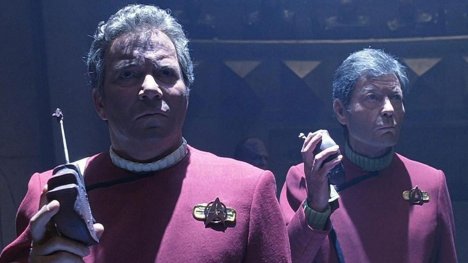
Early in Star Trek VI: The Undiscovered Country, the Klingon Chancellor Gorkon offers what appears to be a fairly dramatic misreading of Hamlet.

Opening a dinner between the representatives of the Klingon High Council and the senior staff of the Enterprise, Gorkon raises his glass of Romulan Ale in salute. “I offer a toast,” he states. “The undiscovered country, the future.” By most accounts, this isn’t what Shakespeare meant when he allowed the Danish Prince to monologue about “the undiscovered country.” The dialogue is quite explicit that Shakespeare was talking about death rather than the future. Hamlet is reflecting upon the possibility of “something after death, the undiscover’d country from whose bourn no traveller returns.” To be fair to Gorkon, this may be a simple translation error; after all, the Klingon Chancellor boasts that “you have not experienced Shakespeare until you have read him in the original Klingon.”

However, increasingly, The Undiscovered Country suggests that Gorkon’s toast is not a simple misreading of the Bard. In the most obvious of senses, Gorkon himself gets to travel to “the undiscovered country” almost immediately after the dinner, murdered by two assassins in Starfleet uniforms as part of a plot to destabilise the possibility of peaceful relations between the Klingon Empire and the Federation. Indeed, even within the larger context of the Star Trek franchise, there is a sense that the future of the Klingon Empire is inexorably associated with death. Gorkon’s peace with the Federation sets in motion the gradual decay and decline of the Klingon Empire that runs through stories like Heart of Glory, Sins of the Father, The Way of the Warrior, Tacking Into the Wind.

However, watching The Undiscovered Country more than a quarter of a century removed from its original context, that seeming misstatement seems increasingly deliberate and calculated. The Undiscovered Country is perhaps the most under-appreciated of the Star Trek films, in large part due to how it consciously and deliberately twins the notions of “death” and “the future”, insisting that perhaps the past must die so that the future might live. In the world of The Undiscovered Country, death is still frightening and mysterious and uncharted. However, it is also a necessary part of growth and evolution. In the years since the release of The Undiscovered Country, it seems like more franchises could take that idea to heart.

Continue reading

125. V for Vendetta (#153)

Hosted by Andrew Quinn and Darren Mooney, The 250 is a (mostly) weekly trip through some of the best (and worst) movies ever made, as voted for by Internet Movie Database Users. New episodes are released every Saturday at 6pm GMT.

This time, James McTeigue’s V for Vendetta.

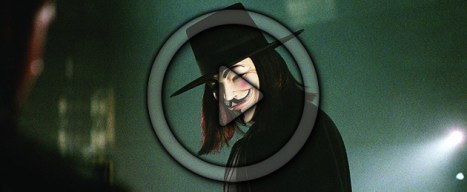
Accosted by “finger men” for breaking curfew, Evey Hammond is rescued by a mysterious stranger who only introduces himself as “V.” As Evey finds herself drawn deeper into the world of this violent vaudevillian figure and as she discovers more and more of his plot to topple the country’s totalitarian regime, Evey finds herself wonder whether this masked figure is a vigilante or villain.

At time of recording, it was ranked the 153rd best movie of all time on the Internet Movie Database.

Continue reading