• Following Us

  • Categories

  • Check out the Archives


  • Awards & Nominations

Star Trek: Voyager – One Small Step (Review)

Star Trek: Voyager marks the end of the future.

Many fans would point to Star Trek: Enterprise as the moment that the larger Star Trek franchise turned its gaze backwards and embraced a sense of broad nostalgia for a future that was already behind that explored in the original series. After all, the last television series of the Berman era took the franchise back to its roots and paved the way for both J.J. Abrams’ pseudo-reboot in Star Trek and for Bryan Fuller and Alex Kurtzman’s prequel in Star Trek: Discovery.

First (and Last) Flight.

However, this overlooks the importance of Voyager in signposting this shift. In some ways, Voyager represents the end of the final frontier. Chronologically speaking, Endgame is the last episode of the larger Star Trek franchise, the future beyond the finale explored only in Star Trek: Nemesis and as part of the back story to the rebooted Star Trek. Chronologically speaking, Voyager represents the last television series within the Star Trek universe. However, Voyager very carefully and very consciously seeds the nostalgia that would later envelope the franchise.

This is obvious in any number of ways. Voyager is a show that is literally about the desire to return home rather than to push forward. Caretaker established the show as an extended homage to fifties pulp storytelling. The politics of the series – reflected in episodes as diverse as Real Life, Displaced and Day of Honour – were decidedly conservative. Even the genre trappings of the series were often framed in terms of mid-twentieth century pulp fiction; the space lift in Rise, the broad allegory in Innocence, the atomic horror of Jetrel.

We come not to praise Voyager, but to bury it.

However, all of this is rooted in a very conscious yearning on the part of Voyager to connect to its roots. Numerous small scenes across the seven-season run of the show hint at this sentiment; Janeway discussing the romantic past in Flashback, the literal journey home in Future’s End, Part I and Future’s End, Part II, the retrofuturism of Tom Paris’ various holoprogrammes, Janeway’s fascination with her long-lost ancestor in 11:59. There was a sense that Voyager was a series as intent on journeying backwards in time as much as space, even outside of its time travel obsession.

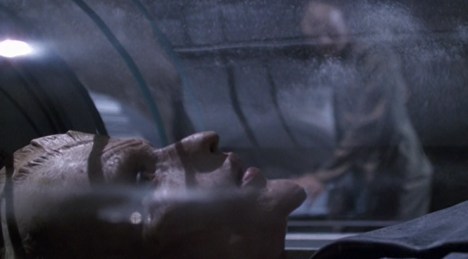
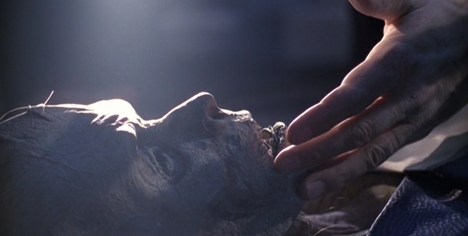
One Small Step stands out as one of the most obvious and blatant examples of this nostalgia within Voyager, in many ways feeling (like Friendship One in the subsequent season) like an attempt to seed the literal prequel that would materialise in Enterprise.

It turns out that John Kelly crossed over into a subspace anomaly drawn by Jack Kirby.

Continue reading

Non-Review Review: Black ’47

This film was seen as part of the Audi Dublin International Film Festival 2018.

Black ’47 is a powerful piece of pulp storytelling, a bold and daring window into an under-served chapter of Irish history.

Directed by Lance Daly, working from a story derived by a variety of writers, Black ’47 is essentially a western set against the background of the Irish Famine. Of course, the reality is much more nuanced than that simple description would suggest, but it provides a suitable starting point for discussion. Indeed, all the genre elements are in place; a soldier returns home from war to discover the horrors that have befallen his family, and decides that there shall be no justice on earth save for that which he might exact by his own hand.

Black ’47 is a very sparse and rugged film. It would be a surprise if the nominal lead character, Feeney, speaks more than one hundred words. Indeed, at one point he explicitly rejects the English language as a tool of communication. The landscape of the film is rough and cold, the audience feeling the chill that runs through the film and almost smelling the decay in the air. Black ’47 reflects its rough and wild settings, and the characters who have been shaped and moulded by those surroundings.

Black ’47 is an effective piece of storytelling.

Continue reading

Non-Review Review: The Lodgers

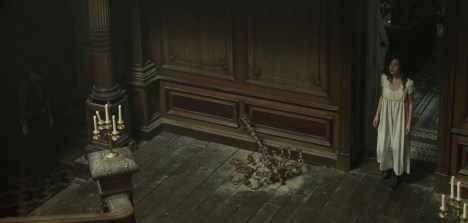
The Lodgers is a beautifully-directed and somewhat muddled gothic horror film.

The Lodgers literally drips with atmosphere, as one might imagine given the combination of writer David Turpin and director Brian O’Malley. Turpin has studied and lectured in English, writing his doctoral thesis on therianthropy. O’Malley directed Let Us Prey, one of the most visually striking and memorable Anglo-Irish horror films of the past couple of years. As such, a gothic horror set against the backdrop of Irish Independence seems very much in keeping with their aesthetics, and it does not disappoint.

The fall of the house of Lodgers.

The Lodgers is a rich piece of work, both in terms of visuals and themes. Like any good horror story, the subtext simmers through the work, O’Malley and Turpin tapping into rich veins of social and political anxiety, often weaving those threads together in a compelling and exciting manner. The Lodgers might be best described as the work of Edgar Allan Poe channeled through a seance with William Butler Yeats. It feels undeniably Irish, rooted in the land and its people.

At the same time, The Lodgers suffers slightly in its own internal mechanics. Like the big house at the centre of the story, the construction is largely sound. However, there is a sense that some upkeep and maintenance might be required. The Lodgers is undercut by a number of key defects including its casting and its dialogue. The Lodgers is visually striking and rich, but it stumbles in some of its more basic elements.

Stairway to heaven.

Continue reading

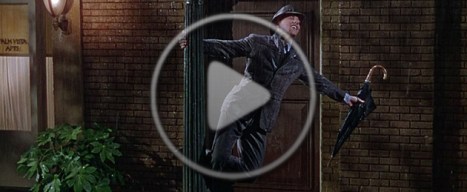
66. Singin’ In the Rain (#92)

Hosted by Andrew Quinn and Darren Mooney and this week with special guest Grace Duffy, The 250 is a (mostly) weekly trip through some of the best (and worst) movies ever made, as voted for by Internet Movie Database Users. New episodes are released every second Saturday at 6pm GMT, with the occasional bonus episode between them.

This time, Gene Kelly and Stanley Donen’s Singin’ in the Rain.

Regarded as one of the best musicals ever made, Singin’ in the Rain focuses on the transition from silent film toward talkies. With his studio embracing sound, leading man Don Lockwood begins to question his ability and his ability in a rapidly-changing industry. But love and good fortune are waiting just around the corner.

At time of recording, it was ranked the 92nd best movie of all time on the Internet Movie Database.

Continue reading

New Podcast! Scannain Podcast (2018) #5!

A very brief Scannain podcast for a very busy week!

Discussing the latest in film news here and abroad, the Scannain podcast is a weekly podcast discussion of what we watched, what we talked about, what is dominating and the box office, and what is lurking on the horizon film-wise. This week we talked about everything from food bullying to Ryan Murphy to the upcoming slate of Irish horror films, along with usual features like the top ten.

I’m thrilled to be part of a panel including returning guest Grace Duffy and new guests Nicola Timmins and (late arrival) Daniel Anderson. Give it a listen below.

CinÉireann – Issue 4 (February 2018)

The latest issue of CinÉireann has just been released.

I’m delighted to have contributed several pieces to the magazine, talking about the Oscars, about Netflix and about Black Panther and the IMDb. There is some fantastic talent involved, and it is an honour to be involved.

As ever, thanks to the fantastic Niall Murphy over at Scannain for letting me be a part of it.

You can read CinÉireann as a digital magazine directly. You can even subscribe and get future issues delivered to you directly. Or click the picture below.

Star Trek: Voyager – Dragon’s Teeth (Review)

In many ways Dragon’s Teeth demonstrates the chaos that marked the start of the sixth season.

On paper, Dragon’s Teeth looks to be a big blockbuster episode of Star Trek: Voyager. It has top-notch production, a large guest cast, an impressive special effects set-up, a new alien menace, and an emphasis on momentum ahead of character or theme. Just looking at Dragon’s Teeth, it has the look and feel of an “event” story. It seems like an episode with a bold statement of purpose, from the opening teaser that suggests an epic scope by unfolding in the distant past of an alien world through to the ominous closing line that promises that Dragon’s Teeth is just the beginning.

Let sleeping dragons lie…

It seems like the sixth season’s answer to earlier mid-season two-parters like Future’s End, Part I and Future’s End, Part II, Year of Hell, Part I and Year of Hell, Part II, The Killing Game, Part I and The Killing Game, Part II, or Dark Frontier, Part I and Dark Frontier, Part II. It even broadcasts in roughly the same stretch of the season as Future’s End, Part I and Future’s End, Part II, Year of Hell, Part I and Year of Hell, Part II or Timeless. It is an early November episode, intended to help boost ratings during Sweeps.

However, what is most striking about Dragon’s Teeth is how much it feels like a non-event. The episode has all the markers of a big event story, from the promise of a shortcut home to the sight of the ship landing on a planet surface, but the story is actually incredibly generic. Dragon’s Teeth is not necessarily bad, it is simply competent. There is a strange sense watching Dragon’s Teeth that a phenomenal amount of effort has gone into ensuring that the episode works, rather than trying to make it excel.

Sweet dreams.

Of course, this makes a certain amount of sense. Dragon’s Teeth aired almost a third of the way through the season, but it was produced earlier. In terms of broadcast, it fell between Riddles and One Small Step. In terms of production, it came between Tinker, Tenor, Doctor, Spy and Alice. As such, it was produced in the midst of the chaos following the sudden departure of Ronald D. Moore and the reinstatement of Kenneth Biller. More than that, it was the first episode of the season to be written by Brannon Braga since that behind the scenes shake-up. As a result, it makes sense it should feel “off.”

Dragon’s Teeth is an episode that spends so much of its energy trying to remain upright that it never manages to take flight.

Oh, mummy.

Continue reading

New Podcast! Scannain Podcast (2018) #4!

The Scannain podcast is back, baby!

Discussing the latest in film news here and abroad, the Scannain podcast is a weekly podcast discussion of what we watched, what we talked about, what is dominating and the box office, and what is lurking on the horizon film-wise. This week we discussed everything from Paul Thomas Anderson to P.T. Barnum, the launch of The Cloverfield Paradox on Netflix and the evolution of “direct-to-video” schlock.

I’m thrilled to be part of a panel including Niall Murphy and Stacy Grouden. Give it a listen below.

Non-Review Review: Finding Your Feet

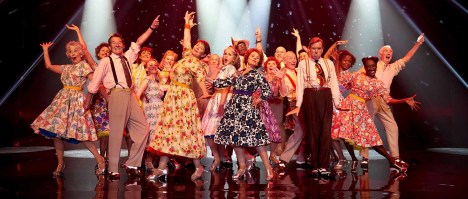
Finding Your Feet is a fairly placid and mostly unobjectionable film that adheres to an increasingly familiar formula, a gentle reminder that life can often begin at sixty.

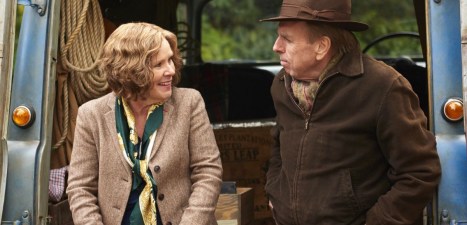
Finding Your Feet largely coasts off the charm of its cast, who seem to be having an enjoyable time with one another and appreciating the opportunity to find themselves cast as romantic leads in a globe-trotting adventure. In particular, there is something disarming in seeing Timothy Spall cast as a charming romantic lead, a disarmingly sincere lovable rogue who inevitably scrubs up quite nicely. Finding Your Feet offers very few surprises, but that is part of the attraction, perhaps worried that too many surprises might throw off the presumed viewer.

Spall good, baby.

However, Finding Your Feet is too awkward and clumsy to allow the audience to get entirely caught up in the familiar beats and rhythms of the tale. The familiar plotting of Finding Your Feet helps compensate for some strange storytelling decisions, with major character arcs unfolding off-screen and the film trying to fill its run time with things happening rather than focusing on the people to whom these things are happening.

Finding Your Feet is bland and inoffensive, its central cast providing a disarming charm that the movie never quite earns.

The sequel will feature a new addition to the cast and will be titled, ‘So You Think You Can Charles Dance?’

Continue reading

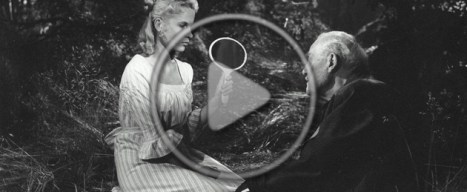
65. Smultronstället (Wild Strawberries) – “Two Guys Die Alone 2018” (#152)

Hosted by Andrew Quinn and Darren Mooney, The 250 is a fortnightly trip through some of the best (and worst) movies ever made, as voted for by Internet Movie Database Users.

This time, a Valentine’s treat. Ingmar Bergman’s Wild Strawberries.

Professor Isak Borg embarks upon a road trip to receive an honourary doctorate from his university, but soon discovers that the fourteen hour car journey represents a trip into his past, reflecting on life lived and love lost as he comes to terms with his decisions and his relationships.

At time of recording, it was ranked the 152nd best movie of all time on the Internet Movie Database.

Continue reading