• Following Us

  • Categories

  • Check out the Archives


  • Awards & Nominations

Into the Dark: New Year, New You (Review)

Into the Dark is the new anthology series from Blumhouse.

A horror anthology series seemed inevitable. There is a rich tradition of television series built around using the anthology format to tell horror stories; The Twilight Zone, The Outer Limits, Tales from the Crypt. More than that, recent years have seen a resurgence in the popularity of anthology television. This is most obvious in the seasonal anthology structure of series like American Crime Story or American Horror Story, but is also reflected in the popularity and success of series like Black Mirror or Philip K. Dick’s Electric Dreams.

New year is the perfect time for… don’t make me say it

Horror is particularly suited to the anthology format. After all, having regular characters in a familiar setting tends to dilute both the suspense and the dread that runs through so much horror. The anthology format allows for a variety of characters, locations, formats and themes. Beyond that, Into the Dark is built around ninety-minute episodes, meaning that the series functions as an anthology of holiday-themed horror stories all telling self-contained tales.

Into the Dark is an effective reminder of just how much the medium of television has changed in recent years. Is Into the Dark best thought of as a television series or six feature films? The episodes are released online at Hulu. Unlike other net-native series Into the Dark eschews both the “all at once” binge model favoured by Netflix and the “one week at a time” approach that defines network television. Episodes are released when appropriate, rather than adhering to a rigid structure. It is an illustration of how fluid media is at the moment.
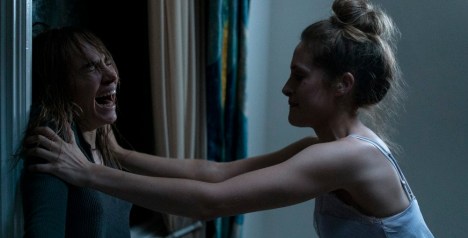
Pushed to the edge.

As the title implies, New Year, New You is the New Year entry in the series. Pooka! had been released for Christmas earlier in the month. New Year, New You is anchored in the themes of the holiday, in the ideas of renewal and reinvention. This is an interesting and audacious approach for a horror story to take. Certainly, New Year is a holiday that does not lend itself to horror as readily as Halloween or even Thanksgiving, and lacks the heightened irony of building a horror story around Christmas.

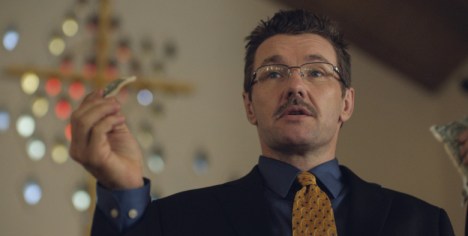
Perhaps accounting for this, New Year, New You leans heavily into dark comedy. The film does not work entirely consistently, effectively transitioning between three separate modes of horror within its ninety-minute runtime. There is very little novel or innovative to be found structurally in New Year, New You, which blazes through the familiar horror movie clichés with little in the way of insight or energy. There are moments when New Year, New You works rather well, particularly as it embraces absurdity in its third act. However, it is just too unfocused and uneven.

Deal with it.

Continue reading

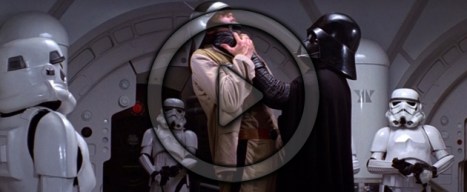
109. Star Wars (#22)

Hosted by Andrew Quinn and Darren Mooney, this week joined by special guests Marianne Cassidy and Grace Duffy, The 250 is a (mostly) weekly trip through some of the best (and worst) movies ever made, as voted for by Internet Movie Database Users. New episodes are released every second Saturday at 6pm GMT, with the occasional bonus episode between them.

This time, George Lucas’ Star Wars.

A long time ago in a galaxy far away, the Empire and the Rebellion struggle for control of the cosmos. Against this backdrop, three unlikely heroes ascend, embarking upon a mythic journey that will reveal dark secrets and promise new hope.

At time of recording, it was ranked the 22nd best movie of all time on the Internet Movie Database.

Continue reading

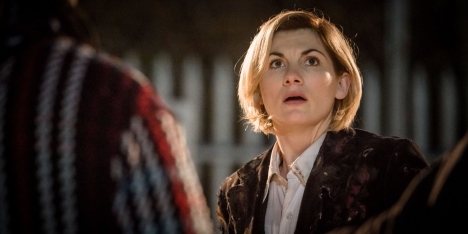
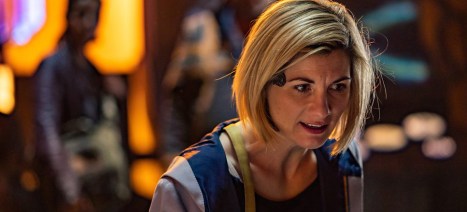
Doctor Who: Series Eleven (or Thirty-Seven) (Review/Retrospective)

And so the Chris Chibnall era begins.

Any discussion of the Chris Chibnall era must begin with an acknowledgement that it is, by any measure, a commercial success. Even allowing for erosion over the course of the season, the overnight ratings are appreciably up on where they were during the Moffat era. This is particularly true in the United States, where the show is thriving on BBC America. More than that, these new viewers are younger and female, indicating that the efforts to revitalise the show have been largely successful in attracting a new audience to a series that has been on the air for ten seasons (over one hundred and forty episodes) over thirteen years.

More than that, the series has survived an incredible transition. In theory, the casting of a female lead in a major long-running science-fiction property really shouldn’t be that big a deal. (After all, the advertising neatly summarised it as “about time.”) However, one need only look at the controversy around things like increasing the diversity in mainstream comic books or even the backlash over Star Wars: Episode VIII – The Last Jedi in order to see how easy it is to start a culture war. Jodie Whittaker is the Doctor, and her widespread acceptance speaks well to Whittaker and Chibnall, and to fans as a whole.

There is a catch, however. As much as the eleventh season has been a commercial success by any measure, it has also been a massive creative disappointment. The eleventh season of Doctor Who is very stylishly produced. There is a credible argument to be made that these ten episodes are the best that the show has ever looked. However, it is also the most generic that the series has ever been. From its earliest days, the series has been defined by a hint of madness and insanity, wonder and awe. The eleventh season of Doctor Who strips all of that out, looking like any other successful science-fiction series. That’s disappointing.

Continue reading

Non-Review Review: Boy Erased

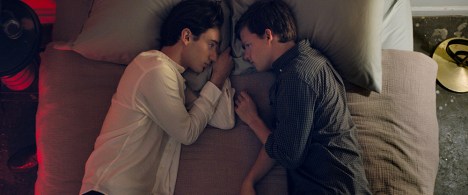
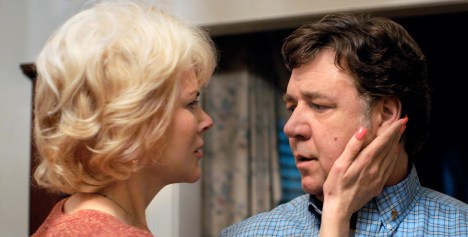
Perhaps the most remarkable thing about Boy Erased is the amount of faith that writer and director (and supporting actor) Joel Edgerton puts in the material at hand.

Boy Erased is based on a memoir written by Garrard Conley, offering a fictionalised account of the writer’s time in gay conversion therapy in rural conservative America. The film is fiction to the extent that the names have been changed; Garrard Conley becomes Jared Eamons. However, Boy Erased never tries to disguise its influences or to assert ownership of the story. The end of the film includes pictures of the real-life inspirations for various characters, often illustrating how uncanny the film’s casting had been.

Bedfellows.

More than that, perhaps as a nod to the increased self-awareness within these sorts of stories, the film hints at its own fictionalisation. The article and book that Jared decides to write towards the end of Boy Erased is very plainly the basis of the film that audience is watching. There is something intriguing in that, in the way that Boy Erased folds itself into its own narrative. The ending of Boy Erased is rooted in the characters responding to the story that Jared has written of his experiences, a clever and reflexive narrative choice that is consciously (and shrewdly) underplayed.

However, the fact that this is the closest that Boy Erased comes to a subversive or deconstructive moment only underscores the matter-of-factness with which Edgerton’s handled the material. Outside of using the origins of the film to provide the basis for a third-act catharsis within the film, Edgerton takes a very straightforward approach to this story. He never seems particularly interested in bending the narrative out of shape or of heightening particular elements for dramatic tension.

Syke out.

In its own weird way, Boy Erased feels decidedly conservative for a contemporary awards film. It is much less energised or dynamic than other similar works, such as the addiction drama Beautiful Boy starring Lucas Hedges’ Lady Bird co-star Timothée Chalamet. This creative restraint is not a criticism in any way; quite the opposite. Edgerton trusts the story that he has been given, and trusts his cast to deliver. Boy Erased is not a showy or ostentatious piece of work, instead a film constructed to specification with care and craft.

Boy Erased is a film that exists primarily as a vehicle for its subject and for its cast, and that is a credit to Edgerton’s approach to the material.

They said that he needed this, but it couldn’t be father from the truth.

Continue reading

New Podcast! On “Filibuster #147” Talking “Christopher Nolan: A Critical Study of the Films” with Lee Hutchinson and Dallas King

I had the good fortune to stop by the latest Filibuster to chat about my latest book with Lee Hutchinson and Dallas King. Lee and Dallas were, as ever, gracious hosts and t was a joy to discuss Nolan for an hour with two fans of contemporary cinema on their last podcast of the year. I hope you’ll give it a listen.

You can listen to the podcast directly at the Filibuster website, but you can also listen to it directly below. You can also buy Christopher Nolan: A Critical Study of the Film as a print or ebook from a variety of online (and bricks and mortar) stores now.


Non-Review Review: Aquaman

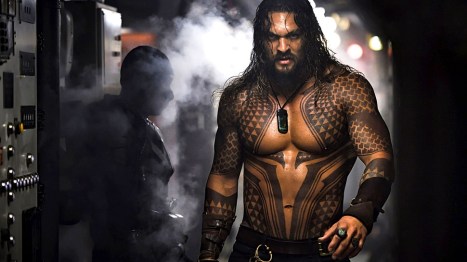
Aquaman is not a disaster on the scale of Justice League. It is perhaps closer to Green Lantern.

This comparison makes a certain amount of sense. Both Aquaman and Green Lantern are defined by the influence of writer Geoff Johns. Johns is an interesting figure, having broken into the entertainment world through film. He famously worked as a personal assistant to Richard Donner. However, Johns is best known for his work in comic books, particularly at DC when he enjoyed long character-defining runs on properties like Justice Society of America, The Flash and Green Lantern. A controversial figure, Johns is a strong writer with a great sense of a property’s core appeal.

Sink or swim time.

However, Johns’ skill with comic books does not translate to cinema. Green Lantern was largely influenced by Johns’ own work on the title, which remains a highlight of DC’s twenty-first century output. The feature film employed Johns’ characterisation of Hal Jordan, ported over a lot of his revamped mythology for the character, and even employed one of his own creations as the primary villain. However, a good comic book run did not translate to a good film. Green Lantern was more focused on being a faithful adaptation of the comic than a satisfying film in its own right.

Aquaman suffers from the same fundamental issue. The movie is packed to the gill with continuity references, particularly to Johns’ reworking and reimagining of the character, which has been repackaged as an omnibus collection to mark the release of the film. Aquaman features an incredibly dense mythology that is often delivered via awkward exposition dump, with characters bouncing between long tiring world-building dialogue scenes and epic computer-generated spectacle. Ironically, there is no room for any of this to breathe.

A Mera mistep-a.

Continue reading

Non-Review Review: The Hate U Give

The Hate U Give is an earnest and sincere attempt to grapple with a very important issue.

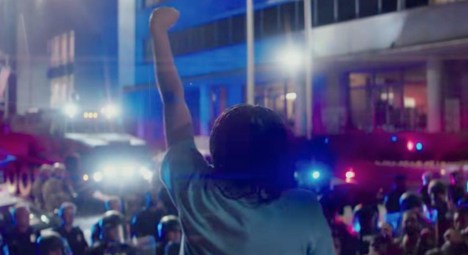
The Hate U Give is essentially structured around the aftermath of a police shooting in the United States, following a young woman named Starr who witnesses one of her oldest friends gunned down by a police officer during what should have been a routine traffic stop. What follows forces Starr to reassess everything that she thought she knew about the life that she was living. The Hate U Give puts the audience squarely in Starr’s position as the community around her begins to fracture and fray.

Taking a hands-off approach.

This is a very timely and very relevant movie, particularly in the context of current tensions within the United States. It frequently seems like a lot of the core issues in the United States come down to a complete lack of empathy or understanding, an inability or unwillingness of certain Americans to examine life as lived by people outside their frame of reference; individuals who respond instinctively with fear to social and political movements like “Black Lives Matter”, who refuse to properly consider the context of events like the protests in Ferguson.

The Hate U Give is occasionally a little clumsy in its storytelling, in how it approaches the arguments that it is making. It is a little broad in places, certain elements exaggerated for effect. Nevertheless, The Hate U Give offers an engaging and insightful exploration of a turbulent moment in contemporary American culture.

“All power to all the people.”

Continue reading

Non-Review Review: Beautiful Boy

Beautiful Boy is a cocktail essentially comprised of three contrasting main ingredients, none of which particularly gel.

Most obviously, it is a traditional performance-driven piece of awards fare designed to showcase the talents of Timothée Chalamet and Steve Carrell; there is a lot of shouting, a lot of confrontation, a lot of listless staring. On top of that, it is also a more modern piece of awards fare, one younger and hipper than stodgy old dramas about addiction; Beautiful Boy might be a good seventy-percent intercut montage set to music of beloved artists like David Bowie and John Lennon. The remaining third is a fifties moral panic anti-drugs film for the twenty-first century.

This movie is Timothée Chala-meh.

These three styles of film are constantly battling within Beautiful Boy. There must be a way to synthesise these three competing approaches into a holistic and satisfying piece of work, but instead Beautiful Boy bounces frantically from one mode to another, never settling on a single cohesive tone or approach. This is disappointing, as Beautiful Boy is a very earnest and sincere piece of work. There’s a strong sense that the film is trying to articulate something that is both important and profound. However, it just cannot clearly translate that sentiment into speech.

Beautiful Boy is a mess of a film, but a fascinating mess in a number of places.

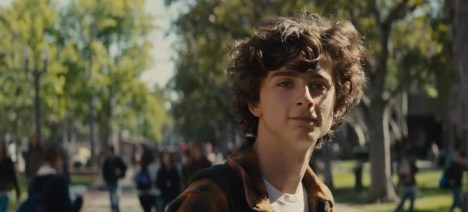
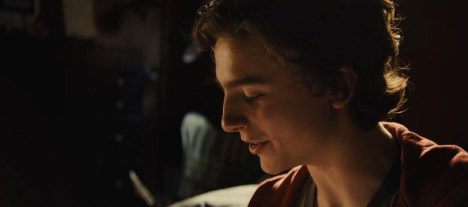
Yes. Most of the screenshots of this film will be of Timothée Chalamet. Why?

Continue reading

Doctor Who: The Battle of Ranskoor Av Kolos (Review)

The Battle of Ranskoor Av Kolos ends the eleventh season on something of a damp squib.

To be fair, there were a lot of hurdles facing The Battle of Ranskoor Av Kolos from the outset. Most obviously, the expectations of a season finale. Unlike when Doctor Who was first broadcast, season finales are a big deal. They are part of the structure and rhythm of a season of television in a highly competitive market place. Indeed, one of the big innovations of the Davies era was understanding this, with Russell T. Davies building all of his season to bombastic blockbuster season finales.

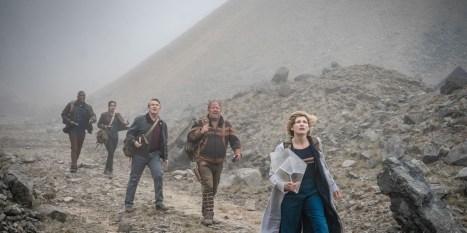
Hunting their quarry.

There are a lot of expectations heading into a season finale. The episode has to at once exist in the context of what came before and gesture towards the future, satisfy the audience who watched every episode leading into it and offer a compelling reason to stick with the show through a long hiatus. That reason to stick around does not have to be a hook or a plot point, it can simply be, “this show does stuff that nothing else on television is doing.”

However, The Battle of Ranskoor Av Kolos faces a number of problems in this regard. Most obviously, it is only a single episode long, which means it is formally indistinct from the nine episodes before it. More than that, it has to cram a host of plot and character work into that space, which needs to be “bigger” (or even just “more”) than the rest of the season. The Battle of Ranskoor Av Kolos has to be a blockbuster episode despite being indistinguishable from Kerblam! or The Witchfinders or It Takes You Away.

Actually, more like Paltraking down their quarry…

There is a reason that Moffat’s two single-episode season finales are among his most divisive, and those were consciously designed to defy the formal expectations of the season finale. Although The Wedding of River Song did not quite work, it was structured more as a fun run-around season opener than an epic season finale, most of its questions long answered. The Name of the Doctor was less of a season finale and more a springboard to The Day of the Doctor and The Time of the Doctor. Even then, Moffat returned to two-part finales in the Capaldi era.

To be fair, The Battle of Ranskoor Av Kolos might be able to get away with this if the show had been seeding momentum leading into the finale in earlier episodes so that story begins with a sense of stakes. Think about the way that The Long Game set up Bad Wolf and The Parting of the Ways, or the way that Tooth and Claw or Rise of the Cybermen and Age of Steel built to Army of Ghosts and Doomsday. More applicable to The Battle of Ranskoor Av Kolos, consider the repeated references to missing planets in the lead-in to The Stolen Earth and Journey’s End.

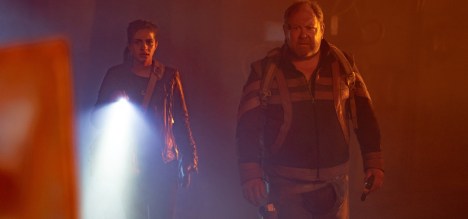
“Orange-a glad it isn’t the stinkin’ Daleks?”

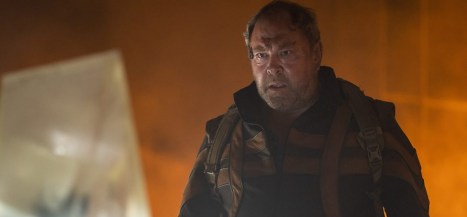
There are undoubtedly aspects of The Battle of Ranskoor Av Kolos that were seeded earlier in the season. Tim Shaw from The Woman Who Fell to Earth, the Stenza weapons testing in The Ghost Monument, the lost world in The Demons of the Punjab. However, none of these were developed with any sense of urgency, nor maintained across the length the season. None of them make any lasting impression. It is a minor miracle that any of the characters remember Tim Shaw, as he was never a compelling villain in the first place.

The result is a season finale that aspires towards a sense of scale that never feels earned, that never pays off, that never engages. It is a good thing that Resolutions will arrive in a little over three weeks, as it’s very hard to imagine The Battle of Ranskoor Av Kolos sustaining audience interest until the series returns in 2020.

“Battlefield: Ranskoor Av Kolos.”

Continue reading

Non-Review Review: Bumblebee

In some respects, Bumblebee feels like the Transformers movie that the franchise has been trying and failing to produce for over a decade.

Bumblebee has its share of problems. Some of those are inherited from a franchise working from a template established by Michael Bay, which means that the style of action direction carries over in certain cases. Some of those are inherited from the fact that the film is “based upon the toys produced by Hasbro Entertainment”, which means that the film occasionally feels obliged to cram in various characters and elements for reasons more toyetic than narrative.

“You really don’t get this ‘robots in disguise’ thing, do you?”

That said, Bumblebee largely works due to a combination of factors. Hailee Steinfeld is the most likable protagonist in the series to date, if not the most likable character in general. The direction from Travis Knight largely steers clear of the cluttered excesses that define the other films in the franchise. The script from Christina Hodson cleverly pushes the film down both in scale and spectacle, meaning that Bumblebee is the first Transformers film not to loose sight of its humanity (let alone its human characters) in its storytelling.

Bumblebee is perhaps not the best film that it could be, but is very easily the best Transformers film to date.

A girl and her robot.

Continue reading