












There is a tendency to think of the current moment as the most important moment; call it “modernity bias.”
There is a certain egocentricism inherent in this premise, in the idea that this moment when we exist will always be the most important moment. On a purely philosophical level, there may some truth in the idea. After all, this is the one moment when we actually get to make a decision and exercise agency, this is the one moment where a course of action can be changed. Of course, people have made decisions in the past and can plan for the future, but this is the moment that exists right now. It’s understandable to think of the current moment in such terms.
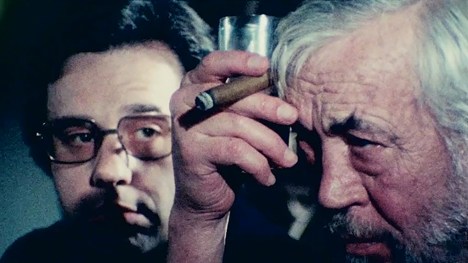
Sometimes this can make it hard to engage with popular culture outside of those terms. Of course, a lot of popular culture is defined by the moment in which it was released. It would be hard to separate All the President’s Men (or even conspiracy thrillers like The Conversation or The Parallax View) from the cultural paranoia of the seventies, just as it would be hard to divorce films like Fight Club (or The Matrix) from the pre-millennial anxieties that informed them. This is not to suggest that these movies lack relevance outside their moments, but instead to acknowledge they are rooted in their times.
In most cases, works are released relatively close to the time at which they were produced, meaning that audiences and critics respond to these films in the context in which they were made. Audiences reacting to films like All The President’s Men or Fight Club were very much in step with the culture that informed it, and so there was a strong communion between what the film was saying and what the audience was hearing. Indeed, any critical reevaluation of these works exists in conversation with the original evaluation, and so the cultural conversation about these works of art tends to move forward from a fixed point.
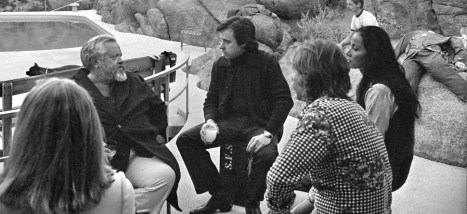
However, this creates a challenge in assessing works that exist outside of that template. “Lost” works that have been recovered. “Incomplete” works that have been finished. Even older works that have been revisited. It is, for example very hard to separate Doug Liman’s reworked 2018 director’s cut of his 2010 film Fair Game from the context of its later release, specifically President Donald Trump’s pardoning of a key official involved in the events depicted in the film. It becomes an even bigger challenge when dealing with a work that is seeing the light of day for the first time years removed from its original context.
Is The Other Side of the Wind a lost seventies film, or is it a film for the closing of the second decade of the twenty-first century? Is it both? Is it neither? Is it something else entirely?

Filed under: On Second Thought | Tagged: mockumentary, orson welles, paranoia, post-truth, postmodernism, seventies, the other side of the wind, the x-files | Leave a comment »




 the m0vie blog
Doctor Who: Arachnids in the U.K. (Review)
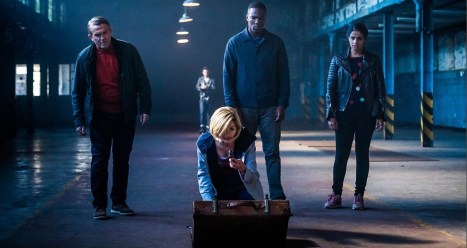
Arachnids in the U.K. is perhaps the best episode of the eleventh season of Doctor Who to date.
Arachnids in the U.K. feels like a nostalgic throwback to the Russell T. Davies era, which makes it feel of a piece with the first three episodes of the season. Executive producer Chris Chibnall has executed his spin on the traditional “present-past-future” triptych that was a hallmark of the early seasons of the revival, and so it is time to return to the contemporary United Kingdom in order to better develop the supporting cast and make some very broad political commentary about the modern world.
Finding its (eight) legs.
It is interesting to reflect on how far Doctor Who has come since its resurrection that this idea seems almost quaint, a nostalgic “back-to-basics” approach that seems lifted from thirteen years earlier. It is a valid and worthy approach to Doctor Who, and reflects Chibnall’s desire to make the show more populist and mainstream than it was during the more esoteric tenure of Steven Moffat. There is a reason that Davies was able to transform Doctor Who from a failed cult curiosity into one of the biggest things on British television using this template, after all.
At the same time, there’s something just a little worrying when the stand-out episode of the eleventh season feels like a perfectly serviceable mid-tier episode from the first four.
“Who is this Harriet Jones? I feel like we could make a deal with her. A tremendous deal.”
Continue reading →
Filed under: Television | Tagged: arachnids, Chris Chibnall, doctor who, donald trump, left behind, political commentary, sheffield, spiders, webs | Leave a comment »