• Following Us

  • Categories

  • Check out the Archives


  • Awards & Nominations

Non-Review Review: Twin Peaks – The Missing Pieces

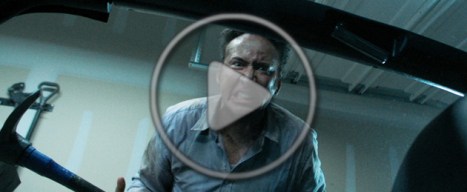
It says a lot about Twin Peaks: Fire Walk With Me that there were enough deleted scenes that they could be structured into a ninety-minute feature film. It says even more that the resulting feature film is almost coherent.

Twin Peaks: The Missing Pieces is a strange piece of work, essentially a narrative film stitched together from the cast-offs of a theatrical release two decades earlier. It is a collection of deleted scenes, but deleted scenes that have taken on an uncanny importance. These deleted scenes have been edited together into something approaching a linear narrative by David Lynch, the director who shot them in the first place. They even come packaged with an introduction and a set of closing credits. They are vitally important to the revived television series. They are, in other words, like a real movie.
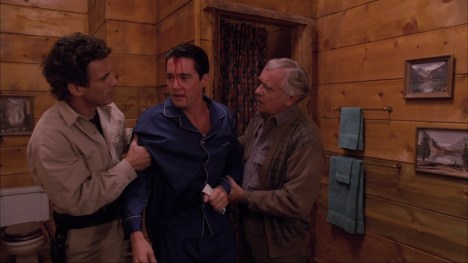
“Yeah, he’s going to need about twenty five years to recover.”

Some of this is because Fire Walk With Me is a notoriously inscrutable and abstract film, one defined by strange choices and bizarre imagery. David Lynch is a surrealist, and Fire Walk With Me reflects this; it is full of odd cul-de-sacs and strange segues. Fire Walk With Me was also a film heavily cut before its release, which accounts for why it feels like a film defined by what is absent so much as what is present. The incomplete nature of Fire Walk With Me makes the incomplete nature of The Missing Pieces more understandable. They fit together like the two pieces of Laura Palmer’s heart-shaped necklace.

However, The Missing Pieces is illuminating for more than just the little details of continuity and the appearances of familiar faces. It is a film that in some ways shades Fire Walk With Me, existing as a remainder of the absences carved from that earlier film. The Missing Pieces defines Fire Walk With Me through contrast, revealing the elements of Fire Walk With Me that were deemed inessential to the theatrical release. In keeping with Lynch’s recurring fascination with doppelgangers and doubles, The Missing Pieces illuminates Fire Walk With Me by presenting an alternative; it is what Fire Walk With Me chose not to be.
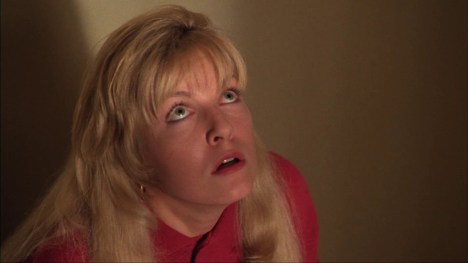
Past prologue.

Continue reading

Non-Review Review: Twin Peaks – Fire Walk With Me

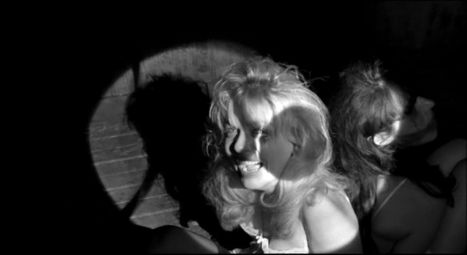
Twin Peaks: Fire Walk With Me is a fascinating piece of work, in no small way due to how it has been re-evaluated and reclaimed since its premiere.

Despite the urban legend, Fire Walk With Me was not booed on its premiere at Cannes. Nevertheless, the widely-reported rumour that it was says a lot about the film’s reception and the ensuing mythology around it. Young provocateur Quentin Tarantino even took the opportunity for a pot shot at David Lynch, lamenting that the director had disappeared so far up his own ass.” The film earned just over four million dollars at the United States box office. Those watching at the time would (fairly, in context) have deemed the film’s failure as the end of the line for Twin Peaks.

In darkness…

Of course, hindsight has reversed a lot of these opinions. Critics like Mark Kermode are willing to make impassioned arguments in support of Fire Walk With Me, and the tone of coverage of the film leading into the television revival two decades later was largely positive. Modern reviews tend to speak about Fire Walk With Me as a “harrowing tour de force”, and as a key part of both Lynch’s evolving filmography and in the development of what Twin Peaks could be. It is an impressive reversal of public opinion, in a relatively short amount of time. (Lynch’s in-between success with Mulholland Drive might have helped.)

It is possible to see both of those films wrestling within the finished product, to understand how the film could once be a provocative disappointment and an insightful statement. In some ways, this wrestling match within Fire Walk With Me feels entirely appropriate with the themes of both the film itself and the series leading into it. Lynch’s oeuvre is populated with doppelgangers and twisted reflections, and it feels strangely appropriate that Fire Walk With Me should exist as its own shadow self.

A singular maniac.

Continue reading

A Surprise Movie Is Good For the Soul: In Praise of Blind Screenings…

A number of major Irish and British cinema chains have begun offering “Secret” or “Surprise” screenings over the past few years. ODEON have their “Screen Unseen” brand, Omniplex have their “Secret Screenings”, the Irish Film Institute have their “Mystery Matinee”, Cineworld have their “Secret Unlimited Screenings.” This is to say nothing of what might be the biggest example on the cinematic calendar, the Dublin International Film Festival’s long-standing “Surprise Film”, which famously originated when Michael Dwyer discovered that he had accidentally left a gap in the original programme.

The basic premise of a “Surprise Film” is simple. The audience buys a ticket to the screening, often at a discounted rate compared to usual ticket prices. The audience is not told what the film is to be ahead of time, instead trusting the organisers of the screening to produce something interesting and compelling. The audience then gets to experience the movie completely blind, without any lead-in and without any hype. It is something to behold, a rare opportunity to see a movie completely blind in an era of heavy media saturation and social media gossiping.

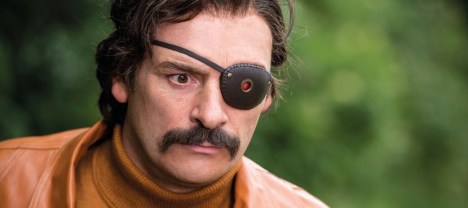
Of course, the quality of these screenings is highly variable. Over the past year, Irish surprise screenings have included films as diverse as I, Tonya, Lady Bird, Snatched, The Florida Project, Ghost Stories, The Shape of Water, Three Billboards Outside Ebbing, Missouri, Unsane, Battle of the Sexes, The Killing of a Sacred Deer, Mindhorn, Baby Driver, The Big Sick. That is an eclectic list of films, and it is almost certain that there is something for everybody in that list and also something that will repulse everybody on that list. But that is the thrill of such screenings.

There is something to be said for the willingness of a movie goer to open themselves to new experiences, to step outside of their comfort zone and to take a risk on something that they are not anticipating. Even if those films are occasionally terrible, and especially if they were not films that the audience member would choose to see on their own terms.

Continue reading

Non-Review Review: Ghost Stories

Ghost Stories is an existential horror dramedy, and gets that unique cocktail to work much better than it really should.

Ghost Stories is adapted by Jeremy Dyson and Andy Nyman from their stage play of the same name. The play premiered in Liverpool in 2010, to rave reviews. Interestingly, Dyson and Nyman worked hard to preserve the mystery and ambiguity around their production, publicising the show with shots of terrified reactions from the audience and asking those who had seen the film not to discuss its twists and turns with those people who had not. As such, Ghost Stories became something of a cult stage phenomenon.

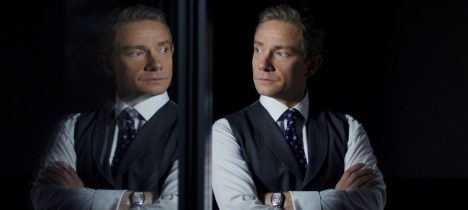
Black mirror.

With this in mind, adapting a play like Ghost Stories to the big screen presents its share of challenges. Not only does a feature film demand more publicity and more conversation than a stage play, having a much higher profile and a much larger distribution mechanism, it also involves a delicate process of translation. Ghost Stories was a concept very firmly anchored in its format, wedded to the conventions of stage shows. Finding a way to preserve the heart of the play within the framework of a motion picture was always going to be tricky.

Ghost Stories works well, although it arguably works better as a psychological meditation on mankind’s relationship with the supernatural than as a horror anthology in its own right. Ghost Stories is a clever and canny piece of work, one undercut slightly by some clumsy narrative choices in the final act. Still, even in its weakest moments, Ghost Stories is a compelling and engaging little film.

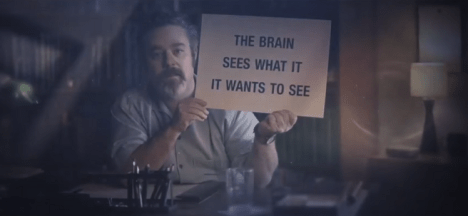
Cue, card.

Continue reading

New Podcast! The X-Cast Season 11 #36 – Karen Neilsen and James Wong (“Nothing Lasts Forever”)

The final of three podcasts looking at the penultimate episode of what might be the final season of The X-Files, Nothing Lasts Forever.

I’m joining the great Carl Sweeney to discuss the writer and director combo on Nothing Lasts Forever. The episode pairs a relatively new writer with a veteran director. Karen Neilsen worked with Glen Morgan on Intruders, and had her short Grace included on the season ten release, but this is her first script for The X-Files. In contrast, James Wong is a veteran director; he was nominated for an Emmy of Musings of a Cigarette-Smoking Man and this is the second episode that he has directed this season.

We also discuss our hopes (and fears) leading into My Struggle IV. I’ll be returning next week to discuss the season finale. In the meantime, we hope you enjoy the episode. Click here, or check it out below.

New Podcast! The X-Cast Season 11 #35 – Barbara Beaumont and the Cult (“Nothing Lasts Forever”)

The second of three podcasts looking at the penultimate episode of what might be the final season of The X-Files, Nothing Lasts Forever.

Once again chatting with Carl Sweeney, this time we discuss the “monster of the week”, washed up immortal sixties starlet Barbara Beaumont and the cult that she has built around herself. Along the way, we discuss other supporting characters like Juliet and Doctor Luvenis, along with constructing a twenty-first century vampire story.

We’ll be back tomorrow talking about the combination of writer Karen Neilsen and director James Wong. In the meantime, we hope you enjoy the episode. Click here, or check it out below.

70. Barry Lyndon – St. Patrick’s Day 2018, w/ When Irish Eyes Are Watching (#225)

Hosted by Andrew Quinn and Darren Mooney, The 250 is a fortnightly trip through some of the best (and worst) movies ever made, as voted for by Internet Movie Database Users. New episodes are released Saturdays at 6pm GMT.

This week, a special crossover episode with When Irish Eyes Are Watching, an Irish film podcast wherein Alex, Clíona and Séan take at a look at films connected to the Emerald Isle.

The 250 and When Irish Eyes Are Watching are crossing over for a St. Patrick’s Day treat. Stanley Kubrick’s Barry Lyndon.

Barry Lyndon is the epic story of the eponymous character, a dashing Irish rogue who seems to bumble his way through the eighteenth century. Using nothing but his wits, Barry manages to manipulate his way to the fame and fortune that he so covets, only to discover a fortune won is not so easily kept.

At time of recording, it was ranked the 225th best movie of all time on the Internet Movie Database.

Continue reading

New Podcast! The X-Cast Season 11 #34 – Mulder and Scully IX (“Nothing Lasts Forever”)

Thrilled to be popping by The X-Cast to discuss the new season of The X-Files with the wonderful Carl Sweeney.

We discussed the penultimate episode of what could be the final season, the twenty-first century vampire story Nothing Lasts Forever. We broke our wide-ranging discussion down into three parts covering various aspects of the episode, so they’ll be released over the next few days.

The first of the three episodes covers the episode in general and its focus on the Mulder and Scully dynamic (including what Carl terms “the Conversation on the Pew”), along with some general thoughts about the eleventh season as a whole. Click here, or check it out below. The next part will be landing tomorrow.

New Podcast! Scannain Podcast (2018) #9!

The new Scannain podcast covers a sad week for Irish film, one marked by the sudden (and largely unexpected) closure of Filmbase and Film Ireland on Wednesday.

That takes up the bulk of the discussion, along with the usual conversations about the top ten at Irish cinemas and the new releases coming out this bank holiday weekend. Thrilled to join Niall Murphy, Jason Coyle, Ronan Doyle and Grace Duffy to discuss all things film related.

Check it out here, or give it a listen below.


Form a Square For That Purpose: Kubrick’s “Barry Lyndon” and the Illusion of Civility

In some respects, Barry Lyndon is seen as an outlier in Stanley Kubrick’s filmography.

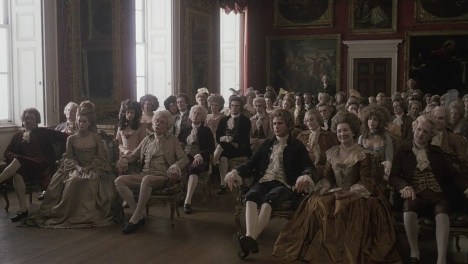
The film is a lush and extended period drama, adapted from a nineteenth century novel set in the eighteenth century. It arrives in the middle of an acclaimed run of films from director Stanley Kubrick: Doctor Strangelove; Or How I Learned to Stop Worrying and Love the Bomb, 2001: A Space Odyssey, A Clockwork Orange, The Shining and Full Metal Jacket. By all appearances, Barry Lyndon stands apart from these films. “Period piece” is obviously a film genre unto itself, but it is not as heightened as the bigger and bolder films around it.

Arresting imagery.

Barry Lyndon is arguably Kubrick’s only “period film” outside of Spartacus, which the director famously disowned and is arguably seen as a film more overtly influenced by its leading man than its director. Of course, some of Kubrick’s films move backwards and forwards in time; Full Metal Jacket takes place in the late sixties, while the prologue to 2001: A Space Odyssey is set at “the dawn of man.” Nevertheless, for many casual film fans approaching Barry Lyndon, the film’s period trapping stands out from the surrounding films, which are largely set near the present and into the future.

Indeed, it could be argued that this difficulty that casual observers have in positioning Barry Lyndon within the Kubrickian canon accounts for some of the controversy around the film’s place in the director’s larger filmography. Upon release, the film was largely met with confusion and disinterest, critics often struggling with what to make of the finished product. For his part, Kubrick dismissed the idea of critics forming a consensus on a film like Barry Lyndon after just one viewing.

Initial audiences weren’t enamored with the film.

Of course, this is arguably par for the course with Kubrick films, particularly those towards the end of his career. Many Kubrick films opened to a divided critical opinion before slowly solidifying their popular reputations over time; 2001: A Space Odyssey, A Clockwork Orange, The Shining. However, Barry Lyndon seems to be a special case. Debate was still raging over the critical merits of the film after Kubrick’s death, even in letter columns of newspapers like The New York Times. Even the release of remastered editions forty years later find proponents arguing the film is undervalued or underrated.

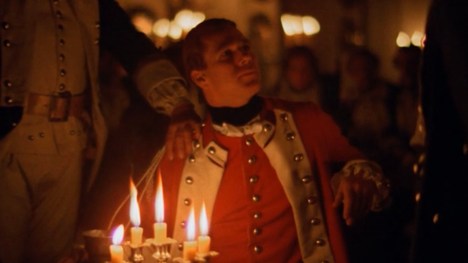
However, watching Barry Lyndon, the film never really feels like an outlier in terms of Kubrick’s filmography. Indeed, in some respects, it feels like a culmination of many of the director’s recurring themes and fascination. Barry Lyndon is perhaps the clearest articulation of some of the key themes within Stanley Kubrick’s larger body of work, in particular through its engagement with the Enlightenment as a window through which he might explore the human concept of “civilisation.”

Drawing to a close.

Repeatedly over the course of his filmography, Kubrick engages with the idea of civilisation and order, the structures that mankind imposes upon the world in order to provide a sense of reason or logic to a chaotic universe. Repeatedly in his movies, Kubrick suggests that “civilisation” is really just a veneer that masks the reality of the human condition, providing a framework for acts of violence and self-destruction that seem hardwired into the human brain. Kubrick suggests that “civilisation” is a fragile construct, and one that occasionally seems hostile to the nature of those who inhabit it.

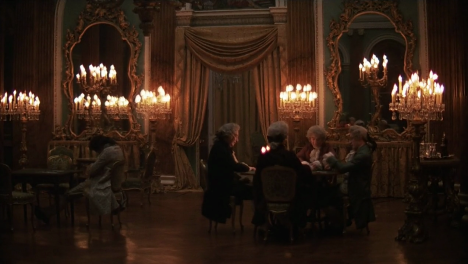
Unfolding against the rigid social mores of the eighteenth century, Barry Lyndon allows Kubrick to construct the starkest and most literal example of that theme.

Soldiering on.

Continue reading