• Following Us

  • Categories

  • Check out the Archives


  • Awards & Nominations

New Podcast! Scannain Podcast (2018) #11!

The eleventh edition of the new and revived Scannain podcast discusses the week that has been in Irish film.

This week, I’m joining Grace Duffy, Alex Towers and Daniel Anderson to discuss everything from Cannes to the great Irish films on television this long weekend. As usual, we discuss what we’ve watched over the past week or so, jump into the top ten, and talk about the new releases landing in Irish cinemas.

Check it out here, or give it a listen below.


New Podcast! Talking Ava DuVernay and the “New Gods” with Speakin’ Geek!

Thrilled to join the wonderful Graham Day on his podcast Speakin’ Geek to chat about the recent announcement that Ava DuVernay is directing a New Gods movie for Warner Brothers.

We are both very happy about this.

Click here, or listen below for our discussion in which we talk about everything from the origins of Jack Kirby’s Fourth World saga through to the similarities between Thanos and Darkseid and even Tom King’s recent work on Mister Miracle. It was a fun and wide-ranging discussion, one of which I was glad to be a part.

The Meta Movie Monster Milieu: The Postmodern Horror Film…

Horror films have historically performed very well.

They never really get the same attention or focus as more prestigious genres like drama or even comedy or action, but they tend to chug away reliably in the background. Since the explosion of blockbuster filmmaking during the seventies, horror has always had several innate advantages over other genres. Horror films are cheaper to produce than star-studded dramas, period pieces, or epic spectacle, meaning that they have to earn less money to be profitable. Horror films are also largely seen as disposable and fun films, so there is always a market for these films and they tend to be insulated from bad reviews.
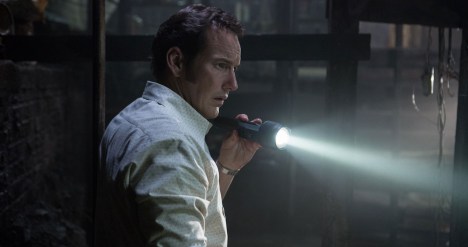
Indeed, there has been a miniature horror revolution over the past few years, itself building on the low-budget found footage revolution of the first decade of the twenty-first century. Very few people seem to talk about it, but director James Wan seems to have built what is Hollywood’s second successful shared universe with the nexus connecting films like The Conjuring and The Conjuring II to movies like Annabelle and The Nun. Indeed, the success of these films has even led to a sort of weird hybrid of revived seventies horror stylings with blockbuster narrative sensibilities.

However, there has also been a quieter revolution in horror storytelling, with several low-budget and independent horror films gaining critical and cultural traction. Films like The Babadook were greeted with enthusiasm. Get Out become one of a handful of low budget horror films to secure a Best Picture nomination. Films like Hereditary emerge from the festival circuit with considerable buzz. Horror movies have always been pointed towards and engaged with contemporary politics, often in a manner more visceral than the prestige dramas around them. However, it seems that is finally being acknowledged.
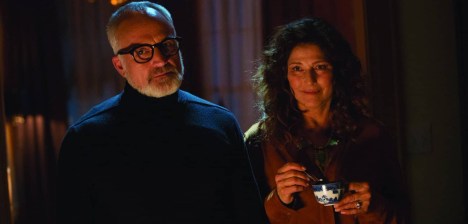
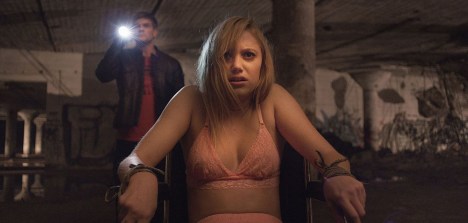
With all of this happening within the genre, there has been something else bubbling through contemporary horror cinema. Films like It Follows, Don’t Breathe, Lights Out and A Quiet Place represent a fascinating shift within the genre towards more self-aware storytelling. There is a decidedly meta quality to horror films like It Follows, Don’t Breathe, Lights Out and A Quiet Place. As with horror films like The Babadook and Get Out, these are films that hinge on the audience’s understanding of the mechanics and structure of horror films, weaponising the viewer’s expectations.

However, these films are markedly different from companion horrors like The Babadook and Get Out, films that use the language of horror to construct broader allegories. Instead, films like It Follows, Don’t Breathe, Lights Out and A Quiet Place are horror films that often seem to be explicitly about the experience of watching horror films.
Continue reading

Non-Review Review: A Quiet Place

A Quiet Place is the latest entry in a string of contemporary high-concept postmodern horrors, very much of a piece with films like It Follows, Don’t Breathe or Lights Out.

These movies are largely predicated upon the internal logic of the horror movie, often incorporating and literalising fundamental parts of the horror movie experience into their conceptual frameworks. It Follows is obsessed with the rules that govern its unstoppable supernatural force, with the teen protagonists seeking to exploit and manipulate them. Lights Out focuses on a creature that can only really move when it is unseen, weaponising the audience’s impulse to look away or cover their eyes when presented with horrific images within the film.

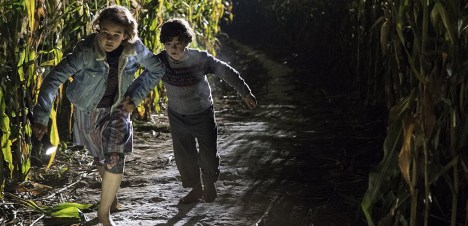
Maize runners.

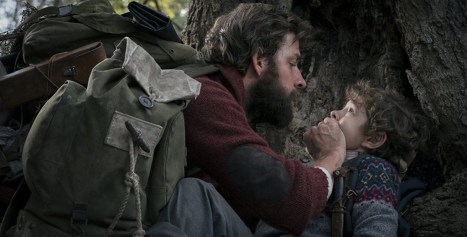
A Quiet Place builds on the same horror movie anxiety as Don’t Breath – the audience’s urge to gasp or to scream in response to the events on the screen. A Quiet Place unfolds in a world dominated by monsters that hunt based on sound, creating an environment where the human cast members have to remain as quiet as possible in order to survive. No matter what happens, the characters cannot scream. Given that they are starring in a horror movie, that is quite the challenge.

A Quiet Place is a lean and effective piece of filmmaking from director John Krasinski, who also worked on the script written by Scott Beck and Bryan Woods. As one might expect given the premise, A Quiet Place is a horror movie that often feels quite minimalist; twenty minutes of set-up giving way to seventy minutes of sustained climax. The results are invigourating, a horror movie worth shouting about.

Children should be seen and not heard.

Continue reading

Non-Review Review: Ready Player One

Don’t hate the player, hate the game.

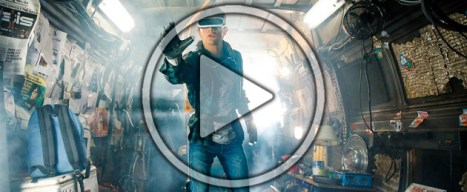
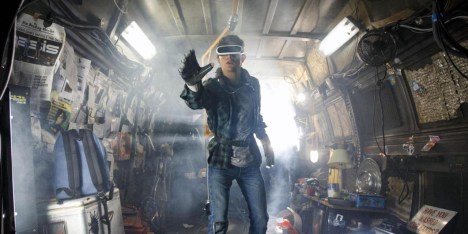
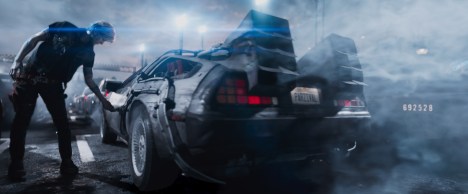
Reader Player One is a very curious piece of cinema. It is an incredibly flawed piece of work, with a lot of its flaws so fundamental that they are threaded into the very architecture of the film. Screenwriter Zak Penn has offered a very thorough and involved reinvention of Ernest Cline’s source novel, a ground-up renovation of Cline’s catalogue of popular culture references and collection of narrative tropes. Indeed, Penn’s screenplay improves a great deal on the novel that inspired it; junking and reworking entire sequences, bulking up supporting characters, trying to find a beating human heart.

Worlds apart.

More than that, Ready Player One provides Spielberg with the opportunity to go “all out.” There is a sense watching Ready Player One that Spielberg has approached the film not as a collection of popular culture references and in-jokes, but instead as an attempt to reconnect with a younger audience. Whether or not Reader Player One is the right source material for such an attempt, there is no denying Spielberg’s energy and vigour. Ready Player One is a dynamic piece of film, Spielberg demonstrating all the technique for which he is known, but with an enthusiasm that puts younger directors to shame.

However, there is no escaping the biggest issue with the film remains its source material. The problem with Ready Player One as a film is that it is an adaptation of Ready Player One as a novel.

Back to the past.

Continue reading

New Podcast! The X-Cast Season 11 #40 – Chris Carter and Season 11 (“My Struggle IV”)

In what is likely my final appearance of The X-Cast‘s coverage of the eleventh (and possibly final) season of The X-Files, I sit down with Tony Black to discuss the legacy and role of series creator and showrunner Chris Carter. I hope it’s an interesting discussion of what has been a controversial season overseen by a controversial showrunner.

It has been an absolute pleasure to discuss these episodes with Tony and Carl, and I’m thrilled to have been part of the coverage of the revival. With a bit of luck, I should be back when The X-Cast jumps back in to its regular coverage; the rewatch of the series will be hitting the third season shortly.

Click here, or check it out below.

New Podcast! The X-Cast Season 11 #39 – William, Skinner, Smoking Man & Everyone Else! (“My Struggle IV”)

Returning to The X-Cast this morning to continue my discussion of the eleventh season finale of The X-Files.

In this installment, we’re discussing the various supporting characters of My Struggle IV, from William (or Jackson) through to Monica Reyes through to creepy possibly-child-abusing car-driving guy! It’s a packed instalment, befitting a packed episode. Thrilled to be joining Tony to discuss the episode in question.

Click here, or check it out below. The final part of our discussion, talking about Chris Carter, will be landing tomorrow morning.


70. Shichinin no Samurai (Seven Samurai) (#19)

Hosted by Andrew Quinn and Darren Mooney and this week with special guest Chris Lavery, The 250 is a (mostly) weekly trip through some of the best (and worst) movies ever made, as voted for by Internet Movie Database Users. New episodes are released every Saturday at 6pm GMT, with the occasional bonus episode thrown in.

This time, Akira Kurosawa’s Shichinin no Samurai.

In feudal Japan, a small village finds itself threatened by an army of bandits. In a desperate attempt to protect their barley crop from the marauding menace, the villages decide to hire a samurai to the protect the village. Inevitably, they end up with more than they bargained for.

At time of recording, it was ranked the 19th best movie of all time on the Internet Movie Database.

Continue reading

New Podcast! The X-Cast Season 11 #38 – Mulder and Scully X (“My Struggle IV”)

Guesting on The X-Cast to cover the season (and possibly series) finale of The X-Files with Tony Black.

With Gillian Anderson adamant that this is the end of the line for her involvement in the show, there is every possibility that My Struggle IV might be the last ever episode of The X-Files. And what an episode it is, with a lot to unpack. We broke our wide-ranging discussion of this episode written and directed by Chris Carter down into three parts covering various aspects of the episode, so they’ll be released over the next few days.

The first of the three episodes covers the episode in general and its focus on the Mulder and Scully dynamic (or perhaps even lack-thereof), along with some general thoughts on the tone and content of the episode. Click here, or check it out below. The next part will be landing tomorrow.

New Podcast! Scannain Podcast (2018) #10!

The tenth edition of the new and revived Scannain podcast discusses the week that has been in Irish film.

Joined by Grace Duffy and Graham Day, we take a look at the usual array of topics. We discuss what we’ve watched over the past week, the big news stories of the day and the top ten. We also take a look at the new releases hitting cinema this week. I also confuse Alia Shawkat with Ilana Glazer.

Check it out here, or give it a listen below.