• Following Us

  • Categories

  • Check out the Archives


  • Awards & Nominations

The X-Files – Empedocles (Review)

This October/November, we’re taking a trip back in time to review the eighth season of The X-Files and the first (and only) season of The Lone Gunmen.

Empedocles returns to one of the most enduring Ten Thirteen themes: the idea of evil as contagion.

Both The X-Files and Millennium have touched upon this theme. On The X-Files, episodes like Aubrey and Grotesque suggested that evil was something that could be passed from person to person. Despite the fact that Millennium was based around a forensic profiler, Chris Carter described it as a show about “the limits of psychology”; it seemed like evil could often be traced to sinister forces at work in the world. Looking at Ten Thirteen’s output as a whole, it seems that Carter believes wholeheartedly in the idea of evil as an external force.

Man on fire...

Man on fire…

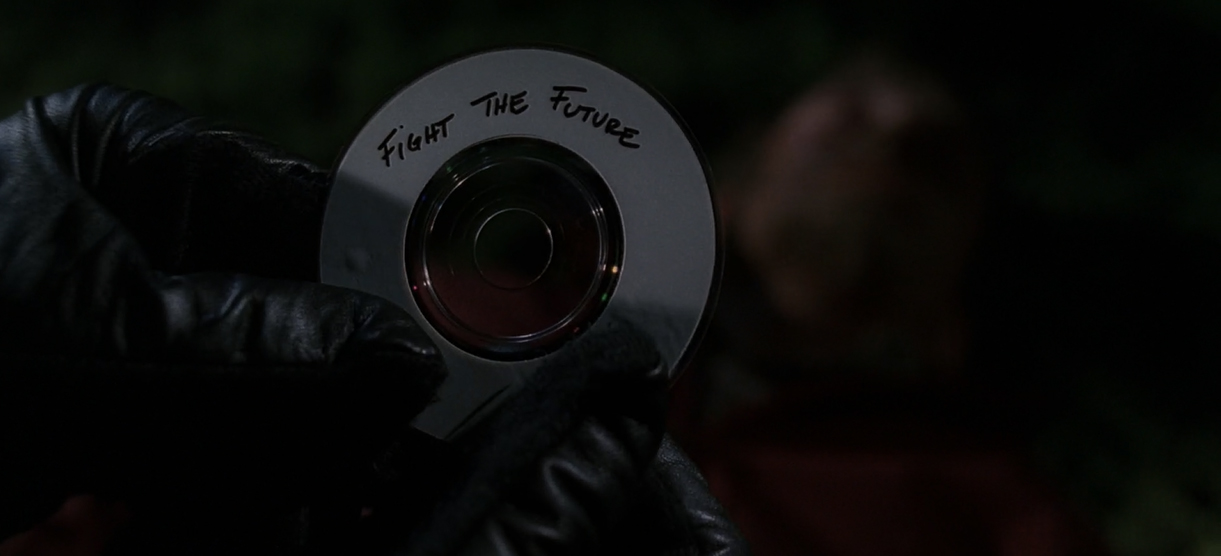
Empedocles offers perhaps the most straightforward example of this recurring theme. Reyes describes the case as “a thread of evil… connecting through time, through men, through opportunity.” It is a narrative thread that connects from the murder of Luke Doggett in New York to a workplace shooting in New Orleans. Evil is at work in the world, in a way that is palpable and discernible. Empedocles is not a subtle episode of television, linking this contagion of evil images of hellfire and burning.

There is undoubtedly something just a little simplistic about all of this. One of the luxuries of conspiracy theory, as The X-Files has repeatedly suggested, is the way that it serves to impose a logical and linear narrative on trauma; to make sense of acts and events that would otherwise suggest a brutally random universe. The mythology running through the first six seasons of the show suggested a conspiracy of powerful men might provide such a nexus of causation, but Empedocles offers something a bit broader.

It burns...

Burn with me.

As with a lot of the eighth season mythology, Empedocles cuts out the middle-man. The eighth season largely eschews the blending of “self” and “other” that run through first seven seasons of the show, largely rejecting the narrative of collaboration and complicity implied by the Syndicate. The eighth season of The X-Files repeatedly suggests that evil is inhuman, presenting its antagonists as distinctly “other” forms that infiltrate and pervert the body in perhaps the purest distillation of the show’s many viral metaphors.

In its own way, Empedocles is just as much a mythology or conspiracy episode as Three Words or Vienen. Like those episodes, Empedocles posits a conspiracy theory based upon the subversion of human identity by something alien and external. Empedocles posits a conspiracy of evil.
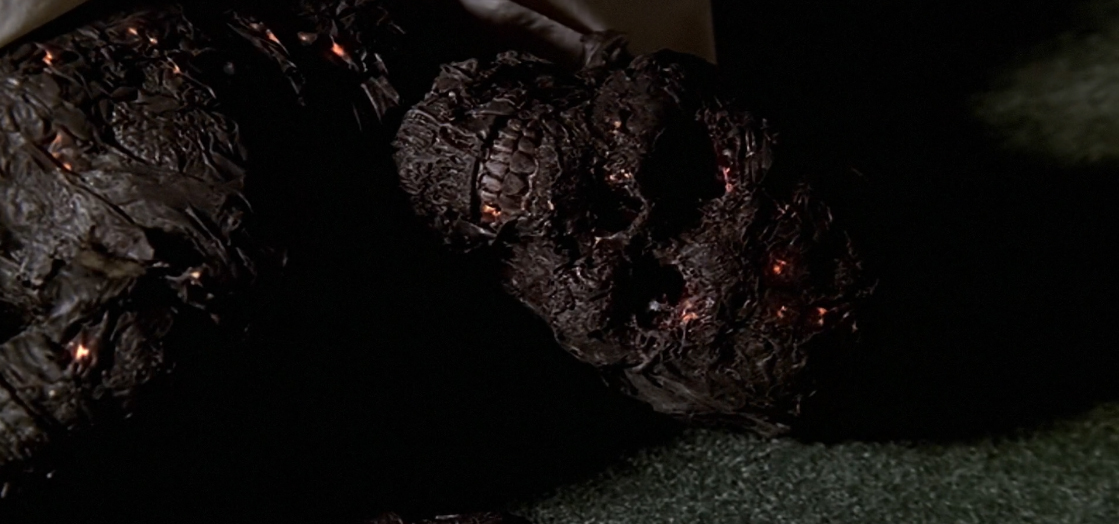
Crispy...

Crispy…

Continue reading

The Lone Gunmen – Diagnosis: Jimmy (Review)

This October/November, we’re taking a trip back in time to review the eighth season of The X-Files and the first (and only) season of The Lone Gunmen.

Diagnosis: Jimmy is another formulaic piece of episodic television.

To be entirely fair, this is a logical part of any first season. While the production team is trying to figure out the identity of a young show, it makes sense to apply templates that have worked in the past. It was an approach that The X-Files adopted in its early seasons, with episodes drawing from popular and successful films. This worked out quite well in some cases, with Ice offering a skilled take on The Thing while Beyond the Sea played with The Silence of the Lambs to great effect.

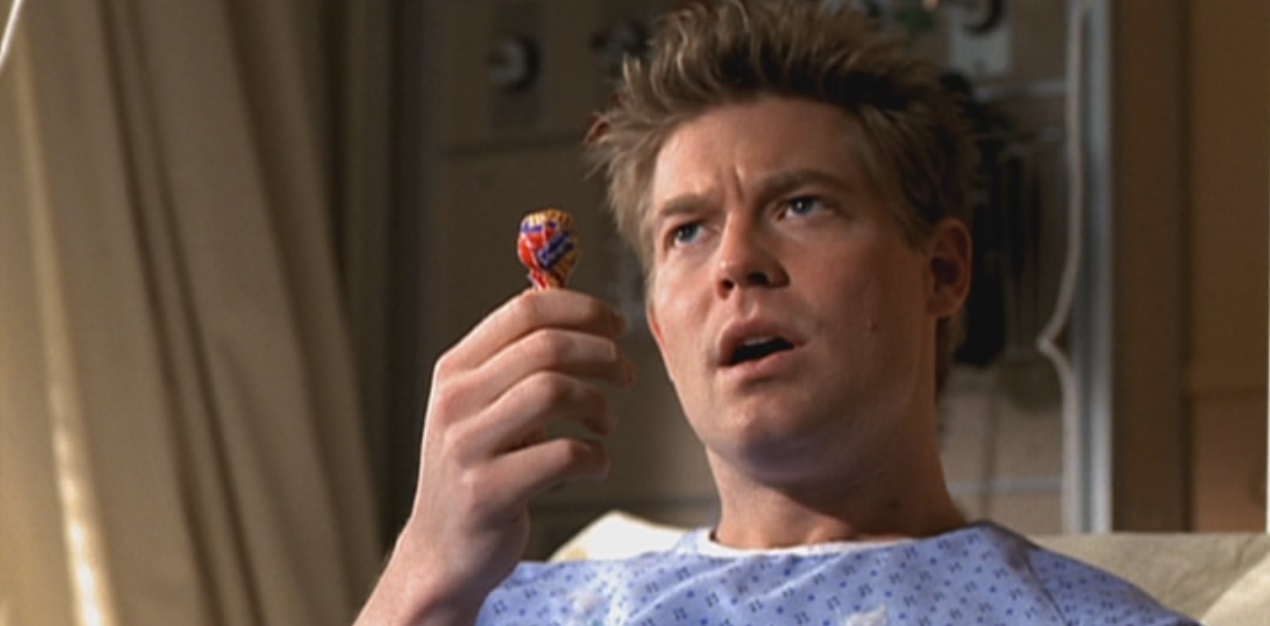
A lotta lolly...

A lotta lolly…

With that in mind, it seems perfectly reasonable for The Lone Gunmen to attempt something similar. Writer John Shiban compared Eine Kleine Frohike to The Ladykillers. The characters within Maximum Byers all but acknowledged that it was the obligatory “prison episode.” If the writers don’t have to worry about the basic story ideas and beats, there is more room to develop character and flavour. With that in mind, Diagnosis: Jimmy positions itself as a twofer. It is both the standard “hospital” episode and a gigantic homage to Rear Window.

Unfortunately, it’s not a particularly inspired piece of television.

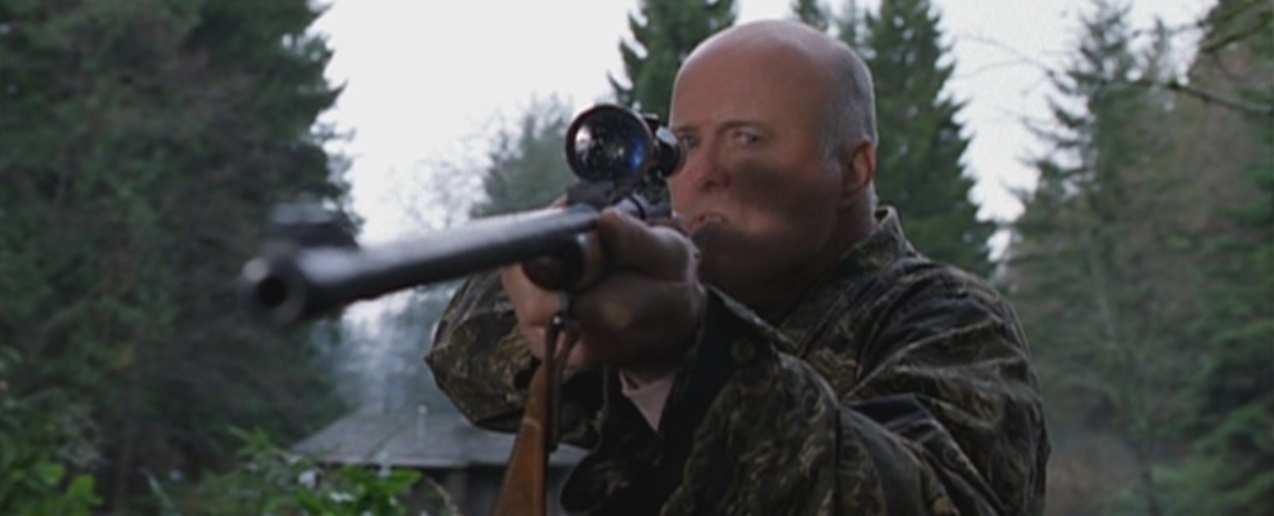
Fox has got the show in their sights...

Fox has got the show in their sights…

Continue reading

The Lone Gunmen – Maximum Byers (Review)

This October/November, we’re taking a trip back in time to review the eighth season of The X-Files and the first (and only) season of The Lone Gunmen.

With Maximum Byers, it seems like The Lone Gunmen has wandered back into the wilderness.

Madam, I’m Adam and Planet of the Frohikes suggested a show that had found its own voice and figured out how best to tell stories featuring theses characters. Those two episodes worked by eschewing the caper-driven hijinks of episodes like Like Water for Octane and Three Men and a Smoking Diaper in favour of character-driven melancholy. Planet of the Frohikes might be the single funniest episode of the show’s short run, but it mostly works because it is underpinned by a sense of genuine tragi-comedy. Its characters felt real; even the talking monkey.

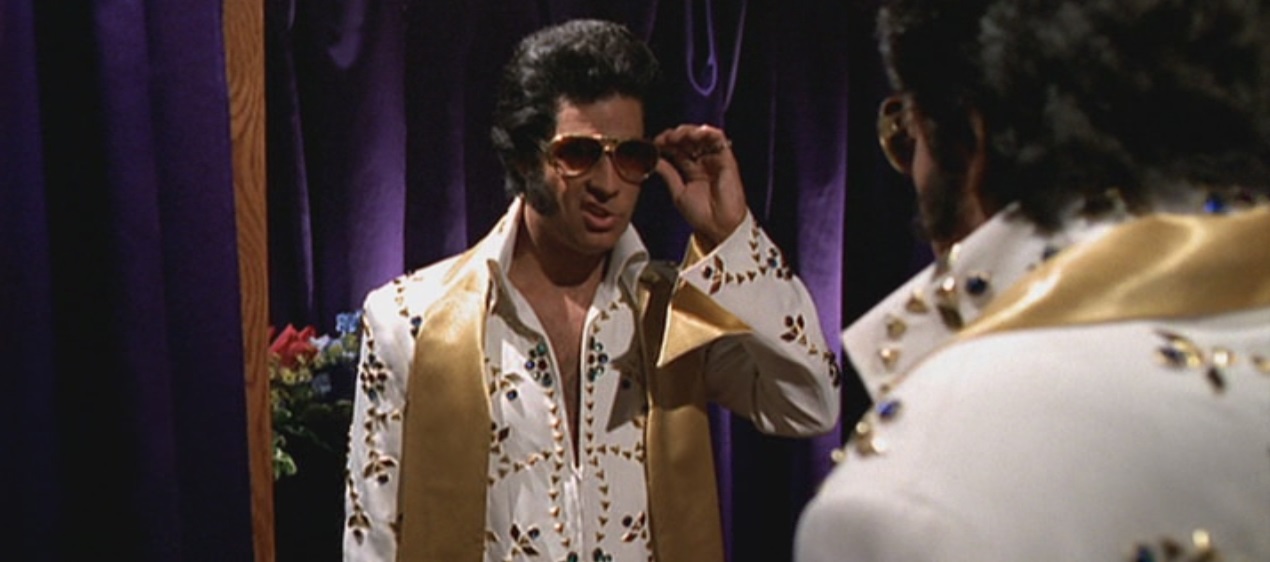
"Thank you very much..."

“Thank you very much…”

Maximum Byers seems to set the clock back to the early first season, sending the Lone Gunmen on a wacky self-aware adventure designed to evoke classic episodic television. It is a model very similar to that employed by scripts like Eine Kleine Frohike or Diagnosis: Jimmy, where the objective is to drop a major character into an unlikely situation and hope that the plot (and the laughs) take care of themselves. After all, “Byers undercover in prison!” seems as compelling as “Frohike undercover as a woman’s long lost son!” or “Jimmy in hospital!”

For most of its runtime, Maximum Byers is fairly bland and inoffensive. It is not particularly memorable or hilarious, but it is not close to the worst episode of the show. Unfortunately, then the ending happens. One of the more frequent criticisms of The Lone Gunmen is that the show had difficulty balancing its tone. While there is an element of truth to this observation, it is never quite as clear as in the final act of Maximum Byers. Then again, it is probably quite tough to do a comedy set on death row.

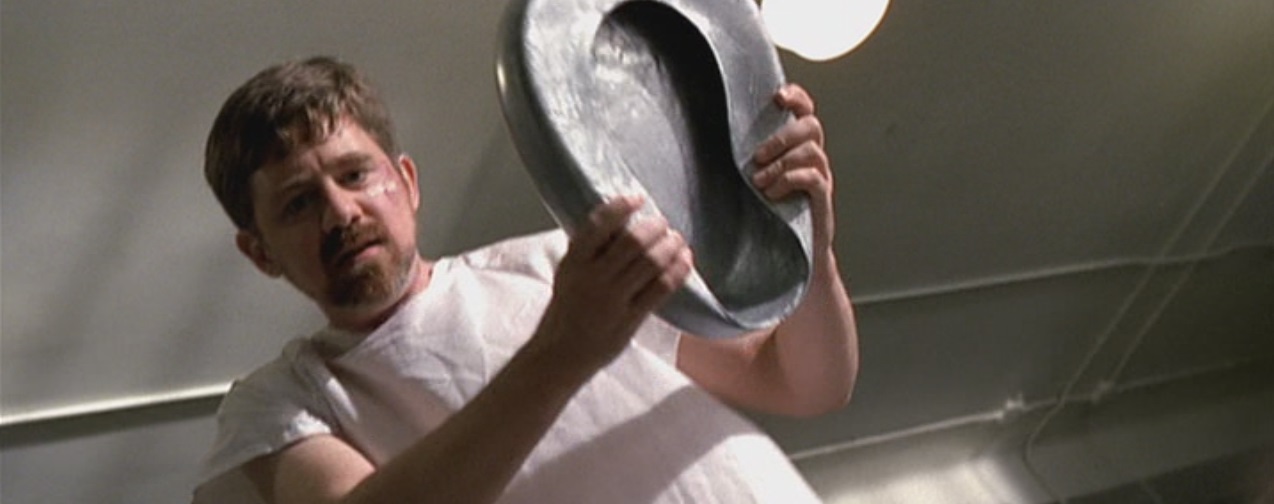
Critics couldn't wait to (bed)pan the episode...

Critics couldn’t wait to (bed)pan the episode…

Continue reading

Non-Review Review: The Hunger Games – Mockingjay, Part II

As with the rest of the series, The Hunger Games: Mockingjay, Part II has an admirable sense of ambition.

There some bold ideas here for a young adult series, some of which are increasingly relevant to twenty-first century political realities. The Hunger Games: Mockingjay, Part II feels like very old-school science-fiction, tackling big issues through metaphor and allegory. While the final film in the series is very much an action spectacular, the script offers any number of observations about terrorism and state power, about media and revolutionary politics. It is nice to see such a big-budget high-profile film tackling these ideas.

Straight arrow...

Straight arrow…

At the same time, The Hunger Games: Mockingjay, Part II feels a little too clean and tempered for its own good. The script is willing to engage with complicated questions of moral relativity, but the problems frequently feel superficial. The movie frequently suggests that political and military realities are not as clear-cut as they might appear, before offering a rather clear-cut solution to what was presented as a moral quagmire. The Hunger Games: Mockingjay, Part II does not follow the path of least resistance, but it follows the path of second-least resistance.

Oddly enough for a story that has been split across two films, The Hunger Games: Mockingjay, Part II feels rather incomplete and rushed in places. Certain sections of the expansive ensemble are casually brushed aside towards the end, with the film tying its major plot threads up quite hastily and efficiently. Still, The Hunger Games: Mockingjay, Part II is impressively produced and anchored in a few great performances from a very experienced cast. The result is a smooth-running film that perhaps might have been better to embrace a few more bumps and hiccups.

As the world burns...

As the world burns…

Continue reading

The X-Files – Three Words (Review)

This October/November, we’re taking a trip back in time to review the eighth season of The X-Files and the first (and only) season of The Lone Gunmen.

There is no “to be continued…” explicitly linking DeadAlive to Three Words, but there doesn’t have to be.

In this final stretch of the eighth season, The X-Files adapts a somewhat serialised narrative model. Although stories like Empedocles and Vienen technically serve as “monster of the week” stories that stand alone, they feel very particular to this moment in the show’s history. Mulder’s return to the land of the living in DeadAlive does not mark a return to the status quo, despite his best efforts. Instead, it creates a highly volatile (and, by its nature, transitory) set-up that cannot be maintained over an extended period.

Howard Salt was willing to go to any lengths to return the President's copy of The X-Files film.

Howard Salt was willing to go to any lengths to return the President’s copy of The X-Files film.

This is not a sustainable status quo. This is not “business as usual.” This is not what the ninth season will look like. This is not like those other changes to the status quo that occurred at the start of the second and sixth seasons, when Mulder and Scully were taken off the X-files but continued to investigate cases that were X-files in all but name. Episodes like Blood or How the Ghosts Stole Christmas could be transitioned into a regular season order with a minimum of changes, but these episodes all feel uniquely tailored to this point in the show’s history.

As such, the end of the eighth season takes on a loosely serialised quality, and not just in the story of the new mythology or the so-called “super soldiers.” The character dynamics evolve and grow, with the individual episodes seeding character development leading the season finalé. Episodes like Three Words and Vienen make it increasingly clear that Mulder is not back in an permanent sense by first pushing him away from the X-files and then firing him from the FBI. Scully’s pregnancy is actually allowed to progress at this point in the season.

He's back!

He’s back!

This serialisation is apparent in the discrepancies between the production and broadcast order. As with extended sections of the fourth season, the final stretch of the eighth season was produced in a different order than it was broadcast. Unlike the fourth season, however, this shift does not create any dissonance as significant as the conflict between the version of Never Again that was filmed and the one that was broadcast. Despite being produced in a different order, these stories could not work in any order other than the broadcast order.

Although The X-Files frequently gets credit for pioneering and popularising (or, at the very least, re-popularising) serialised narratives on prime-time television, the final stretch of the eighth season is perhaps the serialised stretch of the entire nine-year run.

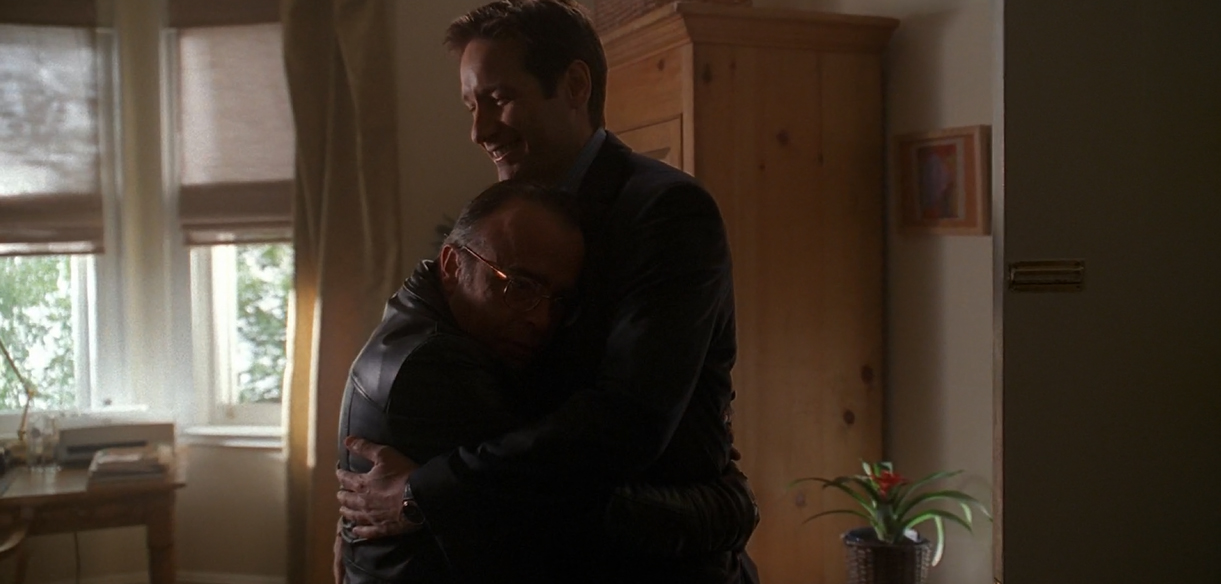
A touching reunion...

A touching reunion…

Continue reading

The Lone Gunmen – Planet of the Frohikes (A Short History of My Demeaning Captivity) (Review)

This October/November, we’re taking a trip back in time to review the eighth season of The X-Files and the first (and only) season of The Lone Gunmen.

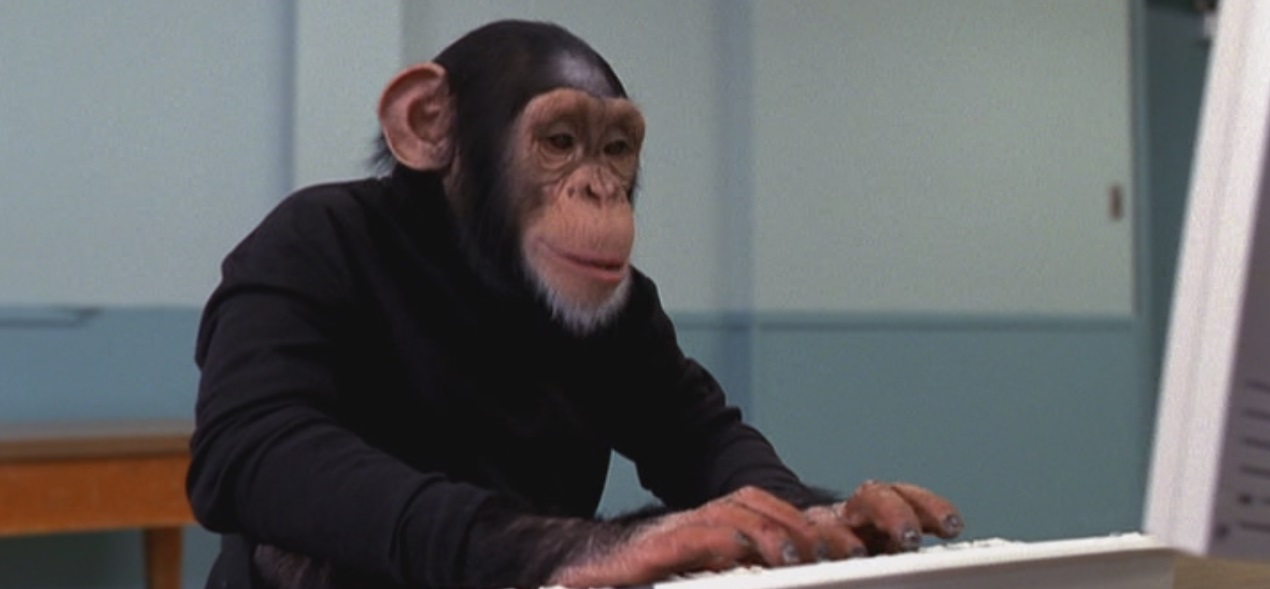
Planet of the Frohikes is Vince Gilligan’s only solo script for The Lone Gunmen. It is also a story about a super-intelligent chimpanzee who adopts the voice of veteran British character actor Edward Woodward. This can be a very strange television show.

All captions to be read in the voice of Edward Woodward.

All captions to be read in the voice of Edward Woodward.

Continue reading

Doctor Who: Sleep No More (Review)

“No. No no no. You don’t get to name things. I’m the Doctor, I do the naming.”

Sleep No More is not a bad idea by any stretch.

One of the defining features of the Moffat era has been a willingness to engage directly with imagery and metaphors tied to the history and culture iconography of Doctor Who. The show has played not only with monsters, but also with the idea of monsters, frequently creating conceptual nightmares that have undoubtedly cost many viewers (young and old) a few nights sleep. The Weeping Angels are monsters that can only move when you can’t see them. The Silence exist in the gaps in your memory. Last Christmas even has the Doctor confront the idea of Santa Claus.

What? No HD feed?

What? No HD feed?

In many ways, Sleep No More feels like a logical continuation of this trend. In a way, the episode doubles-down on the show’s scariness, offering viewers (particularly children) monsters that are immune to (and even capitalise on) potential defenses against scary episodes. If Weeping Angels of Blink are monsters designed to be especially scary to viewers hiding behind the couch or covering their eyes, then the “Sandmen” of Sleep No More are intended to be particularly unsettling to viewers who already have trouble falling asleep after a scary story.

The biggest problem is that the episode is written by Mark Gatiss.

Guess Who?

Guess Who?

Continue reading

The X-Files – DeadAlive (Review)

This October/November, we’re taking a trip back in time to review the eighth season of The X-Files and the first (and only) season of The Lone Gunmen.

The X-Files is dead. Long live The X-Files.

What is dead may never die...

What is dead may never die…

Continue reading

The Lone Gunmen – Madam, I’m Adam (Review)

This October/November, we’re taking a trip back in time to review the eighth season of The X-Files and the first (and only) season of The Lone Gunmen.

Arriving just before The X-Files returns with DeadAlive, it seems like Madam, I’m Adam has found the perfect tone for The Lone Gunmen.

Madam, I’m Adam is the first episode of The Lone Gunmen to really hone in on a unique and distinctive tone for the show and its characters. A lot of Lone Gunmen episodes can seem very generic or bland, engaging the lead characters in wacky capers that lead to familiar jokes that are not necessarily funny enough to sustain forty-five minutes of television. Madam, I’m Adam seems to understand that The Lone Gunmen needs to be more than just silly imagery and bodily function gags if it wants to sustain itself.

Men at work.

Men at work.

Melancholy is threaded through Madam, I’m Adam. This seems perfectly suited to these characters and their world, elegantly capturing a sense of disconnect and disaffection. Madam, I’m Adam is not the first time that the writers have adopted this approach to the characters. Byer’s desperate loneliness served to make Unusual Suspects so very affecting. The short scene in the bathroom between Frohike and Anna in Eine Kleine Frohike might have been the most effective emotional beat of the first five episodes. Madam, I’m Adam just extends that across an episode.

Madam, I’m Adam is also notable as the first credited teleplay to be written by Thomas Schnauz. To quote Byers from the episode itself, “As first stories go, this one’s a doozy.”

Wild blue yonder...

Wild blue yonder…

Continue reading

Jameson Cult Film Club: Ghostbusters

They came. They saw. They kicked some ass.

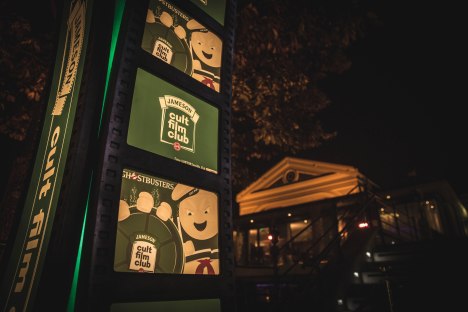
2X3A7808

New York City was brought to Dublin as the Jameson Cult Film Club returned for a double screening of biblical proportions of the 1984 classic Ghostbusters on Wednesday 4th and Thursday 5th of November at the Mansion House.

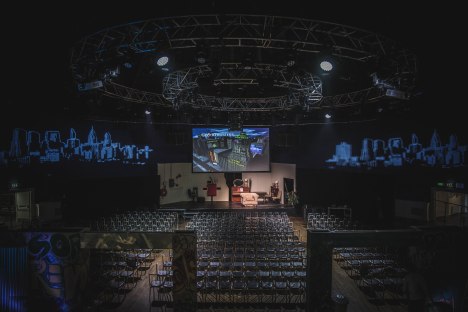
The interactive Jameson Cult Film Club screenings are widely regarded as one of the most hotly anticipated cinematic events of the year and yet again organisers didn’t disappoint. Dublin’s Mansion House was completely transformed into a series of sets from the movie including the Ghostbusters’ NYC headquarters and Dana’s Central Park apartment.

2X3A7752

Iconic scenes from the movie, such as Dana’s capture by the Terror Dogs, were acted out throughout the screening by lookalike actors. In other scenes, the Ghostbusters ran through the audience in a bid to escape being slimed.

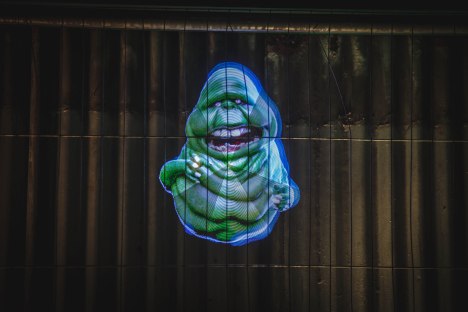
The crowd got a real surprise when the Stay Puft Marshmallow Man exploded on screen, with “melted marshmallow” pouring from the ceiling.

2X3A7772

These free events are more than just your typical screening, as characters from the movie, live theatre and special effects timed perfectly with on-screen action help to create an electric atmosphere throughout the screening.

Following the screening, the party continued in true Jameson style with DJ Aidan Kelly on decks. Guests enjoying the gourmet burgers and Jameson Ginger and Limes at the venue included actors Adam Weafer and Carl Shabaan, film director Kevin de la Isla O’Neill and RTE’s Stephen Byrne.

2X3A7872

For the uninitiated, Jameson Cult Film Club is all about watching your favourite cult films at spectacular screenings, staged to transport you into the film’s universe. This is a free event for movie fans, check out www.jamesoncultfilmclub.ie for details of upcoming screenings and register your details for the chance to win free tickets.