• Following Us

  • Categories

  • Check out the Archives


  • Awards & Nominations

The X-Files – Two Fathers (Review)

This July, we’re taking a trip back in time to review the sixth season of The X-Files and the third (and final) season of Millennium.

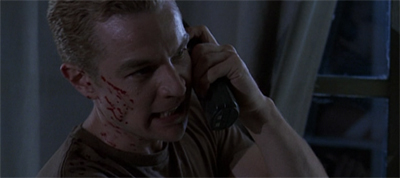
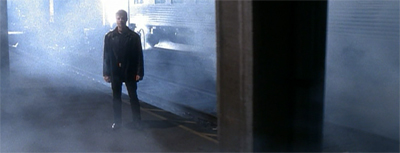
This is the end. I never thought I’d hear myself say those words after all these years. You put your life into something… build it, protect it… The end is as unimaginable as your own death or the death of your children. I could never have scripted the events that led us to this. None of us could. All the brilliant men… the secret that we kept so well. It happened simply, like this.

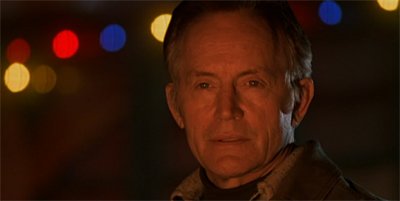
– the Cigarette-Smoking Man channels his inner Chris Carter

In case you were wondering about the title...

In case you were wondering about the title…

Continue reading

Millennium – The Sound of Snow (Review)

This July, we’re taking a trip back in time to review the sixth season of The X-Files and the third (and final) season of Millennium.

“Our pasts are what we are,” Alice Severin explains to Emma Hollis and Bob Giebelhouse towards the climax of The Sound of Snow. It seems as if she might be talking for Millennium itself.

The Sound of Snow is a literal homecoming for Frank Black and Millennium as a television show. It is the last time that a number of crucial elements of Millennium appear in the show. It is the last appearance of Detective Bob Giebelhouse, the Seattle police officer who has been around since The Pilot. It is the last appearance of the yellow house, although it has since been painted a less striking white. It is also the last appearance of Catherine Black, who was a regular character for the show’s first two seasons.

...............

……………

The Sound of Snow features Frank Black returning to Seattle. This is not a big deal of itself. After all, Frank visited Seattle during TEOTWAWKI. However, The Sound of Snow sees Frank wading through memories. He flashes back to the events of The Fourth Horseman and The Time is Now, and visits the yellow house. He even takes a trip out to visit the cabin where he tried to wait out the end of the world with his wife and daughter. The Sound of Snow is about reconciliation, allowing Frank one last conversation with his beloved.

The Sound of Snow is also about reconciliation for the show itself. Since Omertà, the show has been trying to deal with the legacy of a second season that the first eight episodes of the year had tried minimise or ignore. The Sound of Snow is the culmination of that approach, with the third season finally picking up from where the second season let off.

...............

……………

Continue reading

The X-Files – Tithonus (Review)

This July, we’re taking a trip back in time to review the sixth season of The X-Files and the third (and final) season of Millennium.

Alas! for this gray shadow, once a man—
So glorious in his beauty and thy choice,
Who madest him thy chosen, that he seem’d
To his great heart none other than a God!
I ask’d thee, ‘Give me immortality.’
Then didst thou grant mine asking with a smile,
Like wealthy men, who care not how they give.
But thy strong Hours indignant work’d their wills,
And beat me down and marr’d and wasted me,
And tho’ they could not end me, left me maim’d
To dwell in presence of immortal youth,
Immortal age beside immortal youth,
And all I was, in ashes. Can thy love,
Thy beauty, make amends, tho’ even now,
Close over us, the silver star, thy guide,
Shines in those tremulous eyes that fill with tears
To hear me? Let me go: take back thy gift:
Why should a man desire in any way
To vary from the kindly race of men
Or pass beyond the goal of ordinance
Where all should pause, as is most meet for all?

– Alfred, Lord Tennyson, Tithonus

Shades of grey...

Shades of grey…

Continue reading

Millennium – Collateral Damage (Review)

This July, we’re taking a trip back in time to review the sixth season of The X-Files and the third (and final) season of Millennium.

Collateral Damage continues the weird healing process at work in the third season.

After spending so much time pretending that the second season never actually happened, the third season has finally accepted that there were story developments flowing from that season that the show needs to deal with. In some respects, Collateral Damage can be seen as a process of healing and integration for the third season of Millennium, constructing a story that manages to tie together all three seasons of Millennium together into something resembling a cohesive whole.

"A bloody fine mess you've gotten me into!"

“A bloody fine mess you’ve gotten me into!”

From the first season, Collateral Damage takes its introduction and basic premise. Collateral Damage begins in a manner similar to many early Millennium episodes. A sinister attacker stalks their victim and brutally strikes. We are then treated to a few extended suspense-filled sequences as the attacker’s designs become increasingly uncomfortable and nefarious. It is not too hard to imagine Collateral Damage as the kind of “serial killer of the week” episode that populated the early first season.

For the second season, Collateral Damage inherits its fascination with the Millennium Group and its depiction of Peter Watts. Collateral Damage marks the first point in the third season where Peter Watts feels like the character that we watched grow and evolve over the second season. This is a version of Peter who has so repressed his doubts and uncertainties that they threaten to explode if they are even acknowledged. It is a much more compelling character than the knock-off conspirator featured in episodes like Exegesis and Skull and Bones.

"Don't be afraid."

“Don’t be afraid.”

From the third season, Collateral Damage takes its fixation on the link between the Millennium Group and conspiracies involving the American government. Collateral Damage suggests that the Millennium Group is responsible for Gulf War Syndrome. It feels like a plot point from an episode of The X-Files – and arguably makes it an ideal third season element. The result is perhaps the most all-encompassing episode of the show ever produced. Collateral Damage is not the best episode of Millennium ever produced, but it is perhaps the broadest representation of the show itself.

If you were to pull back and examine Millennium from a distance, it might look a lot like Collateral Damage.

"Surgical strike."

“Surgical strike.”

Continue reading

The X-Files – S.R. 819 (Review)

This July, we’re taking a trip back in time to review the sixth season of The X-Files and the third (and final) season of Millennium.

And we’re back on familiar ground.

The first half of sixth season of The X-Files is perhaps the weirdest that the show ever really became. It seemed like the series transformed into a goofy workplace romantic comedy, as Mulder and Scully worked at boring desk jobs during the day before investigating paranormal activity together in their spare time. It was utterly unlike anything that the show had done before or anything that it would do after. It is very strange to see so many oddities packed together so tightly.

He survived by the Skin(ner) of his teeth...

He survived by the Skin(ner) of his teeth…

Triangle, Dreamland I, Dreamland II, How the Ghosts Stole Christmas and The Rain King have enough surreal content to sustain two or three seasons of The X-Files. Broadcasting them almost back-to-back left some fans a little shell-shocked. At the time, it must have seemed like The X-Files had become a completely different television show than it had been only five or six months earlier. However, with the benefit of hindsight, it becomes clear that those episodes were just a very strange blip in the larger context of the series.

S.R. 819 is the episode that marks the clear return to the classic “tried and tested” model of The X-Files. It has everything from ambiguous conspiracies to body horror to car park confrontations. It is very much business as usual. Which is both the best and worst thing about it.

Do the Mathes, son...

Do the Mathes, son…

Continue reading

Millennium – Borrowed Time (Review)

This July, we’re taking a trip back in time to review the sixth season of The X-Files and the third (and final) season of Millennium.

The third season of Millennium is all over the map.

Due to a variety of factors, the show veers wildly in just about every direction. The transition from the second season to the third season was tough on everybody involved, but even the third season itself went through considerable issues. Michael Duggan was brought in to steady the ship, but his approach didn’t really work out. He departed the show a third of the way through the season. As a result of all of this, the third season can often seem disjointed and uneven. It is hard to tie it all together.

Angel of mercy?

Angel of mercy?

At the same time, there are certain recurring motifs and ideas that recur through the twenty-two episode season. A lot of these can be traced back to writer Chip Johannessen (with a great deal of help from Ken Horton). Johannessen was the consistent voice across all three seasons of Millennium, and an executive producer for the entirety of the third season. Although given a seemingly impossible task, Johannessen did work really hard to impose something resembling order upon the chaotic third season.

Borrowed Time hits on a lot of the ideas running through the third season. It is a story that suggests Millennium is about the fragile balance between life and death, and that death is not as much of an absolute as earlier seasons might have suggested. Borrowed Time is a little uneven and messy in places, but it is underscored by a host of bold and interesting ideas. It finds Johannessen engaging with the religious and mystical themes that informed early scripts like Force Majeure and Maranatha.

Countdown...

Countdown…

Continue reading

The X-Files – The Rain King (Review)

This July, we’re taking a trip back in time to review the sixth season of The X-Files and the third (and final) season of Millennium.

I do not “gaze” at Scully.

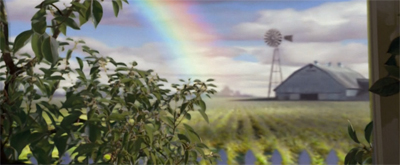
Somewhere over the rainbow...

Somewhere over the rainbow…

Continue reading

Non-Review Review: Inside Out

Inside Out represents a glorious return to form for Pixar.

After several years of sequels and middling films, Inside Out feels like a breath of fresh air. Films like Cars 2 and Monsters University were very much safe bets for the company, a way to leverage return from existing (and well-loved) properties. Inside Out is something altogether stranger and more high-concept. It feels like the studio is getting back in touch with its original aesthetic. It is a concept that initially seems quite complex and esoteric, but quickly reveals itself to be a simple emotional fairytale.

Memories are made of this...

Memories are made of this…

Wall-E might have been a half-silent science-fiction film, but it was also a very effective love story. Up might have been a wacky adventure about a flying house, but it was also an insightful meditation on grief and loss. Finding Nemo was populated with colourful fish, but it was also about the experience of watching a child venture into the world. Pixar established and developed a reputation as a studio that could produce films that were accessible and exciting to children, but also packed a more weighty and substantial punch for the parents in the audience.

Inside Out is perhaps the most high of Pixar’s concepts, but it ultimately boils down a very organic and instinctive story meditating on the studio’s core themes of emotional development and family metaphors.

An emotional journey...

An emotional journey…

Continue reading

The X-Files – Terms of Endearment (Review)

This July, we’re taking a trip back in time to review the sixth season of The X-Files and the third (and final) season of Millennium.

Terms of Endearment is perhaps the most conventional episode of The X-Files to air between Drive and Agua Mala.

The early sixth season was generally quite experimental and playful, and Terms of Endearment stands out in this stretch of the season as an episode that is very much structured like a horror story and which conforms to the expectations of an episode of The X-Files. A local law enforcement official brings a case to the attention of the FBI; Mulder and Scully trade theories; Mulder pursues his hunches, while Scully offers pseudo-scientific rationalisations. There is a crime; there is a paranormal element; there is a secret.

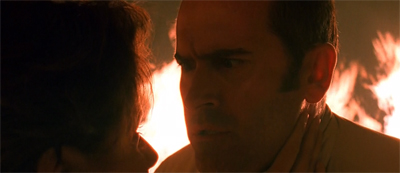
Who said their marriage is lacking some fire?

Who said their marriage is lacking some fire?

Terms of Endearment is an episode that could easily have been written into the fifth or seventh seasons of the show without any real difficulty. Barring the brief appearance of Spender at the start of the episode, and the occasional references to the fact that Mulder is not technically on the X-files anymore, this is business as usual. Indeed, the episode’s themes of reproductive horror might have fit quite comfortably with the recurring infant-related horror stories that populated the fifth season.

Still, Terms of Endearment works. In a way, its somewhat conventional nature serves it well. As with the stand-alone monster of the week stories scattered sparingly through the fifth season, it is easier to appreciate an episode like this when it feels exceptional rather than generic. Featuring an intriguing central metaphor, a great guest performance, and a number of memorable visuals, Terms of Endearment is a clever and powerful little script. It is not a bad début from writer David Amann.

"Who loves you, baby?"

“Who loves you, baby?”

Continue reading

Millennium – Omertà (Review)

This July, we’re taking a trip back in time to review the sixth season of The X-Files and the third (and final) season of Millennium.

It might not feel like it – particularly while actually watching the episode – but Omertà does represent something of a shift in the third season of the show.

Although it was the ninth episode of the third season to be broadcast, it was the eighth produced. It was held back so that it could be broadcast closer to Christmas, in keeping with the themes of the show. As a result, it was the first episode of the third season not to be produced by Michael Duggan. Chip Johannessen is the only “executive producer” listed before Chris Carter at the end of the episode. In a way, shuffling Michael Duggan’s script for Human Essence back earlier in the broadcast order might have been a good thing; it makes for a cleaner break.

"Merry Christmas, Mr. Black."

“Merry Christmas, Mr. Black.”

Omertà is not a great piece of television, by any measure. It is not even a good piece of television, by most measures. However, it does mark a point of transition for the third season of Millennium. Omertà begins a run of episodes that deal substantively with the legacy of the show’s second season, and which engage with grand themes of death and spiritual rebirth. The third season of Millennium is a thematic mess, but Omertà represents a point where it seems like the creative team might finally be getting a grip on things, almost half-way through the year.

None of this makes Omertà any easier to watch, but it does provide an intriguing prism through which the episode might be viewed.

"Tonight, we're gonna party like it's 1989!"

“Tonight, we’re gonna party like it’s 1989!”

Continue reading