• Following Us

  • Categories

  • Check out the Archives


  • Awards & Nominations

Millennium – A Single Blade of Grass (Review)

This May and June, we’re taking a trip back in time to review the fifth season of The X-Files and the second season of Millennium.

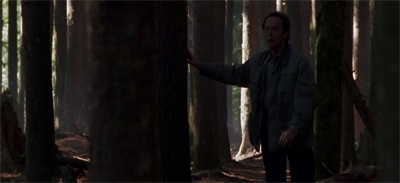
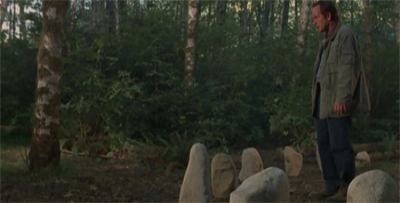
A Single Blade of Grass is one of those episodes of television that skirts a line. It is very much a companion to “subculture” episodes of The X-Files, shows that would see our white heroes wading into the world of an ethnic minority – be the Haitian refugees in Fresh Bones, Chinatown in Hell Money, African immigrants in Teliko or Mexican-Americans in El Mundo Gira. In the case of A Single Blade of Grass, Frank Black is wandering into the world of Native Americans in New York.

It goes without saying that these sorts of episodes have to be very careful. Both Millennium and The X-Files are very white television shows – they have exclusively white primary casts, and the vast majority of their supporting cast are also white. (Also, most of the writers’ rooms.) As such, telling a story about a subculture can be very tricky – it is easy to seem shallow or condescending, trite or exploitative. It is worth noting that some of the biggest misfires on The X-Files occurred when the production team got this horribly wrong – Excelsis Dei, Teso Dos Bichos, El Mundo Gira, Badlaa.
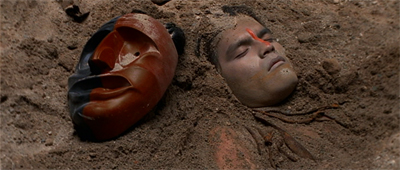
Burial mask...

Burial mask…

It is very easy to get caught up in mysticising and fetishising the Other, which can become quite problematic when “the Other” corresponds to a real-life minority that have – historically speaking – never been treated particularly well by those in authority. As such, A Single Blade of Grass feels like a very risky and very difficult story, particularly for a show that was already struggling in the ratings and trying to gain some traction with audiences. A Single Blade of Grass has the potential to go spectacularly wrong in places, and it is to the credit of all involved that it (mostly) doesn’t.

Then again, this is a large part of the appeal of the second season of Millennium – what makes even the year’s failures seem compelling in their own eccentric way. There is a sense that the second season of Millennium is completely unfazed by the possibility of failure, and so commits completely to what it wants to do. While A Single Blade of Grass might be a little muddled and unfocused in places, it retains a raw energy that makes for compelling viewing.
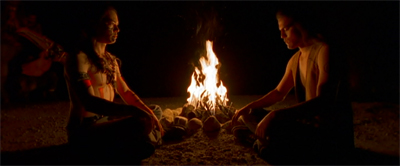
Let us sit upon the ground and tell sad stories about the death of worlds...

Let us sit upon the ground and tell sad stories about the death of worlds…

Continue reading

Star Trek: Enterprise – The Expanse (Review)

Next year, Star Trek is fifty years old. We have some special stuff planned for that, but – in the meantime – we’re reviewing all of Star Trek: Enterprise this year as something of a prequel to that anniversary. This April, we’re doing the second season. Check back daily for the latest review.

And, finally, everything changes.

It feels inevitable. Maybe not in this particular form, maybe not in this particular way, but Star Trek: Enterprise needed something. The show needed to stop feeling like a relic of the early nineties – a great song played on loop to the point where it became nothing more than generic white noise. The Expanse gives the show a clear sense of direction and a clear sense of purpose. It is not a direction that is unanimously loved, and it is not a purpose that is realised as well as it might be, but it finally feels like Enterprise is boldly going in its own direction.

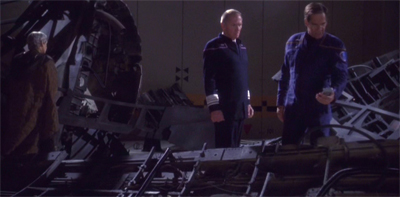
A walk among the wreckage...

A walk among the ruins…

In many respects, the obvious point of comparison for The Expanse is an episode like The Jem’Hadar or A Call to Arms. It is an episode that is clearly written to reach an ending so that the show can start doing something new. These episodes tend to tease a brave new future, one utterly unlike anything that Star Trek has done before, but they play like extended forty-five minute trailers. Watching The Expanse, it feels like show runners Rick Berman and Brannon Braga are thinking more about the direction than the destination. That’s not a bad thing at this point.

Polarising as it might be, and occasionally awkward as it might be, The Expanse was utterly necessary. Enterprise is a Star Trek show that exists in the shadow of 9/11. That horrific terrorist attack has reverberated throughout the series. The War on Terror informs and distorts narratives like Shadows of P’Jem, ShockwaveThe SeventhCease FireThe CrossingJudgmentRegeneration and Cogenitor. However, there is a sense that Enterprise never accepted that heavy pull of gravity.

Homecoming...

Homecoming…

Sometimes it worked; Judgment, Regeneration and Cogenitor are all examples of the series trying to apply its own morality to a more complicated and confusing geopolitical climate. However, the War on Terror made it hard to reconcile Jonathan Archer as both an explorer and a paranoid reactionary. The unquestioning trust in authority in The Seventh, to the point where he did not question the Vulcan High Command’s mindwipe of T’Pol? The all-consuming dread upon meeting something different in The Crossing? These do not fit well within Star Trek.

So The Expanse pushes all that to the front. The opening teaser features a strange alien ship appearing and carving a large scar in the surface of the planet – a very visual representation of the damage done to the utopian optimism of Star Trek. Now that the scar had been literalised, it could be discussed and explored. The Expanse made sure that nobody was talking around the elephant in the room; everybody was now charging right at it.

The way ahead is cloudy...

The way ahead is cloudy…

Continue reading

Millennium – Monster (Review)

This May and June, we’re taking a trip back in time to review the fifth season of The X-Files and the second season of Millennium.

Monster continues the process of laying the groundwork for the second season of Millennium. Glen Morgan and James Wong had very consciously shaken things up with The Beginning and the End, and the first third of the second season is clearly intended to construct a solid foundation for the rest of the year. Looking at the plot points and character beats from the various episodes, they read almost like a checklist of things to address or introduce before the series can really start moving under its own power again.

Even outside of the dramatic changes wrought by The Beginning and the End, the other episodes in this stretch of the season each have their own purpose. Beware of the Dog introduces us to the Old Man, affectionately riffs on the first season format, and outlines the refactored Millennium Group. In turn, Sense and Antisense riffs on The X-Files and helps to identify areas of overlap with Millennium. A Single Blade of Grass gives Frank back his psychic powers, albeit in a more powerful and abstract form. The Curse of Frank Black is a character-driven vehicle. 19:19 and The Hand of St. Sebastian get well and truly biblical.

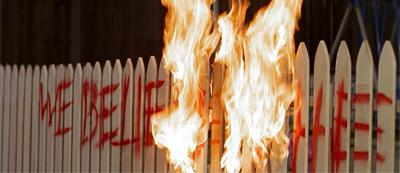
Fire and brimstone...

Fire and brimstone…

The most dramatic aspect of Monster is the introduction of the character of Lara Means. Means becomes a pretty vital part of the second season of Millennium, and is introduced in Monster with an eye to her inevitable role in The Time is Now. Means is a vital cog in the workings of the second season, perhaps the most important part of the mythology explicitly created by Morgan and Wong, instead of simply repurposed and reinvented. Means is a fantastic creation, wonderfully brought to life by actor Kristen Cloke and well-realised by Morgan and Wong’s scripting.

However, even outside of the important introduction of Lara Means to Millennium, Monster feels like an episode that exists to set up and outline the larger themes and ideas of the season in a way that foreshadows the larger arc. Like A Single Blade of Grass, it reiterates themes that will become a lot more important as the year goes on. Like Beware of the Dog, it uses the familiar template of a first-season Millennium episode to do this.

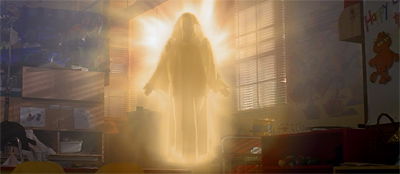
I believe in angels...

I believe in angels…

Continue reading

Non-Review Review: Big Game

Big Game is a rather unlikely combination. Jalmari Helander’s comedy action movie plays as a cocktail of Airforce One and E.T., a coming of age film blended with a old-fashioned action adventure film. It is a combination that works surprisingly well, allowing Big Game to be both playful and charming. Big Game feels like an homage to classic eighties and nineties cinema – the emotional beats are broad, the action is absurd, the irony is layered on pretty heavy. Big Game is always wry and self-aware, but never quite breaks character.

It is a potent mixture, and one that manages to hold itself together remarkably well across the film’s ninety-minute runtime. Big Game never takes itself too seriously, providing a light and exciting action adventure treat.

“I’m king… er… leader of the free world!”

Continue reading

Star Trek: Enterprise – Bounty (Review)

Next year, Star Trek is fifty years old. We have some special stuff planned for that, but – in the meantime – we’re reviewing all of Star Trek: Enterprise this year as something of a prequel to that anniversary. This April, we’re doing the second season. Check back daily for the latest review.

Just when it seemed like Star Trek: Enterprise was on a roll, it produces Bounty.

To be fair to writers Mike Sussman and Phyllis Strong, and showrunners Rick Berman and Brannon Braga, Bounty has all the makings of a network-mandated episodes. It is easy to see the stock plot elements manufactured from a checklist provided by the network. T’Pol in her underwear! Space battles! Klingons! The script also demonstrates a clear reluctance about some of these elements, as uncomfortable to be making Bounty as the viewers are to be watching it.

An enlightening experience?

An enlightening experience?

It is perhaps telling that Bounty was buried as the second half of a “double feature” with First Flight on initial broadcast. Not a feature-length adventure or a two-part episode, the scheduling of Bounty seems a little conspicuous, as if everyone involved is trying to get it out of the way as quickly and quietly as possible. Viewers watching UPN on 14th May 2003 would have tuned in for First Flight as usual. If they were lucky, they simply tuned out afterwards and returned to watch The Expanse a week later.

It is a much smoother transition from First Flight to The Expanse, but that does little to justify Bounty. The last stretch of the second season has generally done a good job of bidding farewell to a particular style of Star Trek. However, Bounty is an episode the embodies the worst tendencies of Enterprise. Sadly, those tendencies that may not actually be going anywhere.

"You're gonna sit there, and like it."

“You’re gonna sit there, and like it.”

Continue reading

Millennium – Sense and Antisense (Review)

This May and June, we’re taking a trip back in time to review the fifth season of The X-Files and the second season of Millennium.

Sense and Antisense is a misfire.

It is an episode with far too much going on, and no time to unpack it all. Sense and Antisense moves like a rocket ship, jumping from one crazy idea to the next crazy idea. It opens with the threat of a viral contagion, but quickly escalates into the realm of conspiracy theories and mind control. It is an episode that is almost impossible to summarise without sounding as crazy as some of the characters populating the narrative. It is unsatisfying and disjointed, but not in a way that makes those sentiments seem part of the plan.

The pupil has become the master...

The pupil has become the master…

At the same time, it is an incredibly ambitious misfire. The biggest problem with Sense and Antisense is that it tries to cram too much in there. It is constructed almost writer Chip Johannessen tried to condense down contemporary conspiracy theory into a single forty-five minute story that winds up connecting the Department of Energy to the Rwandan Genocide. There is a breathless enthusiasm to all this that would make Fox Mulder blush. As much as Sense and Antisense doesn’t work, it is hard not to admire it’s sheer gumption.

The second season of Millennium might not be the most consistent season in the history of the medium, but even its failures are bold and energetic. Sense and Antisense is not The Curse of Frank Black, Jose Chung’s “Doomsday Defense” or Luminary, but it is a far cry from something like Unrequited, Synchrony or Schizogeny.

A stain on the record...

A stain on the record…

Continue reading

Star Trek: Enterprise – First Flight (Review)

Next year, Star Trek is fifty years old. We have some special stuff planned for that, but – in the meantime – we’re reviewing all of Star Trek: Enterprise this year as something of a prequel to that anniversary. This April, we’re doing the second season. Check back daily for the latest review.

First Flight is a prequel to a prequel.

First Flight unfolds before the events of Broken Bow, providing something of a belated origin story for Captain Jonathan Archer. The tail end of the second season feels like an odd place for such a story. The decision to air First Flight and Bounty as a double feature meant that First Flight premiered only a week before The Expanse, an episode that changed everything that fans thought they knew about Star Trek: Enterprise. Then again, perhaps this is the perfect place for an episode like this.

Ground Control to Commander Robinson... Ground Control to Commander Robinson...

Ground Control to Commander Robinson… Ground Control to Commander Robinson…

Much of the final stretch of the second season of Enterprise is introspective and reflective. The show seems aware that a big change is coming, and takes the opportunity of these last few episodes to look back on a classic model of Star Trek. Judgment puts Archer on trial; Cogenitor wonders whether old-fashioned Star Trek morality plays can still work in the twenty-first century; Regeneration finds the Borg lying among the (literal) wreckage of Star Trek: The Next Generation. First Flight opens with the death of Captain A.G. Robinson, a character we never met before.

More to the point, First Flight opens with the death of the man who was almost the captain of the Enterprise. On the cusp of a creative change in direction that effectively kills the show as it existed in the first two seasons, First Flight is pretty heavy on the symbolism.

... Take your protein pill and put your helmet on...

… Take your protein pill and put your helmet on…

Continue reading

Millennium – Beware of the Dog (Review)

This May and June, we’re taking a trip back in time to review the fifth season of The X-Files and the second season of Millennium.

Beware of the Dog opens with the shot of the same comet discussed at the start of The Beginning and the End, just in case viewers thought that The Beginning and the End was somehow a fluke or a deviation. The Beginning and the End was not a freak occurrence, it was not some random divergence from the rest of Millennium. It was very much a new beginning for the series, harking in a bold new direction utterly unlike that marked out by The Pilot. The second season of Millennium was a new breed of animal.

And so a lot of Beware of the Dog is devoted to reinforcing this new direction – convincing the viewers at home that Millennium had reinvented itself from the ground up. Part of what is interesting about Beware of the Dog is the way that the basic structure and beats of the episode hark back to the formula and themes of the first season, but in a way that makes it quite clear that things have changed. Beware of the Dog embraces the pulpy absurdity of a show about millennial fears and anxieties, about the nature of good and evil in the world.

Call of the wild...

Call of the wild…

Beware of the Dog is a very weird piece of television. It is resoundingly and unapologetically odd. It is nowhere near as quirky and eccentric as the second season would become in episodes like The Curse of Frank Black or Jose Chung’s “Doomsday Defense” or The Time is Now, but decidedly more surreal than the first season had allowed itself to be – even in episodes like Force Majeure or Powers, Principalities, Thrones and Dominions. This is an episode which takes the first season’s “serial killer of the week” format, and substitutes in packs of wild dog.

The result is a piece of television that is quite difficult to classify and quantify, but which feels fresh and exciting. As with The Beginning and the End, there is a playfulness and fun to Beware the Dog that was sorely lacking from extended stretches of the first season. Indeed, it seemed unlikely during the first season that Millennium would ever be classed as “playful” or “fun.” That sense of energy and vibrance imbues the second season with life, helping to carry the show across some admittedly rough episodes later in the year.

Circle of trust...

Circle of trust…

Continue reading

Star Trek: Enterprise – Regeneration (Review)

Next year, Star Trek is fifty years old. We have some special stuff planned for that, but – in the meantime – we’re reviewing all of Star Trek: Enterprise this year as something of a prequel to that anniversary. This April, we’re doing the second season. Check back daily for the latest review.

It seems like a bit of an understatement to describe Regeneration as highly controversial.

The blu ray release of the second season of Star Trek: Enterprise includes two commentaries for the episode, a sure sign that there is a lot to talk about. On a track recorded in 2005, writers Mike Sussman and Phyllis Strong describe the episode as “infamous.” On a track recorded in 2013, John Billingsley describes how certain segments of fandom considered it a “jumping the shark” moment for the show. That last statement illustrates one of the perverse qualities of Star Trek fandom; one would assume that the viewers turned off by Regeneration would have already tuned out with Acquisition.

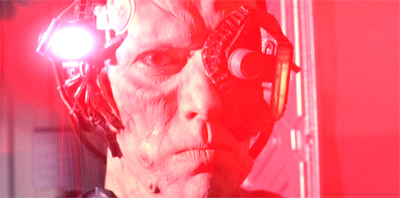
We are Borg.

We are Borg.

After all, the decision to bring back the Ferengi in Acquisition is hard to explain. Nobody was clamouring for more Ferengi episodes after Star Trek: Deep Space Nine had gone off the air. Outside of Deep Space Nine, the most enduring impression of the Ferengi was that they had begun their life as “villains that didn’t quite work” and bad quickly been transformed into “comic relief that didn’t quite work.” As such, it is hard to account for the decision to bend continuity in order to introduce the Ferengi into the first season of a prequel show designed to escape the baggage of the larger Star Trek franchise.

On the other hand, it made a great deal of sense to bring back the Borg. After all, the Borg were one of the few Star Trek aliens created after 1969 to make a genuine impression on popular culture. The Borg will never be as iconic as Klingons or Vulcans, but they will always be more iconic than Cardassians or Bajorans. They were also stars of the best-loved Star Trek movie starring the cast of Star Trek: The Next Generation. The Borg are a big deal; there is a reason that Star Trek: Voyager ran them into the ground.

"Assimilate this!"

“Assimilate this!”

It is no wonder that the Borg are frequently cited in discussions around the future of JJ Abrams’ Star Trek reboot. Asked if the creative team would consider bringing the Borg to the rebooted twenty-third century, Roberto Orci answered, “I think we would think about it.” Damon Lindelof was even blunter in his assessment, “You can’t talk about Trek and not talk about the Borg.” While they have undoubtedly been over-exposed and over-used since they first appeared in Q Who?, the Borg are the most distinctive and most successful addition to the Star Trek mythos outside the classic show.

While common sense and experience seemed to weigh against bringing back the Ferengi in Acquisition, it seems that continuity is the only thing holding the Borg back from making an appearance on Enterprise. That said, Sussman and Strong find a clever way around that issue, by remembering the suggestion in Broken Bow that Enterprise is as much a sequel to Star Trek: First Contact as a prequel to the rest of the Star Trek universe.

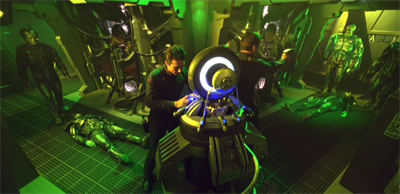
"Oh no, Cap'n, they've discovered the mood lightin' settin'."

“Oh no, Cap’n, they’ve discovered the mood lightin’ settin’.”

Continue reading

Millennium – The Beginning and the End (Review)

This May and June, we’re taking a trip back in time to review the fifth season of The X-Files and the second season of Millennium.

The Beginning and the End manages the impressive and paradoxical feat of both rebooting Millennium and resolving the cliffhanger at the end of Paper Dove. These two contradictory impulses become part of the thematic fabric of The Beginning and the End, an episode fascinated by duality and opposition. Can the polaroid stalker be both a serial killer of the week and the herald of something so much greater? Can Catherine and Frank Black be both united and separated? Can Millennium be the same show it was last year and something completely new?

The Beginning and the End is the start of the show’s polarising and divisive second season. To critics, the second season completely branches off from the first season of the show, replacing a framework that had grown and developed over the course of the year with a bizarre and unwieldy approach that was gonzo and surreal. To fans, the second season was an ambitious and exciting piece of television utterly unlike anything that had been broadcast before or has been broadcast since.

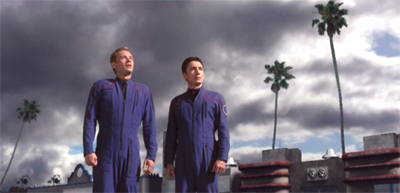
Up in the sky...

Up in the sky…

With Chris Carter back focusing on the development of The X-Files and the looming release of The X-Files: Fight the Future, Fox drafted in Glen Morgan and James Wong to steer the second season of Millennium. The duo had helped to define the identity of The X-Files in its first year, and had produced the failed (but ambitious and prescient) series Space: Above and Beyond for the network. After working on the fourth season of The X-Files and the first season of Millennium, Fox allowed the pair to produce their own pilot – The Notorious Seven.

When Fox opted not to take The Notorious Seven to series, they asked Glen Morgan and James Wong to take charge of Millennium in its sophomore season. As The Beginning and the End demonstrates, Morgan and Wong promptly made the show their own.

Looking up and wondering...

Looking up and wondering…

Continue reading