• Following Us

  • Categories

  • Check out the Archives


  • Awards & Nominations

The X-Files – Provenance (Review)

This December, we’re taking a trip back in time to review the ninth season of The X-Files.

Provenance and Providence are a landmark moment for The X-Files. They represent the last mid-season two-parter.

The mid-season two-parter has been an institution since the early second season, when external factors forced the production team to improvise around Gillian Anderson’s pregnancy. It was decided that the character of Scully would marginalised and written out so as to avoid dealing with the pregnancy, and the centre-piece of that plan was an epic two-parter that would air during in October 1994. Duane Barry and Ascension were such a big hit that the production team opted to do a second mid-season two-parter in February 1995, with Colony and End Game.
The Truth will not be buried...

The Truth will not be buried…

The show never looked back. Those episodes quickly codified the mythology, becoming a highlights in the season schedule. The two-parters typically aired during Sweeps and occasionally managed to garner press and media attention. They featured bigger budgets and impressive scale, with many of those two-parters standing out as prime examples of The X-Files as “event” television. The submarine in the ice in End Game, the leap to the train in Nisei, the mid-air alien abduction in Max. These were blockbuster moments.

Provenance and Providence would mark the end of this rich tradition. Sadly, they do not embody the finest attributes of the form.
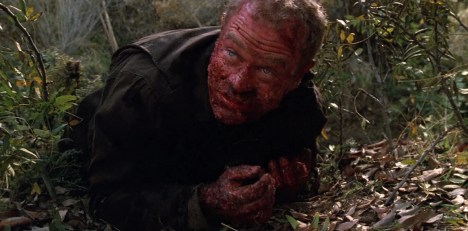
Burnt notice.

Burnt notice.

Continue reading

The X-Files – Hellbound (Review)

This December, we’re taking a trip back in time to review the ninth season of The X-Files.

Your hand travelled
the Aztec trail
down my breast.
The sun popped out like the egg
of a platypus
and aspens pattered
their leafy Ur-language.
All this has happened before.

The jellied landscape
was furrowed with happiness.
You worshipped me
like the goddess of warm rain.

But in each corner of our eyes
stood one of Maxwell’s demons
loosening the molecules
of rise and fall
back and forth.

And in and out, round and about,
in and out,
through the cracked lens of the eye
unendingly,
surface behind glass
entropy mounted
in the random and senseless universe.

All this has happened before.
All this will happen again.

– Miroslav Holub, Lovers in August

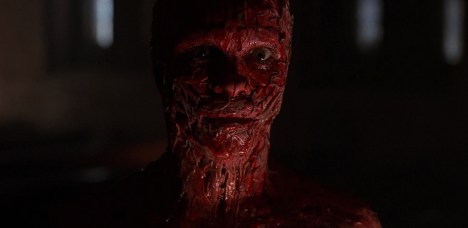
Uncomfortable in his skin...

Uncomfortable in his skin…

Continue reading

The X-Files – John Doe (Review)

This December, we’re taking a trip back in time to review the ninth season of The X-Files.

A man without a past on a show without a future.

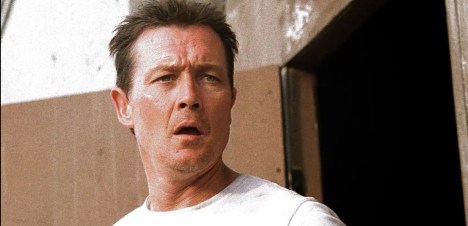
John Doe opens with John Doggett on the floor of a dusty warehouse, an addict stealing his shoes. Doggett chases the thief out of the warehouse, stunned to realise that he is actually in Mexico. His pursuit of the addict culminates in his arrest by local law enforcement, a couple of cops demanding to see his identification papers. Doggett pats himself down looking for something, but the horror of his situation seems to dawn on him. Asked for his name, all Doggett can offer is an awkward “I don’t know.” His past has been stolen from him.

"Woah, boy. Computer-generated film grain. I'm either in Mexico or a CSI flashback."

“Woah, boy. Computer-generated film grain. I’m either in Mexico or a CSI flashback.”

Four days after the initial broadcast of John Doe, it was announced that there would be no tenth season of The X-Files. Fox and Chris Carter were retiring the show after a phenomenal nine-season run. Of course, production had wrapped on John Doe long before the decision had been made; the crew were working on Scary Monsters when news filtered down about the looming end of the show. However, there was something quite appropriate about the timing of all this. John Doggett lost his past in the same week that The X-Files lost its future.

There is almost a weird poetry in that.

Breaking Decent.

Breaking Decent.

Continue reading

The X-Files – Trust No 1 (Review)

This December, we’re taking a trip back in time to review the ninth season of The X-Files.

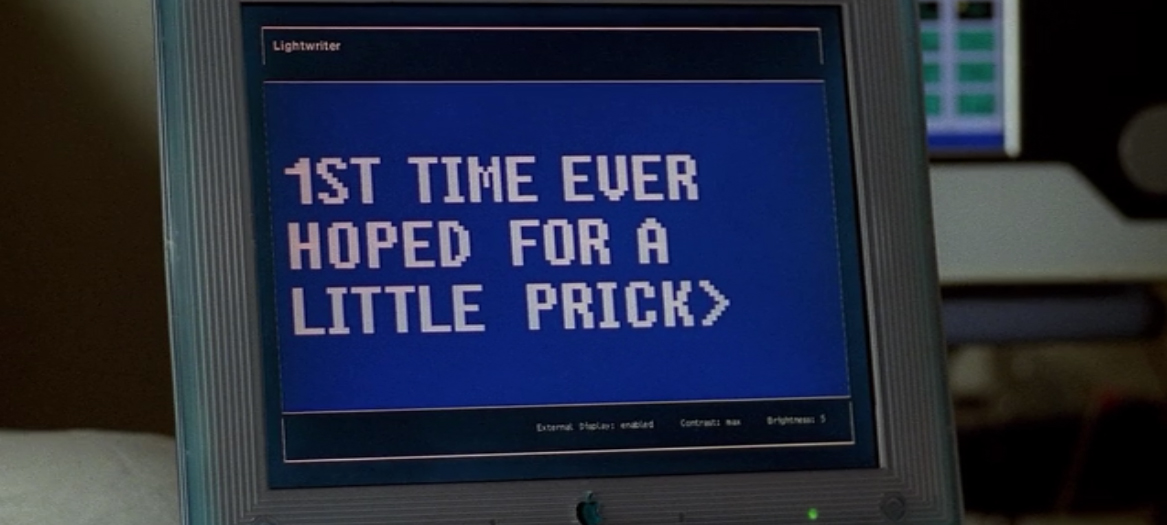
Trust No 1 is an episode that is more relevant now than it was in January 2002. And not just because “trustno1” is still among the most popular (and least secure) internet passwords.

The core ideas of Trust No 1 are fascinating. In hindsight, it is impressive that the production team were able to produce something like Trust No 1 so quickly after the events of 9/11. The type of surveillance state depicted in Tust No 1 would turn out to be quite close to reality in the era of Edward Snowden and the scandal National Security Ageny. “They’re watching,” the words at the end of the title sequence tease, words which seem even more ominous over a decade after initial broadcast.

Circle the odd one out...

Circle the odd one out…

Unfortunately, while Trust No 1 seems to get more and more relevent with each passing year, the episode itself is a mess. As powerful and resonant as its central themes might be, Trust No 1 is very clearly the work of a production team with no idea of where the show is going or where they want to take it. All the worst excesses of the ninth season mythology are on display here, from the heartbreaking obsession with Mulder through to the marginalisation of Scully. The dialogue is overwrought and the climax is absurd. Trust No 1 simply doesn’t work.

And yet, despite all that, it exerts an odd power. It is a power muted by some of the creative decisions around it, and by some of the choices made in structuring the teleplay, but it is power nonetheless.

Night vision, deserves a quiet night...

Night vision, deserves a quiet night…

Continue reading

The X-Files – Lord of the Flies (Review)

This December, we’re taking a trip back in time to review the ninth season of The X-Files.

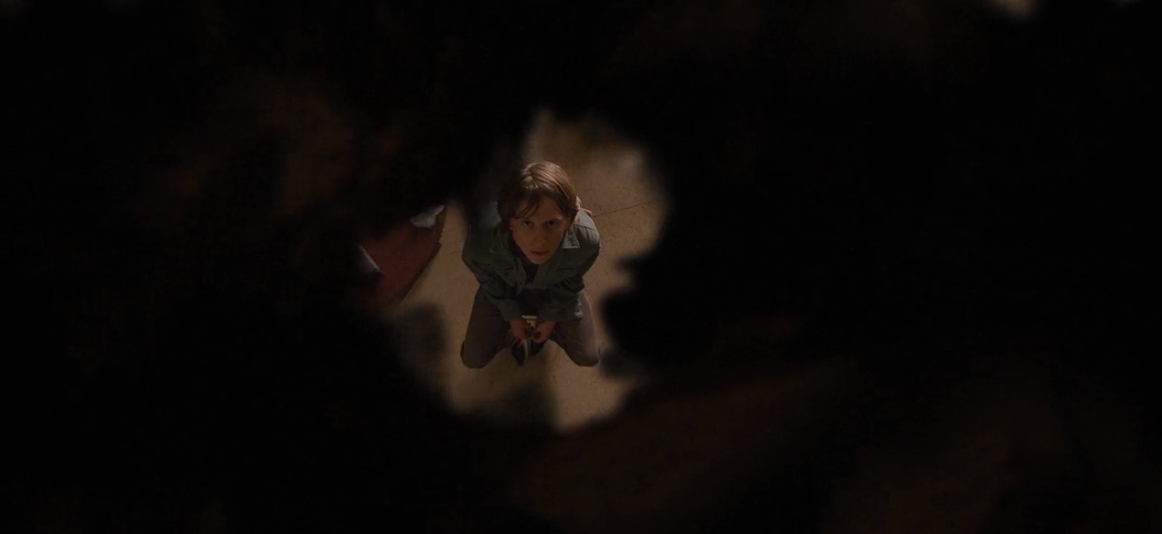
Lord of the Flies is an interesting episode, but not a good one.

After 4-D worked so hard to offer a glimpse of what The X-Files could or should look like in December 2001, Lord of the Flies feels like a step backwards. It is a regression, and not just because it awkwardly transitions Scully back into the role of lead character or because it returns to the comedy stylings largely eschewed by the eighth season. Lord of the Flies feels like a script that could have been written for the show in its third or fourth seasons, returning to the well-tapped reservoir of teen angst that has sustained quite a few episodes at this point.

Flies by...

Flies by…

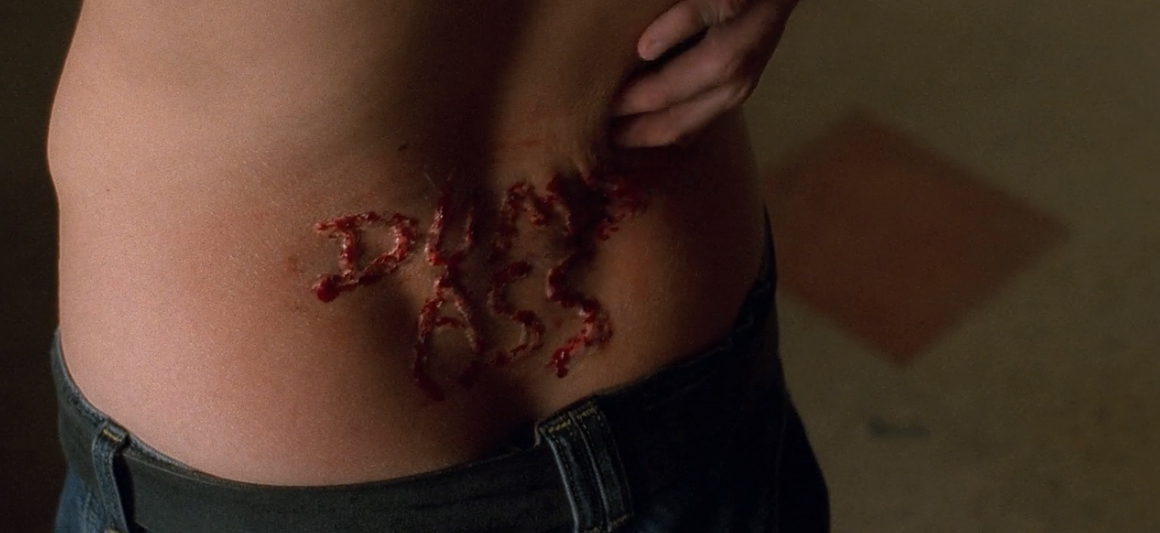
Only a handful of elements serve to mark Lord of the Flies as a piece twenty-first century television. While Scully gets to play action hero at the climax, Mulder is gone; Doggett and Reyes do a lot of the generic detective work across the hour, even if little of their personalities gets to shine through. More than that, Aaron Paul and Jane Lynch pop up in supporting roles that nod towards the various futures of network television. In particular, Paul appears in a home-made stunt show called “Dumb Ass”, an obvious (and shallow) parody of Jackass.

However, Lord of the Flies is not particularly interested in any of these newer elements. The script very clearly wants to hark backwards, towards a past that is no longer easily accessible.

Somewhere, Scully is jealous...

Somewhere, Scully is jealous…

Continue reading

The X-Files – 4-D (Review)

This December, we’re taking a trip back in time to review the ninth season of The X-Files.

In many ways, the ninth season begins with 4-D.

This is perhaps the perfect point for an “alternate reality” episode. After all, The X-Files has undergone a transformation; the reality of the show has been fundamentally and impossibly altered. It might have the same title, it might have an opening sequence that somewhat resembles the old opening sequence, it might even have continuity of characters like Scully and Skinner. However, something has changed. This is not Mulder and Scully, but this is still The X-Files. The show has transitioned. The world has changed around it.

A close shave...

A close shave…

The first three episodes of the season – Nothing Important Happened Today I, Nothing Important Happened Today II, and Dæmonicus – were all produced before 9/11, even though they were broadcast two months after the attacks. (9/11 actually fell during the production of Dæmonicus, with shooting stopping for a day.) The fourth episode of the season, Hellbound, was pushed back deeper into the broadcast order. As such, 4-D was the first episode to be both produced and aired after 9/11.

Appropriately enough, that means that 4-D exists in a different world than the episodes directly preceding it. It has been remarked that the events of 9/11 represented a break in cultural continuity, a line by which history might (relatively cleanly) be divided. There was the world “before 9/11” and “after 9/11.” Although the worlds might look quite similar – and even identical, in many cases – they should not be confused. The world is not as it was. Reality has come undone.

Well, Doggett could always make it as a stand-up comedian.

Well, Doggett could always make it as a stand-up comedian.

Continue reading

The X-Files – Dæmonicus (Review)

This December, we’re taking a trip back in time to review the ninth season of The X-Files.

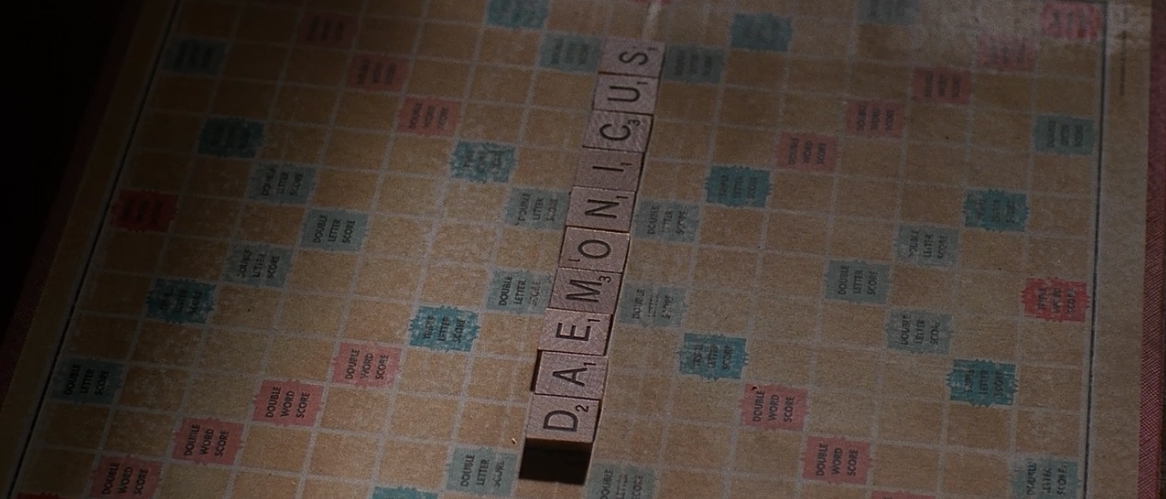
Dæmonicus is the first “monster of the week” episode of the ninth season.

This is important, particularly following on from two particularly limp introductory mythology episodes. After all, The X-Files amounts to more than just its mythology; problems with the mythology are less of a problem when they are surrounded by strong standalone episodes. Tunguska and Terma arrived as messy mythology episodes at the peak of the show’s popularity, but nobody was too bothered because they were surrounded by standalone episodes like Musings of a Cigarette-Smoking Man or Paper Hearts.

The devil inside...

The devil inside…

So the show can probably withstand the hit of Nothing Important Happened Today I and Nothing Important Happened Today II. After all, the third season opened with The Blessing Way and the fifth season opened with Redux I, with both of those seasons standing among the best seasons that the show ever produced. (That said, it helps that the second episodes of those seasons – Paper Clip and Redux II – were much stronger.) There is still a chance to salvage things here. The ninth season is down, but don’t count it out yet.

Dæmonicus could really turn things around, right?

Well, that's just cheating.

Well, that’s just cheating.

Continue reading

The X-Files 102: Ten “Mythology” Episodes

Next week sees the release of The X-Files on blu ray for the first time, just over a month before the new six-episode series premieres on Fox in January. We’re running daily reviews of the show (and its spin-offs) between now and the end of the year, but we thought it might be worth compiling some guides for newer viewers who are looking to experience the length and breadth of what The X-Files has to offer. Every day this week, we’ll be publishing one quick list of recommended episodes every day, that should offer a good place to start for those looking to dive into the show.

There is no getting around the shadow of the “mythology”, the serialised central narrative of The X-Files which explored a sinister conspiracy between the United States government and alien forces building towards a sinister end. While the show was on the air, the mythology was a focal point for discussion and debate around the show, with many viewers speculating about the particulars of the allegiance between the shadowy syndicate and the mysterious visitors from outer space. It was one of the boldest and most distinctive features of the show.

xfiles-oneson4

Continue reading

The X-Files – Nothing Important Happened Today II (Review)

This December, we’re taking a trip back in time to review the ninth season of The X-Files.

Of course, the ninth season was broadcast in a radically different world than the eighth season.

Nothing Important Happened Today I was broadcast early in November 2001, less than two months after hijackers commandeered control of several airline jets and sent them crashing into various American landmarks. The attacks upon the World Trade Centre and the Pentagon changed the world in a way that very few events can claim. History can be comfortably divided into “before 9/11” and “after 9/11”, a rare marker of cultural significance generally reserved for events like World Wars.

World on fire...

World on fire…

Tom Brokow has argued that 9/11 was “when the twenty-first century truly began.” Anne-Marie Slaughter argued that 9/11 was “the defining event of the new millennium.” Phillip E. Wegner suggested that 9/11 represented the end of “the long nineties” that had begun with the collapse of the Berlin Wall. It is not an exaggeration to suggest that 9/11 changed absolutely everything. It defined American foreign policy for over a decade after the fact, cemented a culture of anxiety and surveillance, cast an incredibly long shadow over world culture and politics.

Over two-and-a-half thousand people were killed on 9/11. Estimates suggest that up to twenty-one thousand civilians and more than two thousand American troops died during the War in Afghanistan. Studies suggest that up to half a million Iraqis have died of war-related causes and nearly four-and-a-half thousand American troops have died during the Iraq War. These are just the losses that can be tangibly measured; it is to say nothing of the lives caught in ripple effects and unforeseen (or foreseeable) consequences.

Shining a light on what happened...

Shining a light on what happened…

It is very cavalier and insensitive to suggest that The X-Files was a victim of 9/11 in any real sense. With everything else going on in the wake of 9/11, the cancellation of a television show means nothing. The cancellation of a show (even a popular show) is not even a footnote in any account of how the world changed. It is entirely reasonable to argue that The X-Files might have been cancelled even if 9/11 never happened. The show was nine years old, and had just lost one of its two leads. It was entirely possible that the show could never have recovered from that anyway.

Still, The X-Files was a show indelibly and undeniably anchored in the context of the nineties. It was a show that tapped into the zeitgeist in that historical lacuna following the end of the Cold War, when there were no more enemies to fight and where there was room for introspection and reflection about government authority. By the start of the ninth season, the show’s cultural moment had passed.

A Doggett lead...

A Doggett lead…

Continue reading

The X-Files – Essence (Review)

This October/November, we’re taking a trip back in time to review the eighth season of The X-Files and the first (and only) season of The Lone Gunmen.

The mythology of The X-Files is a strange beast.

In the show’s declining years, it frequently became a stick with which the show might be beaten by critics and fans who had grown exhausted of ambiguity and labyrinthine plotting. Steven King lamented the fact that the show “blundered off into a swamp of black oil, and in that swamp it died.” In assessing the impact of the series, Joyce Millman described the mythology as a “sadistically convoluted plot line.” Juliette Harrisson complained that the entire mythology ended up “so twisted and incomprehensible by the end.”

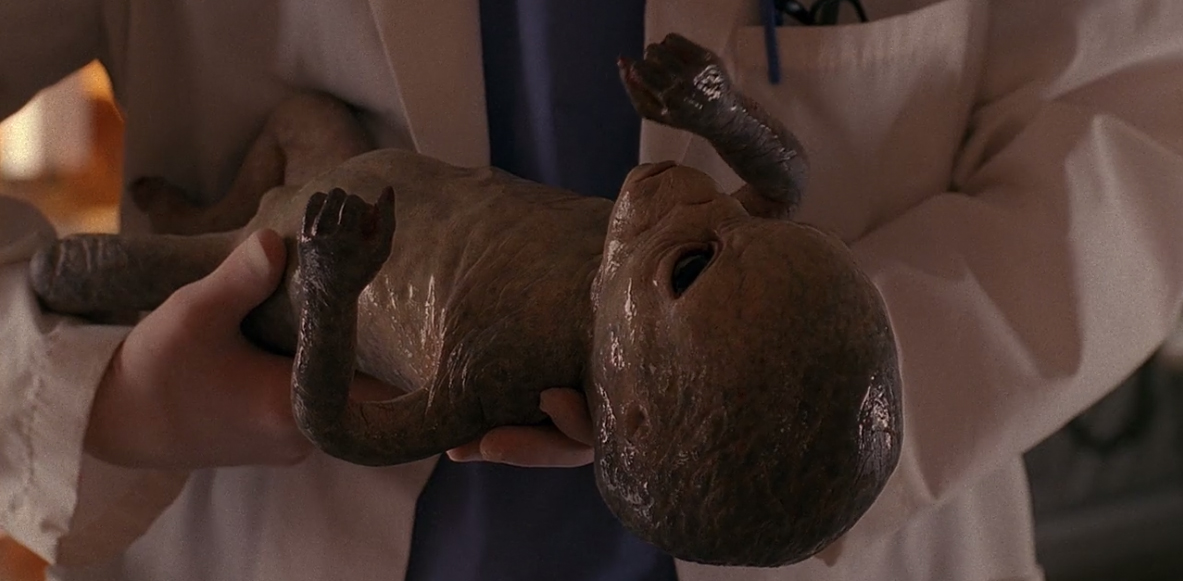
Oh, baby.

Oh, baby.

In hindsight, it seems like history has not been kind to the mythology. In the years since the show went off the air, it seems that fans have come to value the episodic “monster of the week” stories ahead of the central story arc about aliens plotting to colonise the planet. This is ironic, given the attention devoted to the mythology while the show was on the air. The mythology dominated season premieres and finalés, taking the limelight during Sweeps and commanding impressive production values.

This assessment of the mythology is at once fair and unfair. Examined from far enough away, the mythology was linear and logical: alien colonists were coming back to reclaim the planet and enslave (or exterminate) mankind. Everything else was just window-dressing, with the mythology exploring the compromise and collaboration that facilitated this plan. The mythology was, at its best, an exploration of human weakness and the corruption of authority; a timeless (and almost Shakespearean) tragedy. From a sufficient distance, it was not hard to follow.

Oh, alien baby.

Oh, alien baby.

However, the details tend to create confusion, with everything getting a little muddled as The X-Files piles compelling and memorable visuals on top of one another. Are the bees intended to spread smallpox to thin the population as Zero Sum suggests, or to spread the black oil to aid in repopulation as The X-Files: Fight the Future implies? Is the black oil a sinister body-hopping parasite as suggested in Piper Maru and Vienen, or is it an organism that turns the body into a host for a gestating alien organism like in Fight the Future or The Beginning?

The eighth season does a lot to simplify the mythology by stripping out the conspirators and the vaccine and the rebels and the hybrids, replacing them with a more blunt central narrative about “alien replicants” mounting a stealth invasion. That said, things begin to get a bit cluttered and crowded as the season reaches its conclusion. Essence and Existence have a very clear structure and clear objectives, but there is a sense that that the narrative could still be streamlined a bit.

Oh, blood-splattered alien babies...

Oh, blood-splattered alien babies…

Continue reading