• Following Us

  • Categories

  • Check out the Archives


  • Awards & Nominations

Star Trek: Voyager – False Profits (Review)

This February and March (and a little bit of April), we’re taking a look at the 1995 to 1996 season of Star Trek, including Star Trek: Deep Space Nine and Star Trek: Voyager. Check back daily for the latest review.

If ever there was an argument against the importance of continuity, False Profits would appear to be it.

The Price was not a good episode of Star Trek: The Next Generation. In fact, it was quite a bad episode of television. There is a credible argument to be made that The Price was the worst episode of the third season of The Next Generation. Another contender is Ménage à Troi, another third season episode of The Next Generation that coincidentally (or not) happens to feature the Ferengi. By all accounts, The Price is an episode of television that should be forgotten about, consigned to reference books and ill-considered classic television marathons.

"Now, I know fans don't like the Ferengi episodes, but this is too much!"

“Now, I know fans don’t like the Ferengi episodes, but this is too much!”

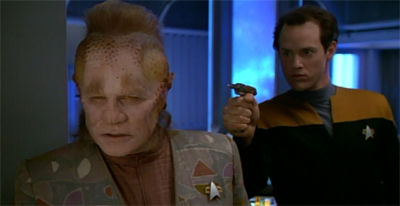
Unfortunately, continuity intervenes. The climax of The Price ends with two Ferengi stranded in the Delta Quadrant after the Barzan wormhole collapses. In most stories, that would be the last time that those two characters appeared; they had served their dramatic purpose, demonstrating that the Barzan wormhole was effectively useless. However, once it became clear that Star Trek: Voyager was heading to the Delta Quadrant, that ending became a plot thread. It became a piece of continuity that could be employed by the production team, a storytelling opportunity.

That explains how False Profits came to be, a terrible sequel to a terrible episode that seems to exist purely to satisfy some dangling continuity.

Proxy war...

Proxy war…

Continue reading

Star Trek: Voyager – The Chute (Review)

This February and March (and a little bit of April), we’re taking a look at the 1995 to 1996 season of Star Trek, including Star Trek: Deep Space Nine and Star Trek: Voyager. Check back daily for the latest review.

Season three begins. Kind of.

The Chute was the first episode produced for the third season. Basics, Part II and Flashback aired as the first two episodes of the season, but they had been produced towards the tail end of the second season and held back so that Star Trek: Voyager could launch its third season in early September. It was a smart strategy for the production team and UPN, but it did mean that there was a lot of holdover from the second season. Although the production team had wanted Basics, Part II to be the end of the Piller era, his ghost lingered on.

A breakout hit.

A breakout hit.

In some ways, the ghost of Michael Piller still haunts The Chute. The episode was produced after Piller’s departure, but writer Kenneth Biller credits the idea to the former executive producer and it feels very much in keeping with some of Piller’s pet fascinations and ideas. At the same time, The Chute does signal the beginning of the third season. It marks a point at which Voyager feels a lot more comfortable in its own skin, and where it feels like the writers have a clear grasp of what they want the show to be.

If the second season was a collection of misfiring experimental concepts and bold new directions, the third is markedly more conservative in its style and tone. The Chute is an episode of Voyager that is aiming squarely for an archetypal science-fiction allegory, and which manages to deliver on those terms. It is not necessarily ambitious or exceptional, but it manages to accomplish what it wants to do. What it wants to do is to be a very broadly-drawn (but recognisable) piece of Star Trek.

Dagger of the not-quite mind...

Dagger of the not-quite mind…

Continue reading

Star Trek: Voyager – Flashback (Review)

This February and March (and a little bit of April), we’re taking a look at the 1995 to 1996 season of Star Trek, including Star Trek: Deep Space Nine and Star Trek: Voyager. Check back daily for the latest review.

Flashback was largely advertised as Star Trek: Voyager‘s contribution to the thirtieth anniversary celebrations of the Star Trek franchise.

It featured guest appearances from three alumni of the original show. It was set during the events of Star Trek VI: The Undiscovered Country. It featured Tuvok and Janeway dressing up in movie-era uniforms. It was publicised as “a very special episode.” It aired only three days after the thirtieth anniversary, while Star Trek: Deep Space Nine waited nearly two months to broadcast Trials and Tribble-ations. Anybody would be forgiven for looking at Flashback as the obligatory nostalgic celebratory adventure to mark the thirtieth anniversary of the Star Trek franchise.

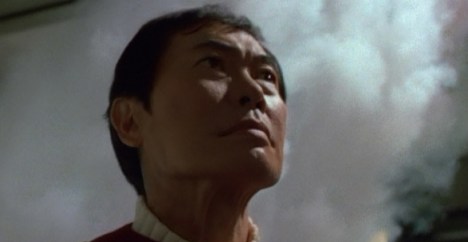
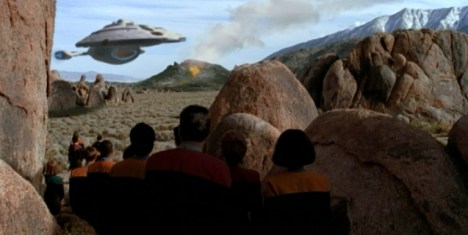
Hero shot.

Hero shot.

Put simply, Flashback does not work in that context. Although it features Captain Hikaru Sulu, the episode doesn’t actually allow him to accomplish anything. As far as “secret histories” go, the episode turns out to be a bit of a cul de sac. More to the point, the continuity is a mess, both in broad franchise terms and specifically with regards to the feature film it heavily references. Although it is great to see Grace Lee Whitney and George Takei back, the script only allows them to interact with Tim Russ and (fleetingly) Kate Mulgrew.

In fact, it could convincingly be argued that Future’s End, Part I and Future’s End, Part II do a much better job of filling the “celebratory thirtieth anniversary story” slot than Flashback, despite the notable absence of any actual characters from the original show. Future’s End, Part I and Future’s End, Part II feel like a gigantic (and enjoyable) homage to Star Trek IV: The Voyage Home, which is both hugely fun and also weirdly appropriate in a play-on-words sort of way. That is more in line with what fans were expecting for the anniversary: nostalgic fun.

Tim Russ was as excited as anyone to get a Tuvok episode.

Tim Russ was as excited as anyone to get a Tuvok episode.

In contrast, Flashback is something altogether stranger. Brannon Braga had been working on the story before it was suggested that Voyager should do a thirtieth anniversary episode, and Flashback plays more as a Brannon Braga script that ties into an anniversary more than an anniversary episode that happens to be written by Brannon Braga. Despite its high-profile guest cast, Flashback has more in common with Braga’s mind-bending scripts for Frame of Mind or Projections than with Trials and Tribble-ations.

Nevertheless, there is something fascinating about Flashback, because it allows Braga to use the springboard of the thirtieth anniversary to talk about memory.

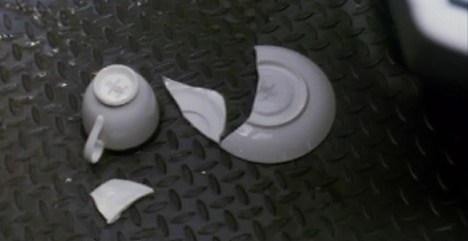
The teacup that he shattered didn't come together...

The teacup that he shattered didn’t come together…

Continue reading

Star Trek: Voyager – Basics, Part II (Review)

This February and March (and a little bit of April), we’re taking a look at the 1995 to 1996 season of Star Trek, including Star Trek: Deep Space Nine and Star Trek: Voyager. Check back daily for the latest review.

With Basics, Part II, the second season comes to an end.

In both technical and spiritual terms, of course. The production team decided to retain the strategy that they had employed during the show’s first season, adding an additional filming block on to the end of the season in order to film a bunch of episodes that would be broadcast at the start of the third broadcast season. At the end of the first season, four episodes were produced and held back – Projections, Elogium, Twisted, and The 37’s. As such, four second season episodes were produced after Basics, Part ISacred Ground, False Profits, Flashback and Basics, Part II.

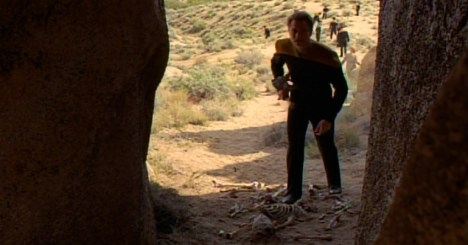
Picking over the bones. An apt image for the third season premiere.

Picking over the bones.
An apt image for the third season premiere.

So, Basics, Part II marks the end of the show’s second production season. Even though it was the first episode of the third season to be broadcast, it was the last episode of the second season to be produced. It is very consciously designed to bring the curtain down on a particular era of the show. Basics, Part II marks the end of the line for various threads running through the first two seasons of Star Trek: Voyager. It is the last Kazon story, the last Seska story, the last Lon Suder story, the last Star Trek television script written by Michael Piller.

Basics, Part II seems written in the hope that it might end a troubled era for the show and for the larger franchise. While things undoubtedly got smoother, it remains highly debatable whether the franchise ever properly recovered.

Let sleeping eels lie...

Let sleeping eels lie…

Continue reading

Star Trek: Voyager – Basics, Part I (Review)

This February and March (and a little bit of April), we’re taking a look at the 1995 to 1996 season of Star Trek, including Star Trek: Deep Space Nine and Star Trek: Voyager. Check back daily for the latest review.

With Basics, Part I, the second season comes to an end.

In a very specific sense, of course. The production team decided to retain the strategy that they had employed during the show’s first season, adding an additional filming block on to the end of the season in order to film a bunch of episodes that would be broadcast at the start of the third broadcast season. At the end of the first season, four episodes were produced and held back – Projections, Elogium, Twisted, and The 37’s. As such, four second season episodes were produced after Basics, Part ISacred Ground, False Profits, Flashback and Basics, Part II.

Heading home alone.

Heading home alone.

However, Basics, Part I marks the end of the show’s second broadcast season. It is very consciously designed as season finalé, something that the first season had struggled with by slotting Learning Curve into the broadcast slot. Basics, Part I also marks the beginning of the end for various threads running through the first two seasons of Star Trek: Voyager. It is the first part of the last Kazon story, the last Seska story, the last Lon Suder story, the last Star Trek television story written by Michael Piller.

It marks the beginning of the end of a troubled era for the show and for the larger franchise.

Hitchhiking in this part of space is very dangerous.

Hitchhiking in this part of space is very dangerous.

Continue reading

Star Trek: Voyager – Resolutions (Review)

This February and March (and a little bit of April), we’re taking a look at the 1995 to 1996 season of Star Trek, including Star Trek: Deep Space Nine and Star Trek: Voyager. Check back daily for the latest review.

So, shipping.

Times change surprisingly quickly. It is fair to say that Star Trek: Voyager emerged in a different world than the original Star Trek. However, it also emerged in a different world than Star Trek: The Next Generation. In a way, the show had acknowledged as much through its experiments with serialisation earlier in the second season. Michael Piller was trying to keep the franchise at the bleeding edge of contemporary television, realising that the medium was not the same as it had been when Jean-Luc Picard emerged at the end of the Reagan era.

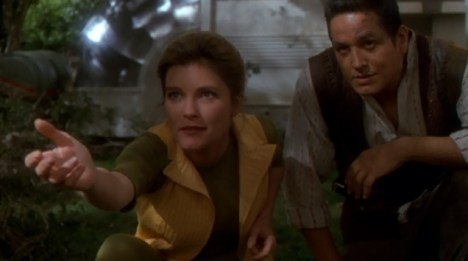
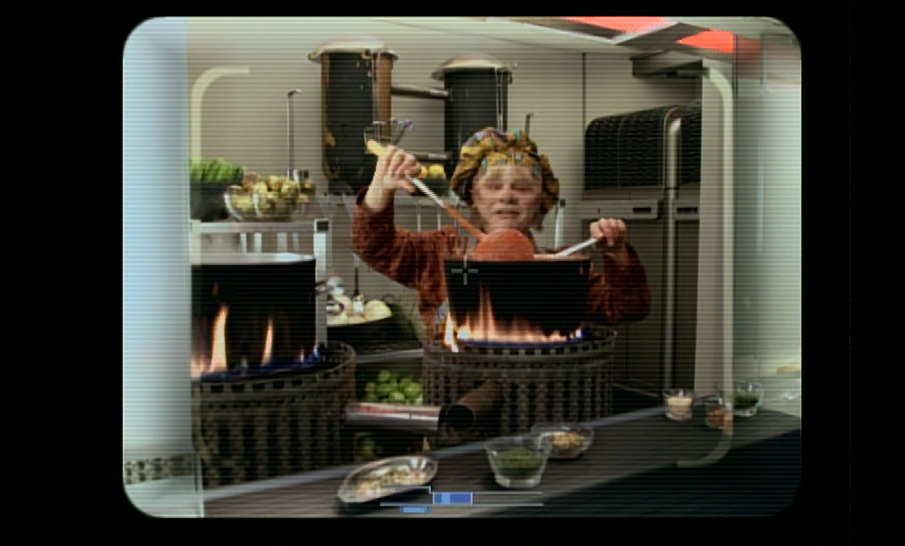
Reach out...

Reach out…

Resolutions nods towards a different type of change in the way that television storytelling worked, particularly conversations about television storytelling. Although it could be argued that Star Trek helped to popularise the notion of romantically (or sexually) pairing off television characters through the practice of “slashing” Kirk and Spock, the notion of “shipping” had begun to enter the mainstream during the mid-nineties. The raw sexual chemistry between David Duchovny and Gillian Anderson on The X-Files played no small part.

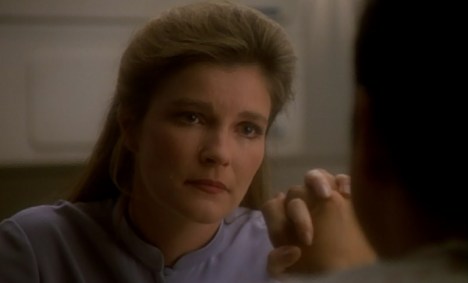
Resolutions is essentially about “shipping” Janeway and Chakotay.

... and touch somebody.

… and touch somebody.

Continue reading

Star Trek: Voyager – Tuvix (Review)

This February and March (and a little bit of April), we’re taking a look at the 1995 to 1996 season of Star Trek, including Star Trek: Deep Space Nine and Star Trek: Voyager. Check back daily for the latest review.

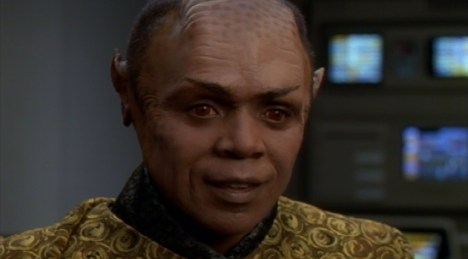
Tuvix is a controversial piece of Star Trek.

The episode tends to polarise fandom. In particular, the climax of the episode seems to divide fans firmly down the middle. When the fan site Trek Today marked the end of Star Trek: Voyager by staging a mock “Court Martial of Captain Kathryn Janeway”, it was argued that the events of Tuvix should have been included as evidence against her. It is no surprise that the episode generated such a strong response. Discussing the production of the episode, Tom Wright reflected, “The truth is that the higher ups of Star Trek knew that this would cause some controversy.”

"Neevok was never gonna cut it."

“Neevok was never gonna cut it.”

Of course it generates some controversy. This is the episode where Janeway elects to murder one crew member in order to resurrect two lost crew members. This is a story about how the title character is convenient for about forty-five minutes of screentime, only for the crew to quickly dispose of him as soon as the end credits beacon. Tuvix never really makes a convincing moral case for why the eponymous character has to die, beyond the fact that it conveniently resets the status quo.

Then again, perhaps that is reason enough.

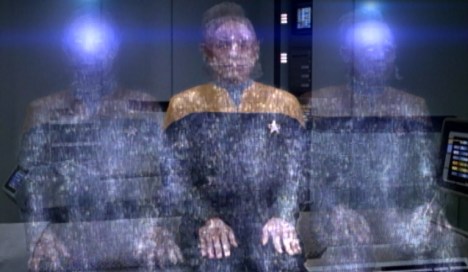
Two for the price of one...

Two for the price of one…

Continue reading

Star Trek: Voyager – The Thaw (Review)

This February and March (and a little bit of April), we’re taking a look at the 1995 to 1996 season of Star Trek, including Star Trek: Deep Space Nine and Star Trek: Voyager. Check back daily for the latest review.

The Thaw is a visually striking piece of Star Trek.

The Thaw is among the most delightfully surreal and abstract episodes of Star Trek to be broadcast after October 1975. One of the more interesting aspects of Star Trek: Voyager is how consciously the show tries to return to the storytelling aesthetic of the original Star Trek show, at least in its early years. While the design aesthetics and characters might have been largely ported over from Star Trek: The Next Generation, the first few seasons of Voyager frequently feel like a conscious attempt to update sixties Star Trek tropes for the nineties.

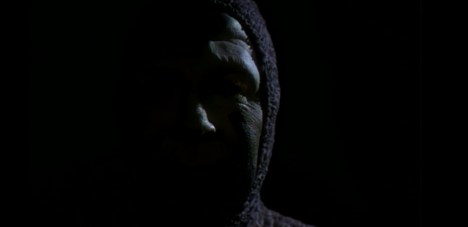
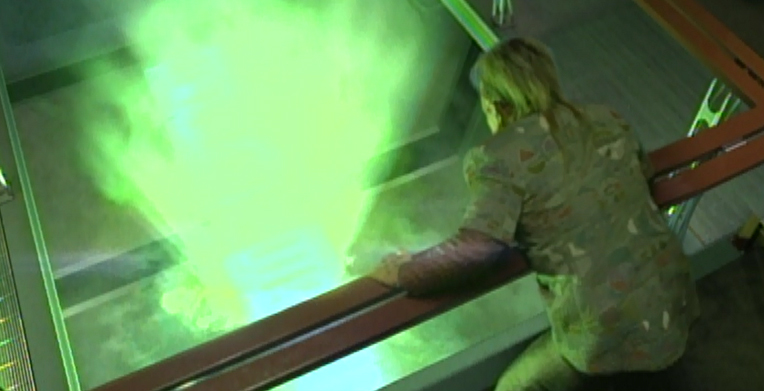
In darkness dwells...

In darkness dwells…

This is obvious in a number of ways. Caretaker consciously tried to evoke the old “space western” aesthetic, to the point of featuring a Native American first officer and introducing the Kazon as horribly racist “primitive” stereotypes. Time and Again relished primary colour costuming for their suspiciously human-like aliens. These themes became more prominent in the second season, with the b-movie aesthetic of Threshold, the space horror of Persistence of Vision and Meld, and the reverse aging allegory of Innocence.

While Tuvix essentially offers a reverse twist on The Enemy Within, it is The Thaw that feels most obviously like a sixties episode trapped in ember. The allegorical storytelling, the abstract set design, the creepy campy tone. Voyager might be half-way across the galaxy, but it is never too far from the familiar.

"We never bother to scream... ... when your mask came off."

“We never bother to scream…
… when your mask came off.”

Continue reading

Star Trek: Voyager – Deadlock (Review)

This February and March, we’re taking a look at the 1995 to 1996 season of Star Trek, including Star Trek: Deep Space Nine and Star Trek: Voyager. Check back daily for the latest review.

In some ways, Deadlock is Star Trek: Voyager‘s original sin.

Of course, Deadlock is good. It is really good. It is a well-constructed piece of television that moves with an incredible momentum; it gathers speed and builds towards a suitably epic finalé. In many ways, Deadlock is one of the strongest episodes from the first two seasons of Voyager. There is a credible argument to be made that Deadlock belongs on any list of “best Voyager episodes ever”, thanks to the potent combination of Brannon Braga’s high-concept script and David Livingston’s dynamic direction.

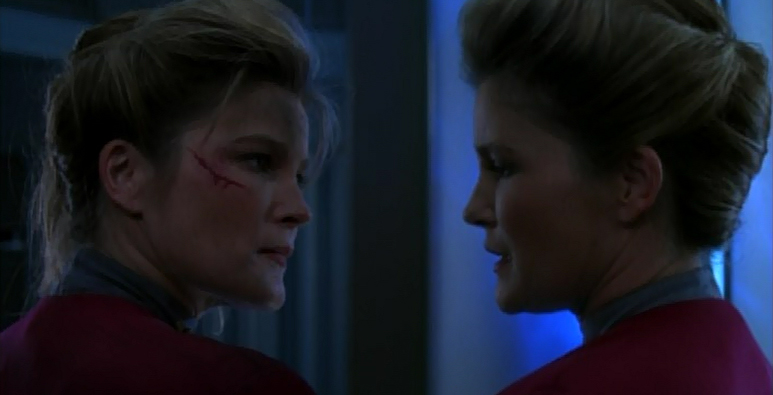
Janeway²...

Janeway²…

At the same time, it is hard not to look at Deadlock in retrospect and see the shape of things to come. It is, perhaps, the ultimate “reset” button episode; it provides a clear template for later “blow up Voyager and kill Janeway” episodes like Year of Hell or Timeless. The trick works very well once; it loses any real impact when it is repeated several times over the course of the show’s run. More than that, the episode feels somewhat generic. Due to the nature of the high-concept premise, there is little room for detail specific to Voyager.

It seems that the end of the second season set the course for the next five years of Voyager. The production team had tried to tell an experimental story specific to Voyager with Investigations, only to fail spectacularly; it would be the last time that the show attempted anything so bold. In contrast, the production team managed to construct a fantastic episode around a generic premise in Deadlock, perhaps indicating that the future of the show lay in that direction. It is easy to see why that production team opted for safe and generic ahead of ambitious and experimental.

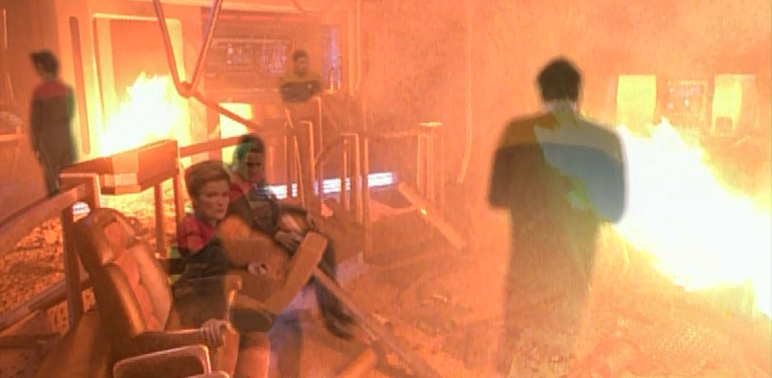
Ghost stories...

Ghost stories…

Continue reading

Star Trek: Voyager – Investigations (Review)

This February and March, we’re taking a look at the 1995 to 1996 season of Star Trek, including Star Trek: Deep Space Nine and Star Trek: Voyager. Check back daily for the latest review.

Investigations is a misfire. It is a spectacular misfire.

Investigations is the episode that pretty much single-handedly killed any chance of Star Trek: Voyager embracing long-form storytelling once and for all. The first season had enthusiastically embraced an episodic structure, but the second season had played with the idea of playing out an arc across the majority of the season. Tying together the Kazon with the idea of a traitor on Voyager and the redemption of Tom Paris, the production team decided to attempt something relatively novel for Star Trek.

Kill me. Kill me now.

Kill me.
Kill me now.

It is worth stressing just how experimental this kind of story was. Star Trek: Deep Space Nine had played with the idea of serialisation. Threads like the Romulan and Cardassian invasion of the Gamma Quadrant were carefully seeded through episodes like Defiant and Visionary, but there was not the same tension and momentum afforded to the arcs of Michael Jonas and Tom Paris in the second season. The Romulans and the Cardassians were not discussed in every episode leading up to Improbable Cause and The Die is Cast.

At the same time, Deep Space Nine eased into serialisation in a way that allowed for failures and miscalculations that did not publicly humiliate the show. Bajoran politics could be quietly eased into the background when they weren’t quite working, characters like Primmin and T’Rul could be dropped when they weren’t what the show needed. The second season of Voyager was perhaps a bit too bold in its attempts at long-form storytelling, creating a situation where there was no way to pull back from an arc that wasn’t working.

"Well. That escalated quickly."

“Well. That escalated quickly.”

It became quite clear early on that the Paris and Jonas arc was not working. Episodes like Threshold and Dreadnought ground to a halt so that the audience could get yet another scene of Jonas selling out Voyager to the Kazon; treachery that never seemed to actually go anywhere. At the same time, Paris’ rebellious behaviour was tackled in a superficial manner in episodes like Meld and Lifesigns, with no real exploration of the interesting side of such a sting operation.

Investigations serves to bring the arc to a close, but in a manner that feels perfunctory rather than compelling. It is resolved out of a sense of tired desperation rather than any real inspiration. There is a feeling that the production team have determined this to be a failed experiment, of which they will never speak again.

See? I told you EVERYBODY's thought about it.

See? I told you EVERYBODY’s thought about it.

Continue reading