• Following Us

  • Categories

  • Check out the Archives


  • Awards & Nominations

Tintin: Tintin and the Alph-Art (Review)

In the lead-up to the release of The Adventures of Tintin: The Secret of the Unicorn, I’m going to be taking a look at Hergé’s celebrated comic book character, from his humble beginnings through to the incomplete post-modern finale. I hope you enjoy the ride.

Tintin and the Alph-Art is a strange little story. It’s the last Tintin adventure that Hergé began before his death, more than fifty years after the intrepid reporter had debuted in Tintin in the Land of the Soviets. I’ve also found something strangely wonderful in the idea that the final Tintin pages that Hergé drew threatened to close the series forever, with the boy reporter trapped in a polyester sculpture, entombed forever as a work of art – it’s not exactly a happy ending, but I’d argue it was a fitting one. There isn’t a definitive finished version of the story available – Hergé died leaving notes and sketches and half-formulated ideas, but there’s little real sense of how he wanted the story to end, or even how he’d get Tintin out of that one final death trap. Of all the “unofficial” Tintin works out there, and there are quite a few, Tintin and Alph-Art is perhaps the one most closely associated with Hergé, drawing from a story he never finished to try to cap off a saga five decades in the making.

And then... nothing...

Note: I am discussing the “unofficial” version of the story completed by Yves Rodier. I will also make reference to the annotated Hergé script released a while back.

Continue reading

Non-Review Review: The Adventures of Tintin – The Secret of the Unicorn

It’s Indiana Jones, but for kids! It’s fascinating that the collaboration of Steven Spielberg and Peter Jackson should produce something that feels much more like the earlier Indiana Jones films than Spielberg’s most recent collaboration with George Lucas. Adapting Hergé’s The Adventures of Tintin was always going to be a challenging proposition, and it’s to the credit of everybody involved that it turned out so well. While it’s not quite perfect, The Adventures of Tintin: The Secret of the Unicorn is undoubtedly Spielberg’s most entertaining family film since Jurassic Park.

Franchise launcher?

Continue reading

Tintin: Tintin and the Picaros (Review)

In the lead-up to the release of The Adventures of Tintin: The Secret of the Unicorn, I’m going to be taking a look at Hergé’s celebrated comic book character, from his humble beginnings through to the incomplete post-modern finale. I hope you enjoy the ride.

So, here we are. Hergé’s last completed Tintin story. The month flew by reading and (in most cases) re-reading the stories that I grew up with. It’s interesting to return to the stories you read as a child, discovering new depth and complexity in what had previously been entertaining little diversions. Since The Red Sea Sharks, Hergé seems to have been toying with the popular franchise he has created, playing with and subverting a formula established over twenty-odd adventures. The Castafiore Emerald reads almost like a deconstruction of a typical Tintin adventure, with the a variety of threads that refuse to add up to a mystery. Flight 714 was almost a parody, relying on contrivance to the point of ridiculousness. And so, with his last complete story, Tintin and the Picaros reads as a criticism of the hero himself, poor and innocent Tintin, who proves to be quite an impotent little character.

Fly-on-the-wall look at San Theodoros?

Continue reading

Tintin: Flight 714 (Review)

In the lead-up to the release of The Adventures of Tintin: The Secret of the Unicorn, I’m going to be taking a look at Hergé’s celebrated comic book character, from his humble beginnings through to the incomplete post-modern finale. I hope you enjoy the ride.

Flight 714 is an interesting Tintin book, if only because it’s the most conventional Tintin story we’ve had in quite some time, while also being one of the oddest books in the franchise. There have been comparisons made between Hergé’s penultimate completed entry in The Adventures of Tintin and the television show Lost, which should give you some inkling of just how strange things get during this particular trip. And, given Tintin’s been to the surface of the moon, things get quite strange.

Don't sweat the landing...

Continue reading

Tintin in Tibet (Review)

In the lead-up to the release of The Adventures of Tintin: The Secret of the Unicorn, I’m going to be taking a look at Hergé’s celebrated comic book character, from his humble beginnings through to the incomplete post-modern finale. I hope you enjoy the ride.

Tintin in Tibet is a highly regarded book. In fact, it’s arguably the most highly regarded book in the entire Adventures of Tintin collection, and it’s easy to see why. While I could recall the events of some of the stories I’d read as a child almost word-for-word, and while I harbour a deep affection for particular adventures in the series, I don’t think I was looking forward to revisiting any of the classic Tintin stories nearly as much as I was anticipating flicking through Tintin in Tibet. I remember the book filling me with a tremendous sense of optimism and hope as a child, a story of faith and hope against impossible odds, deeply moving because of its relative intimacy.

I was not disappointed.

Whiteout...

Continue reading

“You Shiver In Such An-tici-pation”: Upcoming Releases and the Waiting Game…

It’s a bit of a defunct popular witticism that the actual purpose of the internet is not to increase global communication or facilitate and encourage the development and spread of ideas, but exists solely for pornography. I don’t think that’s necessarily true (in fact, it only accounts for 1% of the internet). Instead, I’d argue that the internet exists primarily to provide spoilers, casting calls, plot summaries, set pictures and gossip around all the upcoming releases. In an era where even fictitious characters have facebook and twitter accounts, it sometimes feels like information overload, with constant updates about the status of a given project and director and cast.

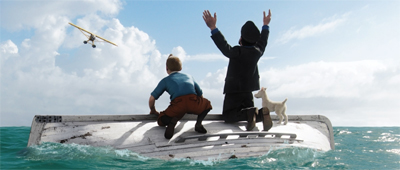
All at sea?

Continue reading

Tintin: The Crab With the Golden Claws (Review)

In the lead-up to the release of The Adventures of Tintin: The Secret of the Unicorn, I’m going to be taking a look at Hergé’s celebrated comic book character, from his humble beginnings through to the incomplete post-modern finale. I hope you enjoy the ride.

The Crab With the Golden Claws is the first of three Tintin stories that were used as the basis of Steven Spielberg’s upcoming The Adventures of Tintin: The Secret of the Unicorn (the other two being, obviously, The Secret of the Unicorn and its sequel, Red Rackham’s Treasure). The Crab With the Golden Claws was originally written during the Nazi occupation of Belgium, when Hergé feared that his then on-going storyline The Land of Black Gold would have proved too politically charged for the country’s new governing force. So the adventure was essentially written as filler, a bit of light entertainment to take the minds of his headers as far away from the political reality as possible. And it certainly succeeds as one of the lighter and brisker adventures in the series, with one major addition to the franchise’s mythos in the form of Captain Archibald Haddock.

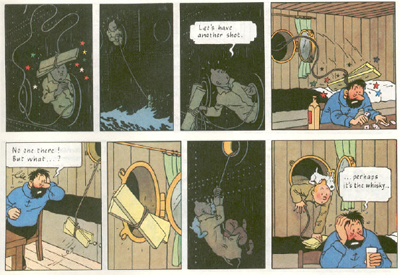
This could be the start of a beautiful friendship...

Continue reading

Tintin: Tintin in America (Review)

In the lead-up to the release of The Adventures of Tintin: The Secret of the Unicorn, I’m going to be taking a look at Hergé’s celebrated comic book character, from his humble beginnings through to the incomplete post-modern finale. I hope you enjoy the ride.

Tintin in America was the earliest Adventures of Tintin book I read as a child, and I owned the entire collection from this point on (for obvious reasons, Tintin in the Land of the Soviets and Tintin in the Congo were not recommended childhood reading). That said, I’ve always regarded Tintin in America as one of the weaker entries in the series, perhaps because my childhood imagination yearned for something relatively more exotic than a trip to North America, or perhaps because the saturation of American pop culture made all the elements Hergé was spoofing seem like old hat. I’m not entirely sure, but I have to admit that the story hasn’t improved too much on re-reading.

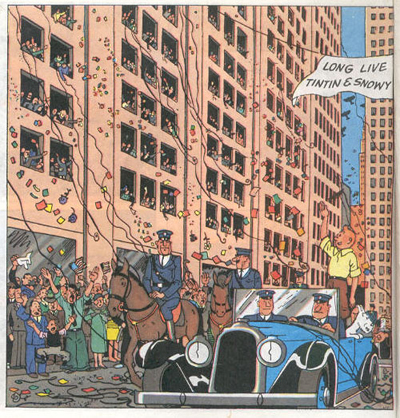
America, %&#! Yeah!

Continue reading

Tintin: Tintin in the Land of the Soviets (Review)

In the lead-up to the release of The Adventures of Tintin: The Secret of the Unicorn, I’m going to be taking a look at Hergé’s celebrated comic book character, from his humble beginnings through to the incomplete post-modern finale. I hope you enjoy the ride.

The two earliest Tintin adventures, Tintin in the Land of the Soviets and Tintin in the Congo, are looked back upon as the black sheep of the Tintin novels produced by Hergé. While Tintin in the Land of the Soviets is shameless anti-Communist propaganda (and does contain a hint of the foul racism we’d see a lot more of in Tintin in the Congo), one can detect a lot of the charm that Hergé brought to his iconic creations, scattered throughout the work, from the surreal sense of humour to the writing style to the love of ridiculous suspense, seemingly for the sake of suspense. The best was definitely yet to come, but it all started here.

The collection isn't Tintin at his finest...

Continue reading

Stop Motion Capture: Time to Worry About Tintin?

Mars Needs Moms bombed at the box office. Badly. Really badly. Ignoring the fact that Disney is in need of another hit, the failure of the Seth-Green-starring Robert-Zemeckis-produced motion-capture 3D CGI films raises serious questions about the future of that particular animation style. However, I wonder if it’s playing across the minds of Steven Spielberg and Peter Jackson as they add the finishing touches to their Tintin adaptation.

All at sea?

Continue reading