• Following Us

  • Categories

  • Check out the Archives


  • Awards & Nominations

Millennium – Powers, Principalities, Thrones and Dominions (Review)

This February and March, we’re taking a trip back in time to review the fourth season of The X-Files and the first season of Millennium.

High matter thou injoinst me, O prime of men,

Sad task and hard, for how shall I relate

To human sense th’ invisible exploits

Of warring Spirits; how without remorse

The ruin of so many glorious once

And perfet while they stood; how last unfould

The secrets of another World, perhaps

Not lawful to reveal? yet for thy good

This is dispenc’t, and what surmounts the reach

Of human sense, I shall delineate so,

By lik’ning spiritual to corporal forms,

As may express them best, though what if Earth

Be but the shaddow of Heav’n, and things therein

Each to other like, more then on earth is thought?

– Raphael, Paradise Lost, Book V

This is about to get biblical...

This is about to get biblical…

Continue reading

Millennium – Covenant (Review)

This February and March, we’re taking a trip back in time to review the fourth season of The X-Files and the first season of Millennium.

Apparently, the original cut of Covenant ran over an hour and twenty minutes. This is not unusual in network television. Glen Morgan and James Wong faced similar problems when producing The Field Where I Died. However, while cutting The Field Where I Died down to forty-five minutes left something of a jumble, Covenant feels much stronger for the rather ruthless editing done to fit the episode into the broadcast slot. In many ways, Covenant feels quite minimalist – an episode that says the bare minimum, but conveys everything that needs to be conveyed.

Covenant is an episode that could easily seem exploitative. After all, there are points where Millennium feels like it is wallowing in human anguish and suffering. A story concerning the brutal murder of a nuclear family (including three children and a pregnant wife) is something that needs to be approached with care and delicacy. The original script for Covenant is perhaps overwritten, trying to draw too many parallels to Frank’s own family; these associations are best left unsaid.

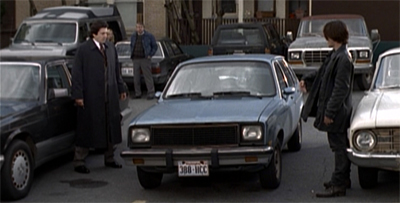
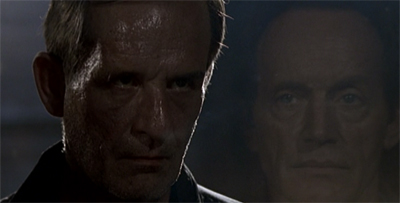
Bloody handiwork...

Bloody handiwork…

In many ways, Millennium could be described as a “horror” show, and Covenant hones on some of the same fears that the first season has targeted repeatedly. Millennium is a show that is keen to assure viewers that their family members are not safe in their own homes and communities. However, there is a deftness and a tactfulness on display here that elevates Covenant above many of the similar stories in this début season. Covenant is all the more unsettling for its restraint and its control.

Covenant continues a strong late-season streak for Millennium, demonstrating the versatility and the nuance possible within the framework that the show has established. Covenant is a triumph for all involved.

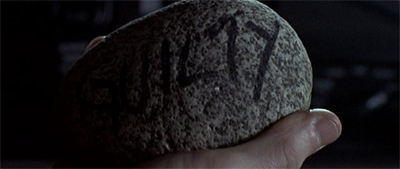
Solid as a rock...

Solid as a rock…

Continue reading

Non-Review Review: A Little Chaos

Perhaps what is most remarkable about A Little Chaos is how deftly the film blends stock romantic comedy tropes with the trappings of a loftier period piece drama. A Little Chaos fictionalises the construction of the gardens at Versailles, undertaken at the behest of King Louis XIV. However, A Little Chaos uses this historical event as the backdrop for a series of quirky romantic misadventures. Matthias Schoenaerts plays André Le Nôtre, the stickler for order who is forced to take on some hired help to ensure that he meets the assigned deadlines.

Kate Winslet is Sabine De Barra, who is hired to design one of the garden’s fountains. Whereas Le Nôtre advocates for order, De Barra argues for a little randomness. The two are introduced at loggerheads, their philosophical positions made clear when De Barra presumes to move a single potted plant in a sequence arranged by Le Nôtre. Inevitably, attraction blossoms as the two find themselves working harder and harder to meet the targets set by the sitting monarch.

Another feather in her cap?

Another feather in her cap?

For all the promise of the title, A Little Chaos packs very few surprises. The formula is quite clearly honed, and it is easy enough to plot the various character arcs and dynamics across the movie’s runtime. Indeed, A Little Chaos might even have benefited from some tightening, feeling quite stretched across its two-hour runtime. At the same time, Alan Rickman has assembled quite the cast for his second film as director. A Little Chaos can count on a superb ensemble – both above and below the title – to carry it when things get a little indulgent.

A Little Chaos is not as fun or as playful as it might be. On the other hand, it looks and feels very impressive, with an occasionally clunky script brought to life by a talented array of actors.

Long live the king!

Long live the king!

Continue reading

Leonard Nimoy

Leonard Nimoy passed away today.

Nimoy is an interesting figure. He is an actor and director with a long a prolific career, who seldom wanted for steady work. He did a lot of quality work in front of (and behind) the camera. Nimoy was a series regular on the sixties version of Mission: Impossible, taking over from Martin Landau. He played a major role in the 1978 remake of Invasion of the Body Snatchers with Donald Sutherland. He also directed both Three Men and a Baby. He worked quite regularly and quite frequently. His body stretches over half a century.

leonardnimoy1

However, all of this work (and it is great work) is inevitably overshadowed by a single role. To an entire generation of people – not just fans, not even just casual television viewers – Leonard Nimoy was Spock. With his pointed ears, memorable catchphrases and iconic Vulcan salute, Nimoy was enigmatic half-human half-Vulcan who served as the first officer of the USS Enterprise. His work spans the franchise, from the unbroadcast original pilot (The Cage) to the most recent JJ Abrams feature (Star Trek Into Darkness).

This was the conflict at the heart of Nimoy, the extremely professional performer who worked pretty consistently throughout his life and the one role that he turned into a screen icon across television and film. Nimoy was a complex character. He famously published an autobiography declaring I Am Not Spock, only to follow it up with I Am Spock. It is a credit to the actor’s complexity and nuance that both could seem to be true in the same instant.

tos-amoktime12

Continue reading

Millennium – 5-2-2-6-6-6 (Review)

This February and March, we’re taking a trip back in time to review the fourth season of The X-Files and the first season of Millennium.

It is interesting to compare and contrast the scripts that Morgan and Wong wrote for the fourth season of The X-Files with the scripts that they wrote for the first season of Millennium. The duo were writing for both shows at the same time – with episodes frequently airing within a week of each other. Morgan tended to focus more on the four X-Files scripts, while Wong worked primarily on the three Millennium episodes. While the seven scripts are all fascinating in their own way, there is a marked difference in how the duo approach the two shows.

Their four episodes of The X-Files are very bold and experimental – they look and feel utterly unlike anything that the show has done; before or after. These four scripts seem to needle at the show, pushing it further. Home seems designed to see how much unpleasantness the writers can get on to Fox prime time in the nineties. The Field Where I Died is a thoughtful and melancholy romance with no companion in the X-Files canon. Musings of a Cigarette-Smoking Man parodies the show’s central conspiracy. Never Again makes the Mulder/Scully dynamic toxic.

Having a blast...

Having a blast…

That makes a great deal of sense. After all, The X-Files was in its fourth season. It was approaching that impressive “one hundredth episode” landmark, the number of episodes necessary before the show would be secure in syndication. (At least in the television landscape of the nineties.) Although less than half-way through its eventual nine-season run, The X-Files was an old dog by this stage of its life cycle. As such, it made a great deal of sense for Morgan and Wong – two writers who had been there at the beginning – to shake things up.

In contrast, the three scripts that Morgan and Wong wrote for the first season of Millennium are a bit more conservative in scope and tone. They are fascinating pieces of television that help to establish the mood of the show, but they are not as experimental of the work that Morgan and Wong were doing on The X-Files. Again, this makes a great deal of sense. Millennium was still a very young show. It was still defining its own identity, figuring out what it wanted and needed to be. Morgan and Wong’s three scripts are essential in that development.

Taking a page from the Group...

Taking a page from the Group…

Continue reading

The X-Files – Sanguinarium (Review)

This February and March, we’re taking a trip back in time to review the fourth season of The X-Files and the first season of Millennium.

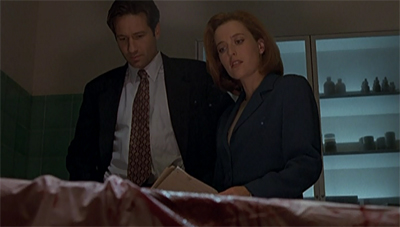
Appropriately enough, Sanguinarium is a bloody mess of an episode.

To be fair, it’s not a total write-off. There are some interesting ideas here, and the episode’s willingness to indulge in trashy horror is almost endearing… to a point. However, Sanguinarium often serves to illustrate just how much care and consideration is necessary to make an episode of The X-Files work. It is a very effective counter-example, an episode that demonstrates it takes more than just pulpy horror to make an episode work. Sanguinarium is almost as revolting and as graphic as Home, but it lack all the little elements that made the earlier episode work.

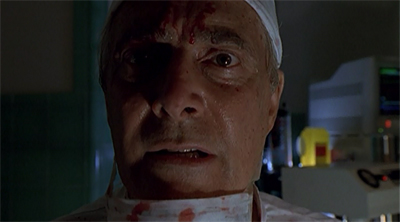
The doctor will see you now...

The doctor will see you now…

It’s cheesy instead of wry. It’s gratuitous instead of simply hyperactive. It’s blunt instead of subversive. Sanguinarium is not a misfire to the same extent as – say – Teso Dos Bichos or Excelsis Dei. It has a few ill-judged elements, but it’s more clumsy than offensive. It might be a bit much to suggest that there’s a classic episode buried just beneath the surface of Sanguinarium, but it seems fair to say that there is a much better episode somewhere in here. One suspects that pressure behind the scenes simply made it tougher to bring that episode to the fore.

Nevertheless, Sanguinarium is an interesting failure, if not quite a satisfying episode.

Blood work...

Blood work…

Continue reading

Millennium – Gehenna (Review)

This February and March, we’re taking a trip back in time to review the fourth season of The X-Files and the first season of Millennium.

Written by Chris Carter and directed by David Nutter, Gehenna feels very much like a continuation of The Pilot.

More to the point, it feels like a restatement of many of the key themes of The Pilot, an attempt to reinforce many of the core ideas in that first episode, and hint at something larger. In many ways, it is about ensuring that Millennium retains its identity as it transitions from a pilot that had a relatively relaxed schedule and high budget into a weekly (well, eight-day) production schedule. Gehenna is about Carter and Nutter proving that Millennium can do what it wants and needs to do week-in and week-out, while also indicating towards larger threads.

Touching (or, at least, seeing) evil...

Touching (or, at least, seeing) evil…

This isn’t a bad way to approach the first regular episode of a television series. Indeed, Carter had done something similar with The Pilot and Deep Throat on The X-Files, structuring the episodes as a one-two punch of reinforced themes and world-building. Gehenna is very much about convincing the audience that The Pilot was not just a flash in the pan, and that the series has a long clear arc ahead of it. Much like Deep Throat really sketched the outline of the alien conspiracy only hinted at in The Pilot, Gehenna features more than a few nods towards a larger evil at work in Frank’s world.

There are points where Gehenna feels a little bit too forced, and a little bit too eager to restate and repeat the themes and ideas of The Pilot. However, it is an interesting episode that does hint towards the show’s future in a number of interesting ways.

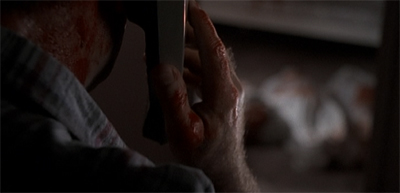
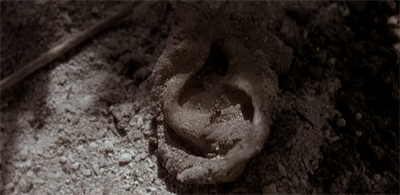
Ear today...

Ear today…

Continue reading

The X-Files – Unruhe (Review)

This February and March, we’re taking a trip back in time to review the fourth season of The X-Files and the first season of Millennium.

Unruhe was the first episode of The X-Files to air on Sunday nights.

The show had vacated its traditional Friday evening slot to make room for Millennium. It had been moved to Sunday evenings. Although the production team were initially quite cautious about the move, it would ultimately pay dividends for the show. The show had already become a mainstream hit, but the Sunday night slot would help to push it into the stratosphere. Airing alongside Fox’s other long-running success story, The Simpsons, the show would secure its highest ratings ever less than six months after moving into its new slot.

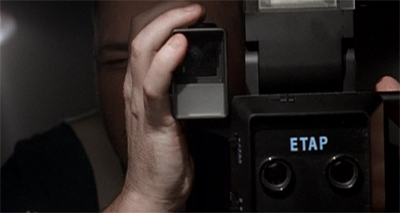
Photo copy?

Photo copy?

Of course, this also draws attention to another interesting facet of Unruhe. This was the first episode of The X-Files to air after Millennium hit the air. Unruhe aired two days after the pilot. The impact of Millennium has already been keenly felt on the fourth season of The X-Files in a number of ways; deadline and production issues hindered Herrenvolk, while James Wong and Glen Morgan had been drafted back to The X-Files to help shore up the fourth season. However, Unruhe seems to directly (and perhaps pointedly) acknowledge Chris Carter’s younger series.

Unruhe is an episode that would probably have been quite at home on Millennium. It is an episode that could easily have been re-worked or re-tooled for Carter’s new show – with only a few minor changes. With its serial offender, fascination with forensic psychology, and its grim reflection on mankind’s capacity for evil, it feels like an story that could comfortably have been told using Frank Black. While it serves to welcome Millennium to the genre neighbourhood, it also seems to suggest that Millennium might be a little redundant.

A walk among the tombstones...

A walk among the tombstones…

Continue reading

Star Trek: Enterprise – Season 1 (Review)

Next year, Star Trek is fifty years old. We have some special stuff planned for that, but – in the meantime – we’re reviewing all of Star Trek: Enterprise this year as something of a prequel to that anniversary. This January, we’re doing the first season. Check back daily for the latest review.

The first season of Star Trek: Enterprise is caught at a crossroads.

On the hand, it needs to be something new and exciting. The first Star Trek show of the new millennium, Enterprise has to find a way of updating the franchise and pushing forward. It has to find a way to challenge audience expectations and demonstrate that – after fourteen consecutive years and twenty-one overlapping seasons – Star Trek still has something fresh and exciting to offer fans. After all, the television landscape had changed significantly since the late eighties. It was time for Star Trek to change with it.

ent-brokenbow3

On the other hand, there’s a clear desire to seek familiar comforts. Star Trek has been on the air consistently for over a decade now. That wouldn’t be the case if the franchise didn’t have its own merits. There’s a sense that the first season of Enterprise is drawn to the idea that it can keep doing what worked before, offering generic Star Trek stories with a new cast and a new theme tune. This is still Star Trek, after all. There’s nothing gained by changing it to the point where it is unrecognisable.

Throughout the first season, these two impulses seem to be at odds with one another, leading to a surreal sense of whiplash. Episodes that feel as unique as Breaking the Ice, Dear Doctor or Shuttlepod One sit alongside generic shows like Civilisation, Sleeping Dogs or Rogue Planet. The show frequently pushes itself in interesting directions, only to pull relent as it approaches the point of committal. The result is a first season that is uneven, but intriguing, one that has great potential – if not necessarily the will to fulfill it.

ent-shockwavepart1m Continue reading

Millennium – Pilot (Review)

This February and March, we’re taking a trip back in time to review the fourth season of The X-Files and the first season of Millennium.

You think you’re protecting me but you make it worse, Frank. You can’t shut the world out for me. You can’t ask me to pretend that I don’t know what you do.

Everyone pretends. We all make believe. These men I help catch – make us.

We’re raising a daughter, Frank. The real world starts to seep in. You can’t stop it.

I want you to make believe that I can.

Fade to Black...

Fade to Black…

Continue reading