• Following Us

  • Categories

  • Check out the Archives


  • Awards & Nominations

Night Stalker – Into Night (Review)

This January, to prepare for the release of the new six-part season of The X-Files, we’re wrapping up our coverage of the show, particularly handling the various odds and ends between the show’s last episode and the launch of the revival.

Night Stalker was cancelled after only six episodes had aired.

The Source was the last episode broadcast during its initial run, closing the show on a cliffhanger. There were four additional episodes produced, but not aired on ABC. There were also two more scripts written, but not produced. While the six episodes of Harsh Realm that had been produced but not aired felt reasonably coherent and finished, there is something very different about the final stretch of Night Stalker. Harsh Realm was not finished, but it felt oddly complete.

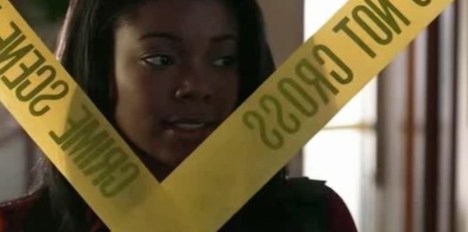
Oh, it's a crime scene alright...

Oh, it’s a crime scene alright…

The final stretch of Night Stalker after The Source has a decidedly rough and unpolished quality to. Everything after The Source takes on the feeling of a rough draft, occasionally intriguing but undoubtedly incomplete. As packaged on the DVD, it all feels like bonus content: Frank Spotnitz elaborating on his plans for the show, the .pdf of Darin Morgan’s script, even the final four episodes. It has become a cliché to compare modern television to a novel, but perhaps the best comparison for Night Stalker is a comparison to a studio album.

If that comparison holds, everything after The Source has the feel of a second disc or a reissue. Linear notes, rough cuts of tracks that did not make the original release, snippets of demos that informed the work. The DVD of Night Stalker is not as interested in concluding or wrapping up the show as it is elaborating or expanding upon it; offering a glimpse into its production and context for its decisions.

Nothing to report...

Nothing to report…

Continue reading

Night Stalker – The Sea (Review)

This January, to prepare for the release of the new six-part season of The X-Files, we’re wrapping up our coverage of the show, particularly handling the various odds and ends between the show’s last episode and the launch of the revival.

One of the interesting aspects of doing a long-running pop culture project is the subtle shifts that you can see taking place over time.

The realities of media consumption change over extended periods; in response, the methods of media production also change. It is not too hard to imagine a world where Night Stalker would have been cancelled by ABC six episodes into its run, ending on a cliffhanger with the remaining four episodes buried for all eternity. Television would have moved on to its next reboot, its next new launch, and the cycle would have continued. Night Stalker would have been dead and buried, even more of a genre curiosity than it is now.

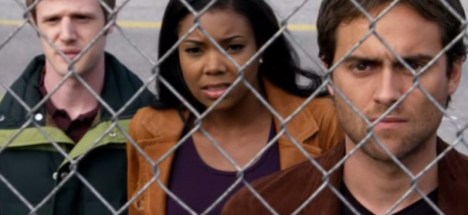
Fenced off...

Fenced off…

There was a time when Night Stalker would have been consigned to history. At best, it might have been a footnote in Frank Spotnitz’s filmography, a point of reference in interviews and conversations about how mainstream American television treats science-fiction history. Had Night Stalker appeared (and been so promptly cancelled) even ten years earlier, it would probably be a curiosity on the IMDb pages of its cast and crew. The name would resonate with genre fans, and t would casually be dropped in career overviews. But it would largely be lost.

However, the reality of television had changed by the twenty-first century, the explosion in home media ensuring that even a six-episode failure like Night Stalker could receive a neatly-packaged DVD release and remain easily accessible to the generations that followed. In some respects, this feels like the worst thing that could have happened. The biggest obstacle between Night Stalker and the status of “cult classic” is ease of access to the show itself; the readiness with which the nostalgic refrain of “cancelled before its time” might be rebutted by simply buying the DVD.

A blast from the past...

A blast from the past…

Continue reading

Massive X-Files Fandom Poll!

So, for the past two years or so, I’ve been delving into the cultural history of The X-Files, doing long-form reviews of everything from the show itself to spin-offs to comic books to crossovers to pop singles. It’s been great fun, and a pleasure from beginning to end. However, that end is fast approaching, and I was thinking of a nice way to mark the occasion. So I thought it might be fun to do a poll of the show’s run, and just get a sense of the broad consensus of fandom’s opinion on the best of the show’s nine-plus year run.

So, that’s what I’m doing.
xfilespoll3

The poll is open to anybody who wants to vote. It will be open until Babylon airs on the 15th February 2016. I’ll then take a little while to tabulate results, and offer a glimpse of fandom’s favourite episode before My Struggle II airs 22nd February 2016. Submission is simple; just compile a list of up to thirty of your favourite episodes (in order) and mail them directly to email address xfilespoll@gmail.com. (Or, if you don’t want to share your email with a stranger, fill out the form here.) Please include the word “Poll” in your subject to weed out the spam, but I’ll be checking the address fairly regularly.

I’ll go through the “rules” below, but it is worth mentioning why I thought this was a good idea. The most obvious is that I’ve spent more than two years talking about The X-Files. It might be worth hearing somebody else’s opinion.  More than that, it is a nice way to acknowledge all the readers of my reviews, and to involve you guys in some way in this project. It’s been great fun for me, and I’ve greatly enjoyed engaging with fans on twitter and in the comments, so I thought this might be a great way to involve everybody.

xfilespoll1

As an aside, I am surprised at the lack of fandom polls for The X-Files compared to other popular franchises like Doctor Who or Star Trek. Fandom polls are a great way to measure popular opinion over long periods, to see how consensus has changed or solidified over long periods of time. With the revival, now seems a good moment to take  a measure. It has been over a decade since the show went off the air, but it’s very much at peak popularity. It feels like this might be useful for the next rewatch or go-round.

As an aside, please feel free to spread word of this poll. Basically, the more people take part, the more interesting the results will be and the more accurately that the results will reflect X-Files fandom at this particular moment. So share it, tweet it, facebook it. Get the word out, even if you just send out the email address and an instruction to send up to thirty ranked choices for the best X-Files episodes ever. I hope this can become something special and cool, a snapshot of where the popular opinion is on The X-Files at this moment in time.

xfilespoll

Now for the boring stuff. Organising a poll means having rules, so the results are somewhat transparent. They should be straight-forward enough, but any questions, please sound off in the comments:

Thanks for reading! Have fun! Any questions or comments, sound off below!

Note: Per feedback, people might be understandably uncomfortable emailing a random address. So I’ve put up a form you can fill out using just your alias and providing your list. The form is accessible here.

Night Stalker – Pilot (Review)

This January, to prepare for the release of the new six-part season of The X-Files, we’re wrapping up our coverage of the show, particularly handling the various odds and ends between the show’s last episode and the launch of the revival.

If you want to examine at the impact of The X-Files on mainstream American television, there are worse places to look than Night Stalker.

Sure, the show only ran for six episodes before it was cancelled, but its very existence speaks to the legacy and success of The X-Files. Night Stalker was a revival of a failed seventies cult television show commissioned by Touchstone Television and broadcast on ABC, one of the “big three” American television networks. More to the point, the network had tasked a veteran producer of The X-Files to oversee production of the show. The network scheduled their Night Stalker relaunch on Thursday nights, against the ratings juggernaut of CSI.

Night Stalking, deserves a quiet night...

Night Stalking, deserves a quiet night…

This was not a scrappy young network taking a creative gambit on an unknown property because they had nothing to lose; this was a substantial investment by a major player in a property that was largely forgotten outside of cult circles and which had failed the last time that it had come to television. It was very much a creative decision based on what had been learned from the success of The X-Files; handled properly, a seemingly marginal and fringe property could grab the national attention. The major networks had been paying attention.

In a way, the success of CSI at the turn of the twenty-first century was proof of this; a forensic thriller populated by idiosyncratic characters with an emphasis on stylised direction. ABC had committed to this idea with Lost, which launched in September 2004. Debuting a year later, Night Stalker found the network doubling down on the premise. Although the twenty-first century televisual landscape owed a debt to The X-Files, Night Stalker would be perhaps the most obvious successor. At least until Fringe came along three years later.

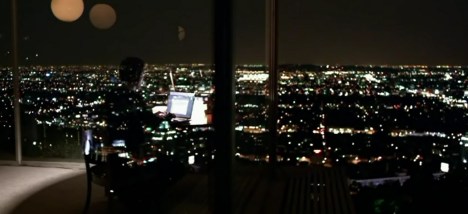
Playing all the angles on the City of Angels...

Playing all the angles on the City of Angels…

Continue reading

The X-Files: Season One (Topps) #8 – Beyond the Sea (Review)

We’ve recently finished our reviews of the nine seasons of The X-Files. Along the way, we tried to do tie-ins and crossovers and spin-offs. However, some of those materials weren’t available at the right time. So this week will be spent finishing Topps’ line of “Season One” comics, published during the fifth season in the lead up to The X-Files: Fight the Future.

Beyond the Sea is more than just the best episode of the first season.

Beyond the Sea is one of the best episodes that the show ever produced. Airing half-way through the first season of The X-Files, Beyond the Sea demonstrated exactly what the show was capable of doing at that point in its run. It was a television masterpiece, and remains one of the very best episodes of an extended nine-season run. More than Ice, more than E.B.E., more than Darkness Falls, Beyond the Sea is the unqualified success story of the show’s first season.

Sea change...

Sea change…

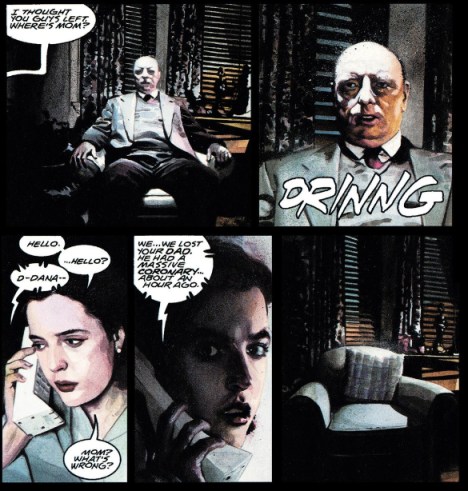
This makes the decision to adapt it as part of the Season One line a relatively risky endeavour. The last two episodes adapted as part of the series – Space and Fire – are unlikely to rank highly on any fan’s assessment of the show’s first year. This was not a bad strategy. If the comic book adaptations were good, like the adaptation of Space had been, then it was a success story for everybody involved. If the comic book adaptations were not great, as was the case with Fire, then it seemed unlikely that anybody would care too much.

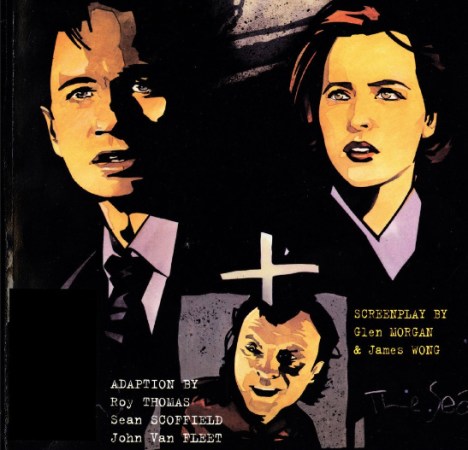
Adapting the season’s strongest episode was a bold creative decision. It seemed highly unlikely that writer Roy Thomas and artist Sean Scofield could compete with the episode written by Glen Morgan and James Wong and directed by David Nutter. The best case scenario for an adaptation of Beyond the Sea would be to serve as a reminder of just how wonderful the television episode had been, rather than a comic book that was memorable in its own right. It was very much a situation where the best possible outcome was not messing it up.

Haunting visit...

Haunting visit…

Continue reading

The X-Files – Season 9 (Review)

This December, we’re taking a trip back in time to review the ninth season of The X-Files.

Very few television shows end when they should.

As much as television might be an artistic medium, it has generally been governed by commercial realities. The length of a television episode is not determined by the volume of the story that needs to be told, but is dictated by the slot allocated it with room left over for advertising. The length of a season is typically negotiated between the demands of the creative team and the needs of the network. Popular shows are seldom allowed to retire at a natural end point, but are instead extended until they reach viable syndication figures or the audience loses interest.xfiles-improbable30a

Things are changing, to a certain extent. The emergence of cable television has allowed creators a greater degree of freedom in how they want to tell their stories. Television series are allowed to wrap up on their own terms, even when they are at the height of their popularity. There is even a bit more give-and-take when it comes to scheduling shows that do not fit comfortably within the standard hour-long block. This allows shows like Breaking Bad, The Sopranos and Mad Men the chance to conclude at a point where it is organic to do so.

However, this was not the television landscape in which The X-Files emerged. Although it helped shape and define television in the nineties, The X-Files was very much a product of the network television system. That meant extended season runs, but it also meant that the show was sustained as long as it remained popular. Due to the fact that television audiences tend to drain rather than spontaneously disappear, this meant that the show was arguably extended years past an organic end point. Indeed, The X-Files had several logical end points.

xfiles-johndoe7a

The plan was to wrap things up after five seasons, meaning that The End might have been the end, and that the show might never have moved from Vancouver to Los Angeles. However, the show was extended for two seasons as ratings declined from their peak. At the end of the seventh season, Requiem was written and filmed before anybody knew there would be an eighth season. A disastrous television season forced Fox to renew the show. The eighth season ended with Mulder and Scully in a happy place in Existence, but was such a success that Fox greenlit a ninth season.

It is interesting to wonder what might have become of The X-Files had the show ended at any of those three logical end points. Would the show be more fondly remembered? Would the general consensus be that the series had ended in a reasonable place? Would fans be relatively satisfied with what had been offered? Would recommendations of the show be a lot less guarded than they would become in the years ahead? There is no way to know the answers to any of these questions. However, there is no getting around the fact that the ninth season is a disaster.

xfiles-sunshinedays15a

Continue reading

The X-Files – Sunshine Days (Review)

This December, we’re taking a trip back in time to review the ninth season of The X-Files.

Well, here’s hopin’ the TV stays off and he learns how to love the real world.

– Doggett stops just short of adding “… and that goes for you as well.”

The X-Files was always a more romantic show than it would readily admit.

The popular image of the show might be Mulder and Scully walking through darkness searching for a truth that may never be revealed or a hideous monster preying upon innocent victims. Chris Carter’s most successful work might be rooted in the dual betrayals of Watergate and Vietnam. The characters might stalk car parks late at night or explore the darkest corners of the urban landscape. Mulder and Scully might be abducted by forces beyond their control, and subjected to the cruel whims of uncaring fate. The show’s motto might be “trust no one.”

"Let's call it a day..."

“Let’s call it a day…”

Nevertheless, that cynicism is offset with a deep-seated romance. “Trust no one” is one of the defining mantras of The X-Files, but there are other more optimistic catchphrases; “I want to believe” and “the truth is out there.” Optimism outvotes cynicism by a two-to-one majority. It is not quite a decisive victory, but it is something in this cynical and chaotic world. While Mulder and Scully might never actually find the truth which they so desperately seek, they did find one another. That is more than either could have hoped and than some people can claim.

Sunshine Days is a staggeringly romantic and optimistic piece of television. Indeed, it suggests that the cynicism of The X-Files was really just a practiced veneer. As the title suggests, Sunshine Days allows the central cast to smile more frequently over forty-five minutes than most have in the course of their entire run on the show. As with the rest of the show, Sunshine Days is rooted in the culture of the seventies. However, there is something quite heartwarming in how Vince Gilligan eschews All the President’s Men for The Brady Bunch.

Out of this world...

Out of this world…

Continue reading

The X-Files – Provenance (Review)

This December, we’re taking a trip back in time to review the ninth season of The X-Files.

Provenance and Providence are a landmark moment for The X-Files. They represent the last mid-season two-parter.

The mid-season two-parter has been an institution since the early second season, when external factors forced the production team to improvise around Gillian Anderson’s pregnancy. It was decided that the character of Scully would marginalised and written out so as to avoid dealing with the pregnancy, and the centre-piece of that plan was an epic two-parter that would air during in October 1994. Duane Barry and Ascension were such a big hit that the production team opted to do a second mid-season two-parter in February 1995, with Colony and End Game.

The Truth will not be buried...

The Truth will not be buried…

The show never looked back. Those episodes quickly codified the mythology, becoming a highlights in the season schedule. The two-parters typically aired during Sweeps and occasionally managed to garner press and media attention. They featured bigger budgets and impressive scale, with many of those two-parters standing out as prime examples of The X-Files as “event” television. The submarine in the ice in End Game, the leap to the train in Nisei, the mid-air alien abduction in Max. These were blockbuster moments.

Provenance and Providence would mark the end of this rich tradition. Sadly, they do not embody the finest attributes of the form.

Burnt notice.

Burnt notice.

Continue reading

The X-Files – Lord of the Flies (Review)

This December, we’re taking a trip back in time to review the ninth season of The X-Files.

Lord of the Flies is an interesting episode, but not a good one.

After 4-D worked so hard to offer a glimpse of what The X-Files could or should look like in December 2001, Lord of the Flies feels like a step backwards. It is a regression, and not just because it awkwardly transitions Scully back into the role of lead character or because it returns to the comedy stylings largely eschewed by the eighth season. Lord of the Flies feels like a script that could have been written for the show in its third or fourth seasons, returning to the well-tapped reservoir of teen angst that has sustained quite a few episodes at this point.

Flies by...

Flies by…

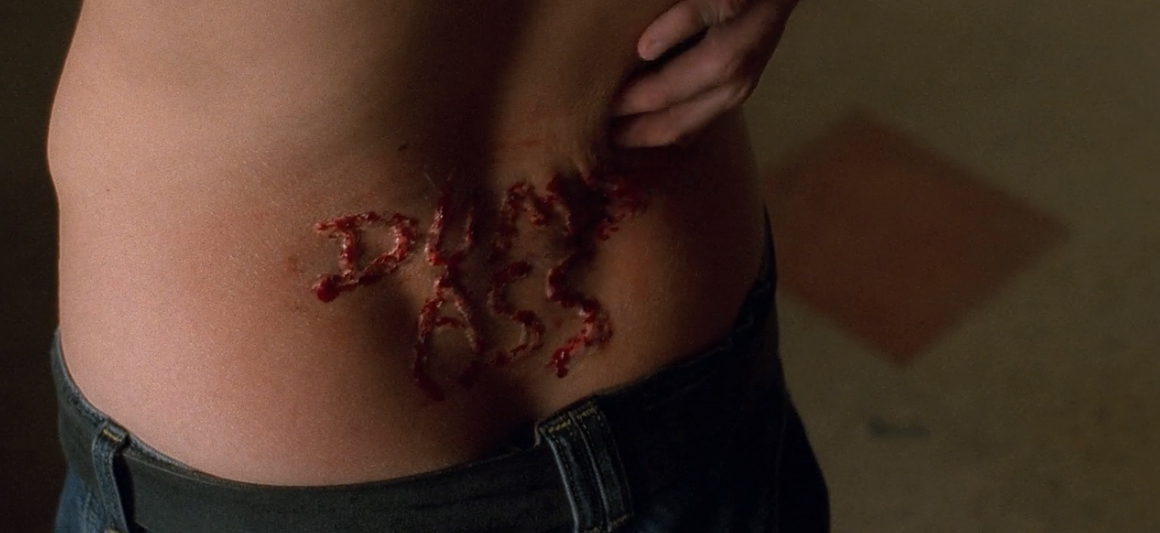
Only a handful of elements serve to mark Lord of the Flies as a piece twenty-first century television. While Scully gets to play action hero at the climax, Mulder is gone; Doggett and Reyes do a lot of the generic detective work across the hour, even if little of their personalities gets to shine through. More than that, Aaron Paul and Jane Lynch pop up in supporting roles that nod towards the various futures of network television. In particular, Paul appears in a home-made stunt show called “Dumb Ass”, an obvious (and shallow) parody of Jackass.

However, Lord of the Flies is not particularly interested in any of these newer elements. The script very clearly wants to hark backwards, towards a past that is no longer easily accessible.

Somewhere, Scully is jealous...

Somewhere, Scully is jealous…

Continue reading

The X-Files – Nothing Important Happened Today II (Review)

This December, we’re taking a trip back in time to review the ninth season of The X-Files.

Of course, the ninth season was broadcast in a radically different world than the eighth season.

Nothing Important Happened Today I was broadcast early in November 2001, less than two months after hijackers commandeered control of several airline jets and sent them crashing into various American landmarks. The attacks upon the World Trade Centre and the Pentagon changed the world in a way that very few events can claim. History can be comfortably divided into “before 9/11” and “after 9/11”, a rare marker of cultural significance generally reserved for events like World Wars.

World on fire...

World on fire…

Tom Brokow has argued that 9/11 was “when the twenty-first century truly began.” Anne-Marie Slaughter argued that 9/11 was “the defining event of the new millennium.” Phillip E. Wegner suggested that 9/11 represented the end of “the long nineties” that had begun with the collapse of the Berlin Wall. It is not an exaggeration to suggest that 9/11 changed absolutely everything. It defined American foreign policy for over a decade after the fact, cemented a culture of anxiety and surveillance, cast an incredibly long shadow over world culture and politics.

Over two-and-a-half thousand people were killed on 9/11. Estimates suggest that up to twenty-one thousand civilians and more than two thousand American troops died during the War in Afghanistan. Studies suggest that up to half a million Iraqis have died of war-related causes and nearly four-and-a-half thousand American troops have died during the Iraq War. These are just the losses that can be tangibly measured; it is to say nothing of the lives caught in ripple effects and unforeseen (or foreseeable) consequences.

Shining a light on what happened...

Shining a light on what happened…

It is very cavalier and insensitive to suggest that The X-Files was a victim of 9/11 in any real sense. With everything else going on in the wake of 9/11, the cancellation of a television show means nothing. The cancellation of a show (even a popular show) is not even a footnote in any account of how the world changed. It is entirely reasonable to argue that The X-Files might have been cancelled even if 9/11 never happened. The show was nine years old, and had just lost one of its two leads. It was entirely possible that the show could never have recovered from that anyway.

Still, The X-Files was a show indelibly and undeniably anchored in the context of the nineties. It was a show that tapped into the zeitgeist in that historical lacuna following the end of the Cold War, when there were no more enemies to fight and where there was room for introspection and reflection about government authority. By the start of the ninth season, the show’s cultural moment had passed.

A Doggett lead...

A Doggett lead…

Continue reading