• Following Us

  • Categories

  • Check out the Archives


  • Awards & Nominations

Is Star Trek on Television Dead?

I saw Star Trek last night and was quite impressed – it is one of the best movies in the franchise (albeit not the best). It riproared effectively and gave us a brilliant look at the Kirk/Spock relationship, which is one of the oddities of the show – how such an impulsive, womanising and irrational man would develop a lifelong friendship with such a stoic and logic individual was always a slight mystery to Star trek fans. Still, there is a world of difference between the television shows and the movies, and I wonder if we’ll ever see another Star Trek show back on the airwaves?
The original original crew...

The original original crew...

Continue reading

Non-Review Review: Star Trek

I finally caved. I went to see Star Trek and I dragged my girlfriend along for the ride. I was cautious, hearing two separate opinions about the film: the mainstream media’s orgasmic delight at being offered a premium piece of geekdom for their visual pleasure and my work colleagues’ enjoyment of the film, but lament that ‘it just wasn’t Star Trek’. Who was right? Well, they both were.

Like the Enterprise itself, the new Star Trek is a carefully constructed engine that takes a while to build up momentum, but has a phenomenal top speed

Like the Enterprise itself, the new Star Trek is a carefully constructed engine that takes a while to build up momentum, but has a phenomenal top speed

Continue reading

This is no time to argue about time, we don’t have the time…

The early reviews for Terminator: Salvation seem to be in – and they are not as bad as I thought they would be. Apparently if you leave your brain at reception, you might enjoy it. Still, it’s got me thinking. The original Terminator was one of the few Hollywood movies to deal with time travel relatively well. How come Hollywood seems to have such difficulty wrestling with such a common science fiction trope?

Warning: thinking about time travel might make your brain melt

Warning: thinking about time travel might make your brain melt

Continue reading

It was the summer of 2009…

Lately I’ve taken a bit of interest in Box Office numbers – I figure that might distract me from the fact Ryan Tuberty is hosting the Late Late. And looking at the few months ahead of us, I can see this being a very big summer for the US box office. In fact, I can see the film industry beating the recession with a large stick (cinema generally does quite well during recessions as it’s well, cheap), thanks to a fairly epic and broad lineup of blockbuster films.

It seems that just about every film this year is a sequel or prequel. Some (Angels & Demons) are both – it’s complicated (the book is a prequel the film is a sequel). We’ve had a relatively strong introduction to the season with the two prequels on offer. Neither Star Trek nor Wolverine broke any major records (though the Imax thing is pretty neat, as is the biggest second-week in May ever). I can see Star Trek having the legs to last in the background at least a month (which, given the onslaught of bigger movies and the disappointing staying power of other would be blockbusters, is really something).

Even before we reach the end of the month, we’ll have the second Dan Brown film, which can’t do too badly with a cast like Ewan McGregor and Tom Hanks and a cult following among a slightly older demographic usually ignored, the fourth Terminator film, which should do big business despite all the reasons that geeks have to worry, and the kid-friendly A Night at the Museum. Rounding off the month’s smaller (pbut possibly slow-burning) releases are Pixar’s Up and Sam Raimi’s return to cult horror with Drag Me to Hell. Again, neither should set opening weekend alight, but I’d expect a decent amount of business from either or both.

Then we have the traditional summer months. Summer movies have been creeping in earlier and earlier (Watchmen was arguably better suited to a summer release; Iron Man last year set the official start-of-season bell back at least a few weeks), but your meat-and-potatoes are here. These are the movies that cannot possibly fail, they are just that wired-in to cheesy pop sentiment. Michale Bay will confirm his title to the throne of summer blockbusters with a brainless sequel to a feature-length toy commercial with Transformers: Revenge of the Fallen, but even he will likely have to stand in the shade created by what most commentators have settled on as the biggest money-spinner of the year, Harry Potter and the Half Blood Prince. The series has built in devotees that Star Trek can only dream about, and they will be out in full force along with any parent looking to entertain a child over the summer months. This and the fact that my sources within the fan community tell me this is the best book points to a right to print money.

I think that GI Joe: The Rise of Cobra may falter as a brand with relatively little name recognition, despite the most over-qualified cast ever – Christopher Eccleston, people! On the other hand, I really hope that Michael Mann’s Public Enemies can do at least respectably, as the man generally delivers and has an amazing cast at his disposal.

All that said, I wouldn’t expect anyone to dethrone The Dark Knight or Titanic. I just think that culminatively the box office should be huge, but it could hugely backfire and lead to blockbuster fatigue, though I doubt it. It’ll be interesting to read the end-of-year numbers.

After that there’s the lonely Autumn followed by the glut of awards-bait. I’m already hyped about some of the movies we won’t be seeing on this side of the Atlantic for another nine months, but I’ll talk about them some other time.

Home Entertainment

I just finished the third season of The Wire on DVD. I am impressed. I never caught the show the first time around, so – as with many of today’s fine televisual treats – it seems to be one best sampled on DVD, at your own pace. It’s a fantastic saga that really capitalises on the previous two seasons (which, while very good fell just short of greatness). I may not be entirely convinced that it is, loike, the best TV show in the world… ever, but I can see why George Hook likes the show.

As I was watching the development of themes and character and mood in the twelve-hour set, I began to think about how far television has come within its own context in the past few years. I remember the days when it was the height of praise to describe a show as being like ‘a new movie every week’. The X-Files, Law & Order, Miami Vice and Star Trek: The Next Generation seemed to epitomise the early wave of this view point, as the networks seemed desperate to sell the illusion that viewers shouldn’t go out to the cinema – the can find entertainment of a similar scale on the box.

Not only can they look moody, the cast of The Wire can also act pretty damn awesome as well...

Not only can they look moody, the cast of The Wire can also act pretty damn awesome as well...

Of course, this wasn’t quite the case. No matter the loft heights that the narratives may reach (and the best television can be as compelling as the best movie or novel or play), the shows were always confined by the ceiling of their budget. So Crockett could crash a speedboat and watch it explode, but he couldn’t blow up a building, or Mulder could see an alien spaceship, but only from the distance as a sequence of blurry lights. You can really only fool the audience so often – eventually they’ll realise the champagne you’re serving is simply apple juice mixed with white lemonade. And treating television as literally a ‘home box office’ also confined the plot: each story had to be self-contained, or you couldn’t mess with the status quo too much, nor develop the characters too far beyond their original positions. It goes without saying that – unless you’re planning a franchise – movie makers rarely have to put the pieces back where they found them. Sure, shows might make a token effort – The X-Files mythology comes to mind – but it would plod rather than glide, if it moved at all.

Television isn’t filmmaking. That should go without saying. As such, it came as a bit of a surprise that it wasn’t really until the last fifteen or so years that writers and producers really embraced the idea. Movies have bigger budgets, but smaller canvas. Your plot pretty much has to fit within two hours (or four if you’re really powerful and can overpower the editor). A television show runs on average about one hundred and fifty episodes. It spans several years in the lives of a bunch of characters. Sometimes events don’t simply occur in handy forty-minute blocks.

As ever, science fiction lead the way, really – but didn’t get the credit. Babylon 5 embraced a complex narrative arc-structure that made the show nigh-impossible to casually follow. Many science fiction nuts would accuse one of the Star Trek spinoffs (Star Trek: Deep Space Nine) of stealing the gimick with a densely layoured (yet still relatively accessible) two-and-a-half-year war storyline balancing a huge number of individual characters whose lives changed from week-to-week. Then again, it’s quite likely that not many people know either of these shows. The more geek-aware would note season-long arcs (again carefull constructed so as to not alienate casual followers) on Joss Whedon’s shows Buffy: The Vampire Slayer and Angel.

The approach really made its jump to the mainstream with The West Wing. I love the show, but will readily admit that most of the time the plots made little-or-no-sense in-and-of-themselves, but rather played into larger arcs both in terms of narrative and character. Big events were seldom concluded within the same hour that they commenced (the shooting, the impeachment hearings, the re-election campaign, the middle east initiative, the primaries and the general election, for example). The show went down as the prestigious pretentious drama it was intended to be, but it began to signal that maybe a change was coming.
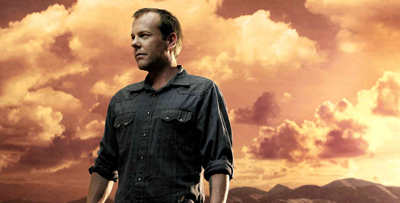
This was taken on Jack's day off...

This was taken on Jack's day off...

About the same time, Home Box Office began producing its own run of series. Oz, though I love it, was a glorified night time soap opera and a respectable first attempt. The Sopranos is generally acknowledged as their masterpiece, though those seeking to be a little contrarian will champion The Wire as the best HBO series. Either way, both unfolded almost as gigantic miniseries, needing to be viewed as a whole to be appreciated in their full beauty. Sure, most episodes of The Sopranos unfold around an issue of the week in Tony’s life, but these generally play as a solo movement in a larger concerto. I know nothing about music, so I don’t know if I messed up that metaphor.

At the same time, regular television shows such as Lost proved that modern audiences could follow an interweaving, no-answers-up-front style of storytelling, with a carefully-constructed six year arc. Well, either that or they’re making it up as they go along, depending on who you ask. Love it or loathe it, it represents a huge step forward in modern storytelling – contestably one story in 150 smaller chapters. A more obvious example is 24, where literally every hour on screen is an hour in Jack Bauer’s really bad day. The advent of the DVD market at around this time undoubtable helped these shows reach people who want a big story, but are afraid of missing an episode on the television.

I love that television seems to have found a unique way of telling a story. That’s how media evolves. Film took a while to find its feet (initially stalling in boring uninspired adaptations of stage plays), emulating an earlier media form much as television aspired to. Sure, you’ll still find a movie-of-the-week style show or two (Law & Order and the CSI franchise spring to mind), but even those shows seemingly following an episodic story format will infulge the odd long game (the CSI franchise like serial killers, unsurprisingly; Life on Mars saw Sam try to get home while solving the crime o’ the week; House is as much about the protagonists many, many, many on-going issues as it is the patient of the week).

I love movies. I also love television. Variety is the spice of life.

I’m ordering the fourth season of The Wire now…

Star Trekkin’, Across the Universe!

This weekend sees the much anticipated opening of Star Trek. And I have to admit, I’m a little excited. It’s been a while since we’ve seen a good old-fashioned space opera on the big screen, the way that it’s meant to be seen.

Sure, it looks like it might have jettisoned all the moral and philosophical explorations that made the franchise what it was – where else could the American public have found dispassionate explorations of issues as diverse as the Cold War, Vietnam, assisted suicide, cloning, religion, even the American healthcare system? – in favour of an edge-of-your-seat thrill ride, but it still looks incredible. It seems more like a rollercoaster to the stars than a wagon train.

"I'm from Iowa, I only work in outer space..."

"I'm from Iowa, I only work in outer space..."

Of course, I wouldn’t be me if I didn’t have a complaint or two. I should introduce this article with the forewarning that I am not a hardcore Trekker/Trekkie/whatever-they-call-themselves, but there is one thing about the attitude of geek god JJ Abrams that really grinds my gears: the insistence that this movie is not for Star Trek fans.

Don’t get me wrong. I have no problem with a movie that is not just for Star Trek fans, but that’s an entirely different sentiment than a movie that is not for Star Trek fans. It’s these guys who are going to see the movie three or four times and will likely make up a sizeably portion ($100m+) of the film’s revenue base. Maybe not a majority, but enough to justify being treated with a little ounce of respect. What’s the point of giving the franchise a much-needed overhaul if you’re just going to insult the fans in the national press?

Anyway, my pet publicity peeve out of the way, I look forward to the reintroduction of space-based science fiction on to the big screen. In the past few years it seems the genre has been confined to the telly (with the superlative, but over, Battlestar Galactica – which also sometimes draws the similar protest “it’s not for sci-fi fans!” – or the wonderful nonsense of Doctor Who, who is unfortunately out of the office bar four specials this year). It’s been a while since we’ve had a big out-and-out science fiction release (okay, most summer blockbusters could loosely be classified as science fiction – Transformers, Eagle Eye, etc. – but I like a bit of substance with my flash).

Ignoring the Star Wars prequels (I’m less of a Star Wars nut than a Star Trek nut), I can only think of a handful of respectable science-fiction films in the past few years. There was the George Clooney vehicle, Solaris, a remake of a classic Russian film of the same name, and there’s was director-of-the-moment Danny Boyle’s Sunshine. Both are solid films, almost independent films in their mindset (being more psychological than epic). A few Michael Gondry fans might throw a hissy-fit at this classification, but Eternal Sunshine of the Spotless Mind is probably easiest classified as a science fiction film (there’s a machine that can erase memories!).

"Walking on... Walking on the moon... ((Some... may say...))"

"Walking on... Walking on the moon... ((Some... may say...))"

Of course, thoroughbred science fiction is the ugly stepchild of the major film genres, one that gets very little respect. The major studios are understandably antsy, with risky science-fiction flicks like Artificial Intelligence or Blade Runner opening to little critical or commercial success. Blade Runner has been subsequently rehabilitated critically, and has likely made its money well back (I own five versions of the film), but one gets the vibe that audiences just don’t dig science fiction settings. The most often-cited complaint about the disappointing Indiana Jones and the Kingdom of the Crystal Skull was the substitution of hokey fifties aliens ‘extra-dimensional beings’ for hokey thirties mysticism. Personally, I just thought the movie was a mess, and its problems had little to do with the close encounter at the film’s climax.

Still, the genre is home to some of the greatest films ever made and, when used well, can provide a creative team an epic canvas with which to work. 2001: A Space Odyssey combining breathtaking ideas with breathtaking imagery. Alien and Aliens gave us some of the most visceral body horrors of mainstream cinema. Metropolis remains one of the most influential films of all time ninety years after it was released. Few types of film can so deftly mix the existentialist questions with sheer visual flair; nor do they mix so well – I can readily name sci-fi dramas (Gattaca), sci-fi comedies (Galaxy Quest), sci-fi horrors (Event Horizon), sci-fi action flicks (Total Recall), sci-fi romances (Wall-E), even sci-fi westerns (Outland).

It is perhaps because of the breadth and scale of the genre’s potential that I can forgive it the occasional empty treat like Star Wars or Minority Report. After all, if Star Trek sucks, I can look forward to Moon.

It’s a low-budget claustrophobic drama set – where else? – on the moon, with Sam Rockwell playing an astronaut whose isolation is steadily growing into paranoia. It probably doesn’t help that his only companion is a computer voiced by Kevin Spacey. Nothing helps calm you down like creepy monotone.

So, yep, I’m looking forward to Star Trek. I’m hoping they catch the lightening in a bottle again. I’m hoping that there are brains to match the spectacle on display. Even if there isn’t, I’m sure there’ll eventually be a science fiction movie along with both.

Maybe Terminator Salvation?

Okay, I won’t hold my breath.