• Following Us

  • Categories

  • Check out the Archives


  • Awards & Nominations

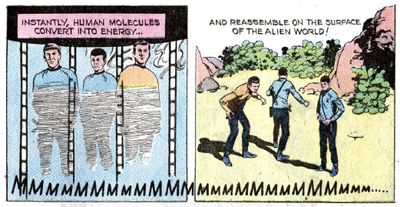
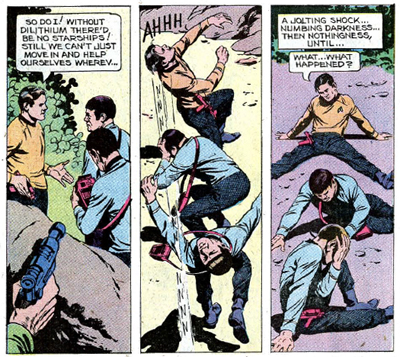
Star Trek (DC Comics, 1984) #39-40 – The Return of Mudd (Review)

The first Star Trek pilot, The Cage, was produced in 1964. To celebrate its fiftieth anniversary, this December we are reviewing the second season of the original Star Trek show. You can check out our first season reviews here. Check back daily for the latest review.

By its nature, Star Trek had very few recurring guest stars – outside of recurring extras and the supporting senior staff.

Star Trek was a prime-time science-fiction show in the sixties. As such, it was strongly episodic. More than that, it was a show that included its stated goal – “to explore strange new worlds” – in a narration over the opening credits. As such, the show did not tend to bring back too many recurring characters. Gene L. Coon had tried to introduce a recurring foil for Kirk in the second season, but Robert Justman had vetoed the reappearance of Kor in A Private Little War and Coon would depart before he could follow through on plans to make Koloth a recurring adversary.
Our man Mudd...

Our man Mudd…

Of course, this has not stopped Star Trek fans from seizing on various one-shot characters from the three seasons of the original Star Trek. Despite only appearing in Errand of Mercy, Kor has become a frequently recurring character in the Star Trek mythos. Gary Seven has spun off from Assignment: Earth into a string of novels and comics. Christopher Pike only appeared with Kirk in one single story, but there is a huge amount of literature dedicated to him. Still, this means that the elements which do recur are given a bit more weight.

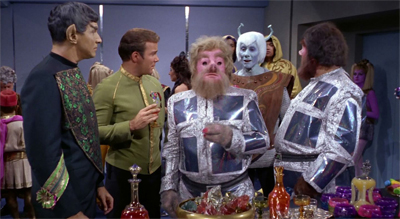
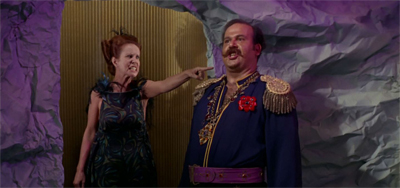
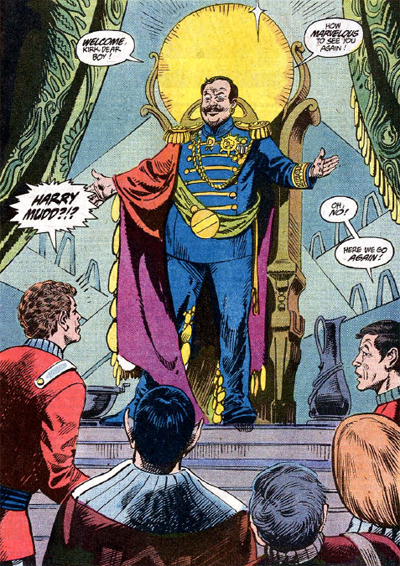
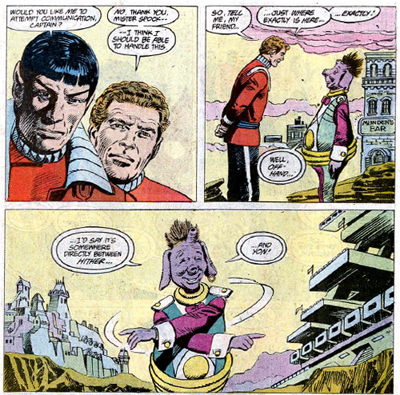
Klingons, Romulans and Vulcans are a vital part of the Star Trek mythos. Khan Noonien Singh only appeared in Space Seed and Star Trek II: The Wrath of Khan, but his memory haunts the franchise to the point where he was revived for Star Trek Into Darkness. Harry Mudd has the distinction of being the only non-crewmember to recur within the original run of eighty episodes. So it is no surprise that Harry Mudd has become one of the most frequently recurring guest stars in the history of the franchise.
Kirk meets quirky...

Kirk meets quirky…

Continue reading

Star Trek – A Private Little War (Review)

The first Star Trek pilot, The Cage, was produced in 1964. To celebrate its fiftieth anniversary, this December we are reviewing the second season of the original Star Trek show. You can check out our first season reviews here. Check back daily for the latest review.

Star Trek is a pop culture relic of the sixties. It’s possible to see the decade reflected in just about every facet of the production. The show’s costume and set design speak to the decade, as do the series’ sexual politics. The Cold War colours a significant portion of the series, reflected in the Klingons and elsewhere. The Second World War is treated as the beginning of the future, while much emphasis is put on mankind’s expansion to the stars.

Even outside of these general parallels, there are episodes that speak to particular facets of the sixties. The Naked Time, This Side of Paradise and The Way to Eden all play with the idea of social liberation. The Ultimate Computer, Return of the Archons, The Apple and The Changeling all speak to concerns and insecurities about the rapid advance of technology and the people left behind. Journey to Babel touches on the gap felt between conservative parents and liberal children ready to embrace life’s possibilities.

Make war, not love...

Make war, not love…

And then there’s the Vietnam episodes. Shows like Errand of Mercy and A Taste of Armageddon reflect the conflict in a number of ways that were not possible in the scripted dramas of the time. However, A Private Little War is perhaps the definitive Vietnam episode. Part of this is due to the script and the production, which makes explicit reference to “the twentieth century brush wars on the Asian continent.” With the Klingons and the Federation meddling directly in the conflict on a small backwater planet, comparisons invite themselves.

However, there were factors at play outside the control of the production team. A Private Little War was produced in late 1967. It aired on February 2, 1968. However, North Vietnamese forces had launched the Tet Offensive only a few days earlier – the campaign would land through the end of March. The Tet Offensive would end with the North Vietnamese suffering heavier losses than the American or South Vietnamese forces, but the attacks would have a devastating affect on public opinion.

"Got your nose! And, soon, your planet!"

“Got your nose! And, soon, your planet!”

A Private Little War is placed terribly. It is a reluctant justification of the Vietnam War, presenting interference in a foreign war as a terrible (but necessary) burden weighing on Kirk’s conscience. The episode closes with Kirk committing to arm the natives, even if the show doesn’t have the courage of its conviction to follow the idea to its logical consequences. For all that Star Trek is described as a liberal and pacifistic vision of the future, A Private Little War endorses American interference in Vietnam.

The broadcast of A Private Little War only a couple of days following the turning point of the public perception of the war is an absolutely fascinating pop cultural synergy – a demonstration of how Star Trek was inevitably and inexorably of its time in a way that even a few months delay between filming and broadcast could change the context of the episode so dramatically.

I wouldn't look so happy with myself...

I wouldn’t look so happy with myself…

Continue reading

Star Trek (Gold Key) #61 – Operation Con Game (Review)

The first Star Trek pilot, The Cage, was produced in 1964. To celebrate its fiftieth anniversary, this December we are reviewing the second season of the original Star Trek show. You can check out our first season reviews here. Check back daily for the latest review.

The Gold Key comics came a long way, in the end.

The early issues were full of errors and contradictions – feeling like Star Trek as described across a crowded bar, the broad strokes present but the details never synching up. Those early comics – much like James Blish’s novelisations – suggest a missing link between Star Trek and fifties science-fiction. The earliest issues offered a glimpse of Star Trek through a prism. However, the comics grew more professional (and more familiar with their source material) as they went along.

Beam me down, Scotty...

Beam me down, Scotty…

Indeed, the series attracted a number of notable writers and artists, including Len Wein. Wein would go on to write for the franchise when DC procured the license in the mid-eighties. More than that, it was clear that the writers and artists had begun to watch the show. There were none of the early mistakes that come from working with publicity materials and without context. Although the earliest issue of the comics achieved infamy among Star Trek fans, the book ran for over a decade – stumbling a bit close to traditional Star Trek values as it went along, even if it never quite abandoned its more absurd tendencies.

Operation Con Game is the last issue of Star Trek published by Gold Key, and serves as an example of how far the comics have come.

Disrupting that thought...

Disrupting that thought…

Continue reading

Star Trek – Journey to Babel (Review)

The first Star Trek pilot, The Cage, was produced in 1964. To celebrate its fiftieth anniversary, this December we are reviewing the second season of the original Star Trek show. You can check out our first season reviews here. Check back daily for the latest review.

Journey to Babel is pretty influential, as episodes of Star Trek go. It is an episode that really cements idea of the Federation that came to be at the heart of the franchise, suggesting that the organisation really is a diverse intergalactic alliance of diverse alien species, rather than a union between Earth and Vulcan. More than that, the episode suggests that the individual members of the Federation might not exist in perfect harmony with one another, but may each operate with their own agenda and motivations.

However, what is really remarkable about Journey to Babel is how much of this unfolds in the background. All this world-building and -embellishing is very much a secondary concern for writer D.C. Fontana. Despite its scale and its scope, Journey to Babel is a decidedly personal story about a family in crisis. It works remarkably well, offering viewers a bit more insight into Spock as a character and where he came from.

Party on, Gav...

Party on, Gav…

Continue reading

Star Trek (IDW, 2009) #15-16 – Mirrored (Review)

The first Star Trek pilot, The Cage, was produced in 1964. To celebrate its fiftieth anniversary, this December we are reviewing the second season of the original Star Trek show. You can check out our first season reviews here. Check back daily for the latest review.

The mirror universe is a fun concept.

Over the run of the franchise, quite divorced from the context of Mirror, Mirror, the mirror universe itself is an excuse to go big; to indulge in hammy and silly behaviour. There’s no need to worry about putting the toys back in the box, or even the general philosophy of the franchise as a whole. Appropriately enough, it becomes a place where you can do almost anything you might imagine with no real consequences. Writers get to do big space opera stuff, actors get to munch on the scenery.

All hail the empire...

All hail the empire…

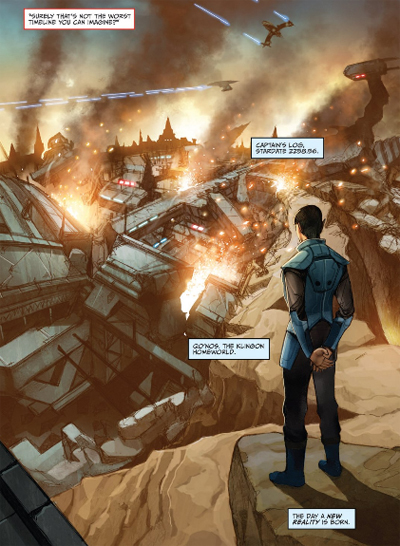
There is a reason that the most giddy and indulgent fan service from the already giddy and fan-service-filled fourth season of Star Trek: Enterprise was the two-parter set in the mirror universe. Indeed, Mirrored arguably borrows more from In a Mirror, Darkly than it does from Mirror, Mirror. The entire two-part story is launched from a casual conjectural conversation between Scotty and McCoy – suggesting that this might just be some flight of fancy. Indeed, the story cuts to the mirror universe as Scotty asks McCoy about “the worst timeline [he] can imagine.”

Mirrored is a very silly, very disposable story. It combines the weird fascination with alternate universes that runs through IDW’s monthly Star Trek series with the fixation on the events of JJ Abrams’ franchise-launching reboot. The result does not rank with the best mirror universe stories ever told, feeling too indulgent for its own good.

A cutting retort...

A cutting retort…

Continue reading

Star Trek – Bread and Circuses (Review)

The first Star Trek pilot, The Cage, was produced in 1964. To celebrate its fiftieth anniversary, this December we are reviewing the second season of the original Star Trek show. You can check out our first season reviews here. Check back daily for the latest review.

Bread and Circuses is not subtle. Then again, that is the point.

There’s a lot of interesting stuff happening in Bread and Circuses, the fourteenth episode produced for the second season, but the last to air. There’s the idea of a world dominated by “a twentieth century Rome”, a rogue captain, a Prime Directive dilemma and a scathing indictment of modern television. Not only is it one of the last episodes with a “produced by Gene L. Coon” credit, it is also an episode co-written by Roddenberry and Coon. It is also the episode of Star Trek that endorses Christianity most explicitly and heavily.

"Wait, we're only getting it in black and white?"

“Wait, we’re only getting it in black and white?”

Bread and Circuses is a bold and audacious piece of television, full of venom and righteous anger, rich in satire and cynicism. It’s a plot so ridiculously over-stuffed with good ideas that viewers are liable to forgive the show’s somewhat cop-out ending where Kirk and his away team beam back to the Enterprise and continue on their merry way as though little has actually happened. Bread and Circuses feels like it uses every minute of its fifty-minute runtime wisely, balancing character with world-building.

It is probably a little bit too messy and disjointed to be labelled a dyed-in-the-wool classic, particularly when compared to the shows produced around it. Nevertheless, it is a decidedly ambitious piece of work, and one that demonstrates what Star Trek could do when it sets its mind to something.

When in Rome...

When in Rome…

Continue reading

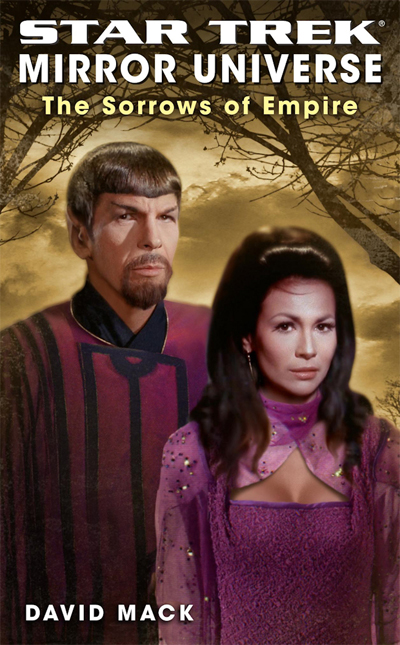
Star Trek: Mirror Universe – The Sorrows of Empire by David Mack (Review)

The first Star Trek pilot, The Cage, was produced in 1964. To celebrate its fiftieth anniversary, this December we are reviewing the second season of the original Star Trek show. You can check out our first season reviews here. Check back daily for the latest review.

There is a fairly significant lacuna in the internal chronology of the Star Trek universe, between the opening scene of Star Trek: Generations and Encounter at Farpoint. It is a fairly significant void that has only fleetingly been explored in various novels and comic books – most notably in Pocket Books’ intriguing Lost Era series. However, the lack of interest in this period is understandable. Not too much had changed between the end of Star Trek VI: The Undiscovered Country and the start of Star Trek: The Next Generation. Starfleet was still Starfleet, the Enterprise was still a ship of exploration.

In contrast, much more happened between the last act of Mirror, Mirror and the teaser of Crossover. The Terran Empire had collapsed in on itself, replaced by a hostile alliance of Klingons and Cardassians. Humans were no longer masters of their domain, instead forced to exist as slaves or mercenaries or rebels. The universe of Mirror, Mirror had been brutal, but ordered; the world of Crossover was brutal and chaotic. Everything had changed in a rather fundamental way. An empire had died, the enemy had stormed the gates. Everything was wrong.

With The Sorrows of Empire, author David Mack begins a project to impose a clear structure on the mirror universe. Mack’s objective is essentially to stitch together a host of divergent (and perhaps even contradictory) continuity into a singular unifying narrative. The Sorrows of Empire was first published as a novella in the Glass Empires collection. However, his attempt to knit together the mirror universe as featured on the original show, Star Trek: Deep Space Nine and Star Trek: Enterprise was quickly expanded into its own full-length novel.

Indeed, having tied those various threads together, Mack would then try to resolve them all, writing Rise Like Lions to help stitch The Soul Key into his tapestry while resolving a long-dangling piece of Star Trek continuity. The Sorrows of Empire is a fascinating read, and Herculean effort. Mack shares the same knack for blending continuity with narrative as writers like Keith R.A. DeCandido or Christopher L. Bennett. However, The Sorrow of Empires struggles to get around the fact that it is trying desperately to put together a jigsaw from mismatched pieces that were never meant to be combined.

tos-thesorrowsofempire

Continue reading

Star Trek – The Trouble With Tribbles (Review)

The first Star Trek pilot, The Cage, was produced in 1964. To celebrate its fiftieth anniversary, this December we are reviewing the second season of the original Star Trek show. You can check out our first season reviews here. Check back daily for the latest review.

This is a classic.

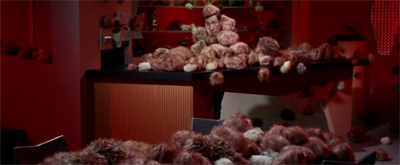
The Trouble With Tribbles is an episode that can make a legitimate claim to being the best episode of Star Trek, if not the best episode of the entire franchise. It is a genuine classic in countless ways, perfectly embodying so much of what makes Star Trek classic and iconic and loved. David Gerrold’s script, polished by Gene Coon, is easily the best comedy episode that the franchise has ever produced, but never at the expense of the show’s credibility. The Trouble With Tribbles may be silly, but it is also very clever and insightful.

Nobody knows the Tribbles I've seen...

Nobody knows the Tribbles I’ve seen…

Continue reading

Star Trek – Mirror Images (Review)

The first Star Trek pilot, The Cage, was produced in 1964. To celebrate its fiftieth anniversary, this December we are reviewing the second season of the original Star Trek show. You can check out our first season reviews here. Check back daily for the latest review.

There has always been something rather strange about IDW’s Star Trek publishing line. How does the company decide what ideas got to print? What indicators do they look at in order to determine that one concept is worth exploration, but another is not? Basing the monthly on-going comic series around JJ Abrams’ rebooted Star Trek universe makes a great deal of sense, as does commissioning D.C. Fontana to write Year Four – The Enterprise Experiment. However, there is a sense that a lot of their output comes from throwing darts at boards.

For example, comics based on Star Trek: The Next Generation and Star Trek: Deep Space Nine have been confined to miniseries or arcs of the on-going monthly series; this seems odd, given that the market buying comics books would have been at the perfect age to feel nostalgia for them. However, miniseries like Intelligence Gathering or Assimilation2 are given as much prominence as strange alternate universe stories as The Last Generation or Mirror Images.

Pained leadership...

Pained leadership…

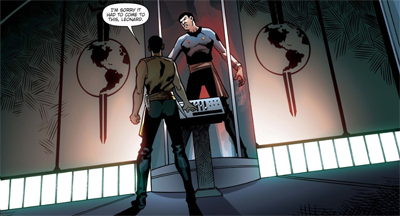
It isn’t that The Last Generation or Mirror Images aren’t interesting, at least on paper. While the execution in both cases might leave a little to be desired, there are interesting stories to be told in the classic “what if…” comic book style. However, it is hard to believe that there is as much demand for the four-issue story of mirror!Kirk taking command of the I.S.S. Enterprise and killing mirror!Pike as there is to see Data or Odo or Picard again. Given the success that IDW has enjoyed resurrecting The X-Files, it would seem nineties nostalgia is out there.

There is an argument to be made that the classic crew is currently more popular and iconic than any of the spin-offs, largely thanks to the recent cinematic reboot. However, is there really so much demand for a story based around Christopher Pike that four issues of mirror!Pike scheming demand to published?

Only logical...

Only logical…

Continue reading

Star Trek – I, Mudd (Review)

The first Star Trek pilot, The Cage, was produced in 1964. To celebrate its fiftieth anniversary, this December we are reviewing the second season of the original Star Trek show. You can check out our first season reviews here. Check back daily for the latest review.

I, Mudd is delightfully silly.

This is probably the broadest Star Trek comedy episode ever produced. It is very difficult to imagine any Star Trek ensemble outside the original cast pulling off an episode like this. While The Trouble With Tribbles is easily the show’s most iconic comedy episode (and the franchise’s, to boot), there is something rather plucky and endearing about I, Mudd. One of features of the later Star Trek spin-offs was a tendency to take themselves quite seriously. This isn’t a problem of itself, but it does make it impossible to do a show like I, Mudd.

Mudd in yer eye...

Mudd in yer eye…

As with other second-season episodes, there is a sense that the show is stretching its wings a bit. Catspaw was a clear attempt to do a horror story, and Wolf in the Fold was a slasher or occult film in Star Trek form. Episodes like Amok Time and Journey to Babel are very consciously building out the Star Trek universe. Episodes like I, Mudd and The Trouble With Tribbles demonstrate that Star Trek can do comedy.

To be fair, it is perfectly reasonably to argue that shows like I, Mudd led the show to think that Spock’s Brain was a good idea. Still, I, Mudd is just so much fun – demonstrating the sense of goofy and theatrical fun that ran through so much of classic Star Trek.

"Stella, Stella... You're putting me through hell-a!"

“Stella, Stella… You’re putting me through hell-a!”

Continue reading