• Following Us

  • Categories

  • Check out the Archives


  • Awards & Nominations

Star Trek: Enterprise – Proving Ground (Review)

Next year, Star Trek is fifty years old. We have some special stuff planned for that, but – in the meantime – we’re reviewing all of Star Trek: Enterprise this year as something of a prequel to that anniversary. This August, we’re doing the third season. Check back daily for the latest review.

Proving Ground is an odd episode to sit in the middle of the third season’s larger arc involving the Xindi and the threat against Earth.

In a very real sense, it is more serialised than a lot of the episodes leading up to it. The episode even opens with a fairly sweeping “previously…” section that is sure to include a lot of nice action shots from the first half of the year. Proving Ground contributes more to the arc than anything like Carpenter Street or Chosen Realm, featuring the testing of the Xindi weapon. It also features the Andorians, suggesting that Star Trek: Enterprise has not completely divorced itself from its original place in the Star Trek canon.
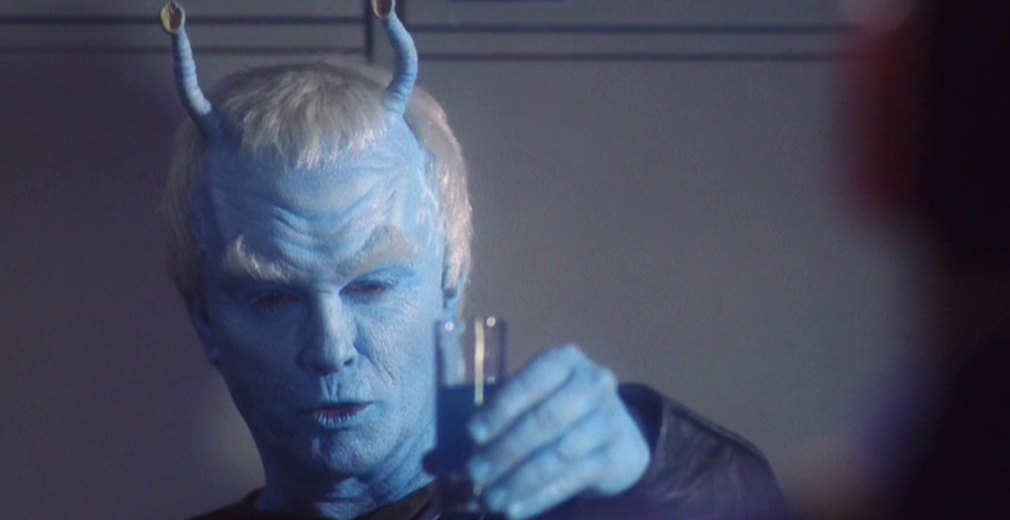
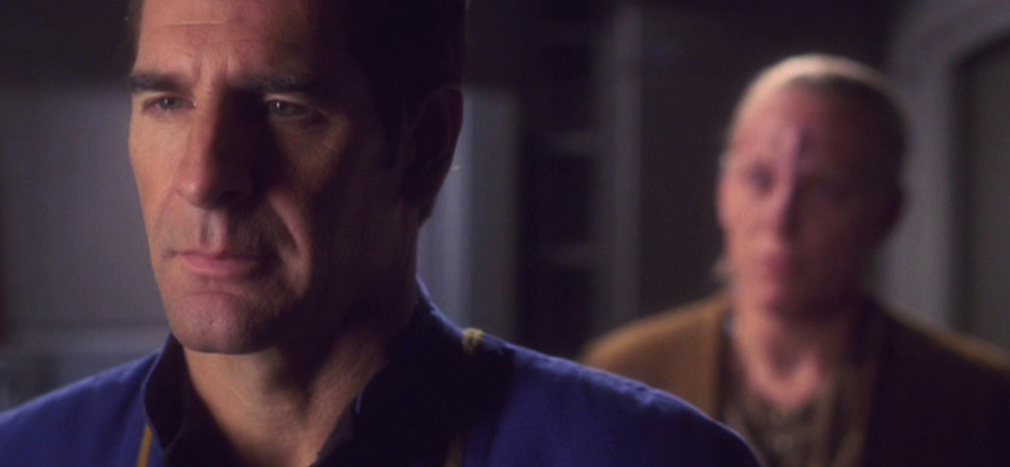
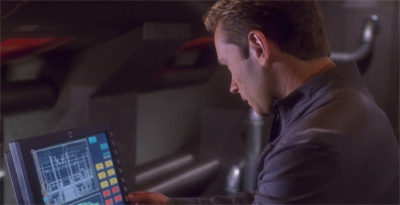
Drinking away the blues...

Drinking away the blues…

At the same time, the episode is also very episodic. Shran makes a very quick cameo in Zero Hour, but this is the extent to which the Andorians are involved in the larger plot of the third season. Much like the second season, there is a sense that Shran has been slotted into “the obligatory Andorian episode” as a way to fill a production slot in a chaotic season. The sense of weight and impact of the episode is relatively minimal, like Cease Fire before it. The conclusion seems to be that Shran might be a nice guy underneath it all. It’s hardly shocking.

More than that, the structure and plot of the episode can’t help but emphasise some of the more misguided creative decisions of the third season, with Proving Ground introducing a bunch of clever (and exciting concepts) into the arc only to take them right away at the end. The fact that Proving Ground is so fun and enjoyable is almost a detriment, inviting the audience to wonder whether some of that love and affection might have been distributed across the season.

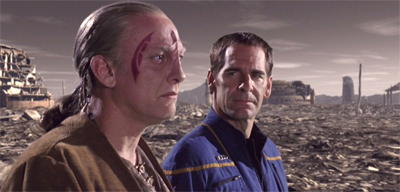
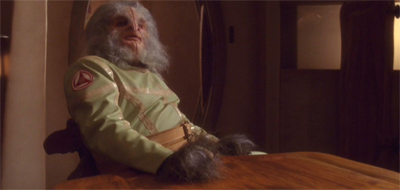
Look who just blue in...

Look who just blue in…

Continue reading

Star Trek: Enterprise – Chosen Realm (Review)

Next year, Star Trek is fifty years old. We have some special stuff planned for that, but – in the meantime – we’re reviewing all of Star Trek: Enterprise this year as something of a prequel to that anniversary. This August, we’re doing the third season. Check back daily for the latest review.

Chosen Realm is Manny Coto’s second script for Star Trek: Enterprise.

His script for Similitude marked Coto as something of an old-fashioned Star Trek writer. It was clear that Coto harboured a great deal of affection for the source material, and Similitude was structured in the style of a classic Star Trek morality play. It was a story about the circumstances in which “the needs of the many outweigh the needs of the few… or the one.” There is a reason that Star Trek fans are so very fond of Similitude, particularly given its position in the middle of a rather polarising and provocative season.

Archer encounter an enemy with faith of the heart...

Archer encounter an enemy with faith of the heart…

However, it was not entirely clear just how traditional Manny Coto was in his approach to Star Trek until the broadcast of Chosen Realm. If Similitude felt like a classic Star Trek morality play, then Chosen Realm literally was a classic Star Trek morality play. A commentary on religious fanaticism and zealotry, Chosen Realm was very much an update of the iconic Let That Be Your Last Battlefield. Coto is quite explicit about this, rather blatantly borrowing the emotive (and poignant) ending from that episode.

Although it aired in the much-maligned third season, and has no shortage of its own problems, Let That Be Your Last Battlefield is an instantly recognisable Star Trek allegory. Casual fans – and even those with a passing familiarity with the franchise – remember “the one with the aliens who are half-black and half-white who are racist against the aliens who are half-white and half-black.” It is not a subtle or nuanced allegory, but it doesn’t really need to be. It is not as if the sort of blatant racism against which the Civil Rights movement fought was a grey area.

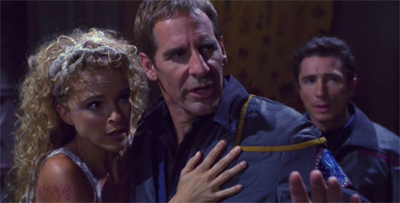
"I think I've seen this before..."

“I think I’ve seen this before…”

Unfortunately, Chosen Realm chooses to apply this simplistic metaphor to a complicated issue. In keeping with the War on Terror metaphor running through the third season, Chosen Realm explicitly ties religion into the larger arc. Archer finds his ship hijacked by a bunch of religious suicide bombers actively intent on turning Enterprise into a weapon that can be deployed against those who believe differently than they do. This is a very classic Star Trek morality tale – the “religion is bad” theme dating back to Who Mourns For Adonais? or The Apple.

Religion is undoubtedly an element of the War on Terror, but it is not the only issue or an issue that exists in isolation. Islamic extremism (as Chosen Realm never seems particularly interested in the trope of Christian extremism) is rooted in more than simply faith. There are political and economic factors at play that are just as vital to understanding why things happen in the way that they happen. Chosen Realm is uninterested in any of this, structuring itself as Richard Dawkins rant in science-fiction form.

What was that about politics or religion?

What was that about politics or religion?

Continue reading

Star Trek: Enterprise – Similitude (Review)

Next year, Star Trek is fifty years old. We have some special stuff planned for that, but – in the meantime – we’re reviewing all of Star Trek: Enterprise this year as something of a prequel to that anniversary. This August, we’re doing the third season. Check back daily for the latest review.

It is hard to talk about Similitude without talking about Manny Coto.

It is quite easy to get distracted from the episode itself, which is a sublimely moving piece of working with skilled direction from LeVar Burton and a beautiful central performance from Connor Trinneer. More than that, Similitude is very much pure Star Trek. It is a metaphor about the human condition, wrapped up in a morality play fashioned from some admittedly questionable science-fiction. This good old-fashioned allegorical science-fiction in a style that really works, capitalising on the status quo of the third season of Star Trek: Enterprise to tell a moving story.

Send in the clones...

Send in the clones…

And, yet, despite all that, this is the point at which Manny Coto arrives. Much like it is impossible to talk about The Bonding without talking about Ronald D. Moore, it is impossible to talk about Similitude without talking about Manny Coto. Coto arrived on the show fresh from Odyssey 5, and quickly made himself invaluable and essential. While his scripts were quite hit-and-miss on an episode-by-episode basis, Coto demonstrated an aptitude for producing television in general and Star Trek in particular.

Indeed, Coto managed to climb the franchise rungs faster than any producer and writer since Michael Piller in the third season of Star Trek: The Next Generation. Piller had found himself running the show after Michael Wagner suddenly decided to step down only a few episodes into the season. Coto had a bit longer to get the lay of the land; he would have half of the third season to establish himself before being placed in charge of the writers’ room for the start of the show’s fourth year when Brannon Braga stepped back into a more supervisory role.

Genetically engineered engineer...

Genetically engineered engineer…

A number of factors helped to establish Coto as an almost mythical figure in Star Trek lore. The dramatic change in tone and style into the fourth year, which catered to a core group of Star Trek fans – including Coto himself – surely helped. The fact that Coto was succeeding Brannon Braga probably helped establish his credibility as well – a vocal section of fandom has complete disdain for Braga’s style. Despite the fact that Coto was only in charge for twenty-four episode, he made a surprisingly enduring contribution to the franchise as a whole.

Hindsight seems to suggest that Similitude was almost prophetic; it is the story of incredible growth and development over an incredibly short amount of time, making a deep and lasting impression.

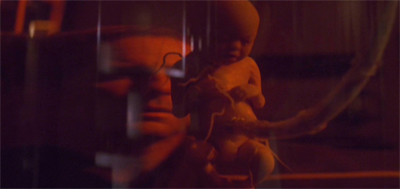
Designer baby...

Designer baby…

Continue reading

Star Trek: Enterprise – North Star (Review)

Next year, Star Trek is fifty years old. We have some special stuff planned for that, but – in the meantime – we’re reviewing all of Star Trek: Enterprise this year as something of a prequel to that anniversary. This August, we’re doing the third season. Check back daily for the latest review.

It is surprising just how hasty some sections of Star Trek fandom are to dismiss North Star as absurd or ham-fisted or ridiculous.

It is precisely those qualities the make North Star quintessential Star Trek.

Spectre of gun...

Spectre of gun…

Continue reading

Star Trek: Enterprise – Twilight (Review)

Next year, Star Trek is fifty years old. We have some special stuff planned for that, but – in the meantime – we’re reviewing all of Star Trek: Enterprise this year as something of a prequel to that anniversary. This August, we’re doing the third season. Check back daily for the latest review.

Twilight is a fascinating piece of Star Trek.

There are some significant flaws with the episode, particularly in how it treats T’Pol as a character and the eagerness with which it grabs at the famed “reset button.” However, despite these problems, Twilight is pretty much perfectly positioned. Eight episodes into the third season, the new status quo has been established. The ground rules have been laid down. Over the past seven episodes, fans have been given a sense of how the third season of Star Trek: Enterprise is supposed to work.

Keep your shirt on, Archer...

Keep your shirt on, Archer…

However, there is a palpable sense of unease about the larger arc – a question of how Star Trek can tell a story like the Xindi arc while remaining true to itself. The Shipment was an awkward attempt to impose a traditional Star Trek moral structure upon the season. North Star and Similitude are very much traditional Star Trek morality tales set against the backdrop of the larger arc. Like many of the stronger shows towards the tail end of the second season, these episodes seem to ask how you can apply old Star Trek standards to the twenty-first century.

Twilight is an episode about what happens if the Xindi arc goes wrong. Obviously, this is a story about what happens if Archer cannot save Earth from the Xindi, documenting the slow death of mankind as they are hunted through the cosmos. However, on an external level, Twilight is a story about what happens if Star Trek bungles this big grasp at relevance. It is no coincidence that the debilitating impairment that Archer develops involves his long-term memory. If the franchise forgets itself, all is lost.

Everything dies...

Everything dies…

Twilight is not just the story about the death of Earth or the death of humanity. It is a story about the death of Star Trek. Two years earlier, the franchise had seemed almost invincible; the idea of there not being any Star Trek on the air after the end of Star Trek: Voyager seemed almost absurd. However, by the time that the show had reached the third season, its existence was very much in peril. Twilight is a story about how horrible and apocalyptic the future might be; how Star Trek might find itself hobbled and then destroyed.

As its name implies, Twilight is a lament for the franchise; perhaps a tacit acknowledgement that the show was nothing more than a dead man walking at this point. The result is a surprisingly moving piece of television, a thoughtful and considerate examination of just how much is on the line for the franchise as well as the characters.

Waking dream...

Waking dream…

Continue reading

Star Trek: Enterprise – The Shipment (Review)

Next year, Star Trek is fifty years old. We have some special stuff planned for that, but – in the meantime – we’re reviewing all of Star Trek: Enterprise this year as something of a prequel to that anniversary. This August, we’re doing the third season. Check back daily for the latest review.

An episode like The Shipment has been inevitable since The Expanse was first broadcast.

Nobody watching The Expanse could have truly believed that Star Trek would ever truly lose itself in the midst of an epic War on Terror analogy. Trip’s character arc over the course of the third season is not hard to predict. His raw anger and hatred in The Expanse are not a new status quo for the character, they are very clearly the starting point for a character arc that will circle back around to the core values associated with Star Trek. Trip might be raw and vengeful, but he will come to forgive and heal.

Woah, woah, woah... he's on fire...

Woah, woah, woah… he’s on fire…

That is largely the arc of the third season, albeit with a coda where Archer punches out an evil lizard man atop a flying bomb, because evil lizard men and flying bombs are pretty damn fun. Indeed, the third season works through the bulk of its big moral arc in The Council, so that the final two episodes of the season can be devoted to “stuff blowin’ up real good” without any of those awkward analogies getting in the way. The effort to resolve the big moral arc of the season two episodes before the finalé would seem to suggest that this resolution is a foregone conclusion.

As such, The Shipment feels a little redundant – particularly this early in the season. It is an episode designed to reassure viewers that Jonathan Archer has not suddenly transformed himself into Jack Bauer. However, at this point in the season, the audience has been given little reason to fear that Archer has been so transformed. The Shipment seems like an overly preemptive reassurance that arrives a little bit too early for its own good.

#NotAllXindi

#NotAllXindi

Continue reading

Star Trek: Enterprise – Rajiin (Review)

Next year, Star Trek is fifty years old. We have some special stuff planned for that, but – in the meantime – we’re reviewing all of Star Trek: Enterprise this year as something of a prequel to that anniversary. This August, we’re doing the third season. Check back daily for the latest review.

Rajiin is not as bad as Extinction. So there’s that.

Rajiin continues the pulpy theme that runs through the third season of Star Trek: Enterprise and into the fourth. There is a sense that the writing staff are cutting loose with a collection of decidedly retro science-fiction tropes that they found in the old storage cupboard. The third and fourth seasons have a gonzo energy to them, with elements like the reptile!Xindi and the evil!alien!space!Nazis feeling like ideas that escaped from the types of magazines where Benny Russell used to work.

"Captain, my scans report that she does have Bette Davis eyes."

“Captain, my scans report that she does have Bette Davis eyes.”

At its best, this new storytelling freedom allows the show to cut loose with ideas that would have made Star Trek: The Next Generation or Star Trek: Voyager blush. The show would never have attempted episodes like Impulse and North Star in its first or second season. Even if the episodes are not flawless, they have an energy and vitality that was sorely lacking in the first two years of the show. It feels like the writing staff are really having fun with the concept, playing with the sort of goofy ideas that they never would have attempted a year or so earlier.

Of course, there is a flip side to that coin. The biggest misfires of the third season are generally rooted in that pulpy storytelling style. Extinction was effectively a “lost race” story that felt like a throwback to colonial narratives about explorers in exotic parts of the world. Rajiin is the story of an alien seductress who our hero rescues from slavery, only to use her womanly wiles to seduce the crew for a sinister purpose.

"Hey, Kirk got to do this all the time!"

“Hey, Kirk got to do this all the time!”

Continue reading

Star Trek: Enterprise – Extinction (Review)

Next year, Star Trek is fifty years old. We have some special stuff planned for that, but – in the meantime – we’re reviewing all of Star Trek: Enterprise this year as something of a prequel to that anniversary. This August, we’re doing the third season. Check back daily for the latest review.

In many respects, The Xindi and Anomaly opened the third season as if it were the first season of a new show. In particular, Anomaly built consciously and cleverly off of Fight or Flight and Strange New World in providing a solid foundation for the year ahead. The comparison works quite well. By that logic, Extinction and Rajiin serve as Unexpected and Terra Nova. They are two of the weakest episodes of the season, harmed by their close proximity to the start of the year. Anybody wanting to reach Twilight or Damage has to get through Extinction and Rajiin.

In many respects, this early lag in the third season demonstrates just how inexperienced the creative team were at long-form serialised storytelling. The only arc comparable to the Xindi arc in the entire Star Trek franchise is the Dominion War arc on Star Trek: Deep Space Nine. There, the writers were clever enough to launch the new status quo with an unheralded six-episode interconnected story. The Dominion War had its share of duds, but the opening salvo was magnificently confident.

Archer's not feeling himself lately...

Archer’s not feeling himself lately…

In contrast, the third season of Star Trek: Enterprise suffers out of the gate. The Xindi and Anomaly do good work setting up plot points and character beats that will be of use later in the season, but there is no real sense that the writing staff has any idea what that use might be at this point of the season. Two episodes into the third season, the show is already back to fairly formulaic adventures that stand quite cleanly alone. It is not too difficult to imagine Extinction or Rajiin as episodes in any other season – albeit with some slight tinkering.

However, this is only part of the problem. Long-form storytelling need not become a burden. There is a great deal of value to be had in drifting away from a serialised story arc to tell a quality standalone tale. Unfortunately, Extinction is not a quality standalone tale. In fact, it is one of the worst episodes of Enterprise ever produced. Airing it as the third episode of a bold new season feels like a poor choice.

"C'mon, wouldn't you like to go back to being a torturing and almost genocidal human?"

“C’mon, wouldn’t you like to go back to being a torturing and almost genocidal human?”

Continue reading

Star Trek: Enterprise – Anomaly (Review)

Next year, Star Trek is fifty years old. We have some special stuff planned for that, but – in the meantime – we’re reviewing all of Star Trek: Enterprise this year as something of a prequel to that anniversary. This August, we’re doing the third season. Check back daily for the latest review.

Anomaly continues the sense that the third season of Star Trek: Enterprise is essentially a new first season of the show.

That is most obvious in the way that the script works hard to establish the ground rules of the Expanse. There is a sense that the episode is very clearly establishing rules and plot points that will come into play later in the run. Anomaly not only explains why mining for trellium-D is such a profitable enterprise; explaining that ships without it are susceptible to all sorts of strange distortions to the laws of physics. Anomaly also introduces the spheres, strange structures that will become a key part of the third season’s mythology.

A good man goes to war...

A good man goes to war…

The show is also marking out ground for later exploration. Anomaly becomes a lot more potent in hindsight, with various decisions here reversed in later episodes. In Anomaly, Archer is a victim of piracy; in Damage, he is forced to commit piracy. In Anomaly, Archer tortures a prisoner in order to procure information that he needs; in Countdown, Hoshi is tortured by Dolim in order to procure information that he needs. It is not entirely clear whether these plot beats were figured out ahead of time, but – like the destroyed Xindi home world in The Xindi – they lend the third season a nice sense of moral symmetry.

Most interestingly – and, perhaps, most pointedly – Anomaly represents a clear return to two very early episodes of the first season. The script of Anomaly touches quite overtly on plot points from Fight or Flight and Strange New World. In some ways, it could be seen as a belated do-over.

Sparks fly...

Sparks fly…

Continue reading

Star Trek: Enterprise – The Xindi (Review)

Next year, Star Trek is fifty years old. We have some special stuff planned for that, but – in the meantime – we’re reviewing all of Star Trek: Enterprise this year as something of a prequel to that anniversary. This August, we’re doing the third season. Check back daily for the latest review.

Delivering on change is always more difficult than promising change.

The first block of episodes in the third season of Star Trek: Enterprise struggle with the weight of expectation and the sense that the production team have no real idea of how to manage this sort of storytelling. Rick Berman and Brannon Braga had consulted with Ira Steven Behr towards the end of the second season, suggesting that they wanted to model the storytelling loosely on the blend of episodic and serialised scripting that Behr oversaw on Star Trek: Deep Space Nine. It makes sense, as Deep Space Nine was the only Star Trek series to really engage with that sort of storytelling.

A primate example of the Xindi...

A primate example of the Xindi…

In hindsight, it seems a shame that the writing room on Deep Space Nine was allowed to disintegrate so thoroughly. Ira Steven Behr, Hans Beimler and Rene Echevarria departed immediately following What You Leave Behind. Ronald D. Moore migrated briefly over to Star Trek: Voyager, but quit quite promptly following creative disagreements with former collaborator Brannon Braga. The veteran writers on Enterprise came from Voyager. Brannon Braga, Mike Sussman, Phyllis Strong and André Bormanis were all writers who had come into their own working on Voyager.

Star Trek: Voyager a show that was incredibly episodic and seemed to actively resist serialisation even more than Star Trek: The Next Generation. This is not a reflection on the production team. Braga had lobbied to expand Year of Hell into a year-long story arc during the fourth season, but his proposal had been rejected. Discussing the Xindi arc, Braga has talked about how he wanted to tell a year-long Star Trek story, and it is telling that one of his post-Star Trek writing assignments was on 24.

The ascent...

The ascent…

Nevertheless, it meant that the writers working on Enterprise faced a sharp learning curve when it came to structuring the third season. The experience accumulated during the arc-building on Deep Space Nine was largely lost to the franchise, and a lot of the early part of the third season sees Enterprise making a number of teething mistakes. The early stretch of the third season struggles to pace itself, and it struggles to integrate stand-alone stories with its larger serialised arc.

The Xindi is a prime example of this, an episode that has a wealth of interesting ideas and great concepts, but one that stumbles in the execution.

Pointing the finger...

Pointing the finger…

Continue reading