• Following Us

  • Categories

  • Check out the Archives


  • Awards & Nominations

Star Trek: Deep Space Nine – Season 3 (Review)

This September and October, we’re taking a look at the jam-packed 1994 to 1995 season of Star Trek, including Star Trek: Deep Space Nine and Star Trek: Voyager. Check back daily for the latest review.

The third season of Star Trek: Deep Space Nine was a turning point for many reasons. The most obvious was that Star Trek: The Next Generation had gone off the air, meaning the first half of the third season was broadcast during a window where Star Trek: Deep Space Nine was the only Star Trek show on the air. The show was no longer the goofy kid brother to a much beloved mainstream television show. It was out in the syndication market place by itself.

More than that, though, Star Trek: Deep Space Nine was no longer the child of the franchise. With Star Trek: Voyager on the way, launched as the flagship of UPN, Deep Space Nine was left to its own devices for the first time since it was created. Voyager was the high-profile standard-bearer for the franchise, serving as the cornerstone of a new network. In contrast, Deep Space Nine chugged along in syndication, with the powers that be working overtime to bring Voyager to screen.
ds9-thesearchpart1a

In some respects, this was a tough time for Deep Space Nine. It was no longer the newest and freshest Star Trek. It was no longer the bright promising future of the Star Trek franchise. The novelty of having a second Star Trek show on the air had worn off. (Indeed, the decision to treat Voyager as the eighth season of The Next Generation was largely a response to how Deep Space Nine was not filling the niche.)

At the same time, the fact that Michael Piller and Rick Berman were focused on other projects meant that Deep Space Nine really came into its own during the third season. Ira Steven Behr had helped run the writers’ room towards the end of the third season of The Next Generation, and was the logical choice to take the reigns on Deep Space Nine. His influence on the show had been obvious since the beginning, becoming more pronounced after The Maquis.

ds9-defiant19

However, the third season saw Behr becoming the driving creative force on Deep Space Nine, a changing of the creative guard. Ronald D. Moore and Rene Echevarria joined the show from the staff of The Next Generation. Given all this drama behind the scenes, the third season was as chaotic as you might expect. There were all manner of production problems that haunted the third season, with a sense that Deep Space Nine was being produced by the seat of the producers’ pants.

Episodes tended to get shifted around in production order. Various scripts ended up produced under time constraints so tight that there was no opportunity to properly polish them before putting them in front of the camera. There were rumours that Colm Meaney might have been considering leaving;. Episodes had to be extended into two-parters at the last minute. The show had great ideas, but difficulty realising them. The season as a whole was rather oddly paced, plotted haphazardly. And yet, despite all this, the chaos felt necessary.

ds9-explorers28

Continue reading

Star Trek: Deep Space Nine – The Adversary (Review)

This September and October, we’re taking a look at the jam-packed 1994 to 1995 season of Star Trek, including Star Trek: Deep Space Nine and Star Trek: Voyager. Check back daily for the latest review.

The Adversary is a strange little episode. In many respects, barring the last line, it really doesn’t feel like a season finalé. While Star Trek: Deep Space Nine typically eschewed the season-ending cliff-hangers that came to define Star Trek: The Next Generation and Star Trek: Voyager, the last episode of a given year typically ended with a major shake-up to the status quo. They may not have ended with the promise “to be continued…”, but they usually carried a great deal of weight.

In contrast, The Adversary feels like a fairly standard episode of Deep Space Nine. It doesn’t radically alter anything. Although Odo’s last line hints at the shape of things to come, it’s not much more than what Lovok assured us in The Die is Cast. The episode is well-executed, well-constructed and it’s distinct enough from a standard Star Trek episode that it works, but The Adversary feels like it’s not really positioned to close out the year.

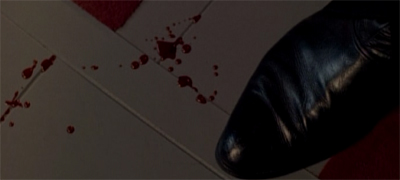
There's blood on the Defiant's floor...

There’s blood on the Defiant’s floor…

This is, of course, because it wasn’t intended to close out the year. The third season of Deep Space Nine was quite troubled. While not anywhere near as troubled as the third season of The Next Generation, it was a year where plans were constantly changing and scripts were frequently written on the fly. It seemed like the writers were constantly struggling against deadlines while trying to keep track of all the moving pieces.

Second Skin was filmed from little more than a first draft; Improbable Cause was extended into a two-parter at short notice. Scripts like The Abandoned looked like they needed a bit more work before being put in front of the camera. Shows like Meridian, Facets and Life Support seemed stitched together out of desperation. Indeed, The Adversary was produced at only a week’s notice. It’s to the credit of the episode – like Second Skin before it – that it holds up remarkably well.

There won't be blood...

There won’t be blood…

Continue reading

Star Trek: Deep Space Nine – The Lives of Dax: The Music Between the Notes (Curzon) by Steven Barnes

This September and October, we’re taking a look at the jam-packed 1994 to 1995 season of Star Trek, including Star Trek: Deep Space Nine and Star Trek: Voyager. Check back daily for the latest review.

Star Trek: Deep Space Nine struggled with the character of Dax on-and-off for the first three years. Terry Farrell found herself at the centre of interesting character-driven stories with Playing God and Facets, but the show tended to treat the Dax symbiont as a macguffin that just happened to be inside Jadzia. Episodes like Dax, Invasive Procedures and Equilibrium tended to marginalise Jadzia so that the symbiont itself could be pushed to the centre of a story driven by other members of the ensemble.

However, Dax is a character with absolutely phenomenal potential. There is something absolutely fascinating idea of a creature that has lived for centuries, and seen generations of history unfold within its lifetime.The symbiont has witnessed countless changes and pivotal moments. Dax has seen civilisations fall and alliances form; Dax has seen old enemies become true friends, and watched civilisations reach out into the cosmos.

The realities of a seven-season television show mean that Deep Space Nine never really got to explore the fact that Dax was living history. Perhaps Blood Oath and Trials and Tribble-ations come closest, using Dax as a rather logical bridge spanning almost a century of continuity. One of the joys of the Star Trek universe is how expansive and how limitless it is. Infinite diversity and all that. While even Dax cannot have seen everything, Deep Space Nine never felt like it captured the sense of Dax as living history.

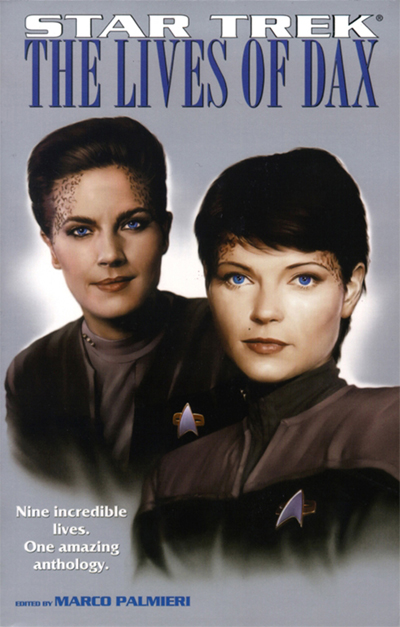
At its best, Pocket Books’ The Lives of Dax anthology captures this sense of change and movement. The books spans the width and breadth of the Star Trek franchise, as lived through the life of one single organism. It is beautiful.

ds9-thelivesofdax1 Continue reading

Star Trek: Deep Space Nine – Shakaar (Review)

This September and October, we’re taking a look at the jam-packed 1994 to 1995 season of Star Trek, including Star Trek: Deep Space Nine and Star Trek: Voyager. Check back daily for the latest review.

There are really two versions of Shakaar.

There is the episode that Shakaar very clearly wants to be. It’s intended to offer Kira a bit of closure, following on from the events of Life Support. It’s very clearly meant to explore Kira’s grieving process and to allow her to come to terms with the loss she suffered. After all, the episode opens establishing that Kira still mourns Bareil, while the episode closes with Kira extinguishing the memorial candle she lit for him. (Which does invite the audience to wonder if it was burning the whole time she was on Bajor.)

Carrying a torch...

Carrying a torch…

As such, it makes sense to offer Kira an opportunity to get back to her roots – to suggest that Kira might secretly want to return to the relative simplicity of a rebel fighter resisting an oppressive government; fighting a war is a lot less complex than navigating the peace. Kira’s reunion with the Shakaar Resistance Cell is meant to offer her a way to escape into something comfortable, to avoid moving forward; because moving forward is tough and painful. Shakaar should be about Kira learning that she has to push forward. It should be a companion piece to Progress.

The episode can’t quite manage this. Instead, we end up with an episode about how Kira gets swept off her feet by a dashing hunk of a man – an episode that leaves the viewer with the unfortunate implication that Kira only needed to find another weirdly paternal man to help her get past the death of the man she loved. Shakaar is an episode with a host of interesting ideas, but isn’t quite sure how to best bring those ideas to the screen.

You Winn some, you lose some...

You Winn some, you lose some…

Continue reading

Star Trek: Deep Space Nine – Family Business (Review)

This September and October, we’re taking a look at the jam-packed 1994 to 1995 season of Star Trek, including Star Trek: Deep Space Nine and Star Trek: Voyager. Check back daily for the latest review.

Family Business is surprisingly good, standing as one of the strongest Ferengi-centric episodes produced during the run of Star Trek: Deep Space Nine. This is largely down to how Family Business treats its central characters. While still broadly played as a farce, Family Business is rooted in character. Like House of Quark (and unlike Prophet Motive), the episode takes care to treat its characters with a great deal of respect.

This isn’t an episode constructed around stock comedy tropes and trying to get the audience to laugh at one-note caricatures. Instead, it’s an episode firmly built around exploring Quark as a character in his own right. Family Business makes the decision to treat Quark (and its other Ferengi characters) with respect, and it’s a decision that ultimately pays dividends.

Naked ambition...

Naked ambition…

Continue reading

Star Trek: Deep Space Nine – Through the Looking Glass (Review)

This September and October, we’re taking a look at the jam-packed 1994 to 1995 season of Star Trek, including Star Trek: Deep Space Nine and Star Trek: Voyager. Check back daily for the latest review.

It’s very tempting to write off the problems with the mirror universe episodes of Star Trek: Deep Space Nine as diminishing returns – the idea that repeated exposure to what was once novel robs that item of its novelty. It is possible to become immune to the charms of camp, dulled to absurd space opera, and just worn out by watching the cast play “space pirates meet Star Wars.”

However, this does a bit of a disservice to the mirror universe as a concept. As iconic as it has become, Mirror, Mirror worked very well as a piece of introspection for the original Star Trek. Crossover stands out as one of the strongest episodes in the first two years of Deep Space Nine, because it manages to capture the thoughtful-yet-campy self-criticism of Mirror, Mirror.

Let's face it, after what O'Brien's been through, nobody would be surprised if he snapped...

Let’s face it, after what O’Brien’s been through, nobody would be surprised if he snapped…

In contrast, Through the Looking Glass marks the point at which the mirror universe really ceases to be a clever concept, and becomes something that is simply kept around because it’s old and because the production team like the idea of playing “roguish rebels and evil empires” in a way that’s impossible in the mainstream Star Trek universe.

While the episode does have an interesting central premise and is nowhere near as weak as some of the mirror universe episodes ahead, Through the Looking Glass is the moment where the mirror universe seems to get away from Deep Space Nine.

They really nailed Rom to the wall...

They really nailed Rom to the wall…

Continue reading

Star Trek: Deep Space Nine – Life Support (Review)

This September and October, we’re taking a look at the jam-packed 1994 to 1995 season of Star Trek, including Star Trek: Deep Space Nine and Star Trek: Voyager. Check back daily for the latest review.

Life Support is the first episode of Star Trek: Deep Space Nine to air after Star Trek: Voyager went on the air. It’s amazing how quickly Deep Space Nine settled back into the role of “the other Star Trek show on television.” A lot of attention was focused on launching Voyager, with the show put in the awkward position of launching (and, in the years ahead, supporting) the new television network UPN. As a result, Voyager got a lot of press and a higher profile.

Deep Space Nine fell back into familiar routines. Life Support is far from an exceptional piece of Deep Space Nine. In fact, it’s a deeply flawed piece of television. However, it feels free of the identity crisis that dominated the first half of the third season. This is Deep Space Nine free of the expectations of being “the only Star Trek on television”, and allowed the freedom to just keep doing whatever it wants to do.

It doesn’t do any of the things that it wants to do particularly well, but it does them in its inimitable way.

Dead air...

Dead air…

Continue reading

Star Trek: Deep Space Nine – Past Tense, Part II (Review)

This September and October, we’re taking a look at the jam-packed 1994 to 1995 season of Star Trek, including Star Trek: Deep Space Nine and Star Trek: Voyager. Check back daily for the latest review.

Past Tense, Part II is a nice way to close out Star Trek: Deep Space Nine‘s solo run, the only period in the show’s history where it was the only Star Trek on television. Caretaker, the première of Star Trek: Voyager, would be the next episode of the franchise to air. Deep Space Nine spent a lot of its early third season attacking various foundations of the Star Trek universe, as if hoping to demonstrate how profoundly different the show was from its predecessors.

The Search promised a war brewing on the horizon, and presented a cynical view of Starfleet foreign policy, where pacifism amount to appeasement. House of Quark reduced the Klingon Empire to a joke. Equilibrium suggested that Sisko could live with (and passively enable) a government lie if it kept his friend alive. Second Skin hinted that things might not be as they appear to be. The Abandoned embraced the idea that sometimes people are incapable of being anything more than what their genes might tell them to be. Defiant was the story of sibling desperately trying to prove his unique identity.

Everything is under control...

Everything is under control…

Part of me wonders if this very cynical stretch of episodes is responsible for the perception of Deep Space Nine as an incredibly cynical and pessimistic television show – one consciously at odds with the utopian ideals of the franchise. After all, this was the stretch where Deep Space Nine was most in the spotlight. It had the spot previously allocated to Star Trek: The Next Generation in most markets. It had no televised competition. If ever Star Trek fans were going to jump on board Deep Space Nine, this was the moment. It seems quite possible that this run of episodes cemented the show’s reputation.

So it seems strange that Deep Space Nine should wait until its last possible moment in the sun to embrace the humanism and optimism at the heart of the franchise. Past Tense is a story about building paradise, and about how humanity has the capacity to be so much better than we currently are. In short, it’s quintessential Star Trek, right down to the occasionally heavy-handed moralising and utopian idealism.

Keep your hat on...

Keep your hat on…

Continue reading

Star Trek: Deep Space Nine – Past Tense, Part I (Review)

This September and October, we’re taking a look at the jam-packed 1994 to 1995 season of Star Trek, including Star Trek: Deep Space Nine and Star Trek: Voyager. Check back daily for the latest review.

It’s weird to think that Past Tense aired at the very end of the period where Star Trek: Deep Space Nine was the only Star Trek on television. The two parts were broadcast in early January 1995, after the release of Star Trek: Generations but before the broadcast of Caretaker, the pilot episode of Star Trek: Voyager.

In a way, these are the most “Star Trek”-y episodes of the third season of Deep Space Nine. Embracing the franchise’s utopianism and optimism, the two episodes are even structured as a gigantic homage to The City on the Edge of Forever. Unlike the somewhat cynical and jaded run of episodes leading into them, Past Tense seems to exist as an episode that could draw fans of Star Trek: The Next Generation into Deep Space Nine.

Panic in the streets...

Panic in the streets…

It would have made sense to position the episodes earlier in the season, where they might have done a better job of attracting casual Star Trek viewers jonesing for a fix after The Next Generation went off the air. Unconnected to the serialised long-form plot of Deep Space Nine, engaging with important social issues of contemporary society and playing with familiar Star Trek tropes like time travel, it’s hard to imagine an episode of the third season of Deep Space Nine better suited to reeling in viewers.

As it stands, though, Past Tense aired at the last possible moment where Deep Space Nine could truly claim to be “the only Star Trek on television”, making the two-parter feel more like a footnote than a crescendo. It’s a shame, as Past Tense remains a vastly underrated instalment of the show’s third season.

Arresting drama...

Arresting drama…

Continue reading

Star Trek: Deep Space Nine – The Abandoned (Review)

The September and October, we’re taking a look at the jam-packed 1994 to 1995 season of Star Trek, including Star Trek: Deep Space Nine and Star Trek: Voyager. Check back daily for the latest review.

The Abandoned is a problematic episode.

It’s brave and provocative and challenging, but it’s also incredibly grim and cynical. In fact, it is probably the most relentlessly pessimistic episode of Star Trek: Deep Space Nine‘s third season. And, given the episodes surround it, that is quite an accomplishment. Deep Space Nine has subverted classic Star Trek storytelling before. The Maquis was really a watershed moment for the series, suggesting that paradise itself might be unsustainable – attacking Roddenberry’s utopia rather brutally.

However, The Abandoned pushes things even further. There’s a social and racial subtext to this episode that grounds it in the racial politics of Los Angeles in the mid-nineties. The story of a young angry drug-addicted killer can’t help but feel associated with the increased profile of Los Angeles’ gangland in the early-to-mid-nineties. Casting the episode’s young Jem’Hadar soldier using African American actors invites this comparison, something that director Avery Brooks himself has conceded.

The racial politics of The Abandoned are decidedly uncomfortable, but they are clearly meant to be. Still, there’s something rather cynical and pessimistic about the episode’s conclusion that this young boy cannot be saved from a life of brutality and violence.

A Jem?

A Jem?

Continue reading