• Following Us

  • Categories

  • Check out the Archives


  • Awards & Nominations

“No one trusts each other anymore.” Brian Michael Bendis’ “Avengers” and the War on Terror

One of the great things about long-running pop art, whether television shows, film franchises or comic books, is the sense in which they can serve as a reflection of shifting cultural concerns.

The Marvel Universe spans more than six decades of continuity. It is perhaps too much to call it a single story, even if comic book continuity is held together by that fiction. It is the work of countless writers and artists, working under different editorial regimes with different creative and commercial constraints. The visual language of the medium has shifted over decades, along with its target audience, not to mention its relationship with the mainstream culture.

Still, while monthly superhero comics are rarely considered high or important art, they are an interesting window into their particular cultural moment. These characters and archetypes are constantly changing and evolving, being reworked and recontextualised to fit the perpetual present. Rereading old comic books can feel like stepping inside a time machine, taking the reader back to not just a particular moment in comics continuity, but a funhouse mirror of the larger culture.

Brian Michael Bendis stewarded the Avengers titles for eight years, from 2004 to 2012. He managed the brand across multiple titles starting with Avengers Disassembled into New Avengers and Mighty Avengers, and through a host of epic status quo-altering events. Some of those events, like House of M, Secret Invasion and Siege, Bendis wrote himself. Other events, like Civil War, he simply tied into from the sidelines.

Still, that initial run of comics from Avengers Disassembled to Siege remains hugely important. Bendis restructured the Marvel Universe to place the Avengers franchise at its core, displacing the X-Men as the company’s flagship brand. Coinciding with the launch of Marvel Studios, that run is an obvious and ongoing touchstone for the Marvel Cinematic Universe, which has directly adapted segments of this run into films like Captain America: Civil War and shows like Secret Invasion.
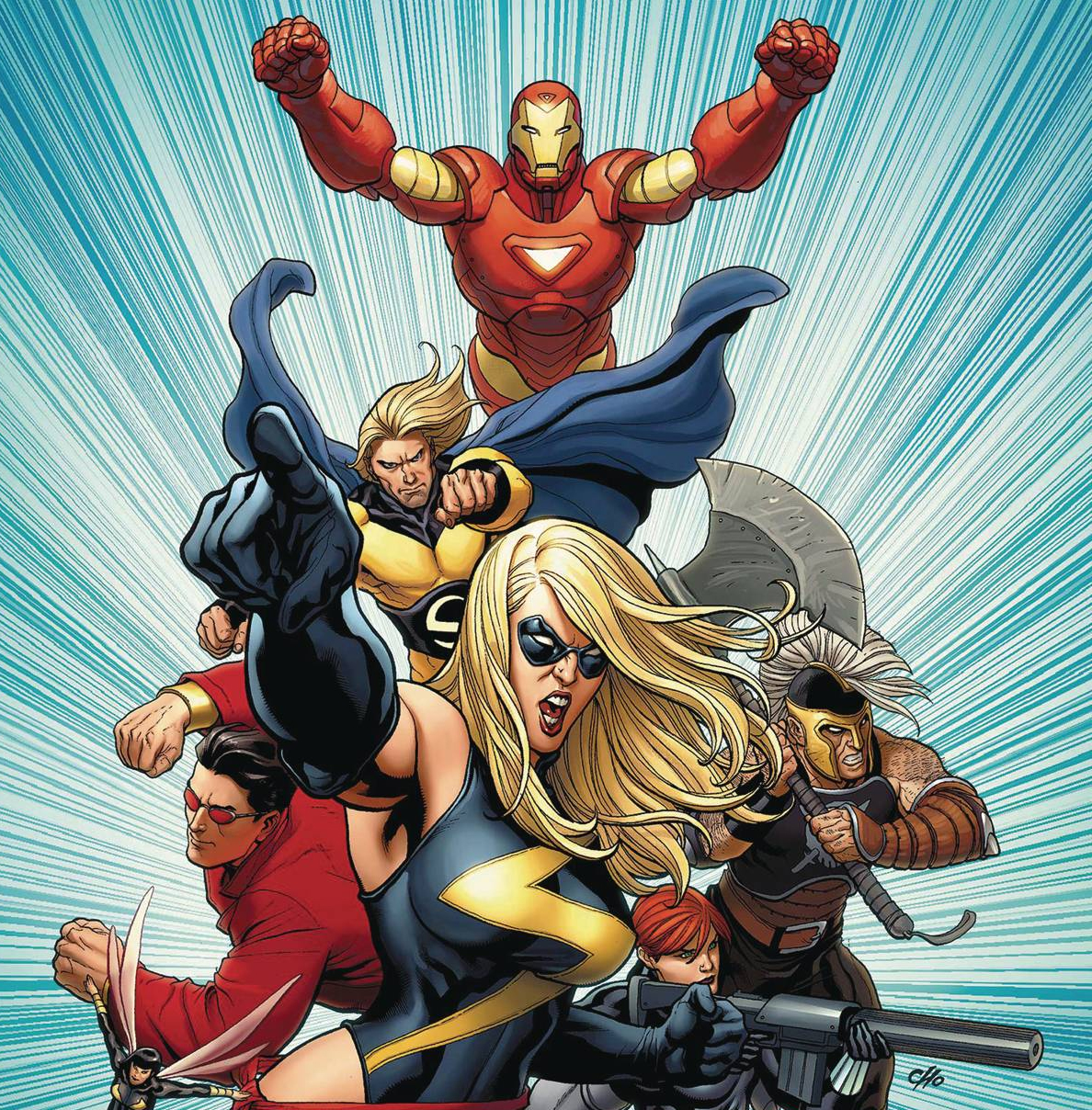
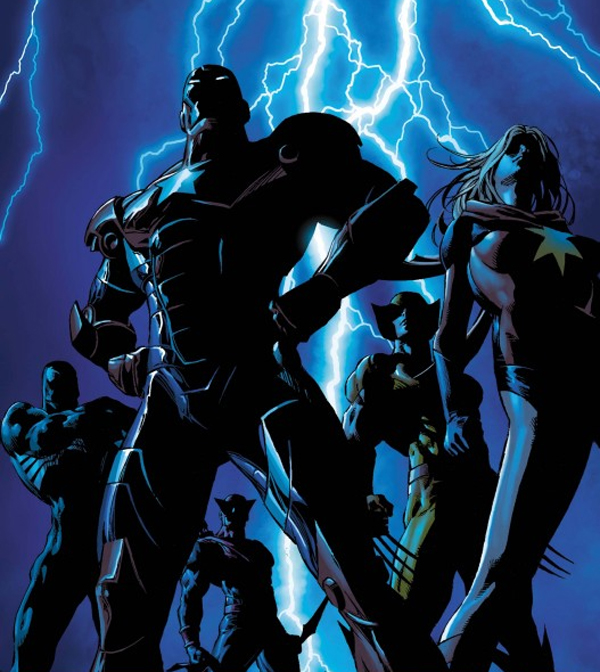
Even as the big crossover events like Avengers: Infinity War or Avengers: Secret Wars draw more heavily from the work of Bendis’ successor on the Avengers titles, Jonathan Hickman, Bendis’ Avengers remains a key influence. Thunderbolts*, for example, feels heavily indebted conceptually to Bendis’ Dark Avengers and even leans heavily on the character of Sentry, a continuity curiosity who became central to Bendis’ larger arcs.

However, even outside of its obvious cultural footprint, the remains one of the definitive explorations of the War on Terror in popular American culture, elevating the emotional and symbolic response to the 9/11 terrorist attacks into a sort of pop mythology, playing out the country’s psychodrama in costumes and capes. Bendis’ Avengers run is messy and uneven, occasionally downright clumsy in its execution. It is also a snapshot of a moment.
Continue reading

New Escapist Column! On the Superhero Genre’s Existential Crisis…

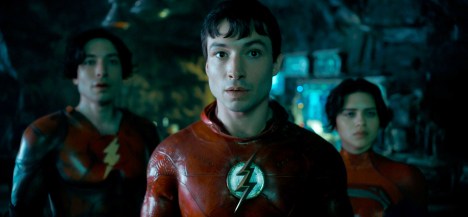
I published a new In the Frame piece at The Escapist this evening. With no major new releases this week, and with the recent release of both Secret Invasion and The Flash, it seemed like a good opportunity to take a look at the state of the modern superhero genre.

While there are ongoing debates about whether “superhero fatigue” has set in, these are largely besides the point. Watching contemporary superhero films, there is a palpable anxiety underpinning these blockbusters. Increasingly, these superhero films are about superhero films. In particular, they are movies and television shows that make an existential argument for their continued importance and necessity.

You can read the piece here, or click the picture below.

New Escapist Column! On How “Secret Invasion” Finally Foregrounds Nick Fury…

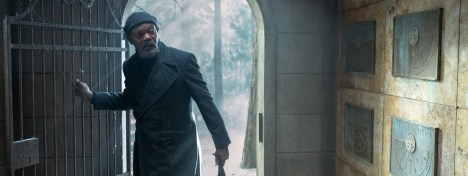
We’ll be running weekly reviews of Secret Invasion at The Escapist. To start with, the premiere.

Secret Invasion is notable as the first Marvel Studios project to truly foreground Nick Fury, a character who has been essential to the shared universe dating back to the closing credits of Iron Man. It’s interesting that it took the shared universe fifteen years to build a narrative around Samuel L. Jackson. Secret Invasion adopts an interesting approach to the character, treating him as an avatar for the increasingly beleagured media franchise, a veteran and hero that might be over the hill with his best years behind him.

You can read the piece here, or click the picture below.

New Escapist Column! On How “Secret Invasion” isn’t Marvel’s “Andor”…

We’ll be running weekly reviews of Secret Invasion at The Escapist. But first, a review of the episodes that were previewed for press.

For months, the gossip has been that Marvel Studios have seen Secret Invasion as their answer to Andor, a show that could revitalise interest in a franchise that has been in something of a slow and steady decline, with disappointments like Ant-Man and the Wasp: Quantumania. Unfortunately, Secret Invasion really doesn’t live up to that potential. It offers glimpses of a show tht aspires to push the shared universe outside of its comfort zone, but lacks the necessary killer instinct.

You can read the piece here, or click the picture below.

Brian Michael Bendis’ Avengers – Siege (Review/Retrospective)

April (and a little bit of May) are “Avengers month” at the m0vie blog. In anticipation of Joss Whedon’s superhero epic, we’ll have a variety of articles and reviews published looking at various aspects of “Earth’s Mightiest Heroes.”

Read our review of The Avengers here.

Please, father… Let these heroes rise. Both Asgardian and mortal. Together. Empowered. Let them fight. Let them save us.

– Loki, Siege #4

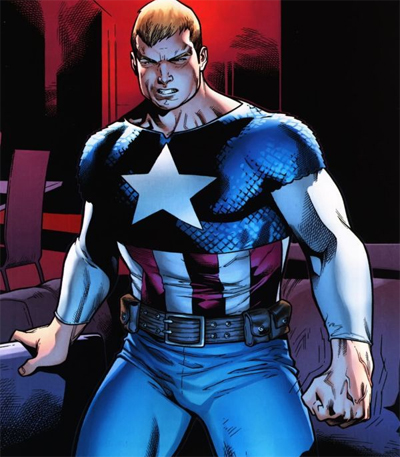
And so, here we are. The culmination of more than five years of plotting in the Marvel Universe. Brian Michael Bendis has directed the Avengers franchise from Avengers Disassembled to Siege, crafting a post-modern exploration of what it is to be a superhero in a politically complex and morally ambiguous world. In doing so, for better or worse, Bendis has redefined the Avengers, with New Avengers just as “new” as the title promises. It’s somewhat fitting, then, that after years of introspection and exploration about when and how the characters in the Marvel Universe might be considered heroes, that it ends with an almost proto-typical superhero knock-down smash-up brawl fest.

Capping it all off...

Continue reading

Brian Michael Bendis’ Avengers – Dark Avengers (Hardcover) (Review/Retrospective)

April (and a little bit of May) are “Avengers month” at the m0vie blog. In anticipation of Joss Whedon’s superhero epic, we’ll have a variety of articles and reviews published looking at various aspects of “Earth’s Mightiest Heroes.”

Dark Avengers actually reads quite well as a self-contained volume. It’s relatively short, running sixteen issues (fourteen of which are collected here, with the other two collected in Utopia) and an annual. It sits between two gigantic crossovers, Secret Invasion and Siege, so it isn’t as frequently derailed as Bendis’ New Avengers was (or even Mighty Avengers was). Instead, it feels like a nice little self-contained chapter in the epic superhero saga that Bendis has been writing for quite some time, dating back to the first issue of New Avengers, an exploration of the modern superhero myth in this cynic world so keen to deconstruct our idols in the wake of classics like Watchmen and The Dark Knight Returns. It’s not a perfect book, but it’s a clever and succinct summary of the themes the author has been exploring, in a fun and dynamic sort of way.

Maybe it should be called “Moodily-lit Avengers”…

Continue reading

Brian Michael Bendis’ Avengers – New Avengers Vol. 5-6 (Hardcover) (Review/Retrospective)

April (and a little bit of May) are “Avengers month” at the m0vie blog. In anticipation of Joss Whedon’s superhero epic, we’ll have a variety of articles and reviews published looking at various aspects of “Earth’s Mightiest Heroes.”

You know, at this stage I’m wondering what an Avengers book might look that wasn’t plowing from one event (Secret Invasion), through another event (Dark Reign), towards yet another event (Siege). I actually quite enjoyed Bendis’ opening two arcs on New Avengers, before the book effectively became the primary tie-in to whatever big crossover event was happening in the Marvel Universe on a given month. It was Grant Morrison who once wrote that every panel in a comic book should be an event, and I agree – stand-alone series don’t gain any extra validity by tying themselves in to a big crisis crossover. Make the stories themselves compelling and worry about the “event” later.

The evil empire…

Continue reading

X-Men: Second Coming (Review/Retrospective)

This is the sixteenth in a series of comic book reviews that will look at the direction of Marvel’s shared universe (particularly their “Avengers” franchise) over the past five or so years, as they’ve been attempting to position the property at the heart of their fictional universe. With The Avengers planned for a cinematic release in 2012, I thought I’d bring myself up to speed by taking a look at Marvel’s tangled web of continuity.

Second Coming is the culmination of about five years of X-Men plots. In fairness, the finale was pretty obvious from the moment that the Scarlet Witch rather infamously muttered “no more mutants” at the climax of the muddled House of M. When mutants were rendered an “endangered species” we always knew the saga would come down to one gigantic confrontation between mutants and the humans who would seek to exterminate them – while at the same time lifting the weight of extinction from the shoulders of the mutant franchise. Reflecting on the events within the Marvel universe, Cyclops comments, “Osborn is gone. The Avengers are back. And the X-Men… we can stand for something again.” And perhaps that’s the best thing to come out of all of this – the return to the status quo. If that sounds disappointing, it probably is.

Cable's gunning for the record for most kills by a one-armed mutant ever...

Continue reading

War of Kings (Review/Retrospective)

This is the twelfth in a series of comic book reviews that will look at the direction of Marvel’s shared universe (particularly their “Avengers” franchise) over the past five or so years, as they’ve been attempting to position the property at the heart of their fictional universe. With The Avengers planned for a cinematic release in 2012, I thought I’d bring myself up to speed by taking a look at Marvel’s tangled web of continuity.

War of Kings is perhaps the best thing to come out of Secret Invasion. In fact, the miniseries went out of its way to highlight its links to the Marvel comics mega-event, with the story even kicking off in a Secret Invasion: War of Kings special (note the order there, it isn’t War of Kings: Secret Invasion). However, not withstanding the attempts to tie the series back to the high-selling mainstream events that Marvel was consistently churning out, War of Kings is essentially an epic space opera, the story of an interstellar war and alien politics, told with the wit and charm that writer Dan Abnett and Andy Lanning have made the cosmic line famous for. Tying it into Secret Invasion only serves to highlight the deficiencies with that event, as the writers here attempt the same sort of story with the same sort of themes, but with more skill and grace than the bigger event could off.

Now is the time...

Continue reading

Secret Invasion (Review/Retrospective)

This is the twelfth in a series of comic book reviews that will look at the direction of Marvel’s shared universe (particularly their “Avengers” franchise) over the past five or so years, as they’ve been attempting to position the property at the heart of their fictional universe. With The Avengers planned for a cinematic release in 2012, I thought I’d bring myself up to speed by taking a look at Marvel’s tangled web of continuity.

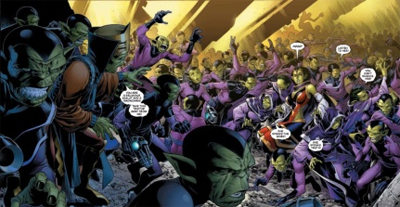
Well… that was anti-climactic.

Well, at least green and red go together...

Continue reading