• Following Us

  • Categories

  • Check out the Archives


  • Awards & Nominations

Doctor Who: The Ark in Space (Review)

To celebrate the fiftieth anniversary of the longest-running science-fiction show in the world, I’ll be taking weekly looks at some of my own personal favourite stories and arcs, from the old and new series, with a view to encapsulating the sublime, the clever and the fiendishly odd of the BBC’s Doctor Who.

The Arc in Space originally aired in 1975.

I’ll have to link in my own cerebral cortex. That’s the only thing.

That is highly dangerous.

I know. Two more leads, Rogin.

The power could burn out a living brain!

I agree. An ordinary brain. But mine is exceptional.

– the Doctor demonstrates his tremendous ego to Vira

It really is amazing how quickly Philip Hinchcliffe and Robert Holmes established their mark on Doctor Who. Barry Letts finished up his time as producer working on Tom Baker’s first serial, Robot. The Ark in Space was the second adventure to star the Fourth Doctor, and certainly a lot more indicative of the shape of things to come. While you could argue that Holmes and Hinchcliffe did improved over the following years – for one thing, this first season still has the odd pothole – it is clear that they immediately knew what they were doing.

Hinchcliffe and Holmes would cast a tremendous shadow over Doctor Who, and it’s no coincidence that so much of that influence can be traced back to The Ark in Space, the first indication of their plan for Doctor Who.

The Wirrn really bug the Doctor...

The Wirrn really bug the Doctor…

Continue reading

Doctor Who – The Ark (Review)

To celebrate the fiftieth anniversary of the longest-running science-fiction show in the world, I’ll be taking weekly looks at some of my own personal favourite stories and arcs, from the old and new series, with a view to encapsulating the sublime, the clever and the fiendishly odd of the BBC’s Doctor Who.

The Ark originally aired in 1966.

Yes, I bet it’ll take some time to get the whole of the population down here, so the sooner you get started, the better, I should think.

Don’t worry. It may not take as long as you think.

What do you mean? Are you up to something?

Em… no.

– Dodo (yes, Dodo) outwits a Monoid

The Ark is an interesting piece of Doctor Who, both in terms of structure and in terms of theme. It’s a very clever concept, with the four-parter effectively split into two halves as the Doctor and his companions join the same story at two different intervals. It’s a wonderful high concept, with the action jumping from across time while keeping a fixed location. However, The Ark is also notable because of its less-than-subtle political under-currents, one of the relatively rare times where Doctor Who has seemed reactionary, conservative and downright colonial in its attitudes.

The end of the world as we know it...

The end of the world as we know it…

Continue reading

Doctor Who: Destiny of the Daleks (Review)

To celebrate the fiftieth anniversary of the longest-running science-fiction show in the world, I’ll be taking weekly looks at some of my own personal favourite stories and arcs, from the old and new series, with a view to encapsulating the sublime, the clever and the fiendishly odd of the BBC’s Doctor Who.

The Last of the Time Lords originally aired in 1979.

Oh, look! Rocks!

– the Doctor

Destiny of the Daleks is a bit crap. I know that there’s a whole bunch of “a bit crap” Dalek episodes, but Destiny of the Daleks doesn’t suffer because it doesn’t make sense, or it hangs on plot contrivance. Instead, it’s just a little bit dull. At least Resurrection of the Daleks bangs along making no sense in a reasonably exciting manner. In contrast, Destiny of the Daleks just sort of… is. In a way, it serves as the perfect opener to Graham Williams’ final year as producer, perfectly capturing the gap between the production staff the cast and the writers that so often led to bit of a mismatch in this part of the show’s history.

While I have a fondness for Terry Nation, I think it’s perfectly reasonable to argue that his style was hardly progressive or dynamic when he first wrote for the show in 1963. Indeed, my fondness for his work in the early years of the show is mostly down to how it harks backwards to pulpy classic science-fiction. If Nation wasn’t the most forward-looking of writers in 1963, then perhaps he really wasn’t best suited to open a season for Graham Williams and Douglas Adams in 1979.

Romana II goes through one of the oldest companion rites of passage...

Romana II goes through one of the oldest companion rites of passage…

Continue reading

Doctor Who: Remembrance of the Daleks (Review)

To celebrate the fiftieth anniversary of the longest-running science-fiction show in the world, I’ll be taking weekly looks at some of my own personal favourite stories and arcs, from the old and new series, with a view to encapsulating the sublime, the clever and the fiendishly odd of the BBC’s Doctor Who.

Remembrance of the Daleks originally aired in 1988.

You can always judge a man by the quality of his enemies.

– the Doctor explains why the Daleks needed to be badass again

I think Sylvester McCoy’s tenure in the lead role has been vindicated by history. While he may have been the title character as the show slid quietly into cancellation, there’s no denying the massive impact that the show has had on the hugely popular revival. It’s quite something that the McCoy era managed not only inspire both Russell T. Davies and Steven Moffat, but in two radically different ways. Although it kicks off his second year in the role, you could make the argument that all of that really kicks off with Remembrance of the Daleks, which was also a hell of a way to celebrate the show’s twenty-fifth birthday.

They’ll never keep them clean…

Continue reading

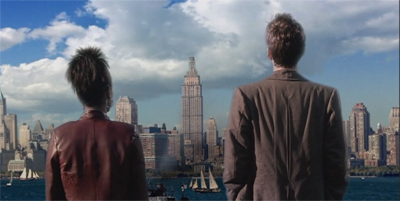
Doctor Who: Daleks in Manhattan (Review)

To celebrate the fiftieth anniversary of the longest-running science-fiction show in the world, I’ll be taking weekly looks at some of my own personal favourite stories and arcs, from the old and new series, with a view to encapsulating the sublime, the clever and the fiendishly odd of the BBC’s Doctor Who.

Daleks in Manhattan originally aired in 2007.

We must evolve! Evolve! Evolve!

– Dalek Sec has perhaps the most out-of-character moment for a Dalek ever

The concept of Daleks in the past is a great idea. However, with the exception of Evil of the Daleks, it is also a bit of a tricky one. Steven Moffat found that out with the first Dalek story of his tenure, Victory of the Daleks, bringing the Daleks to the Second World War. However, Russell T. Davies tried telling a Dalek story set in the past as part of the show’s third season. The Parting of the Ways had featured a Dalek story set in the future, while Doomsday saw the fiends lay siege to modern-day London. Placing the Daleks in 1930s New York seems a staggeringly ambitious proposition.

It's a hell of a town...

It’s a hell of a town…

Continue reading

Doctor Who: The Dæmons (Review)

To celebrate the fiftieth anniversary of the longest-running science-fiction show in the world, I’ll be taking weekly looks at some of my own personal favourite stories and arcs, from the old and new series, with a view to encapsulating the sublime, the clever and the fiendishly odd of the BBC’s Doctor Who.

The Dæmons originally aired in 1971.

I’ve bought you a nice cuppa, Sergeant. I hope you like china.

For goodness sake, Miss Hawthorne.

What’s the matter? Don’t you like tea?

Something’s gone badly wrong. We’ve no idea what’s happening to Miss Grant and the Captain, the Doctor should be back here by now, I can’t get through to the Brigadier and you’re nattering on about tea.

You must learn the art of waiting, Sergeant. The Doctor will come, or else he won’t, and that’s all that can be said. Now, milk or lemon?

– Miss Hawthorne helps Sergent Benton get his priorities straight

Barry Letts was a very talented man. I feel like I don’t stress that often often. I’ll freely concede that the UNIT era isn’t my favourite part of Doctor Who history, but there are times when you really have to admire the skill and competence of Letts as the show’s producer. In fact, he served as both a director and a writer on the series. He had a very clear vision for the show, and he implemented it remarkably well, to the point where his work on the show still stands out as something quite distinguished from the work of other producers.

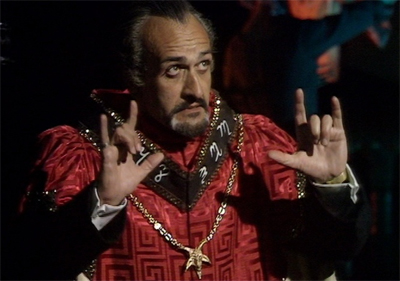
The Dæmons is a very clear illustration of just how carefully and how thoughtfully Letts had overhauled the show for the seventies. While it’s not the most Letts-ian episode ever produced (he would produce, write and direct Pertwee’s final episode, Planet of the Spiders), but it is a great illustration of Letts’ approach to the programme and perhaps a testament to his lasting legacy.

Rock on, you crazy Master...

Rock on, you crazy Master…

Continue reading

Non-Review Review: John Dies at the End

This film was seen as part of the Jameson Dublin International Film Festival 2013.

Don Coscarelli is that most frustrating of film-makers. He’s a remarkable talent able to produce a story with the zany off-kilter madness of Bubba Ho-tep, but can also produce something as disappointing and as frustrating as John Dies at the End. It isn’t that John Dies at the End is completely without charm. It can occasionally be a wittily subversive take on the staples of American horror, from the works of H.P. Lovecraft through to the gore of seventies and eighties schlock-fests.

The real problem with John Dies at the End is that, for all its charm and its wit, it feels terribly unoriginal.

Sauced...

Sauced…

Continue reading

Doctor Who: Terror of the Autons (Review)

To celebrate the fiftieth anniversary of the longest-running science-fiction show in the world, I’ll be taking weekly looks at some of my own personal favourite stories and arcs, from the old and new series, with a view to encapsulating the sublime, the clever and the fiendishly odd of the BBC’s Doctor Who.

Terror of the Autons originally aired in 1971.

That jackanapes! All he ever does is cause trouble!

– nice to see the Doctor taking the Master seriously

I think you can make a fairly credible argument that Jon Pertwee’s first season of Doctor Who stands out as one of the best years the show ever produced. Facing the challenge of migrating from black-and-white to colour, and forced to tell stories entirely set on present-day Earth, the writers and producers managed to craft a season of television that I think stands quite well when measured against the very best of vintage BBC science-fiction. Sure, there may have been walking shop-front dummies, lizard people, animal men and haunted space suits, but the stories were surprisingly mature and relatively clever. The writers used the framework of Doctor Who to tell four very good and very philosophical stories exploring both bold science-fiction high-concepts (alternate universes) and also moral quandaries (how humanity relates to the unknown).

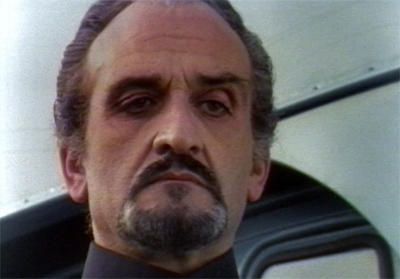
Terror of the Autons is the first story in Jon Pertwee’s second season. I’m actually quite fond of it, and it’s packed to the brim with iconic imagery, so it’s very difficult to be too critical of it. After all, any adventure that left so large an impression on the public imagination must have something to recommend it. However, there’s a very clear sense of regression here. It seems, from this first serial of Pertwee’s second year, that the agenda has changed somewhat.

Terror of the Autons is arguably more indicative of Pertwee’s time in the lead role than any of those stories from his first year. It’s exciting, it’s fast-paced, it has a decidedly man-of-mystery feeling to it, but it also feels somewhat light and a little insubstantial. Not that there’s anything wrong with that, but it just feels like a definite regression.

Master of the Whoniverse?

Master of the Whoniverse?

Continue reading

Doctor Who: Rise of the Cybermen (Review)

To celebrate the fiftieth anniversary of the longest-running science-fiction show in the world, I’ll be taking weekly looks at some of my own personal favourite stories and arcs, from the old and new series, with a view to encapsulating the sublime, the clever and the fiendishly odd of the BBC’s Doctor Who.

Rise of the Cybermen originally aired in 2006.

Delete. Delete.

– the moment the Cybermen realise they are second-rate Daleks

I’ll freely concede that I am sceptical of the Cybermen. Okay, that’s not fair. I actually really like the early Cybermen stories. However, it seems like Doctor Who really forgot how the Cybermen worked when it turned them into a recurring “once per Doctor” sort of threat. However, they are part of the show’s iconography. The image of the Cybermen marching down the steps of St. Paul’s Cathedral from The Invasion is important enough to earn them a sacred place in the show’s history.

So the return of the Cybermen was inevitable, even before we caught a glimpse of one of their silly helmets in Dalek. Russell T. Davies has generally done a great job revitalising old concepts for the revived series, so Rise of the Cybermen has that in its corner. Unfortunately, I’m not convinced that Rise of the Cybermen approaches anything resembling the quality of Dalek, and I think that Rise of the Cybermen manages the rare feat of turning most of Davies’ strengths into weaknesses.

March of the Cybermen...

March of the Cybermen…

Continue reading

Doctor Who: Scream of the Shalka (Review)

To celebrate the fiftieth anniversary of the longest-running science-fiction show in the world, I’ll be taking weekly looks at some of my own personal favourite stories and arcs, from the old and new series, with a view to encapsulating the sublime, the clever and the fiendishly odd of the BBC’s Doctor Who.

Scream of the Shalka originally streamed in 2003.

Doctor Who survived its cancellation across a variety of media. There were unofficial videos starring Colin Baker and Sylvester McCoy. There were audio plays. There were mountains of books. The BBC even came up with the clever idea of offering on-line content, with a series of illustrated audio plays, including the Seventh Doctor story Death Comes to Time and the Sixth Doctor adventure Real Time, as well as an adaptation of the aborted Douglas Adams serial Shada. Most of these were little more than powerpoints with sound playing over them. However, for the show’s fortieth anniversary, the BBC came up with an altogether more ambitious idea – a brand new fully animated adventure starring a new Doctor and promising a wave of new adventures, striving boldly forward into the new century.

The Doctor is in…

You can hear the serial, free, here.

Continue reading