• Following Us

  • Categories

  • Check out the Archives


  • Awards & Nominations

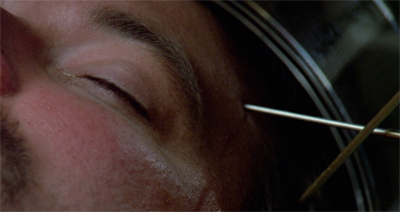
The X-Files – Pusher (Review)

This November (and a little of December), we’re taking a trip back in time to review the third season of The X-Files and the first (and only) season of Space: Above and Beyond.

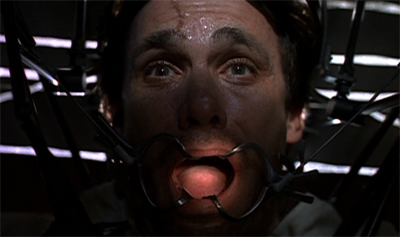
Pusher is perhaps one of the most effective stand-alone “monster of the week” stories that the show ever did.

It is no wonder that the episode is frequently cited among the best episodes of The X-Files ever produced, but it is telling that it was identified by Slate as the perfect “gateway” episode of the show. If you want to give someone a taste of The X-Files without burdening them with continuity or back story, this is a good choice. It may not be the best episode that Vince Gilligan ever wrote, and it may not even be the best episode of the third season, but it is one the strongest demonstrations of what the show does on a weekly basis.

Mano a mano...

Mano a mano…

Pusher is the first episode that Vince Gilligan wrote after joining The X-Files writing staff. It is the only episode credited to Gilligan in the show’s third season. He had been offered a position on staff after turning in Soft Light at the end of the second season, but had hesitated before accepting the job. When he did accept the job, he came down with a dose of infectious mononucleosis. As a result, Gilligan only wrote one script for the third season, despite becoming one of the show’s most prolific writers.

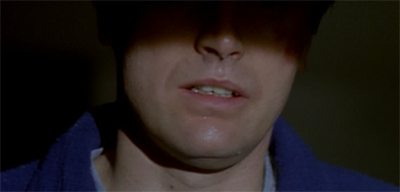
Pusher is a pulpy delight, a spectacularly constructed standalone that perhaps points the way to Gilligan’s later work.
Gift of the gab...

Gift of the gab…

Continue reading

The X-Files – 731 (Review)

This November (and a little of December), we’re taking a trip back in time to review the third season of The X-Files and the first (and only) season of Space: Above and Beyond.

731 is a lot more substantial than Nisei.

This is most likely due to the episode’s production history. Frank Spotnitz had pitched the episode that would become 731 as a single standalone episode, but the production team discovered that the show was too large to fill a single forty-five minute block. So the show was extended into a two-parter. Given that Spotnitz was the credited writer on 731, it would seem that the second part retained most of the substance.

It's in the eye of the beholder...

It’s in the eye of the beholder…

This makes a great deal of sense, given that the two-parter eschews the stand format of a two-part X-Files episodes, featuring a frantic run-around in the first forty-five minutes and a tighter more intimate story in the second. Coupled with the fact that the episode is more about working through what we already know instead of heaping more information on top, and the two-parter seems a lot more substantial than most of the series’ big mythology shows.

Thoughtful, introspective, and unnerving, 731 is perhaps the highpoint of the show’s entire nine-season conspiracy arc.

Where the bodies are buried...

Where the bodies are buried…

Continue reading

The X-Files – The Walk (Review)

This November (and a little of December), we’re taking a trip back in time to review the third season of The X-Files and the first (and only) season of Space: Above and Beyond.

The approach that The X-Files took during its third season was to hone what had worked during the first two seasons to a fine edge.

The second season had been quite playful and experimental – taking the time to figure out what did and didn’t work. Comedy episodes, like Die Hand Die Verletzt and Humbug, worked; making shows like Clyde Bruckman’s Final Repose or Jose Chung’s “From Outer Space” logical choices. Mythology-driven two-parters during sweeps had paid off, so those returned for the third season. In contrast, the heavy science-fiction of shows like Fearful Symmetry, Død Kälm or Soft Light didn’t work, and were largely forgotten.

Let some light in...

Let some light in…

The result is a third season that plays to the established strengths of The X-Files. Sure, there are still bold and experimental episodes – particularly those credited to writer Darin Morgan. However, the third season is markedly more conservative in tone than the second season – or even the fourth season. This conservatism can work very well. The third season has very few out-and-out bombs, and more than a few classics. However, it comes at a cost.

The Walk is a reasonably well-produced episode that feels a little bit overly familiar. This is the second “supernatural revenge” story that The X-Files has done in so many episodes. There’s a point where The Walk feels a lot less like a unique story than an archetypal “fill in the blanks” exercise, where a unique location and a new set of characters are caught up in an old-fashioned ghost story.

Don't worry, Stans will take good care of him...

Don’t worry, Stans will take good care of him…

Continue reading

The X-Files – Season 2 (Review)

This August (and a little of September), we’re taking a trip back in time to review the second season of The X-Files. In November, we’ll be looking at the third season. And maybe more.

The first few seasons of a television show are very much about defining the show – figuring out what works and what doesn’t, and what form the show will take. After all, a lot of discussion and planning takes place during development, but all of that is on paper. It’s only once you’ve worked with the cast and had a chance to gauge audience response that it is possible to truly understand a television show.

The first two seasons of The X-Files seem like an attempt to map out the show, to mark the boundaries and do some fine calibration. The show had been a sleeper hit in its first season, popular enough to secure a second season on Fox. However, the second season had seen the series become a breakout hit. It climbed rather dramatically in the ratings, and the show would continue that ascent through to the fifth season in the lead-in to the feature film. However, the second season still feels like it’s a learning curve.

xfiles-onebreath6

There are exceptional episodes in the second season. The season provides a wealth of classic stories. Fresh Bones and Our Town stand out as two of the best monster-of-the-week stories that the show had done by this point in its life-cycle. Even outside of that, there are classics like One Breath or Humbug or The Host or F. Emasculata. However, there are also quite a few misfires like Fearful Symmetry or Excelsis Dei or 3.

There are a lot of points in the second season where it feels like The X-Files is experimenting, trying new things that would ultimately become part of the show’s unique identity. Not all of these elements worked, but that is the luxury of a second season. It allows the production team to do that sort of experimentation so they might find their groove.

xfiles-duanebarry16 Continue reading

The X-Files – End Game (Review)

This August (and a little of September), we’re taking a trip back in time to review the second season of The X-Files. In November, we’ll be looking at the third season. And maybe more.

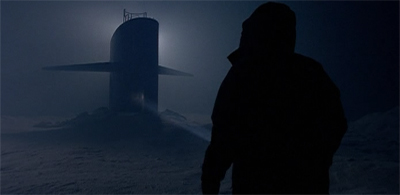
Towards the end of End Game, Mulder stumbles across a nuclear submarine that was attacked in the episode’s teaser. The craft was disabled by a strange craft it picked up in the ocean. Now, following a mysterious alien figure across the world in a quest to find his sister, Mulder approaches the location of the lost American submarine. As he does, he notices the submarine’s coning tower, bursting through the ice.

It’s one of those beautifully iconic television moments. It’s an image that is audacious and stunning and beautiful and breathtaking. It immediately gives End Game (and Colony) a sense of scale. All of a sudden, this isn’t just a bunch of stuff happening under the radar in some small town somewhere. This is the hijacking of a nuclear submarine by a hostile entity. This is Mulder going to the ends of the Earth to get his sister back.

Not so green any longer...

Not so green any longer…

It’s also worth noting that the symbolism is beautiful. Even looking at a picture of Mulder on the ice conjures up all manner of associations. Coupled with the non-linear storytelling employed by Colony and End Game, it calls Frankenstein to mind – Frankenstein serving as a massively influential text on Chris Carter. However, the idea of Mulder finding important existential answers on an Arctic soundstage also evokes Clark Kent’s self-discovery in Richard Donner’s Superman films, playing into the sense that this is an episode framed in cinematic terms.

The rest of the episode could just be dead air, and End Game would still work impressively well. However, End Game remains a fantastic piece of work in its own right, effectively codifying how a two-parter is meant to work.

The truth is out there...

The truth is out there…

Continue reading

The X-Files – Fresh Bones (Review)

This August (and a little of September), we’re taking a trip back in time to review the second season of The X-Files. In November, we’ll be looking at the third season. And maybe more.

Written by Howard Gordon and directed by Rob Bowman, Fresh Bones is a superbly constructed piece of television. Indeed, there’s an argument to be made that Fresh Bones is the best “traditional” episode of The X-Files produced since Scully returned to the fold. While episodes like Irresistible and Die Hand Die Verletzt have been bold and adventurous in their attempts to expand the show’s comfort zone, Fresh Bones is perhaps the best example of what the show was missing while Gillian Anderson was unavailable – proof the familiar formula still works.

It’s a great example of what might be termed “the standard X-Files episode” – a demonstration of how all the moving parts come together to produce an episode of the show, offering an example of the series’ standard operating practice. If you were to pick an episode of the second season to demonstrate how a “standard” episode of The X-Files should work, Fresh Bones would be perhaps the most appropriate example. (Aubrey and Our Town are perhaps the only two other examples.)

Grave danger...

Grave danger…

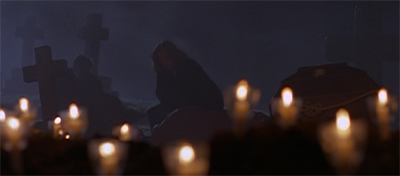
In keeping with Bowman’s approach to the series, Fresh Bones feels like a forty-five minute movie. The show atmospherically shot with some wonderful kinetic sequences – such as Mulder’s pursuit of Chester on the pier or Scully’s attack in the car. The Voodoo subject matter lends Fresh Bones a wonderfully pulpy atmosphere, although it seems like Howard Gordon has done his homework. The script to Fresh Bones averts many of the awkward stereotypes you’d expect in a show about Voodoo starring two white leads produced in Vancouver.

The result is a superb piece of television, an example of what The X-Files is capable of.

A bone to pick...

A bone to pick…

Continue reading

The X-Files – Aubrey (Review)

This August (and a little of September), we’re taking a trip back in time to review the second season of The X-Files. In November, we’ll be looking at the third season. And maybe more.

Aubrey doesn’t necessarily a make a lot of sense. Even as episodes of The X-Files go, “serial killer genes that skip a generation” feels like a logical leap. The idea that not only memories but personalities can be passed from grandfather to granddaughter is absurd even by the standards of a show that just did “magic mushrooms that cure Alzheimer’s and give people telekinesis and open portals to another world.” Perhaps it’s the fact that Aubrey tries to root its story in genetics that makes it seem so ridiculous.

And yet, once you get past that logical leap, Aubrey is a fascinating little episode. Aubrey works on quite a few levels that are disconnected from the story itself. For one thing, it is a Rob Bowman episode, and he is clearly pushing himself. For another, the guest cast features superb performances from Deborah Strang, Terry O’Quinn and Morgan Woodward. There’s also the fact that Aubrey connects almost perfectly with both the underlying themes of The X-Files as a show and of the second season in particular.

Hey little sister, what have you done?

Hey little sister, what have you done?

Continue reading

The X-Files – Sleepless (Review)

This August (and a little of September), we’re taking a trip back in time to review the second season of The X-Files. In November, we’ll be looking at the third season. And maybe more.

Vietnam casts a long shadow over The X-Files, just as it casts a long shadow over the rest of American popular culture. It was a conflict that left a scar on the American psyche, prompted no small amount of soul-searching and naval-gazing, forcing the country to contemplate its role on the global stage. The issues of war guilt and veterans rights haunted America well into the nineties, with films like Forrest Gump and Heaven and Earth still trying to make sense of it all.

Along with Watergate, Vietnam came to embody the disillusionment and disengagement of the seventies. While public discomfort with American involvement the Korean War never climbed above 50%, public disapproval of American involvement in Vietnam would reach almost 75% in March 1990. Vietnam remains a boogeyman, with memories of Vietnam arguably informing Clinton’s reluctance to commit American ground troops to foreign theatres during the nineties and serving as a frequent point of comparison to twenty-first century entanglements in Afghanistan or Iraq.

Howard Gordon’s first solo teleplay for The X-Files, Sleepless is an episode that explores Vietnam as a perpetual waking nightmare.

Preaching to the choir...

Preaching to the choir…

Continue reading

Star Trek: The Next Generation – Brothers (Review)

This January and February, we’ll be finishing up our look at the second season of Star Trek: The Next Generation and moving on to the third year of the show, both recently and lovingly remastered for high definition. Check back daily for the latest review.

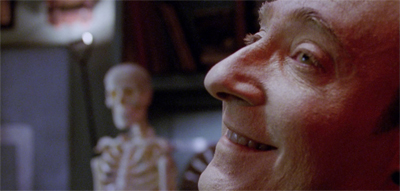
Brothers is Star Trek: The Next Generation getting back to business at usual. Well, not quite usual, but close enough. Following the monumental season-bridging epic that was The Best of Both Worlds and the breathing space afforded by Family, Brothers is a good old-fashioned science-fiction adventure story revolving around one of the show’s most popular character and really written to satisfy a laundry list of Star Trek tropes and conventions.

Although its notable for maintaining a thematic consistency that is threaded through the fourth season, and also for affording Brent Spiner to play three different roles, the most striking aspect of Brothers from a production point of view is the fact that it is written by Rick Berman. Berman had been serving as producer on the show since Encounter at Farpoint, but this was his first scripting contribution. He’d only write one more episode of The Next Generation before the show went off the air.

Given Berman’s production style, it feels strangely appropriate that Brothers is so carefully and meticulously structured and constructed.

"Let's put a smile on that face..."

“Let’s put a smile on that face…”

Continue reading

Star Trek: The Next Generation – Shades of Grey (Review)

This January and February, we’ll be finishing up our look at the second season of Star Trek: The Next Generation and moving on to the third year of the show, both recently and lovingly remastered for high definition. Check back daily for the latest review.

Well. That’s over now. Star Trek: The Next Generation limps across the finish line of its second season with a compilation clip show designed to save money and keep the season’s episode count up. Shades of Grey is frequently cited as the worst episode not just of the second season of The Next Generation, but of the show as a whole. While it’s hard to entirely agree with this assessment – Shades of Grey is cynical and lazy, but it’s neither as sexist as Angel One or The Child nor as racist as Code of Honour or Up the Long Ladder – it is possible to see where that argument comes from.

Like the first season before it, there’s a sense that the second season of The Next Generation might have been better had it ended an episode earlier. Indeed, the second season could have ended with Q Who? and the only episode anybody would really miss would be The Emissary. Unfortunately, one imagines the syndication agreements and network policy made this impossible. While one suspects many of those involved would be happy if Shades of Grey simply faded from existence, it remains part of the show’s syndication package.

This is a little like what this episode feels like...

This is a little like what this episode feels like…

Continue reading