• Following Us

  • Categories

  • Check out the Archives


  • Awards & Nominations

Non-Review Review: Toy Story 4

Toy Story 4 is a lovely grace note.

Understandably, the largest tension that exists within Toy Story 4 is the question of whether the movie is “necessary”, as much as crowd-pleasing feel-good film must be “necessary.” Rather, it’s the question of whether its presence enhances or diminishes the immediately previous film in the franchise. Toy Story 3 was in many ways a pitch-perfect franchise closer, the perfect place in which to leave these characters and this world. It was bittersweet and deeply moving, striking a perfect balance between providing closure and suggesting that the adventure continues.
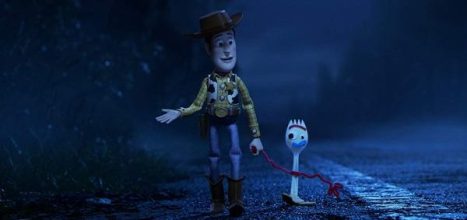
The real Toy Story is the toys we made along the way.

This creates an interesting challenge for Toy Story 4. Because Toy Story 3 provided such a fitting ending, it is not enough for Toy Story 4 to simple be amusing or engaging. To quote another popular Tom Hanks vehicle from the nineties, it has to “earn this.” To a certain extent, Toy Story 4 exists in conversation with Toy Story 3, and with the notable handicap of being unable to play many of the same emotional beats as strongly. “This is the epic last go-round” is a card that is difficult to play in two consecutive movies. So, quite apart from how funny and how thrilling and how clever Toy Story 4 is, it faces an uphill struggle.

It is to the credit of Toy Story 4 that it justifies itself so effectively. A lot of this is down to canny structuring; Toy Story 4 is much less of an ensemble piece than any of the two previous films in the series, focused very tightly on Woody as its focal character. This provides a nice change of pace, even compared to the fun “toys mount a rescue” template of Toy Story 2. To a certain extent, Toy Story 4 feels – in terms of tone, plot and character – much closer to the original Toy Story than any of the intermediate films in the franchise. This allows it a certain freshness and lightness on its feet.
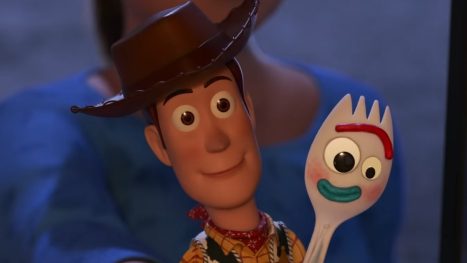
A forkin’ delight.

However, the smartest thing about Toy Story 4 is that it understands its position. Toy Story 4 is shrewd enough to understand that it can neither ignore nor repeat Toy Story 3. Indeed, Toy Story 4 is cognisant of the fact that it must be an ending of a sort, but also a different kind of ending than Toy Story 3. The film has to both justify and distinguish itself, fitting with what came before while finding something unique to say. This is a delicate balance to strike, and it is to the credit of Toy Story 4 that it succeeds as thoroughly as it does.

Toy Story 4 exists in the shadow of Toy Story 2 and Toy Story 3, but most animated films do; they are both among the very best films that Pixar has produced, making them among the very best animated films ever produced. Toy Story 4 works well as an epilogue or a coda. It’s charming, smart, funny and very moving in the places where it needs to be. Toy Story 3 existed at the full stop at the end of the story, but Toy Story 4 draws a line under it.
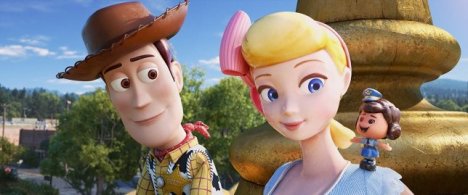
Home on the range.

Continue reading

Non-Review Review: X-Men – Dark Phoenix

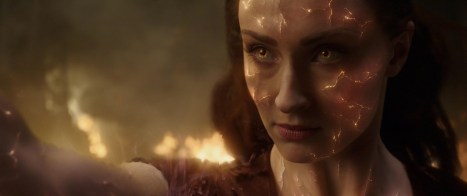
It reflects the strange state of the modern multimedia landscape that X-Men: Dark Phoenix feels almost like a plucky underdog.

This is a major studio summer blockbuster with a budget of well over one hundred million dollars. More than that, it is the twelfth film in a series that has historically been both critically and commercially successful; the films have earned over $5.7bn dollars worldwide, eight of the twelve films have positive scores on Rotten Tomatoes, seven of those twelve have been popular enough to end on the Internet Movie Database‘s top 250 films of all-time. The current franchise stars a two-time Oscar winner. The last film in the series earned an Oscar nomination for its screenplay.

A hot property.

Dark Phoenix should be an event. Instead, it arrives with a relative whimper. The release date was pushed back repeatedly, first from November 2018 to February 2019, and then to June 2019. It has been hounded by largely unfounded industry gossip about terrible test screenings. It is tracking for the lowest opening weekend in the franchise. In the time between the film entering production and its eventual release, it has been somewhat overshadowed by news that Disney are to buy 20th Century Fox, and that this franchise will be rebooted.

“I am inevitable,” Thanos famously boasted in Avengers: Endgame, the literal manifestation of death and time who existed to be vanquished by the assembled heroes. He might have been speaking of the influence of Disney. Dark Phoenix crashes against that inevitability, shattering and snapping against those immovable objects. Dark Phoenix is a mess, a disorganised husk of a movie carved out in an editing booth and built from last-minute reshoots. However, it is not quite the disaster that it should be. Instead, it seems almost endearingly defiant, a blockbuster flavoured with passive aggression.

Raining on their parade.

Continue reading

132. Glitter (-#18)

Hosted by Andrew Quinn and Darren Mooney, and this week with special guest Stacy Grouden, The 250 is a (mostly) weekly trip through some of the best (and worst) movies ever made, as voted for by Internet Movie Database Users. New episodes are released every Saturday at 6pm GMT.

This time, Vondie Curtis-Hall’s Glitter.

Spotted as a back-up vocalist by fly D.J. Julian “Dice” Black, singer Billie Frank finds herself whisked away into a world of stardom and celebrity. However, Billie quickly discovers that fame and fortune do not offer the comfort and security that she has always craved.

At time of recording, it was ranked 18th on the Internet Movie Database‘s list of the worst movies of all-time.

Continue reading

Non-Review Review: Always Be My Maybe

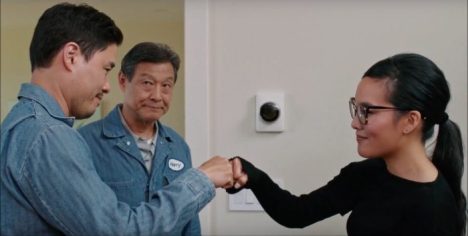
Perhaps Always Be My Maybe is a more accurate reminder of the romantic comedy.

Much digital ink has been spilled on the state of the romantic comedy as a genre, particularly in the context of the streaming wars. Many critics and observers have lamented the death of the mid-budget movie at the American box office, citing the romantic comedy as one of the genres most obviously affected. However, there were a number of hopeful signs of life in the genre in recent years. Netflix has been consciously investing in these sorts of films, with internet favourites like Set It Up or To All the Boys I’ve Loved Before. (Tellingly, Netflix became the international home for Isn’t It Romantic?)

The script could use a punch-up.

However, the genre also performed robustly in cinemas with Crazy Rich Asians becoming a breakout success story for Warner Brothers and sparking a lot of excitement and interest around the genre. In fact, even Late Night looks like it might do something similar for the related “woman at work” subgenre; although its box office success seems much less assured, critical response is very positive. As a result, it seems like reports of the death of the romantic comedy and similar works have been greatly exaggerated. There is life in that old genre yet, whether theatrically or streaming.

The arrival of Always Be My Maybe underscores at least one factor in the success of breakout hits like Crazy Rich AsiansSet It Up or Late Night. A lot of the modern attention on the romantic comedy genre is focused on exceptional examples of the genre; films within the genre that are very, very good. In contrast, Always Be My Maybe feels like something of a grim corrective. It is perhaps more representative of the romantic comedy genre as it tended to be, rather than evoking the popular memory of it. This is to say that Always Be My Maybe is occasionally charming, largely derivative, and generally quite bland.

I left my heart in San Francisco.

Continue reading

Non-Review Review: Godzilla – King of the Monsters

“There has to be another way!” a character pleads at one point in Godzilla: King of the Monsters. Another responds, “There is no time for debate!”

This is King of the Monsters in a nutshell. A film where there is never time. There is just a constant bombardment of stuff happening. There is noise. There is shouting. There is shaking. There is exposition. There is spectacle. All thrown at the audience with an intensity that will overwhelm even the strongest flinching reaction. King of the Monsters isn’t just the proverbial ten pounds of sh!t in a five pound bag, it is those ten pounds being constantly fed to a whirling rotating blade. It is almost impressive that the fan lasts as long as it does. Almost.

A monster mash-up.

King of the Monsters is a sequel to both Gareth Edwards’ Godzilla and to Jordan Vogt-Roberts’ Kong: Skull Island, and it somehow finds a way to synthesise the the most incompatible elements of both films into a monstrous mess of a single narrative. King of the Monsters is a movie of single-minded focus on what it is trying to do, and what it is trying to do is to cram as much monster madness and mythology into a two-hour film as possible. That single-minded focus leaves little room for any of the niceties of normal cinematic narratives.

King of the Monsters is frustrating and infuriating at times, but it is mostly just exhausting.

Frankly, my dear, I don’t give a Rodamn.

Continue reading

Non-Review Review: Late Night

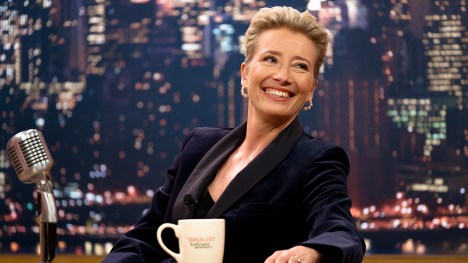
As the title implies, Late Night is a film about a late night American chat show, a prime-time institution that has lost its edge and finds itself almost at the bottom of a slide into irrelevance.

Katherine Newbury is a British comedian who landed a plum gig on American television and never looked back. Her nightly chat show is a fixture of the cultural landscape; the film opens with Newbury accepting a comedy award, and a late scene takes place in a room in her house that seems to be overflowing with trophies. However, there is also a sense that Late Night with Katherine Newbury has become sloppy in its old age. Ratings have been declining for a decade. The network is eager to replace the veteran broadcaster with somebody younger and fresher.

Talking shop.

Against this backdrop, Molly Patel arrives. A young woman with no direct comedy experience, Molly finds herself drafted into the writers’ room as a cynical “diversity hire.” A former “factory” (“chemical plant,” she repeatedly and insistently clarifies) worker, Molly is a big fan of the show who also understands that it needs a course correction. Indeed, Late Night accepts that the old-fashioned format needs to be updated, and becomes a battle over how best to modernise the template. Network president Caroline Morton and talent agent Billy Kastner suggest radical reinvention, but Molly thinks the basic template is still sound.

To a certain extent, it feels like Late Night is having a conversation with itself about itself. The movie belongs to the familiar tried-and-true template of the “new job or career crisis” comedy, those films about inexperienced characters who find themselves thrown into a new job with no real grounding and forced to adapt to their circumstances; Second Act is the most recent example, but there are plenty to choose from including Morning Glory, The Ugly Truth, 9 to 5, Working Girl. It is a familiar genre, the first-cousin of (and often interwoven with) the romantic comedy.

A bright spot.

The romantic comedy has been having a very public conversation with itself in recent years, playing out through the viral success of Netflix’s love letters to the genre like Set It Up or in more straightforward but more diverse big screen iterations like The Big Sick or Crazy Rich Asians. Indeed, Late Night feels like something of a companion piece to The Big Sick and Crazy Rich Asians, a film that fundamentally understands the sturdiness of the narrative template with which it is working. Like Molly’s approach to the eponymous show, Late Night understands that the basic structure doesn’t need renovation, just the content.

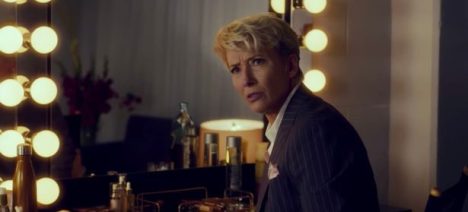
The result is an endearing workplace comedy that plays as a loving homage to the genre, elevated primarily through execution. Late Night understands the importance of new perspectives and reacting to a changing world, but it also understands what fundamentally works in movies like this. Late Night benefits from two fantastic central performances from Emma Thompson and Mindy Kaling, playing two very well-drawn characters. It is consistently funny, but also consistently well-observed. Late Night demonstrates that the workplace comedy works for a reason, and sets out to demonstrate the genre’s robustness.

Addressing the issues…

Continue reading

Non-Review Review: Rocketman

As has been noted, the iconic Elton John song that inspired the film is titled Rocket Man, while the film itself is simply Rocketman.

The missing space is an intriguing stylistic choice, given that the film is obviously designed to evoke Elton John’s beloved contemplative ballad about space-age truckers. What purpose does the omission of that space serve? What is gained by contracting the song to create a single-word title for the biographical feature film. Having watched the film, it feels like the missing space might have been lost as an inadvertent consequence of a thorough find-and-delete of anything resembling subtext from the screenplay.

Fancy, that.

To be clear, this isn’t entirely a flaw with Rocketman. Musicals are fundamentally designed to render subtext as supratext, to literalise and articulate the themes and ideas and emotions underscoring a character or plot. By their nature, musicals feature characters very theatrically expressing their innermost feelings and desires directly to the audience through the medium of song and dance. Subtlety is not necessary in this context, and could even become something of a hindrance. A musical – especially a jukebox musical like this – is narrative as stadium rock.

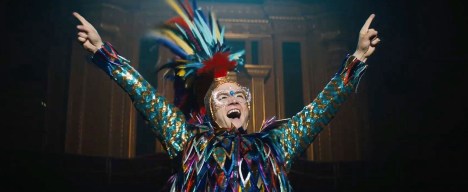
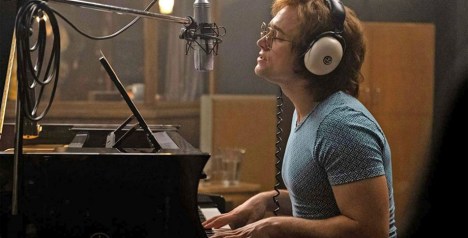
The musical sequences in Rocketman capture this beautifully, and are the film’s strongest attribute. The movie just has trouble turning the volume down in the scenes between those numbers.

Key details.

Continue reading

Non-Review Review: Aladdin (2019)

Aladdin is a fairly sturdy adaptation of a beloved animated film.

The obvious point of comparison here is something like Beauty and the Beast, with the live action adaptation facing many of the same challenges. By that standard, Aladdin acquits itself quite well. As with Beauty and the Beast before it, Aladdin is a fairly straightforward no-frills and no-surprises effort to transition a classic piece of nineties animation into live action; it lifts both the song and score, the set pieces, the themes, the characters, even the tempo. It is less ambitious or imaginative adaptation process than Alice in Wonderland or Pete’s Dragon, for better and worse.

Carrying a lamp for the original…

With that in mind, Aladdin feels like a clear improvement upon Beauty and the Beast. A large part of this is down to knowing what to do with the roughly forty minutes of storytelling real estate that seem to be added to these projects by default, adapting eighty-minute cartoons into two-hour blockbusters. The cartoons that inspired Beauty and the Beast and Aladdin were already very tightly structured and very well-constructed, so anything added to otherwise highly faithful adaptations those films often feels alien or uncomfortable.

Beauty and the Beast seemed particularly unsure what to do with those forty minutes, leading to strange narrative diversions to answer questions that nobody asked, like, “What happened to Belle’s mother?” In contrast, Aladdin benefits from a much better understanding of where the story can be fleshed out. There are a few clumsy missteps along the way; the new songs often stand out in contrast to those ported over from the original film, and the first act drags a little. However, by and large, Aladdin understand what aspects of the original can stand to be bulked up.

“And you’re sure you want to use your wish for a photo-realistic Sonic the Hedgehog movie?”

If this is to be the future of these adaptations – and the success of Beauty and the Beast means that it most likely will be – then Aladdin is far from the worst template. It is fun, it is light, it is diverting. It has a charismatic cast, and a solid understanding of the story that it is updating. However, it is also a little sluggish at the start and bloated at the end, traits inherited from modern blockbusters rather than a result of the process of adapting the source material.

At the same time, as with Beauty and the Beast, the same core issues shine through. Despite what spoiler culture might suggest, a film is more than just a series of plot events. Aladdin is adapting a film that was designed specifically for another medium, while making a point to stress its fidelity to that source material while translating it to live action. The biggest problem with Aladdin is built into it from the outset; this is an approach to the story that will always work better in animation than in live action.

It’s not quite a whole new world…

Continue reading

Non-Review Review: Thunder Road

Thunder Road is a sweet, affecting piece of work.

It seems a little bit disingenuous to describe Thunder Road as a comedy. Much has been written about how the boundaries of the genre have shifted in recent years, particularly on television where form seems to dictate genre more than content. (Tom Hanks even took time to spoof that shifting trend during an appearance on Saturday Night Live.) There are funny moments in Thunder Road, often well-observed and organically delivered, but even those humourous beats underscore the film’s deep-seated melancholy.

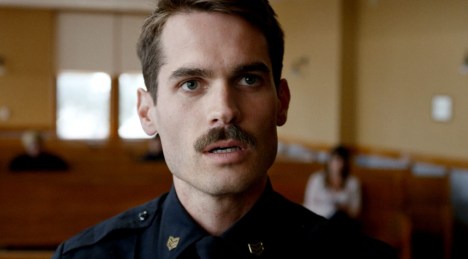
Thunder Road is a profoundly human film, but one that feels very tragic. Focusing on a divorced police officer recovering from the recent death of his mother and facing the prospect of losing his daughter, there’s a lot of genuine emotion surging through Thunder Road. Jim Arnaud is a man who is very clearly lost at sea, oblivious to his own mental state even as friends (and bystanders) watch him crumble before their eyes. The film’s humour often seems like an attempt to stave off tears, as if an awkward laugh might offer a reprieve against the slow sense of mounting dread.

Thunder Road is an impressive piece of work, a film with real heart.

A grave mistake…

Continue reading

Non-Review Review: John Wick – Chapter III: Parabellum

The biggest issue with John Wick: Chapter III – Parabellum is that it lacks an ending.

To be clear, there’s nothing wrong with an ambiguous or open-ended film. Indeed, a large part of the thrill of John Wick: Chapter II was the extent to which it fudged such boundaries. Despite the fact that John Wick offered something of a satisfying conclusion, the sequel picked up mere moments later to offer a coda that audiences never realised was needed. The ending of the first sequel bled (both literally) into the one that would follow. Open-endedness is not an issue of itself.

“So John Wick flees on horseback, the assassin’s after them on a motorcycle and it’s like a battle between motors and horses, like technology versus horse.”

After all, Chapter II belonged to the now-familiar family of “second films in trilogies.” Traditionally, the first film in a series would be relatively self-contained, with a broad teasing ending at best that could provide closure if the box office numbers didn’t work; Star WarsBack to the Future. In contrast, after those movies were box office hits, sequels were often commissioned in batches of two; Star Wars: Episode V – The Empire Strikes Back bleeds more obviously into Star Wars: Episode VI – Return of the Jedi, Back to the Future II bleeds into Back to the Future III.

However, there tended to be an understanding that closure was necessary at some point. Not necessarily in a definitive or conclusive manner for the series as a whole; Return of the Jedi is not the last Star Wars movie. However, a sense that the single narrative being tidied up. The characters’ journeys may not be completed, but their arc within this particular story is complete. Parabellum feels very much like a cheat on this front. Although building from a premise with a clear ending, it seems to be awkwardly constructing a perpetual motion device.

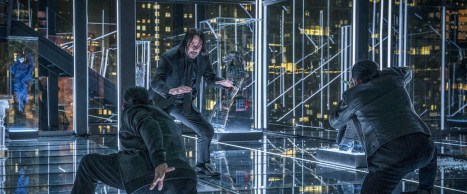
Shattering expectations.

After all, John Wick’s journey has a clear end point. The character arc that began in John Wick has any number of potential resolutions. Chapter II seemed to offer some clear linear progress to that journey, taking the character from his position in the closing moments of John Wick and escalating the existential stakes significantly. The single biggest problem with Parabellum is that the film doesn’t manage a comparable transformation. Wick’s situation doesn’t seem particularly different between the beginning and the end of the film. At most, the character has run a closed loop.

This is a shame, as that is a lot to like in Parabellum. As with both John Wick and Chapter II, this is a visually stunning film. It is saturated with neon glows of reds and blues, mingling and reflecting into beautiful purples on grimy streets and immaculate sterile sets. The stunt choreography is breathtaking, and a testament to an underappreciated artform, ballet with blades and bullets. Indeed, Parabellum even improves upon the already enchanting heightened operatic (and gloriously melodramatic) storytelling of John Wick and Chapter II, weaving them into an engaging parable.

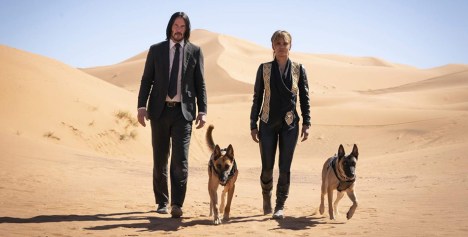
Getting their just deserts.

Continue reading