• Following Us

  • Categories

  • Check out the Archives


  • Awards & Nominations

Doctor Who: Earthshock (Review)

To celebrate the fiftieth anniversary of the longest-running science-fiction show in the world, I’ll be taking weekly looks at some of my own personal favourite stories and arcs, from the old and new series, with a view to encapsulating the sublime, the clever and the fiendishly odd of the BBC’s Doctor Who.

Earthshock originally aired in 1982.

I would suggest you get your people well back. The hatch may be booby-trapped.

What about you?

Well, my arms are only this long. I can’t get any further away.

– the Doctor and Scott

Earthshock is regarded as one of the stronger stories of Peter Davison’s tenure on Doctor Who. It’s easy enough to see why. After all, it features not one but two memorable twists. It also harks back to the classic “base under siege” stories of the Patrick Troughton era. While it’s still very clearly a piece of early eighties Doctor Who, its production values hold up rather well compared to adventures from that era of the show. It’s written by Eric Saward and, like The Visitation, it has that same sense of tension and pace, building towards a truly massive final twist.

And yet, despite that, I find it very difficult to love Earthshock. I suspect a lot of that is down to how it seems like Doctor Who learned all the wrong lessons from Earthshock, retroactively tainting an otherwise very solid serial.
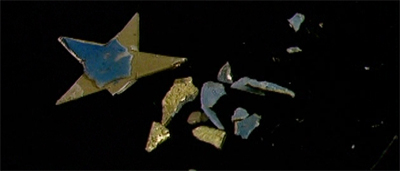
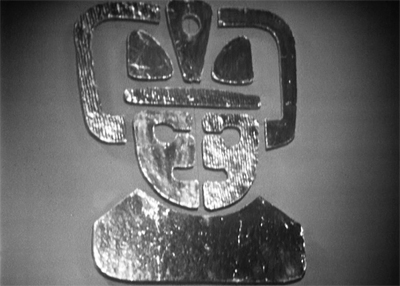
Shattered...

Shattered…

Continue reading

Doctor Who: Four to Doomsday (Review)

To celebrate the fiftieth anniversary of the longest-running science-fiction show in the world, I’ll be taking weekly looks at some of my own personal favourite stories and arcs, from the old and new series, with a view to encapsulating the sublime, the clever and the fiendishly odd of the BBC’s Doctor Who.

Four to Doomsday originally aired in 1982.

Come along, children. Not in front of our hosts.

– the Doctor finally manages to strike the right tone with his companions

Four to Doomsday is an interesting story, if only because it’s so rarely discussed. The second story of a particular Doctor seems to set the tone for their era. William Hartnell’s second story, The Daleks, introduced the iconic pepperpots. Patrick Troughton’s second serial, The Highlanders, introduced the companion Jamie, who would remain with him for the rest of his tenure. Jon Pertwee’s second story, The Silurians, saw Barry Letts taking over the role of producer. Tom Baker’s second story, The Ark in Space, is one of the most memorable and definitive instances of horror in the history of the show. Colin Baker had the misfortune to have Attack of the Cybermen as his second story, an adventure that set the tone for his time in the TARDIS. Sylvester McCoy didn’t really develop until his second season, but he’s probably the exception that proves the rule.

Peter Davison’s Four to Doomsday, on the other hand, just sort of… is.

Ground control to Major... dammit, why couldn't I get this image a year earlier in the show's run?

Ground control to Major… dammit, why couldn’t I get this image a year earlier in the show’s run?

Continue reading

Doctor Who: The Tomb of the Cybermen (Review)

To celebrate the fiftieth anniversary of the longest-running science-fiction show in the world, I’ll be taking weekly looks at some of my own personal favourite stories and arcs, from the old and new series, with a view to encapsulating the sublime, the clever and the fiendishly odd of the BBC’s Doctor Who.

The Tomb of the Cybermen originally aired in 1967.

In fact you might say they’ve had a complete metal breakdown.

Oooooh….

I’m sorry, Jamie.

– traveling with the Doctor can be quite pun-ishing

The Tomb of the Cybermen is a bit of miracle. Originally thought lost to history in the great BBC archives purge (along with most of the Troughton era), The Tomb of the Cybermen was recovered completely intact from Hong Kong in 1992, a quarter of a century after the adventure aired and several years after the original series had been cancelled by the BBC. It remains perhaps the most significant recovery in recent memory, and fosters hope that there might be a few other serials that have been preserved in their entirety. Still, even outside of its significant historical context, I’d make the argument that The Tomb of the Cybermen stands as the best adventure to feature the metallic men.

Sealing your tomb…

Continue reading

Doctor Who: The War Games (Review)

To celebrate the fiftieth anniversary of the longest-running science-fiction show in the world, I’ll be taking weekly looks at some of my own personal favourite stories and arcs, from the old and new series, with a view to encapsulating the sublime, the clever and the fiendishly odd of the BBC’s Doctor Who.

The War Games originally aired in 1969.

Well, what was happening? Why was it so difficult to move?

It was the Time Lords.

But they’re your own people, aren’t they, Doctor?

Yes, that’s right.

Why did you run away from them in the first place?

What? Well, I was bored.

What do you mean, you were bored?

Well, the Time Lords are an immensely civilised race. We can control our own environment, we can live forever, barring accidents, and we have the secret of space time travel.

Well what’s so wrong in all that?

Well we hardly ever use our great powers. We consent simply to observe and to gather knowledge.

And that wasn’t enough for you?

No, of course not. With a whole galaxy to explore? Millions of planets, eons of time, countless civilisations to meet?

Well, why do they object to you doing all that?

Well, it is a fact, Jamie, that I do tend to get involved with things.

– Jamie, the Doctor and Zoe

The War Games represents the end of the era. It is the last appearance of Jamie as a regular companion. It is the last show featuring Patrick Troughton as the Doctor, although he would return for the occasional guest spot, celebration or charity episode. It was also the last of the series to be shot in black and white. The transition from Troughton to Pertwee would arguably be one of the most dramatic shifts in the history of the show. Not only would the show suddenly be broadcast in colour, and not only would it feature a new lead actor, but it would also have a new focus, grounded on Earth, and with that a new status quo and new rules. The show was only six years old at the time, but the change must have seemed radical to those watching.

The War Games isn’t the perfect episode – it’s too long and too plodding – but it is a lot more entertaining than some of the longer adventures, and it serves as a fond farewell to the “cosmic hobo” interpretation of the Doctor. Indeed, the episode probably seems a great deal harsher than it did in hindsight, with the specifics of regeneration not quite codified, the Doctor’s forced transformation seemed less like a formal execution than it does to modern audiences who watched the Tenth Doctor plead for more time.

The War Games is an effective and fond farewell to not only a particular iteration of the title character, but also a version of the show as a whole.

Run!

Run!

Continue reading

Doctor Who: Spearhead From Space (Review)

To celebrate the fiftieth anniversary of the longest-running science-fiction show in the world, I’ll be taking weekly looks at some of my own personal favourite stories and arcs, from the old and new series, with a view to encapsulating the sublime, the clever and the fiendishly odd of the BBC’s Doctor Who.

Spearhead from Space originally aired in 1970.

Oh well, at least he won’t get very far.

You mean, before your men shoot him again?

I don’t find that funny.

– The Brigadier and Liz discuss the Doctor’s (second) escape

Looking back now, it’s hard to believe that Spearhead from Space had so much riding on it, if only because of the deft combination of Robert Holmes’ sharp script and Derek Martinus’ confident direction. Indeed, the serial served as something of a second pilot for the show, demonstrating that the survival of the series during the transition between William Hatnell and Patrick Troughton had not been a fluke, broadcasting in colour for the first time, and setting up an entirely new status quo set primarily on present-day Earth. It’s a miracle that it all works so well, let alone that fact that it remains one of the most accessible adventures featuring the character.

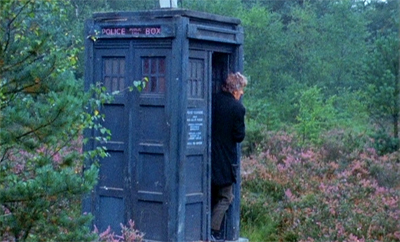
We need a Doctor in the TARDIS!

Continue reading

Doctor Who: The Aztecs (Review)

To celebrate the fiftieth anniversary of the longest-running science-fiction show in the world, I’ll be taking weekly looks at some of my own personal favourite stories and arcs, from the old and new series, with a view to encapsulating the sublime, the clever and the fiendishly odd of the BBC’s Doctor Who.

The Aztecs originally aired in 1964.

Don’t you see? If I could start the destruction of everything that’s evil here, then everything that is good would survive when Cortes lands.

But you can’t rewrite history! Not one line!

– Barbara and the Doctor discuss time travel

The Aztecs is generally considered one of the show’s very best historicals, so I think it’s absolutely wonderful that the adventure has managed to survive the purges that wiped out a significant portion of the Hartnell era and a huge chunk of Patrick Troughton’s work.

A low-tec culture?

Continue reading

Doctor Who: An Unearthly Child (Review)

To celebrate the fiftieth anniversary of the longest-running science-fiction show in the world, I’ll be taking weekly looks at some of my own personal favourite stories and arcs, from the old and new series, with a view to encapsulating the sublime, the clever and the fiendishly odd of the BBC’s Doctor Who.

An Unearthly Child originally aired in 1963.

“Just open the doors, Doctor Foreman.”

“Eh? Doctor who? What’s he talking about?”

– Ian and the Doctor drop the title

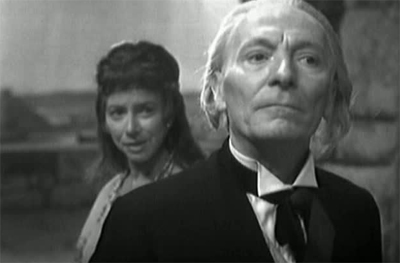
And so, it begins…

There from the beginning…

Continue reading

Non-Review Review: The Omen

A whole bunch of ropey sequels and a dodgy remake aside, The Omen remains a rather wonderful little Satanic thriller, and a fantastic horror movie in its own right. The sixties and seventies were populated with reproductive horrors like Rosemary’s Baby and The Omen, and I think that there’s a reason that The Omen has endured. More than three decades after its original release, The Omenremains a superb example of seventies horror at its very finest.

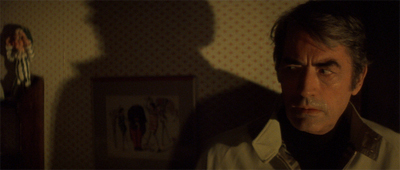
Not quite father-of-the-year material…

Continue reading

No More Animated Patrick Troughton? It’s a War Crime!

The War Games, the final Doctor Who serial featuring Patrick Troughton, materialises on DVD today. I haven’t seen it (I’ll probably pick it up from HMV today if the price is right), but reviews seem to state it’s one of the show’s few ten-parters that doesn’t feel padded… well as padded. Anyway, I’m a big fan of Troughton’s Doctor (whose one-adjective-summation would be “loveable” – in the same way that Tom Baker’s would be “dramatic” or Eccleston’s would be “human” or Hartnell’s would be “bratty” and so on), but we’re nearing the end of Troughton serials available for release. Which is a damned shame. Is animation the next step forward?

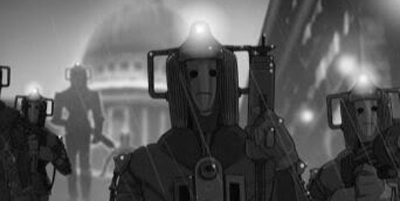
The "Reanimated" Cybermen...

The "Reanimated" Cybermen...

Continue reading