• Following Us

  • Categories

  • Check out the Archives


  • Awards & Nominations

The Meta Movie Monster Milieu: The Postmodern Horror Film…

Horror films have historically performed very well.

They never really get the same attention or focus as more prestigious genres like drama or even comedy or action, but they tend to chug away reliably in the background. Since the explosion of blockbuster filmmaking during the seventies, horror has always had several innate advantages over other genres. Horror films are cheaper to produce than star-studded dramas, period pieces, or epic spectacle, meaning that they have to earn less money to be profitable. Horror films are also largely seen as disposable and fun films, so there is always a market for these films and they tend to be insulated from bad reviews.
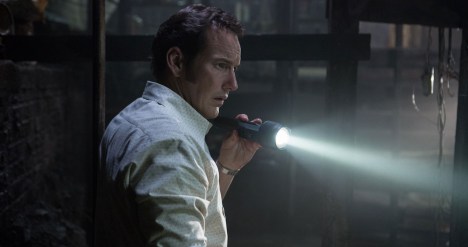
Indeed, there has been a miniature horror revolution over the past few years, itself building on the low-budget found footage revolution of the first decade of the twenty-first century. Very few people seem to talk about it, but director James Wan seems to have built what is Hollywood’s second successful shared universe with the nexus connecting films like The Conjuring and The Conjuring II to movies like Annabelle and The Nun. Indeed, the success of these films has even led to a sort of weird hybrid of revived seventies horror stylings with blockbuster narrative sensibilities.

However, there has also been a quieter revolution in horror storytelling, with several low-budget and independent horror films gaining critical and cultural traction. Films like The Babadook were greeted with enthusiasm. Get Out become one of a handful of low budget horror films to secure a Best Picture nomination. Films like Hereditary emerge from the festival circuit with considerable buzz. Horror movies have always been pointed towards and engaged with contemporary politics, often in a manner more visceral than the prestige dramas around them. However, it seems that is finally being acknowledged.

With all of this happening within the genre, there has been something else bubbling through contemporary horror cinema. Films like It Follows, Don’t Breathe, Lights Out and A Quiet Place represent a fascinating shift within the genre towards more self-aware storytelling. There is a decidedly meta quality to horror films like It Follows, Don’t Breathe, Lights Out and A Quiet Place. As with horror films like The Babadook and Get Out, these are films that hinge on the audience’s understanding of the mechanics and structure of horror films, weaponising the viewer’s expectations.

However, these films are markedly different from companion horrors like The Babadook and Get Out, films that use the language of horror to construct broader allegories. Instead, films like It Follows, Don’t Breathe, Lights Out and A Quiet Place are horror films that often seem to be explicitly about the experience of watching horror films.

Continue reading

Non-Review Review: Game Night

Game Night is a delightfully strange creation, the kind of film that feels willfully esoteric.

Game Night a comedy built around an extended whole plot reference to a largely forgotten-by-all-but-hardcore-devotees mid-tier nineties David Fincher movie. Despite amassing something of a cult following, and despite the fact that it has aged relatively well as an example of Fincher’s craft, The Game is largely seen as a curiousity in Fincher’s filmography. It lacks the gravity and cultural weight afforded to the Fincher films that impacted the zeitgeist and resonated with critics; se7en, Fight ClubZodiac, The Social Network.

A cheesy premise.

As such, it is strange to see a comedy built as an extended homage to The Game. Not that there is anything wrong with The Game. As with any Fincher film, it is a very well-constructed film and one that is satisfying on its own terms, even if it never elevates itself in the same way as the best of the director’s work. It seems like a strange choice for a loving spoof twenty years after the fact. Perhaps Game Night can be contextualised as one of the more bizarre and specific expressions of the nineties nostalgia otherwise referenced in films like Jurassic World or Independence Day: Resurgence.

However, what is especially striking about Game Night is its commitment to this singular extended reference. This is not a film recycling the basic concept of The Game, it is a film defined and shaped by The Game. While it is very clearly nested inside the framework of a contemporary studio comedy, Game Night proves endearingly invested in its inspiration. Game Night is very… well… game.

Getting on board with the premise.

Continue reading

Star Trek: Voyager – One Small Step (Review)

Star Trek: Voyager marks the end of the future.

Many fans would point to Star Trek: Enterprise as the moment that the larger Star Trek franchise turned its gaze backwards and embraced a sense of broad nostalgia for a future that was already behind that explored in the original series. After all, the last television series of the Berman era took the franchise back to its roots and paved the way for both J.J. Abrams’ pseudo-reboot in Star Trek and for Bryan Fuller and Alex Kurtzman’s prequel in Star Trek: Discovery.

First (and Last) Flight.

However, this overlooks the importance of Voyager in signposting this shift. In some ways, Voyager represents the end of the final frontier. Chronologically speaking, Endgame is the last episode of the larger Star Trek franchise, the future beyond the finale explored only in Star Trek: Nemesis and as part of the back story to the rebooted Star Trek. Chronologically speaking, Voyager represents the last television series within the Star Trek universe. However, Voyager very carefully and very consciously seeds the nostalgia that would later envelope the franchise.

This is obvious in any number of ways. Voyager is a show that is literally about the desire to return home rather than to push forward. Caretaker established the show as an extended homage to fifties pulp storytelling. The politics of the series – reflected in episodes as diverse as Real Life, Displaced and Day of Honour – were decidedly conservative. Even the genre trappings of the series were often framed in terms of mid-twentieth century pulp fiction; the space lift in Rise, the broad allegory in Innocence, the atomic horror of Jetrel.

We come not to praise Voyager, but to bury it.

However, all of this is rooted in a very conscious yearning on the part of Voyager to connect to its roots. Numerous small scenes across the seven-season run of the show hint at this sentiment; Janeway discussing the romantic past in Flashback, the literal journey home in Future’s End, Part I and Future’s End, Part II, the retrofuturism of Tom Paris’ various holoprogrammes, Janeway’s fascination with her long-lost ancestor in 11:59. There was a sense that Voyager was a series as intent on journeying backwards in time as much as space, even outside of its time travel obsession.

One Small Step stands out as one of the most obvious and blatant examples of this nostalgia within Voyager, in many ways feeling (like Friendship One in the subsequent season) like an attempt to seed the literal prequel that would materialise in Enterprise.

It turns out that John Kelly crossed over into a subspace anomaly drawn by Jack Kirby.

Continue reading

New Podcast! Primitive Culture #19 – Star Trek: Voyager, History and Nostalgia

Over the Christmas Break, I had the pleasure of sitting down with the wonderful Duncan Barrett and talking about Star Trek: Voyager. Duncan is a historian, and I’ve had the pleasure of quoting some of his work on the blog in the past. He hosts Primitive Culture, with Tony Black and Clara Cook, a show wherein the hosts discuss certain historical-related items of interest in the Star Trek canon.

Duncan was in Ireland for part of the break, and so we took the opportunity to have a sit down to talk about the unique approach that Voyager had to the ideas of history and nostalgia within the Star Trek canon, how it viewed both the past and the future. We particularly focused on episodes like Distant Origin and Living Witness, along with a broad discussion of particular themes. It was a fun discussion, and you can listen to it below or directly via Primitive Culture‘s homepage on trek.fm.

Twin Peaks – Northwest Passage (Review)

This is Special Agent Dale Cooper.

Gary Cooper?

Agent Cooper. Agent.

Twin Peaks remains something of a pop cultural oddity.

Despite its trappings and its pedigree, Twin Peaks was not a niche phenomenon. It was an event. The pilot was the most-watched television movie of 1990, and set about a wave of speculation and engagement. The series inspired a whole generation of television copycats, from Picket Fences to The X-Files. It redefined what was possible on television. It was a water-cooler show. This fact is somewhat obscured by the underwhelming ratings of the recent relaunch and even the sharply declining ratings of the original run.

And yet, in spite of all of that, Twin Peaks is undoubtedly the product of David Lynch. Of course, Lynch was working with writer Mark Frost, who deserves a great deal of credit for fashioning Lynch’s surrealist tendencies into something as coherent and accessible as Twin Peaks. Nevertheless, Twin Peaks is very much “of a piece” with the rest of the director’s work. Even beyond its use of familiar faces and its unmistakable tone, there is a clear sense that Twin Peaks belongs alongside Lynch’s films like Blue Velvet, Mulholland Drive and Inland Empire.

However, the beauty of the original Twin Peaks is the way in which so skillfully distills that illusive and ethereal Lynchian quality into something that is much more conventional than a lot of his cinematic output; something that has the same depth and uncanniness that defines so much of Lynch’s work, while also seeming very much in tune with the popular consciousness. It is a rare quality, a piece of art both universal and specific.

Continue reading

“My World Doesn’t Exist Anymore.” Man of Steel, Batman vs. Superman, and the Rejection of Nostalgia

Man of Steel and Batman vs. Superman are deeply flawed films. However, they are also breathtakingly ambitious films.

There are very few big budget blockbuster films that look and feel like Man of Steel and Batman vs. Superman. Actor Henry Cavill has diplomatically described Batman vs. Superman as a “niche” film in order to account for the openly hostile fan and critic reaction to the movie. There is a sense that Cavill was trying to offer an apology without an apology, to appease certain vocal segments of fan culture without throwing his work under the bus. However, there is some truth in his words.

It is tempting to wonder how much of the vocal and aggressive online response to Man of Steel and Batman vs. Superman comes down to the fact that these movies challenge popular perceptions of these iconic characters. Comic book writer Mark Waid was very vocal in his dislike of Man of Steel, not on the basis of the direction or the choreography or the framing or the craft, but because the film misunderstood “the essential part of Superman.” These complaints were echoed across the the blogosphere.

An unchallenged and unspoken assumption crept into discussions and debates around Man of Steel and Batman vs. Superman. The primary argument seemed to be that this wasn’t really Superman and this wasn’t really Batman, because these characters were so impossible to reconcile with the popular image of these characters. Many criticisms of Man of Steel and Batman vs. Superman measured them against other iterations of the characters, real and imagined. Man of Steel wasn’t colourful enough. Superman doesn’t kill. Lex Luthor is not Mark Zuckerberg.

The idea was that Man of Steel and Batman vs. Superman violated some unspoken compact with the audience, that it offered a version of these characters and their world that didn’t line up with audience expectations. Indeed, this is perhaps most notable in the inevitable comparisons between Zack Snyder’s work and the output of Marvel Studios. Marvel Studios had spent the better part of a decade building a reputation as a studio that was faithful and respectful of its source material, to the point of slavishness. Marvel Studios offered uncomplicated, straightforward adaptations.

However, there is a sense that Man of Steel and Batman vs. Superman were rather consciously rejecting the culture of nostalgia that has become so dominant and overwhelming in contemporary blockbuster cinema, that the films represented a conscious effort to challenge audience expectations and to push provocative and ambitious interpretations of these characters and their mythos. Indeed, it is hard not to see the audience’s vicious and aggressive response to Man of Steel and Batman vs. Superman as a response to that.

Continue reading

Trump Trek: How Star Trek: Voyager is Perfectly Trumpian Star Trek…

Star Trek has built up a fascinating pop culture mythology around itself. There is an interesting dissonance between that memory and the reality.

The fond memory of a thing is not the thing itself. It is a cliché to observe that the line “beam me up, Scotty” was never actually said on the original show, but many casual fans associate the phrase with the franchise. Even hardcore Star Trek fans tend to gloss over the historical record in favour of affectionate memory. Many fans remember the pointed anti-Vietnam rhetoric of A Taste of Armageddon, Errand of Mercy or The Trouble with Tribbles. Few remember the pro-Vietnam tone of Friday’s Child, The Apple or The Omega Glory.

There is a tendency to believe that Star Trek has always been progressive, that the franchise has always embraced tolerance and actively pursued diversity. However, the reality is often more complicated than that. This why certain sections of the fanbase seem to react in abject terror to concepts like “Trek Against Trump”, a campaign organised by Armin Shimerman to protest the racism and xenophobia espoused by the (then-) candidate Donald Trump. One would imagine that rejecting sexism, racism, white nationalism would be a no-brainer for fandom, but it was not.

Indeed, this reactionary strain of fandom has come up time and again in the context of Star Trek: Discovery. Certain vocal sections of the fan base have objected to the diversity of the primary cast, despite the fact that Star Trek: Deep Space Nine arguably had a much more diverse ensemble. The backlash has reached the point that the cast have had to actually give interviews that racism is a very bad thing and that the franchise is very much about tolerance and understanding. Similarly, the news that the series would be overtly political has rattled some cages in fandom.

In theory, these reactions should be shocking. The Star Trek franchise has carefully cultivated a reputation for liberalism and idealism. Indeed, the Federation is quite explicitly socialist, something hinted at in Star Trek IV: The Voyage Home and explicitly confirmed in Star Trek: First Contact. On a more fundamental level, the franchise is about people from different cultures and with different values coming together to work in common purpose. It seems reasonably fair to argue the franchise would disagree with concepts like “the Muslim Ban” or “the Transgender Service Ban.”

However, the truth is that there has always been a reactionary streak lurking within the franchise. And nowhere has that reactionary streak been stronger than in Star Trek: Voyager, bleeding over into the creation and first two seasons of Star Trek: Enterprise.

Continue reading

Star Trek: Voyager – Bliss (Review)

Bliss is a textbook example of Star Trek: Voyager doing textbook Star Trek.

The episode feels like a stew composed primarily of leftovers, the residue of past meals thrown together to serve up something lukewarm and familiar. Bliss is not necessarily a bad episode of television, per se. It is rather lifeless and generic, but it is hardly the weakest episode of the season or the series. Instead, Bliss is the kind of episode that fades gently from memory, a hollow confection that doesn’t taste particularly nice, but which at least offers something to chew over.

Good Sheppard.

Bliss is a cocktail of familiar Star Trek plot elements. At the centre of the story is the sort of gigantic monstrous space entity that haunted earlier tales like The Immunity Syndrome or Datalore, a reminder of how weird and dangerous space can be. The “pitcher plant” in Bliss recalls the parasites from Operation — Annihilate! or the space vampire from The Man Trap. It feels like something almost Lovecraftian, a “beast” with tendrils that reach into the minds anybody near enough so that it might lure them to their doom. It is unfathomable to those caught within its grasp.

Qatai exists in opposition to this malign entity, caught in an immortal struggle with a force more vicious and more powerful than he could ever be. The EMH compares Qatai to Ahab, acknowledging the debt that Bliss owes to Moby Dick. Of course, the Star Trek franchise is populated with stories built upon that classic template; Obsession, The Doomsday Machine, Star Trek II: The Wrath of Khan, Star Trek: First Contact, Star Trek: Nemesis, Star Trek. It is hard to think of a more generic source of inspiration for an episode of Star Trek.

The show could use a shot in the arm.

Even beyond that, Bliss touches on plot ideas and elements that will be familiar to most Voyager viewers. As with episodes like Eye of the Needle or False Profits, the crew are tempted by a phenomenon that seems to promise the possibility of getting the crew home quickly. As in Hope and Fear and The Voyager Conspiracy, Seven of Nine becomes preoccupied with the notion that she is the only member of the crew with an objective perspective that allows her to see the truth. As with The Cloud or One, this might be deemed an “anomaly of the week” episode.

The result is something the feels very much like a representative distillation of Voyager, the statistical mean of the series derived to a decimal point. Bliss is perhaps the perfect encapsulation of Voyager as a television show. It is neither truly great or truly awful, it is merely there.

Coming down to Earth.

Continue reading

Star Trek: Voyager – Bride of Chaotica! (Review)

Bride of Chaotica! is an enjoyable mess.

As its title implies, Bride of Chaotica! is a celebration of nostalgic futurism. It is a culmination of a number of themes running through the series. Most obviously, this particular brand of retrofuturism has been a recurring gag since Night at the start of the fifth season, but it fits within a broader context. From the outset, Star Trek: Voyager has been engaged with a more nostalgic sci-fi aesthetic than Star Trek: The Next Generation or Star Trek: Deep Space Nine.

Bride of evil.

Voyager‘s retrofuturism has taken various forms; the old school “space western” tone established by Caretaker, the retro sci-fi trappings of episodes like Innocence or Rise, the monster mayhem of episodes like Phage or Macrocosm, the Cold War paranoia of Cathexis or In the Flesh, Tom Paris’ nostalgic holoprograms in Lifesigns or Vis á Vis, the abductees from the early twentieth century in The 37’s. However, perhaps the most basic is baked into the concept of the show. Voyager is literally a series about the desire to return to a safer and more familiar time.

In some ways, Bride of Chaotica! cements this nostalgia in the context of the larger Star Trek canon, embracing the anxiety that has become increasingly apparent in the years since the thirtieth anniversary. After all, the surrounding feature films all literalise the pull of the past. Star Trek: First Contact has Jean-Luc Picard literally journey back to twenty-first century Earth while revisiting his most iconic moment. Star Trek: Insurrection has the crew discover the fountain of youth. Star Trek: Nemesis confronts Picard with a younger clone of himself.

Radio Chaotica!

It is perhaps telling that Voyager was the moment at which the Star Trek franchise stopped pushing forward. During and after Voyager, the franchise would become increasingly backwards-looking. Star Trek: Enterprise would invite the audience to meet James T. Kirk’s childhood era, trying to recapture that old magic. JJ Abrams’ Star Trek reboot would focus on a young version of Kirk and Spock. Star Trek: Discovery will feature a central character who is something close to Spock’s sister. There is a conscious pull of nostalgia.

Perhaps the future was better yesterday.

Never too far afield.

Continue reading

Non-Review Review: Star Trek – Insurrection

“I think I’m having a mid-life crisis,” Riker tells Troi at one point in Star Trek: Insurrection, and it might be the most telling line in the film.

Insurrection is many things, perhaps too many things. However, it primarily feels like a meditation on what it means to grow old, focusing on the cast of Star Trek: The Next Generation. That first live-action Star Trek spin-off had revived the franchise as an on-going cultural concern, even launching a feature film franchise including Star Trek: Generations and Star Trek: First Contact, and spawning its own spin-offs including Star Trek: Voyager and Star Trek: Deep Space Nine.

A fist full of Data.

However, by the time that Insurrection arrived, The Next Generation was looking quite old. The Next Generation had launched more than a decade earlier, and had been off the air for almost five years. Although it had been a pop cultural behemoth, even its children (or its younger siblings) were starting to look a little long in the tooth. Deep Space Nine was in its final season, and Voyager was closer to its end than to its beginning. There was a creeping sense of fatigue and exhaustion.

In theory, this positions Insurrection quite well. After all, the original feature film franchise really came into its own when the characters found themselves forced to confront their own mortality. Star Trek II: The Wrath of Khan breathed new life into the franchise as it forced Kirk to come to terms with his old age, while Star Trek III: The Search for Spock indulged the sense of grown-ups behaving badly in a story that forced Kirk to throw aside his ship and his career in service of an old friend.

Picard’s hairpiece was fooling nobody.

Stories about age and mortality resonate, and so Insurrection has a fairly solid foundation from which to build. There is just one sizable problem. The cast and crew of The Next Generation have no intention of growing old, of wrestling with mortality, of confronting their age. Insurrection is fundamentally a story about rejecting this maturity and this sense of age, of refusing to accept that time takes its toll and denying that old age is best faced with solemn dignity and reflection.

Insurrection is a story about mamboing against the dying of the light.

A familiar dance.

Continue reading