• Following Us

  • Categories

  • Check out the Archives


  • Awards & Nominations

Non-Review Review: High Flying Bird

High Flying Bird is a quietly radical movie about a sports agent.

This should not be a surprise. Director Steven Soderbergh is a director fascinated with systems, particularly capitalist systems. Unsane might have taken the form of a trashy and tacky nineties thriller, but it was primarily interested in exploring the horrors of a psychiatric industrial complex. Side Effects touched upon the way in which pharmaceutical companies and legal systems work. Contagion was a story about structural responses to a viral infection that spread rapidly through an increasingly interconnected world.

Managing the situation.

With that in mind, it makes sense that Steven Soderbergh’s movie about the NBA lockout of 2011 would feature very little actual basketball. Sure, footage of games plays on several of the large flatscreens adorning bar or office walls, but it’s just window dressing. Just when it looks like Soderbergh might actually show a game, he cuts away dramatically to a shot of a billionaire’s daughter carrying her dog on board a private jet, flanked by two helpful staff holding umbrellas to protect her from the wind. High Flying Bird is about basket ball as an institution, but not a sport.

A cynic would argue that  High Flying Bird is about basket ball in the same way that the NBA is about basket ball, interested in institutions and structures more than the actual sport itself. Such a cynic would be right at home in the world of High Flying Bird, where characters talk freely and repeatedly about the  “game that’s been played behind the game”, “the game that they made over the game”, or “a game on top of a game.” Professional basket ball is not about basket ball, High Flying Bird argues coherently and consistently. Professional basket ball is about profiting off basket ball.

“What are you doing here?”
“Beatz me.”

High Flying Bird is drawn from a script by Tarell Alvin McCraney, who is perhaps best known for working on the story for Moonlight with Barry Jenkins. Indeed, the cast is anchored by Moonlight co-star André Holland. High Flying Bird recalls Moneyball, in that it is a film about sport that does not feature sport, understanding that the activity does not exist in a vacuum. For High Flying Bird, professional basket ball is about money and power and race, and the real game is being played away from where the camera and the audience is looking.

The only thing that keeps High Flying Bird from being a slam dunk is a lack of focus. High Flying Bird doesn’t entirely trust its cast and its premise to hold the audience’s attention through all of these conversations about abstract concepts layered upon abstract concepts placed over a game that the film only shows in the background. As a result, McCraney and Soderbergh crowd out the story with subplots designed to generate human interest; a tragic back story, an emerging romance. These elements ultimately distract from the most interesting aspects of the film.

This screenshot is also about capitalism. Somehow.

Continue reading

Non-Review Review: Alita – Battle Angel

Alita: Battle Angel is the result of a creative union between James Cameron and Robert Rodriguez.

This partnership makes a certain amount of sense. Both Cameron and Rodriguez are genre film-makers, and one suspects that the two men would have been fast friends had they emerged at around the same time; Cameron came of age making films like Piranha 2 or Terminator, and those are certainly of a piece with Rodriguez’s filmography from Desperado through to Planet Terror and even Sin City. Cameron has arguably elevated his work into the mainstream, in that it is impossible to imagine Rodriguez producing a mass-appeal cultural smash like Cameron did with Terminator 2: Judgment Day Titanic or Avatar.

Slice o’ life.

However, allowing for that core similarity, Cameron and Rodriguez are still fundamentally different film-makers. Their interests might align when it comes to genre work, but they construct their movies in a very different manner, with a different emphasis on different aspects of their technique. Cameron is much more interested in bringing polish to his genre work, in finding a way to transform otherwise niche high-concept tales into crowd-pleasing blockbusters with mass appeal. In contrast, Rodriguez revels in the grottier aspects of his genre work, believing that the lack of sheen is part of the appeal.

Alita: Battle Angel finds these two aesthetics at odds with one another. The story at the heart of Alita is pure Cameron, dedicated to world-building and social commentary while relying on exposition and centring on big set pieces. However, the delivery of Alita is very much in the style of Rodriguez, stressing cool beats and individual sequences rather than the singular cohesive whole. The result is jarring and deeply fascinating, but it doesn’t quite come together. Alita is an intriguing piece of cinema, but a less than satisfying would-be blockbuster. Like its central character, it seems constructed of parts that don’t quite fit.

Red is dead.

Continue reading

Non-Review Review: The Lego Movie 2 – The Second Part

Appropriately enough, given the brand involved, The Lego Movie 2: The Second Part very skillfully builds on The Lego Movie.

Of course, The Second Part faces the typical challenges that haunt sequels to beloved and genre-bending films. A large part of what made The Lego Movie such a joy was the way in which it played with audience expectations of what it could be. More specifically, it built very cleverly and very consciously to a late development that was both entirely organic and very surprising, which is a difficult balance to strike. The Second Part starts with that late development baked into the premise, which means that it can’t pull the same twist again. It removes an important toy from the chest.

Bricking it.

However, while The Second Part lacks the novelty that made The Lego Movie so refreshing, it does have the advantage of building on what came before. In keeping with the nature of the toys depicted, The Second Part has the luxury of building upon an established template to tell its own story. The Second Part can trust that the audience understands the logic (both literal and metaphorical) that guided The Lego Movie, and so can develop that idea in interesting directions.

The result is a sequel that is fulfilling and satisfying, but which never quite matches the highs of the original film. The Second Part is clever, funny and canny. However, it is also – by its very nature – less innovative and creative. The results are impressive and affecting. While they don’t have quite the same impact as they did in The Lego Movie, the success of The Second Part is at least reassuring. That the template works so well even without disguising its twists offers proof that the fundamental building blocks are solid.

Piece in our time.

Continue reading

Non-Review Review: Can You Ever Forgive Me?

Can You Ever Forgive Me? is, at its core, a story of authenticity.

It is the tale of Lee Israel, the noted biographer who hit a bit a creative and economic snag in the early nineties. Unable to shop around her planned biography of Fanny Brice, Israel instead decided to market forgeries; type-written letters offered up in the voices of famous writers, auctioned on the collector’s circuit. Israel had a knack for capturing the voices of her subjects, from Noel Coward to Dorothy Parker. In fact, Israel’s work was often deemed indistinguishable from the real thing, at least in an abstract and narrative manner.

Forging ahead.

There is something very timely in this premise, in the blurred boundaries between the real and the fake. Of course, this has been an aspect of the American character for well over a century, with P.T. Barnum famously advertising an obvious phony as “a genuine fake.” However, Can You Ever Forgive Me? arrives at a moment in time where the real and the fake seem to have collapsed into one another, where reality is often indistinguishable from fantasy, populated by people who will often happily accept a heartwarming fake over cold reality.

Can You Ever Forgive Me? is largely an unshowy piece of awards fare. The film is never self-consciously stylised and never overly aggressive. Can You Ever Forgive Me? never seems sure how thrilling or how funny or how dramatic it should be, and so tries to split the difference between those three extremes. The result is a very broad film with a very familiar central arc. However, Can You Ever Forgive Me? very insistently avoids getting in its own way, which allows its two central leads room within which they might work their magic.

“Gee, Richard E. Grant sure plays a good drunk.”

Continue reading

Non-Review Review: Velvet Buzzsaw

Velvet Buzzsaw is a broad and blackly comic exploitation horror story.

Of course, Velvet Buzzsaw has all the trappings of a biting social satire about the shallowness of the art world, the kind of cartoonish takedown that has been a pop culture staple for decades, built on the acknowledgement that the world of commercial art is vapid and that the people who inhabit that world are delusional and self-centred. There’s certainly an elements of that to Velvet Buzzsaw, which populates its cast with the kinds of characters who might be ordered in a box set for that kind of film; the pretentious and insecure critic, the conniving climber, the manipulative dealer, the precious artist.

The art of horror.

However, Velvet Buzzsaw has nothing particularly new or interesting to say about these characters and this world. In fact, the opening half-hour or so that the film spends with these characters in this world is perhaps the weakest part of the film, often feeling like the television edit of a more pointed and acerbic film. There is a sense that writer and director Dan Gilroy understands this. At one point, early in the film, Rhodora Haze surveys a Miami art show with a potential client. “I get the joke,” she admits. “None of this new.” She may as well be talking about the stretch of the film in which she finds herself.

However, as with Nightcrawler, there is a sense that the social commentary is not the central appeal of Velvet Buzzsaw. Instead, again as with Nightcrawler, the appeal of Velvet Buzzsaw is the manner in which Gilroy appends what is a fairly straightforward criticism of hypercapitalism to the framework of a horror movie, to create a compelling and exciting aesthetic. Velvet Buzzsaw doesn’t work as an angry takedown of a world that has been well-explored across film and television, but it does work as a delightfully schlocky B-movie about (literally) killer art installations.

Painting the town red. And blue. And yellow.

Continue reading

Non-Review Review: Polar

At the heart of Polar is a vaguely interesting idea.

The basic premise of Polar filters an archetypal masculine midlife (or retirement) anxiety through the prism of a hyper-violent fantasia. It is almost a cliché to suggest that certain types of men revert to boys when confronted with their own mortality, but only because it permeates popular culture that treats middle age as a relapsed adolescence reflected in the shiny toys that such men buy and the selfish decisions that such men make. Polar just takes that central metaphor and runs with it.

The assassin who came in from the cold.

Even beyond that basic concept, there’s something potentially compelling in the premise of an assassination-themed black comedy that hinges on what amounts to a pension swindle. It’s hyper-capitalism run wild, the commodification of human life to the point that workers are literally killing one another to prevent the company from having to make a pay-out. The Other Guys managed that deft balance with ease and grace. On some strange level, it’s fun to imagine a hyper-violent assassination thriller rooted in something as mundane as balance sheets, mergers and annual reports.

Unfortunately, Polar is a disaster of a film. It just doesn’t work. More than that, the ways in which it doesn’t work are painfully and predictably mundane. It’s leery, voyeuristic and trashy, but not in any fun way. It has a weird anal fixation that most obviously manifests itself in those sleazy tight close-ups of female derrieres, but which has a slight equal opportunity air to it; audiences are also treated to a number of shots of Mads Mikkelsson’s ass as he thrusts into his female co-stars, and the film opens with Mikkelsson receiving a prostate exam that might serve as a metaphor for the store film.

Not a patch on John Wick.

Continue reading

Non-Review Review: Instant Family

The biggest issue with Instant Family is one of identity.

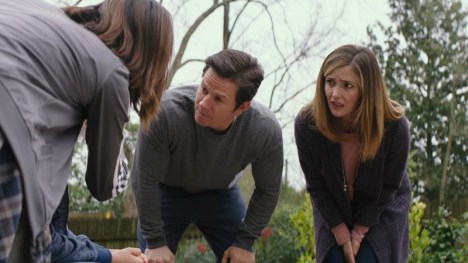
Is Instant Family best approached as a broad feel-good comedy that deals too glibly with serious and deeply affecting issues, or is it an earnest drama that too eagerly punctuates its heart-tugging beats with gags that play loudly the gallery? Instant Family never quite seems to work this out, bouncing quickly from one extreme to another without any sense of internal cohesion. Instant Family often seems unsure of the tone that it wants to hit, which means that it can never maintain a consistent tone for more than a scene or so.

Kids also make great human shields.

To be fair to Instant Family, it is possible to deftly balance the demands of comedy and drama. There are countless great films that balance on a knife-edge between the two extremes, most notably the work of directors like Woody Allen or the Coen Brothers. While there is obviously some debate about how skillfully they pull off this balance, it is also a key ingredient in contemporary Oscar contenders like Vice or Green Book. It is entirely possible for a film to make the audience both laugh out loud and cry softly at the same time. Pixar is very good at this.

The issue with Instant Family is one of speed and extremes, how much ground it tries to cover in navigating the space between funny and moving, and how quickly it tries to cross that space.

Family matters.

Continue reading

Non-Review Review: The Mule

The Mule is an endearingly and charmingly bizarre piece of work, one which plays to both the best and worst impulses of its leading man and director.

A revealing moment comes very early in The Mule, when the protagonist is making his way through a horticultural convention. Pausing at a table where a salesman is explaining that customers can now order their flowers online, Earl pauses and sighs. “The internet,” he mutters to both himself and the audience. “Who needs that?” It’s a moment that serves as something of a litmus test, in which the audience find themselves asking how much that statement illuminates Earl’s perspective or the film’s central arguments.

Who needs Netflix money anyway?

Earl is very much an archetypal Clint Eastwood protagonist. He is crotchety, casually racist, well-intentioned and irresistibly charming. These elements are often uncomfortable when played off one another, with films like Gran Torino playing with the tension between the film’s perspective and the outdated views of its incredibly engaging protagonist. Eastwood is everybody irascible elderly relative, to the point that it’s almost impossible not to like him. Particularly in his later roles, Eastwood rarely plays characters who are actively malicious. They are just insensitive and blunt.

Of course, Earl is also a decidedly ambiguous figure. This is part of what defines him as an archetypal Clint Eastwood protagonist. Eastwood’s screen persona is the very definition of a certain sort of masculinity; confident, assured, assertive, canny. However, Eastwood’s screen persona is also built around deconstructing certain old-fashioned notions of masculinity, picking at the role that violence plays in defining a masculine identity or exploring the emotional consequences of rigid professionalism and stiff stoicism.

Case foreclosed.

Earl is incredibly disarming, and almost impossible not to like, a fact that The Mule repeatedly and consciously acknowledges. From Drug Enforcement Administration agents to cartel enforcers, Earl has the capacity to smooth-talk absolutely anyone. Attending his granddaughter’s wedding, his ex-wife very pointedly has to fight off the urge to succumb to Earl’s charm offensive. The Mule is quite conscious that Earl’s wit and charisma are not the entirety of who he is, and how they belie other less flattering aspects of his personality.

The Mule is a film that is stuck in a constant push-and-pull with its leading man, which results in an uneven but compelling film. The Mule never seems certain what to make of its title character, never sure how seriously it takes him. The result is to leave a lot of space for the audience to navigate their own reaction to the film’s cocaine-carted grandfather.

Not beaten yet.

Continue reading

Non-Review Review: Mary, Queen of Scots

Mary, Queen of Scots is unfocused and unmoored.

Mary, Queen of Scots feels like it should be a star vehicle for Saoirse Ronan. This makes sense. Ronan is a star in ascent. She has three Oscar nominations, and has recently headlined films with broad appeal like Brooklyn and Lady Bird. The concept of building a star vehicle for Ronan from the life and times of Mary Stuart seems like a good idea. Ronan experimented with larger-scale films in her teens like The Lovely Bones or The Host, but it seems perfectly reasonable to have her approach a large scale period drama as a genuine movie star.

Beth left unsaid.

However, Mary, Queen of Scots suffers from what feels like a crisis of confidence. The film’s second-billed lead is Margot Robbie, a successful Oscar-winning actor with similar star wattage to Ronan. Despite the fact that Mary Stuart retained the title of the film, Mary, Queen of Scots has largely been sold and marketed as a film with two leads; consider the misguided #dearsister hashtag publicity campaign, or the misguided branding on the character-focused profiles. It often seems like Mary, Queen of Scots clumsily aspires to be a biography of Queen Elizabeth I.

Mary, Queen of Scots is never entirely sure whether it wants to be a character-driven story focused on one woman’s life or a two-hander about lives in parallel. Watching the film, it feels like the decision was repeatedly taken and revised at various points during production, never committing to one approach for fear that it might preclude the other. The result is uneven and disjointed. Mary, Queen of Scots devotes enough time to Queen Elizabeth I that she feels like a major player, but only managed to get Ronan and Robbie together on set for a single day.

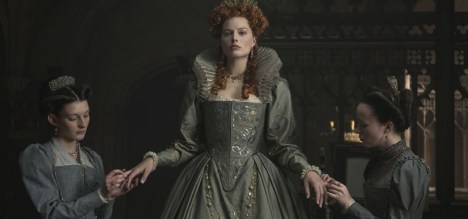
Queen of hearts.

Continue reading

Non-Review Review: Destroyer

At its core, Destroyer is a pulpy, heightened B-movie.

The basic plot involves a former undercover officer who finds herself tidying up loose ends from a botched job twelve years earlier, Erin Bell trying desperately to stay ahead of everything as the walls close in around her. It’s a standard template for a story like this, and audiences will be familiar with the basic structure of the story. Erin’s life is a disaster zone, and there is a sense that she still carries the scars from the trauma she enduring working with a local criminal gang.

She is become death…

As with most other genre exercises like this, Destroyer lives or dies in the execution. The template is so recognisable because it works efficiently. Apply a talented performer, a good director and a solid script to the template, and the movie will work. In that respect, Destroyer benefits from a compelling central performance by Nicole Kidman as Erin Bell, and from director Karyn Kusama’s understanding of the rhythms and tempos of genre exercises like this.

Destroyer stumbles a little bit in its third act, largely due to a completely unnecessary piece of narrative trickery. However, the film is propulsive and compelling enough to make it across the finish line.

Copping to it.

Continue reading