• Following Us

  • Categories

  • Check out the Archives


  • Awards & Nominations

The X-Files – Three Words (Review)

This October/November, we’re taking a trip back in time to review the eighth season of The X-Files and the first (and only) season of The Lone Gunmen.

There is no “to be continued…” explicitly linking DeadAlive to Three Words, but there doesn’t have to be.

In this final stretch of the eighth season, The X-Files adapts a somewhat serialised narrative model. Although stories like Empedocles and Vienen technically serve as “monster of the week” stories that stand alone, they feel very particular to this moment in the show’s history. Mulder’s return to the land of the living in DeadAlive does not mark a return to the status quo, despite his best efforts. Instead, it creates a highly volatile (and, by its nature, transitory) set-up that cannot be maintained over an extended period.
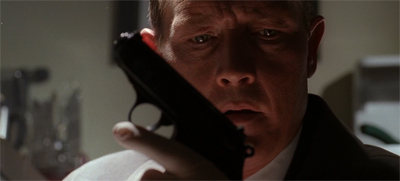
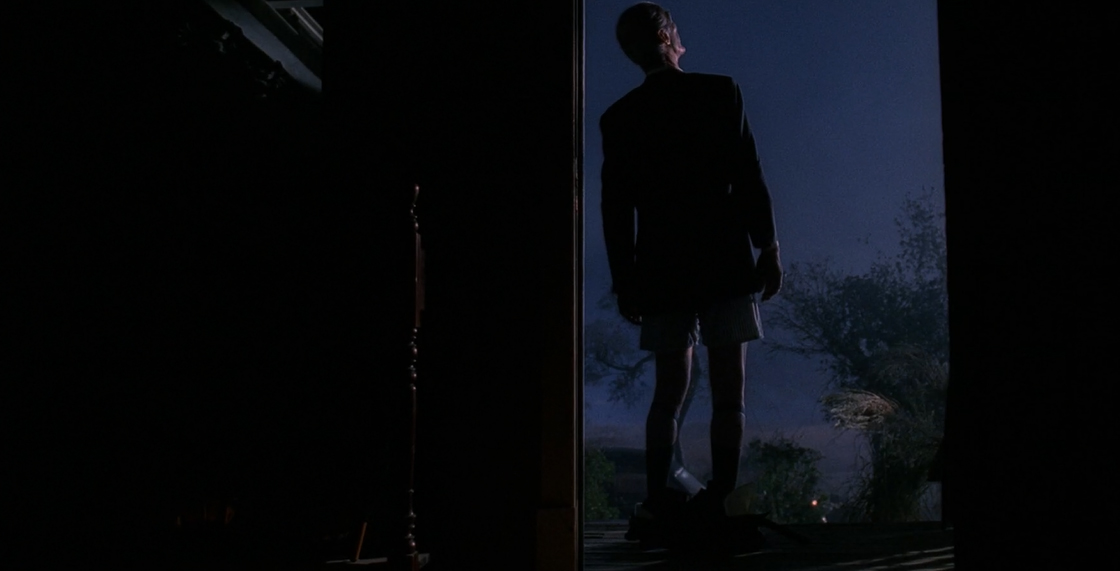
Howard Salt was willing to go to any lengths to return the President's copy of The X-Files film.

Howard Salt was willing to go to any lengths to return the President’s copy of The X-Files film.

This is not a sustainable status quo. This is not “business as usual.” This is not what the ninth season will look like. This is not like those other changes to the status quo that occurred at the start of the second and sixth seasons, when Mulder and Scully were taken off the X-files but continued to investigate cases that were X-files in all but name. Episodes like Blood or How the Ghosts Stole Christmas could be transitioned into a regular season order with a minimum of changes, but these episodes all feel uniquely tailored to this point in the show’s history.

As such, the end of the eighth season takes on a loosely serialised quality, and not just in the story of the new mythology or the so-called “super soldiers.” The character dynamics evolve and grow, with the individual episodes seeding character development leading the season finalé. Episodes like Three Words and Vienen make it increasingly clear that Mulder is not back in an permanent sense by first pushing him away from the X-files and then firing him from the FBI. Scully’s pregnancy is actually allowed to progress at this point in the season.
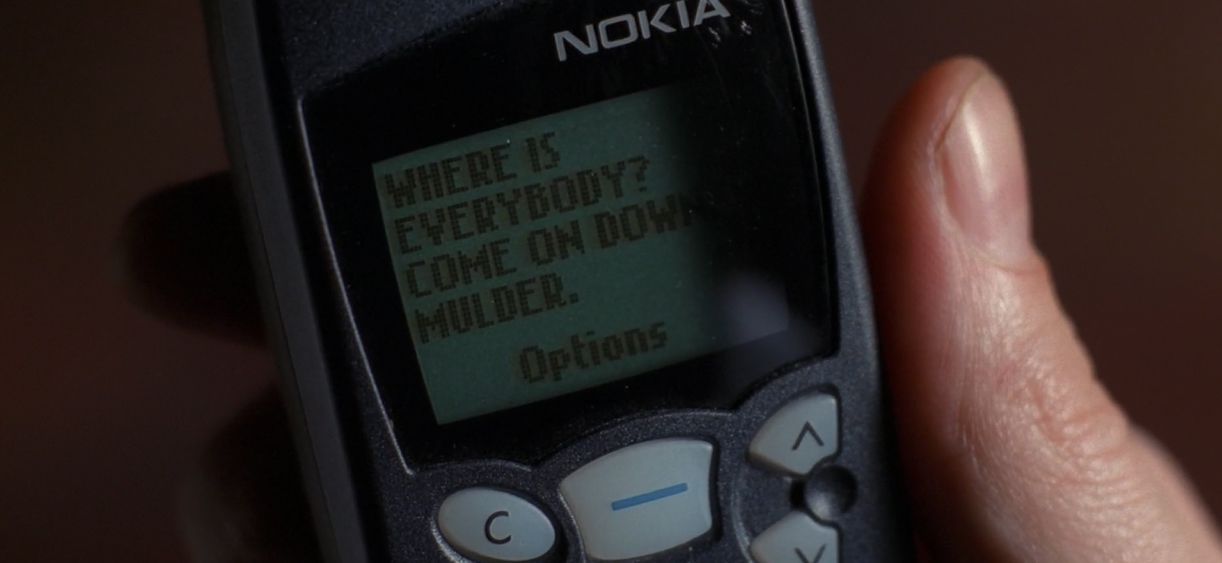
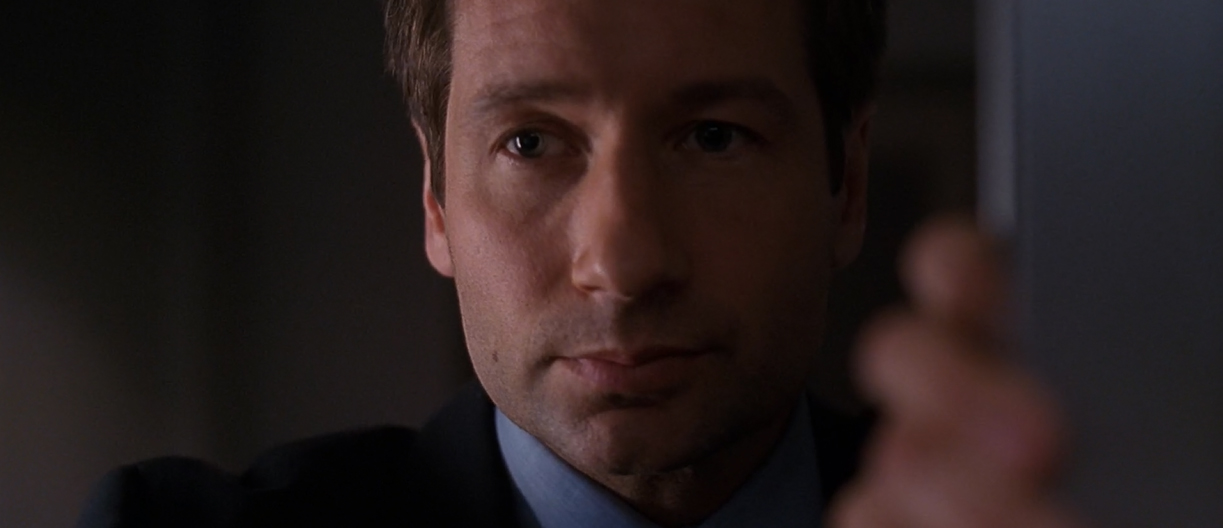
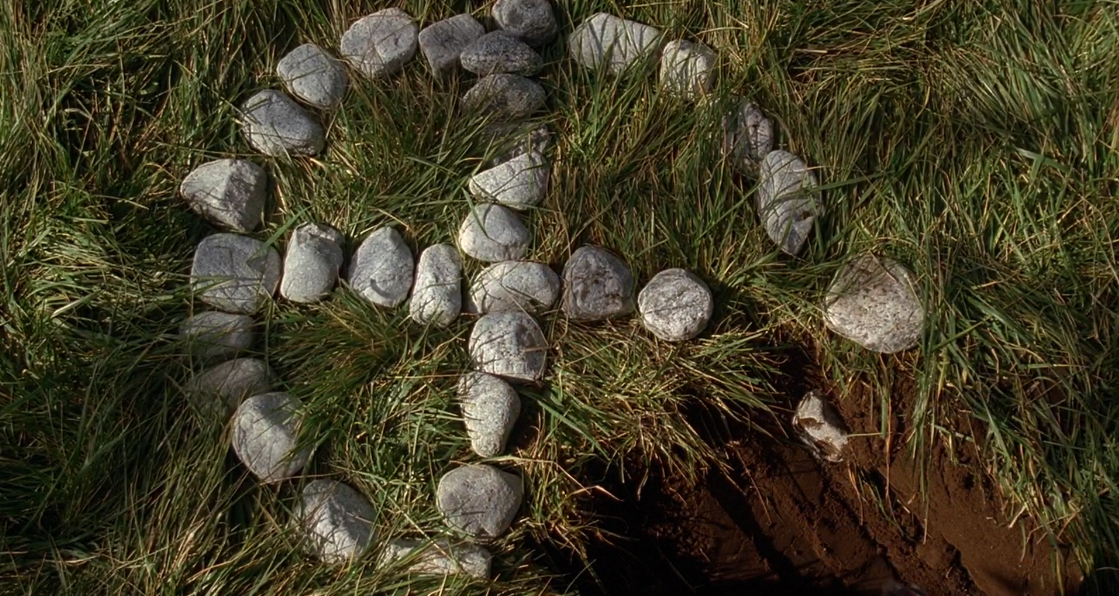
He's back!

He’s back!

This serialisation is apparent in the discrepancies between the production and broadcast order. As with extended sections of the fourth season, the final stretch of the eighth season was produced in a different order than it was broadcast. Unlike the fourth season, however, this shift does not create any dissonance as significant as the conflict between the version of Never Again that was filmed and the one that was broadcast. Despite being produced in a different order, these stories could not work in any order other than the broadcast order.

Although The X-Files frequently gets credit for pioneering and popularising (or, at the very least, re-popularising) serialised narratives on prime-time television, the final stretch of the eighth season is perhaps the serialised stretch of the entire nine-year run.
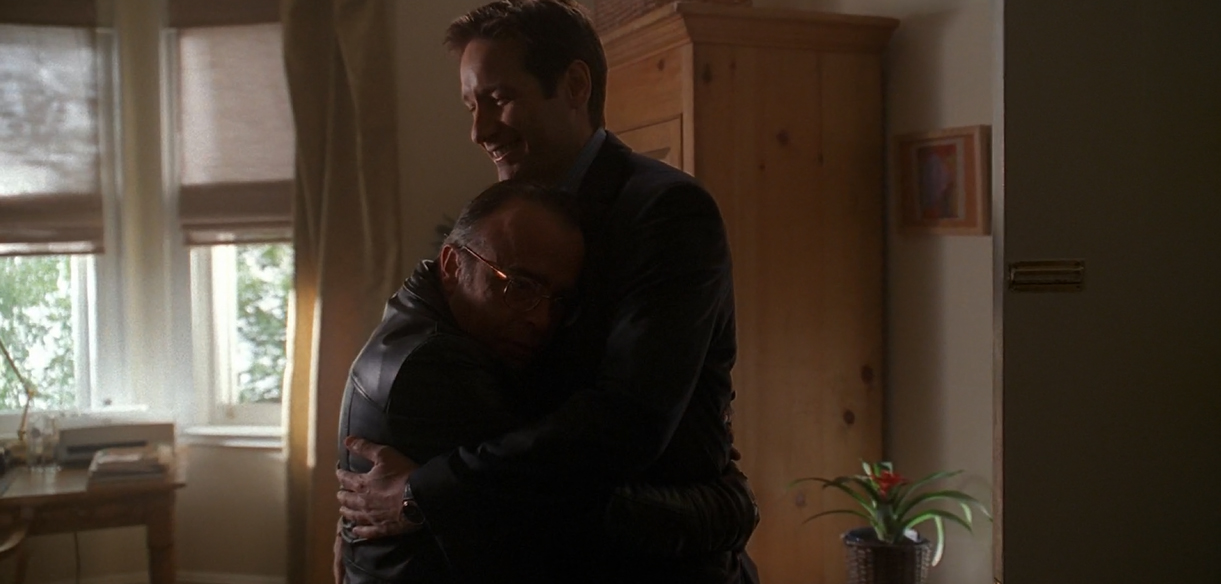
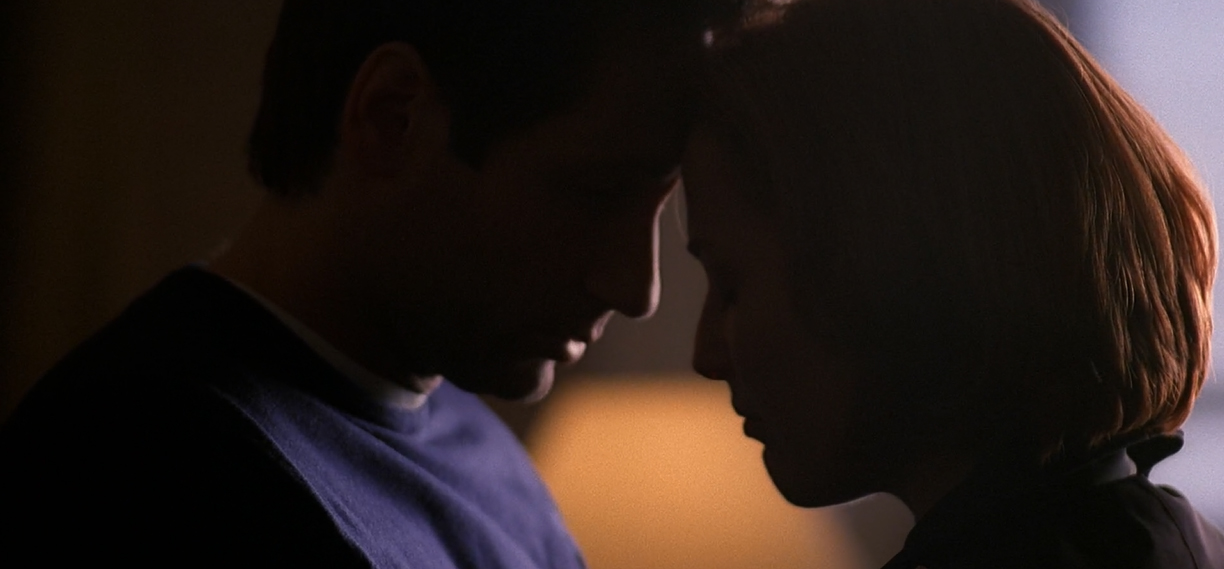
A touching reunion...

A touching reunion…

Continue reading

The X-Files – DeadAlive (Review)

This October/November, we’re taking a trip back in time to review the eighth season of The X-Files and the first (and only) season of The Lone Gunmen.

The X-Files is dead. Long live The X-Files.

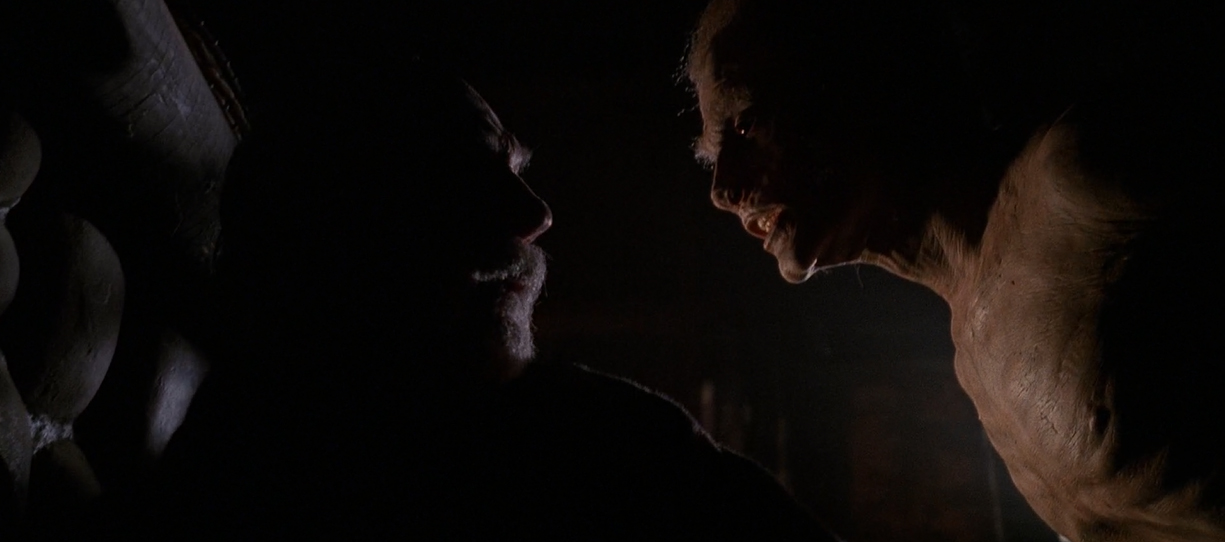
What is dead may never die...

What is dead may never die…

Continue reading

The X-Files – This is Not Happening (Review)

This October/November, we’re taking a trip back in time to review the eighth season of The X-Files and the first (and only) season of The Lone Gunmen.

The eighth season of The X-Files is remarkable in a number of ways.

It accomplishes a lot of things, and does them in a very logical and linear way. The departure of David Duchovny at the end of the seventh season set an agenda for the season ahead, and gave the production team a very clear set of goals. The eighth season required more discipline and planning than any of the previous seven seasons, with less room for improvisation or error. If Chris Carter and his team were to succeed at bringing the eighth season to life, it would require even more care and discipline than the show usually required.

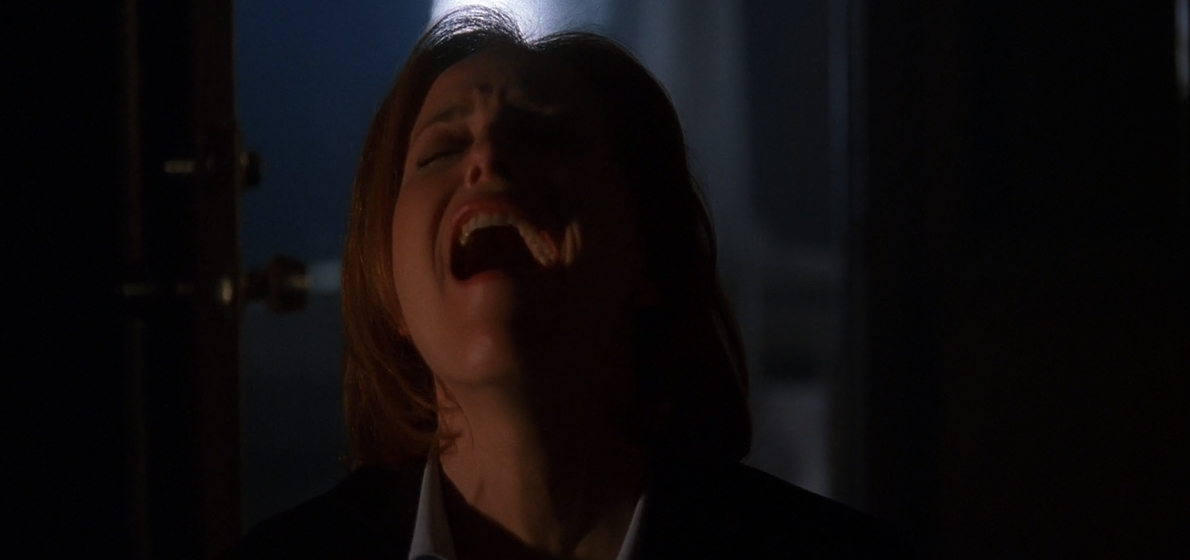
"Nooooo!"

“Nooooo!”

One of the least discussed aspects of the eighth season is the care that the production team took to structure it. The eighth season of The X-Files is the most meticulously and carefully structured season of The X-Files, clearly adhering to an internal three act structure. The first seven or eight episodes (Within to Via Negativa or Per Manum) are all set-up. The next five (Surekill to Medusa) explored that new set-up. The final eight (This is Not Happening to Existence) closed out the plots and threads of the season, leaving the show in a very different place.

The decision to shift Per Manum around in the broadcast order changes things slightly, but there is still a sense that the eighth season was entering its end game in late February 2001. Positioned at the start of the season’s third act, This is Not Happening offers perhaps the bleakest cliffhanger and puts our heroes at their lowest possible point. Adhering to the classic three-act structure, This is Not Happening serves as the emotional climax of the season. With a five week gap between the broadcast of This is Not Happening and DeadAlive, this is one hell of a cliffhanger.

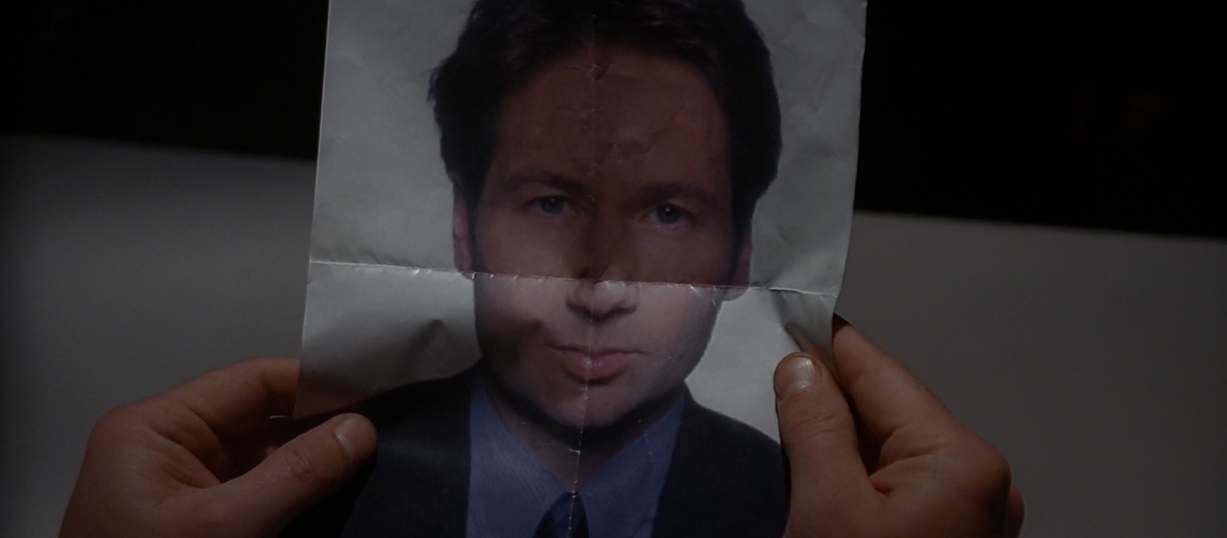
"Have you seen this devilishly handsome man?"

“Have you seen this devilishly handsome man?”

Continue reading

The X-Files – Per Manum (Review)

This October/November, we’re taking a trip back in time to review the eighth season of The X-Files and the first (and only) season of The Lone Gunmen.

Per Manum marks a very serious shift in the eighth season of The X-Files.

It marks the point at which the show becomes more serialised and more tightly interwoven on an episode-to-episode basis than it had been at any point in the past. There are several “monster of the week” stories populating the final third of the eighth season (most obviously Vienen, Empedocles and Alone), but the last eight episodes of the season are more tightly interlocked than any other eight episodes of the show. Perhaps the closest comparison is to the opening nine episodes of the second season, but even the majority of those were stand-alones in a new status quo.

Things past...

Things past…

With Per Manum, the show reengages with the two big central mysteries driving the mythology of the eighth season. The closing moments of Requiem featured the disappearance of Mulder and the revelation of Scully’s pregnancy, establishing them as a driving force for the future of the show. Of course, nobody knew what form that future would take when Requiem was written and filmed. However, it is interesting how little forward momentum the eighth season has on these plot points. Two-thirds of the way through the season, neither is closer to resolution.

Of course, that is not to suggest that the production team have forgotten about Scully’s pregnancy or Mulder’s disappearance. One of the stronger aspects of the eighth season is the way that these details are woven into the plots of episodes where they are not even explicitly acknowledged. Mulder’s disappearance informs Scully’s unspoken reluctance to trust Doggett in Roadrunners; Scully’s pregnancy explains her decision not to go into the subway tunnels with Doggett in Medusa. Still, there is no linear sense of progress by this point of the year.

Hold it there...

Hold it there…

This is probably because these two plot threads cannot necessarily be explored in increments. Within and Without suggested that Mulder was being experimented upon from the comfort a spaceship; short of Scully and Doggett hijacking a space-shuttle, there is little they can do to affect his return but wait. Similarly, Scully’s pregnancy has a natural time limit imposed upon it; short of inducing labour, there is little she can do to affect the outcome but wait. As such, these are not the most dynamic plot points, but they work quite well in the context of the eighth season.

The first two thirds of the eighth season are spent waiting and anticipating, reflecting on strange absences and unexpected presences. The final third is spent rushing towards the finish line. Per Manum marks the transition point.

Don't turn this into a competition, Doggett...

Don’t turn this into a competition, Doggett…

Continue reading

The X-Files – The Gift (Review)

This October/November, we’re taking a trip back in time to review the eighth season of The X-Files and the first (and only) season of The Lone Gunmen.

Sweeps have arrived. And so has David Duchovny.

David Duchovny appeared in three of the four episodes of The X-Files broadcast in February 2001. (The fourth, Medusa, is very much the “blockbuster” episode of this stretch of the season, with a large budget and impressive scale.) This was very much a conscious choice on the part of the production team. Although Duchovny’s shooting schedule meant that the episodes were filmed across the season, the show made a choice to broadcast them all as part the February Sweeps.

He's back...

He’s back…

Indeed, even the order of the episodes in question has been jumbled around. The Gift is the third broadcast episode of the eighth season to feature an appearance by David Duchovny; it was filmed before Badlaa, but broadcast after it so as to open the Sweeps season. However, Per Manum would be the fourth broadcast episode of the eighth season to feature an appearance by David Duchovny; not only was it filmed before The Gift, it was actually filmed between Via Negativa and Surekill.

There is a sense, looking at the differences between the production and broadcast orders of the eighth season, that the production team were well aware of just how big a deal the return of David Duchovny would be. In fact, the decision to broadcast The Gift before Per Manum seems like a very canny attempt to tease those viewers excited about the return of Mulder. The character is much more prominent in Per Manum, so it feels like the decision to air his smaller supporting role in The Gift earlier is an effort in building suspense and excitement.

"The name's Doggett, John Doggett."

“The name’s Doggett, John Doggett.”

The Gift doesn’t offer much in the way of advancement for the season’s on-going story arcs. Although the teaser is smart enough to build to the reveal of David Duchovny, the character only appears in quick flashes throughout the episode. Mulder has less than half-a-dozen lines over the course of the show’s forty-five minutes. He does not directly encounter (or engage with) Doggett or Scully, only appearing for a brief moment as a vision in the basement at the end of the episode. Fans eagerly anticipating Mulder’s return would undoubtedly be frustrated.

However, there is something almost endearing in the show’s playful teasing of its fanbase. It feels almost like the show getting comfortable with itself once again. Indeed, the structure of the episode – paralleling Mulder’s investigation with that of Doggett rather than intersecting them – seems to suggest that perhaps the show might be in good hands without the need to have Mulder literally validate his successor.

Now that's branding...

Now that’s branding…

Continue reading

The X-Files – Via Negativa (Review)

This October/November, we’re taking a trip back in time to review the eighth season of The X-Files and the first (and only) season of The Lone Gunmen.

Why no! I never thought other than
That God is that great absence
In our lives, the empty silence
Within, the place where we go
Seeking, not in hope to
Arrive or find. He keeps the interstices
In our knowledge, the darkness
Between stars. His are the echoes
We follow, the footprints he has just
Left. We put our hands in
His side hoping to find
It warm. We look at people
And places as though he had looked
At them, too; but miss the reflection.

– R.S. Thomas, Via Negativa

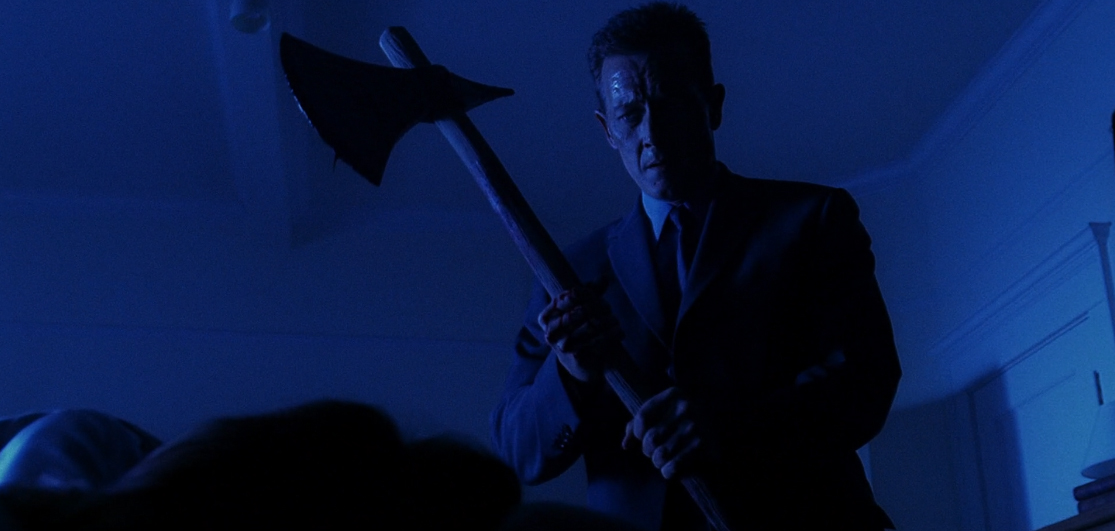
Facing the axe...

Facing the axe…

Continue reading

The X-Files – Patience (Review)

This October/November, we’re taking a trip back in time to review the eighth season of The X-Files and the first (and only) season of The Lone Gunmen.

Patience is necessary.

The eighth season of The X-Files is conservative. There are arguments to be made that this is true in a political sense, but it is certainly true in a narrative sense. The eighth season generally plays it quite safe when it comes to the structuring and plotting. The most structurally ambitious episode of the eighth season is perhaps Redrum, which feels a lot less “out there” than episodes like The Post-Modern Prometheus, Bad Blood, Triangle, X-Cops or First Person Shooter. Narratively, the eighth season plays it relatively “safe.”

Batsh!t crazy...

Batsh!t crazy…

There is a reason for this, of course. Losing David Duchovny for half the season and rotating in Robert Patrick represents perhaps the biggest risk that the show will ever take. Given how essential Duchovny had been to the show’s success, the eighth season is taking quite the gamble. With that in mind, it makes sense to play it safe. Without Mulder around, the show’s primary goal is to reassure fans that it is still The X-Files. This is not the time for experimental “event” episodes, because “Mulder is not in this episode” is an experimental event of itself.

As such, the eighth season feels largely like a return to a more traditional X-Files aesthetic, a “back to basics” approach. In that respect, Patience is essentially about kicking the tires and taking the show for a gentle test drive in its new configuration.

The show won't be caught with its pants down...

The show won’t be caught with its pants down…

Continue reading

The X-Files – Without (Review)

This October/November, we’re taking a trip back in time to review the eighth season of The X-Files and the first (and only) season of The Lone Gunmen.

Taken as a whole, the eighth season of The X-Files is remarkable.

It is not a perfect season of television, by any stretch. The eighth season doesn’t hit as many highs as the fourth, fifth or sixth seasons. As great as Robert Patrick is as John Doggett, and as skilfully as he is introduced, it is impossible to replace the easy dynamic between Mulder and Scully. The actual mythology of the season feels overcrowded and convoluted, with “supersoldiers” feeling a tad cliché and Mulder’s terminal illness going nowhere of note. The season’s recurring motifs of darkness, death and body horror are not for everybody.

I bet David Duchovny really missed working on The X-Files...

I bet David Duchovny really missed working on The X-Files

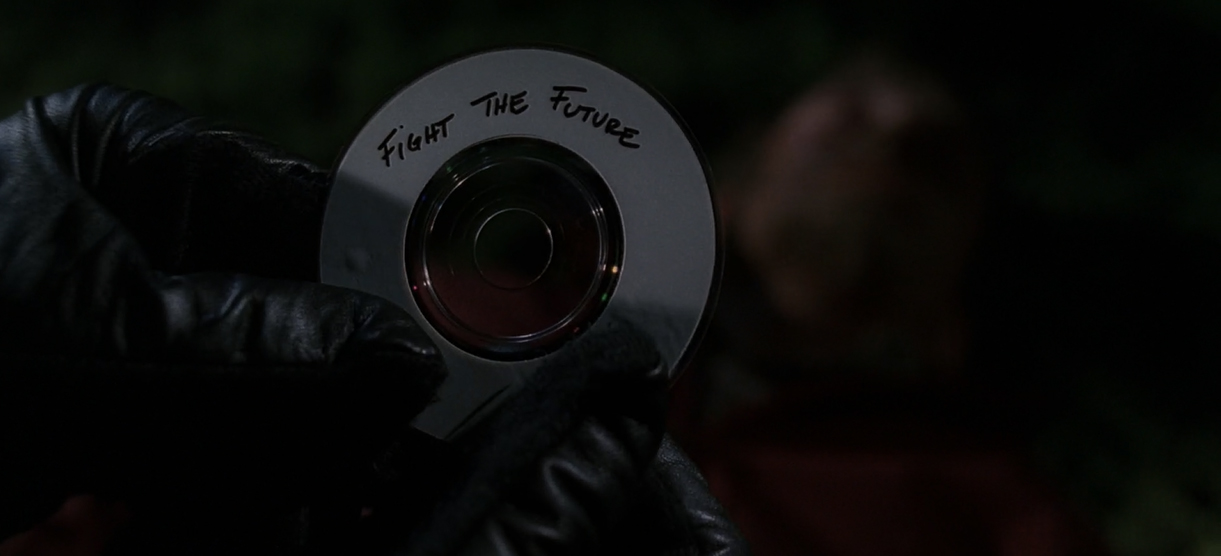
At the same time, there is a staggering consistency and reliability to the season. From the outset, the eighth season seems to know what it wants to be and where it wants to go. There is a stronger sense of purpose to the eighth season than to any other season of the show, with the possible exception of the third. Even the lead-up to the release of The X-Files: Fight the Future did not feel this single-minded and focused. In terms of consistency of theme and imagery, this is the closest the show ever came to pulling off a season-long arc.

It is tempting to credit this renewed vigour and energy to the absence of David Duchovny; the search for Mulder provides a solid and compelling hook for the season ahead. However, there is more to it than that. Mulder’s disappearance is a part of it, but the big thematic bow wrapped around the eighth season is Scully’s pregnancy. After all, David Duchovny returns to the show two-thirds of way through the season; it is Scully’s pregnancy that provides the season’s finalé.

"Thank goodness we all wore different ties. That might have been awkward."

“Thank goodness we all wore different ties. That might have been awkward.”

Continue reading

The X-Files – Signs and Wonders (Review)

This November, we’re taking a trip back in time to review the seventh season of The X-Files and the first (and only) season of Harsh Realm.

Religion is a major part of The X-Files. After all, what is the show but a meditation on faith?

In a way, this is an aspect that dates the series. While the show’s conspiracy theories and surveillance culture paranoia resonate as effectively in 2015 as they did in 1995, the show’s religious themes seem innocent and naive in the wake of 9/11 and the War on Terror. Signs and Wonders was broadcast towards the end of January 2000. It is hard to imagine the episode being produced even two years later, once the world had been so thoroughly shaken by acts of religious zealotry.

Snaking along...

Snaking along…

The X-Files exists as a product of the nineties, pre-dating what many have termed “the new atheism.” It exists against the backdrop of the Clinton era, in the space between the fall of the Berlin Wall and the start of the War on Terror. There are points when the shew resonates beyond that; The X-Files is often a profound and thoughtful meditation on issues like trust and faith. However, there are also points where The X-Files almost seems fused in time; where it seems like a moment has been captured in celluloid like a mosquito trapped in amber.

Signs and Wonders feels like one of those moments, sitting between the failed impeachment of President Bill Clinton and the triumphant election of President George W. Bush. This is what the last gasp of the nineties looks like.

Snake handling...

Snake handling…

Continue reading

The X-Files – Orison (Review)

This November, we’re taking a trip back in time to review the seventh season of The X-Files and the first (and only) season of Harsh Realm.

The X-Files has generally avoided sequels.

There are exceptions, of course. Eugene Victor Tooms appeared twice in the first season, bookending the show’s first year in Squeeze and Tooms. The character of Robert Patrick Modell resurfaced in Kitsunegari, two years after his debut in Pusher. In a way, the mythology could be read as a series of sequels and inter-related plots, with the show lacking the sort of truly overarching design that would identify it as a single story that had been serialised. Still, The X-Files has been reluctant to resurrect old monsters, perhaps acknowledging the law of diminishing returns.

Here's Donnie!

Here’s Donnie!

So Orison is something of an oddity. It marks the second and final appearance of Donnie Pfaster, the demonic Ted Bundy type who made such an impression in Irresistible. Much like Robert Patick Modell or Eugene Victor Tooms, Donnie Pfaster was popular enough the bringing him back made a certain amount of sense; if the show had to do a “sequel” episode, Donnie was as good a candidate as any. Meanwhile, Flukeman waits by the phone. However, the question remains: why?

What is the point of bringing back Donnie? What didn’t the show do last time that it would do this time? It’s a very basic, very fundamental question. Unfortunately, Orison does not have much of an answer.

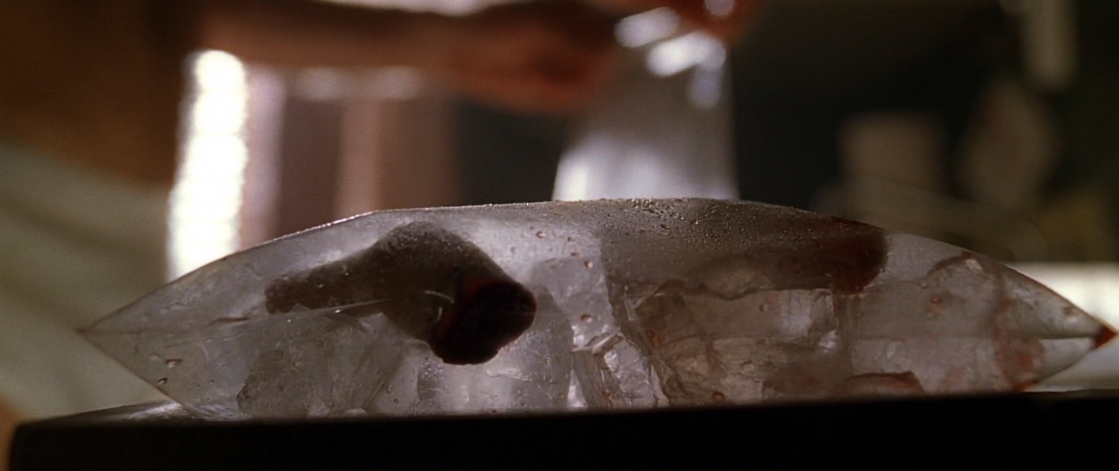
Finger food...

Finger food…

Continue reading