• Following Us

  • Categories

  • Check out the Archives


  • Awards & Nominations

My 12 for ’14: The Wolf of Wall Street and More!

With 2014 coming to a close, we’re counting down our top twelve films of the year. Check back daily for the latest featured film.

Everything about The Wolf of Wall Street is excessive, even its length.

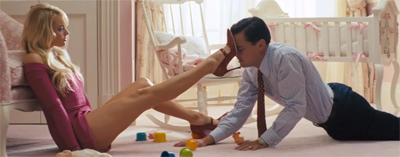
Still, The Wolf of Wall Street never feels like long film. This is somewhat paradoxical. After all, the film does not have too much ground to actually cover. For a film that runs to almost three hours, the movie has a pretty straightforward plot. Cinema audiences are quite familiar with this sort of story: the story of a wealthy crook who inevitably (and spectacularly) implodes. The audience watching The Wolf of Wall Street knows the tale inside out: the arrogance, the hubris, the greed; the consequences, the price, the fallout.
thewolfofwallstreet4

Of course, our villain doesn’t really implode. It turns out that – despite what we’d like to believe – crime does pay. The Wolf of Wall Street alludes to this uncomfortable truth in its closing scene, as Belfort attracts an audience of people eager (and willing to pay) to learn his financial secrets. The cruel gag extends even beyond the movie’s own narrative into the real world; Belfort has boasted he made more from The Wolf of Wall Street than he did from his time on Wall Street. He has used very little of that money to pay back the victims he swindled.

In many ways, The Wolf of Wall Street plays like a belated companion piece to Goodfellas or Casino, a loose exploration of greed and corruption that avoids a lot of the easy moralising that audiences have come to expect from stories like this. Instead, The Wolf of Wall Street basks in its hedonism, affording its villainous protagonist almost unquestioned control of the narrative. As such, it seems to tease the audience: who would be able to refuse such luxury and such debauchery? There’s something delightful uncomfortable in how the film needles the viewer.

thewolfofwallstreet6 Continue reading

My 12 for ’14: Gone Girl and the most $£@!ed up people…

With 2014 coming to a close, we’re counting down our top twelve films of the year. Check back daily for the latest featured film.

Gone Girl is a surprisingly playful film.

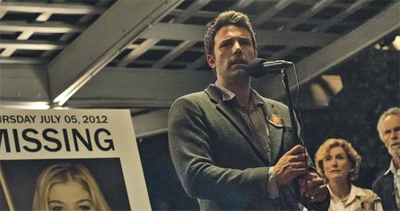
David Fincher is a director who likes to play with his audience, constructing elaborate and stylish labyrinths that might trap the audience as easily as they trap his characters. Gone Girl plays to Fincher’s strengths, as Gillian Flynn adapts her best-selling novel into a pulpy thriller. The news that Fincher and Flynn would collaborate on HBO’s Utopia is fantastic, giving television viewers something to anticipate; one hopes that the collaboration might be as fruitful as that enjoyed by Nic Pizzolatto and Cary Joji Fukunaga on True Detective this year.

gonegirl3

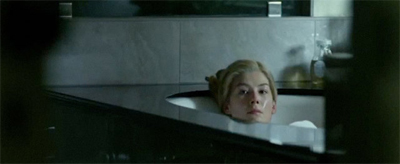
Gone Girl is a story about stories. Most particularly, it is the story of two people fighting to control their own narratives; to try to steer the stories being told around them. Is Nick Dunne a loving husband desperately searching for his missing wife? Or is Nick Dunne a sociopath desperately trying to cover-up her murder? Is Amy Dunne an innocent victim who has worked her way into the heart of the American public? Or is Amy Dunne a manipulative and ruthless (and ruthless) cynic who has helped to turn her marriage into a perpetual struggle?

Gone Girl is a very sleek and stylish film that is lovingly crafted and wryly self-aware. It is a horror story about a dysfunctional marriage, a tale about media fascination and a black comedy about resentment and revenge. More than that, it is a puzzle that competes against the audience, a story that seems to change form at any point where the viewer might finally have come to grips with what they are watching.

gonegirl5

Note: This “best of” entry includes spoilers for Gone Girl. You should probably go and see the movie, because everybody is talking about it. Don’t worry, we’ll wait for you. Still there? Good. Let’s continue. Continue reading

My 12 for ’14: The Guest and a Halloween Christmas Movie…

With 2014 coming to a close, we’re counting down our top twelve films of the year. Check back daily for the latest featured film.

2014 was a spectacular year for genre work. Perhaps emboldened by the success of genre fare (shared universes! talking apes! killer racoons!) in the summer movie season over the past number of years, it seemed like both major and minor studios were more willing to play with concepts that could easily seem absurd or throwaway.

’71 blended its historical real-world setting with the claustrophobia one might expect to find in horror thriller – a zombie movie set in seventies Belfast. The Babadook is a awards-caliber study of disillusioned parenthood that just happens to use the language of a supernatural horror. Birdman is a blistering Hollywood satire and character study driven by imagery and iconography more traditionally associated with fantasy. There has always been genre overlap, but it seemed particularly pronounced this year.

theguest

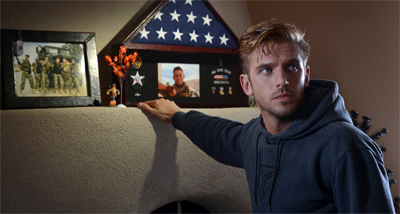
The Guest revels in its pulpy nature, offering a gleefully absurd intersection of a classic slasher movie with a more traditional holiday fare. The story of a mysterious visitor who moves in with the family of a deceased soldier, The Guest is wry and quick-witted, subversive and cheeky in equal measure. Anchored by a script from Simon Barrett that refuses to pull any punches, razor-sharp direction from Adam Wingard and a superb central performance from Dan Stevens, The Guest is a pure pulpy pleasure.

In many respects, The Guest feels like what would happen if you asked John Carpenter to make a Christmas movie. Only set at Halloween.

Flying the flag...

Flying the flag…

Continue reading

My 12 for ’14: The Babadook and Living With Demons…

With 2014 coming to a close, we’re counting down our top twelve films of the year. Check back daily for the latest featured film.

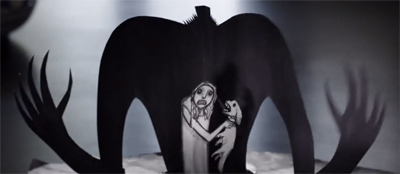
The Babadook is a delightfully well-executed Australian horror film for most of its run-time, an uncomfortable and occasionally harrowing exploration of guilt, resentment and motherhood. The scares are executed cleanly and efficiently, and director Jennifer Kent does an admirable job of ratcheting up the tension as the movie ticks along. However, the most interesting and clever aspects of The Babadook are found nestled in the movie’s final few minutes, providing a satisfying and thought-provoking conclusion to the allegorical horror film.

thebabadook5

Note: This “best of” entry includes spoilers for The Babadook. You should probably go and see the movie, particularly if you are a horror fan. Don’t worry, we’ll wait for you. Still there? Good. Let’s continue. Continue reading

Star Trek (DC Comics, 1984) #9-16 – New Frontiers (aka The Mirror Universe Saga) (Review)

The first Star Trek pilot, The Cage, was produced in 1964. To celebrate its fiftieth anniversary, this December we are reviewing the second season of the original Star Trek show. You can check out our first season reviews here. Check back daily for the latest review.

Eight issues is a long time in the world of comic books, even by the standards of modern storytelling. Committing to the same story arc for two-thirds of a calendar year is a big decision, even moreso in December 1984. Nevertheless, DC comics committed to an eight-issue Star Trek story arc in the wake of Star Trek III: The Search for Spock, on throwing Kirk and the crew into a truly epic adventure with the fate of the Federation hanging on the line. It is no wonder that The Mirror Universe Saga remains the gold standard for Star Trek comic books, reprinted and repackaged repeatedly over the years.

The Mirror Universe Saga is an epic in just about every sense of the word, spanning two universes and eight issues. Not only do writer Mike Barr and artist Tom Sutton find themselves handling the fallout from the last feature film, but they also dabble in an iconic piece of Star Trek history. The Mirror Universe Saga takes full advantage of its format to offer a spectacular and impressive adventure that would have been impossible to realise on film in 1984 – indeed, it is hard to imagine television or cinema doing justice to the scale of the adventure now.

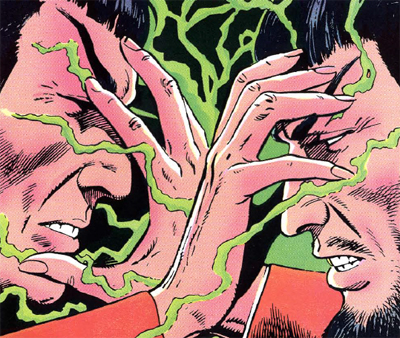
Meeting of minds...

Meeting of minds…

However, The Mirror Universe Saga succeeds on more than simply epic scale and meticulous attention to detail – although Barr and Sutton provide those with gusto. Despite everything going on around it, The Mirror Universe Saga largely works because it never loses track of the characters at the heart of the story. While the Terran Empire might be plotting an invasion in the midst of an internal revolution, the more powerful moments of The Mirror Universe Saga come from throwing the characters into contact with their alternate selves.

In 1984, it seems like The Mirror Universe Saga had figured out what would be the core ingredients for the most successful follow-ups to Mirror, Mirror. It deduced that the mirror universe could not just be playground where everything is gloriously and campily evil; it had to retain some level of emotional reality or connection. What good is a mirror if it is not reflecting anything?

Set course... for eeeevil!

Set course… for eeeevil!

Continue reading

Non-Review Review: Night at the Museum III – Secret of the Tomb

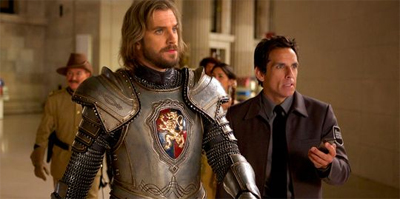
Night at the Museum III: Secret of the Tomb is fairly inoffensive family fare. It largely sets out to do what it wants to do – providing a sense of closure to the hits series while encouraging its all-star cast to have a bit of family-friendly fun together. The movie is hardly the most compelling adventure; it never manages to generate substantial stakes, it introduces a convenient third-act villain as the plot demands, it is frequently distracted by individual set pieces. At the same time, it feels like the movie largely hits the targets that it sets for itself.

Knight at the Museum...

Knight at the Museum…

Continue reading

Non-Review Review: Unbroken

The true story of Louis Zamperini is absolutely fascinating. It lends itself to this sort of big spectacle. It has everything you need for a movie that might clean up during awards season: a historical setting; a war; a sporting story about triumph of adversity; incredible physical transformations from the cast; a character enduring incredible hardship and coming out the other side. These are the sorts of ingredients that make a Best Picture contender. Unbroken just heaps more and more on top of these already alluring elements.

It isn’t the terrible and messy script that ultimately defeats Unbroken, with beloved filmmakers Joel and Ethan Cohen at the top of the bill. It isn’t the pedestrian unchallenging direction, either. It isn’t Alexandre Desplat’s condescending and patronising score, that doesn’t trust the audience to determine what they should be feeling from one moment to the next. It is not even the cynical Coldplay song playing over the closing credits, to put a pleasant life-affirming spin on events.

The Oscar race is on...

The Oscar race is on…

The detail that really shatter Unbroken is the fact that all of this has been very carefully and meticulously calibrated to check off the requisite items on the big Oscar check list. Unbroken is just as mechanical and lifeless a production as Transformers 4, but it happens to be built for a different purpose. There is no energy here, no enthusiasm, no emotion. It is just a bunch of things that have been successful in other stories heaped on top of one another, hoping to hit the high score on that fateful morning in January 2015.

Despite managing to eat up an incredible amount of attention and discussion in the larger Oscar race – taking attention off far more deserving contenders – Unbroken is a complete and utter misfire.

"This is what happens to anybody who suggests Merry Christmas Mister Lawrence is a better Japanese prisoner of war film."

“This is what happens to anybody who suggests Merry Christmas Mister Lawrence is a better Japanese prisoner of war film.”

Continue reading

Non-Review Review: Birdman (or, The Unexpected Virtue of Ignorance)

Birdman is a staggeringly cynical piece of work.

Alejandro González Iñárritu’s showbusiness satire has its knives out from the opening sequence, and never puts them away. It is a movie that is relentlessly snarky and bitter about just about any facet of the artistic process. The movie seldom pulls its punches, lawing into its targets with a vengeance. There are points where it almost seems too much, where it feels like Iñárritu might be better served to pull back or ease off for a moment as the film becomes just a little bit too much.

Showtime!

Showtime!

Then again, Iñárritu turns the film’s relentlessness into a visual motif, structuring Birdman as one long unbroken take. This structure is only slightly disingenuous. While there are any number of “cheats” that allow Birdman to stitch together multiple takes, the end result is still a hugely ambitious and impressive piece of work. Even viewers as cynical as the film itself may find themselves marvelling at some of the incredibly fluid transitions and extended sequences. Birdman‘s anger might occasionally come close to suffocating, but its energy is infectious.

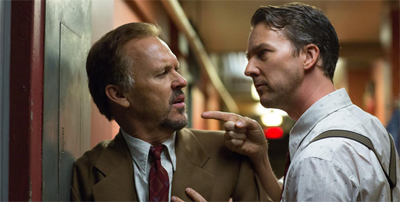
That is to say nothing of the performance at the centre of the film, with Michael Keaton playing a washed-up has-been celebrity desperately (and pathetically) fighting for artistic credibility after a career spent in blockbuster cinema. One of the more interesting aspects of Birdman is that it seems just as dismissive of the attempts at artistic rehabilitation as it does of the original “sell out” work. Birdman is a wry, clever and vicious piece of work. It is also a phenomenal accomplishment.

You wouldn't like him when he's angry...

You wouldn’t like him when he’s angry…

Continue reading

Non-Review Review: Horrible Bosses 2

Horrible Bosses 2 is a cluttered film. In many ways, it is handicapped by a reluctance to let go of what worked the first time around. As a result, the film seems to bring back just about every cast member it can, ensuring that everybody gets their own little arc and their own pay-offs. Two of the three original horrible bosses get extended subplots in the sequel, with an expanded role for another side character.

This leaves the film feeling a little crowded. The new additions to the cast seldom get room to breath. Horrible Bosses 2 brings in a rake of superb talent to fill out the supporting cast, but doesn’t have the time to do anything particularly interesting with them. Chris Pine makes the most significant impression, but Horrible Bosses 2 wastes  talent like Christoph Waltz and Jonathan Banks in fairly bland roles.

"I spot a sequel..."

“I spot a sequel…”

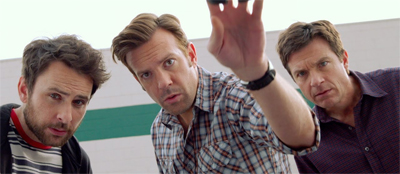
And yet, despite its problems managing space, Horrible Bosses 2 holds itself together. It’s a clumsy film, one that feels like it could have done with a script polish and some judicious editing at an early story phase, but it manages to hang a lot on the chemistry of its three leads. Even more than in the original film, Bateman, Sudeikis and Day find themselves playing archetypes rather than characters – but the fit rather comfortably into those archetypes.

Bateman, Sudeikis and Day spend a lot of Horrible Bosses 2 talking over one another – something that more than one character acknowledges over the course of the film. The result is a lot like the film itself; it’s often difficult to separate the important material from the background noise, but there’s also an underlying sense of fun that just about keeps everything ticking over.

"We've all seen Reservoir Dogs, right?"

“We’ve all seen Reservoir Dogs, right?”

Continue reading

Jameson Cult Film Club: Friday the 13th, Part II

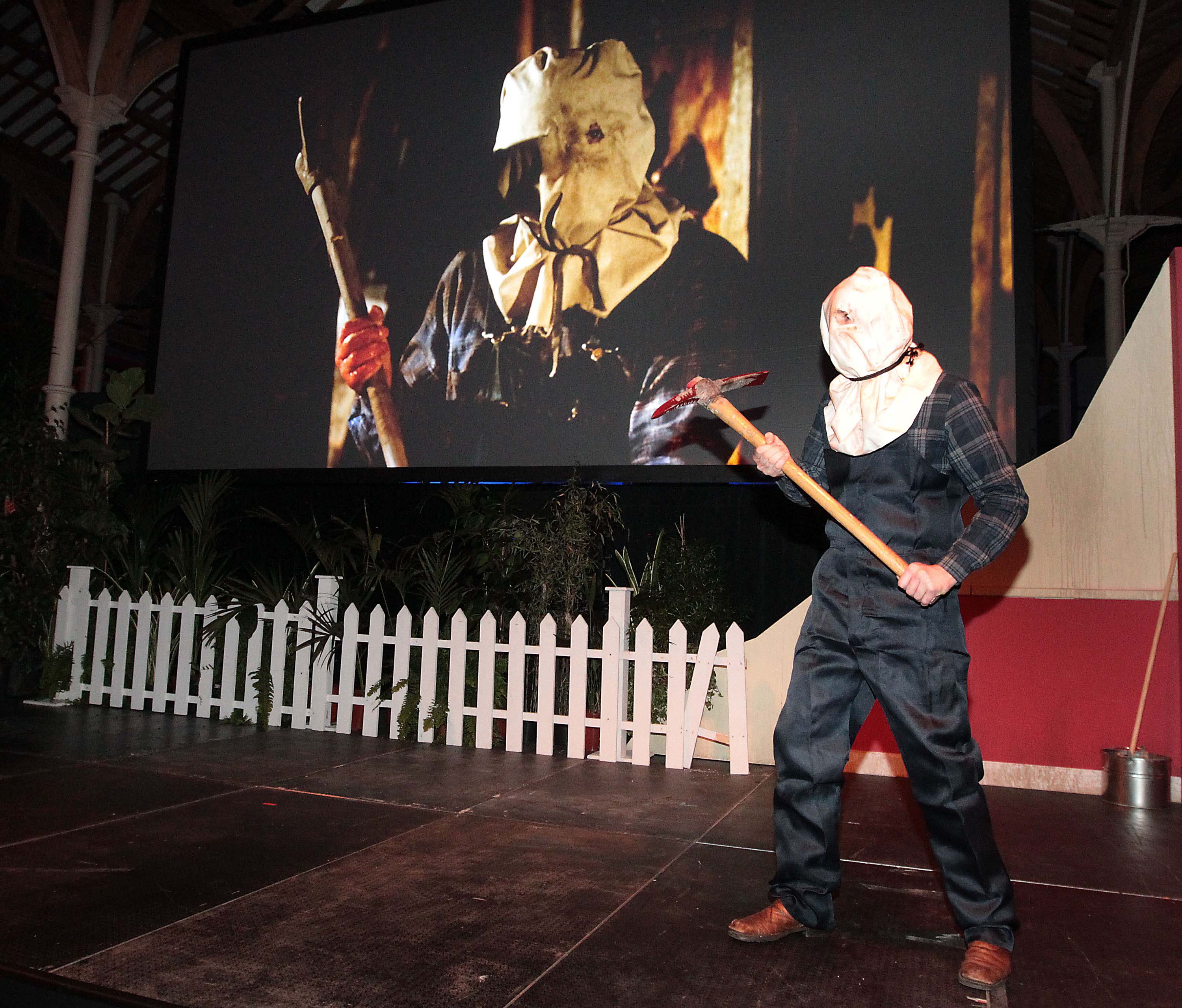
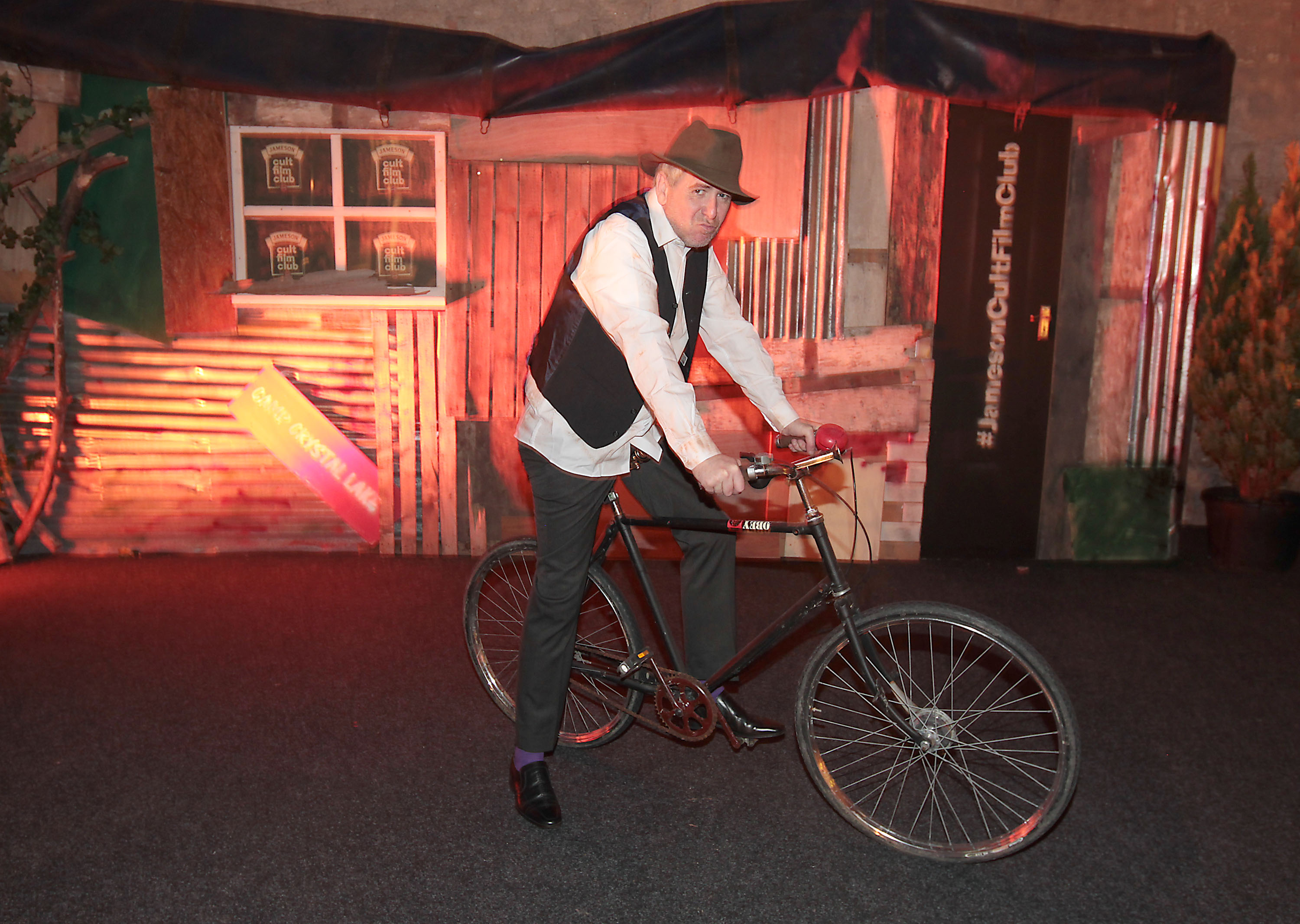
In many ways, Friday the 13th, Part II is an interesting choice for a Jameson Cult Film Club event. Traditionally, these special screenings have tended to focus on films that are broadly agreed to be popular classics – films as diverse as Jaws, Alien, Fight Club, The Blues Brothers and Die Hard. There is a very solid argument to be made that Friday the 13th, Part II is the odd film out here.

It is an early eighties slasher film, one with very few nuances. It is a grimy, gritty horror thrown together very quickly to cash in on the success of the of the original film – it is very much channelling better and more successful horrors like Psycho or Halloween. The movie’s defining feature is a ruthless pragmatism, a willingness to do anything to get a jolt from the audience.

Jameson Cult Film Club 78 (1)

As such, Friday the 13th, Part II is a controversial choice. It is a film that is even subject to considerable debate within the fandom of Friday the 13th. Is it one of the weaker films in the series? Is it one of the stronger? There is a sense that Friday the 13th, Part II is more open to debate and discussion than many of the films screened as part of the Jameson Cult Film Club cycle.

However, the fact that Friday the 13th, Part II is such an off-centre choice is refreshing. It affords the event a considerable freedom With Halloween approaching, the goal seems to have been to do a slasher movie in the Jameson Cult Film Club style, and Friday the 13th, Part II works very well in that context.

Jameson Cult Film Club 58

Continue reading