• Following Us

  • Categories

  • Check out the Archives


  • Awards & Nominations

Non-Review Review: The Promise

The Promise is made in earnest, even if it cannot honour all of its commitments.

The Armenian Genocide remains one of the most horrifying atrocities of the twentieth century, which is saying something. The horror of that systematic extermination is compounded by a refusal to acknowledge the violence committed by the Ottoman Empire. Modern Turkey refuses to acknowledge, or take responsibility, for those crimes. Political realities prevent other major powers from holding the government to account. It is a shameful situation, all around.

The Promise is made with the intent of shedding some light on that atrocity and bringing it to international attention. It is clearly a passion project, made with the best intentions. The film undoubtedly captures the horror of the violence inflicted upon the Armenian Christians and the systemic nature of the attempt to wipe out an entire civilisation. There are points at which The Promise plays as a travelogue into terror, a sequence of harrowing images set against a journey across Turkey during the First World War.

However, The Promise is also very much modeled on an old-school Hollywood adventure movie, complete with daring stunt work and tangled romantic subplots. The Promise evokes the feel of “classic” Hollywood, with its broad themes and its impressive scale. This sleek approach to the material jars with the horror being inflicted, the movie’s character arcs pasted over a nightmarish true story just a little too smoothly. The Promise is well-intentioned, if clumsy in execution.

Continue reading

Non-Review Review: The Fast & The Furious 8 (aka The Fate of the Furious)

Seven cars crowd out an otherwise empty New York street.

In the midst of the carnage, all law-abiding citizens have taken cover. Only the outlaws remain, the powerhouses that rule the street. One black muscle car sits at the centre of this chaos. It stars menacingly at the five cars blocking its path. Behind that black car lurks the vanguard. Inside, a scruffy stubbled Englishman cracks his neck impatiently, waiting for action. The target car revs its engine. The drivers all kick into gear, and it becomes a game of reflexes.

Present and corrected.

There is an endearing charm to The Fast and the Furious as a blockbuster movie franchise. In many ways, it has become Universal’s own home-grown superhero franchise, albeit one that swaps out the capes for cars. A wry observer might suggest that the series is Diesel-powered, but that is not entirely true. The franchise runs on sheer main-lined ridiculousness, on the blurry line that falls somewhere between awesome and absurd. “High noon, but with cars…” is far from the most audacious scene in The Fast and the Furious 8, but it might be the most indicative.

Like a driver wrestling with a powerhouse engine, the series works best when it actively turns into the spin. Fast Five revived the franchise by removing the throttle and setting in motion a sense of escalation that threatens to send the characters into space before the conclusion of the series. In the meantime, The Fast and the Furious 8 settles for a neon orange Lamborghini being chased over ice by a nuclear submarine. There are points at which the whole thing threatens to fall apart like that surface ice, but the film moves just quick enough to stay above water.

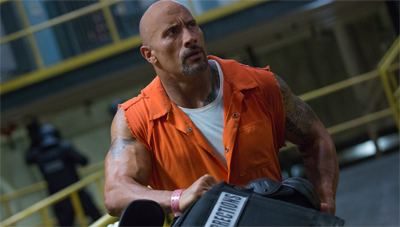
Dominating Dom.

Continue reading

Non-Review Review: Miss Sloane

Like its central character, Miss Sloane is an interesting beast.

The movie’s central conflict is not the clash of egos between the rival lobbyists played by Jessica Chastain and Michael Stuhlbarg. Nor is it the philosophical conflict over gun control that drives so much of the plot. It is not even the conflict of interest that bookends the movie, the clash between the democratic ideal and the pragmatic reality of contemporary politics, although that perhaps comes closest to expressing the battle raging at the heart of the film.

Miss Sloane Goes to Washington.

The crisis that plays out across Miss Sloane is the gap between the perceived gap between personal and the political. For most of the film’s runtime, the eponymous character’s motivations remain engagingly opaque. Why has the cold and rational Elizabeth Sloane taken up a cause as ill-fated as tighter gun control regulations? The characters in the movie pick at the idea. Several wonder if she knew somebody involved in some traumatic incident of gun violence. It seems impossible to reconcile the calculated decisions of this political operator with a sense of moral righteousness.

Miss Sloane cleverly plays with this idea, teasing and goading the audience across its runtime. That implied conflict between the canny lobbyist and the just cause bubbles throughout the film. Most successfully, it plays out in Jessica Chastain’s superb central performance as the eponymous character; a keen observer of human nature who often seems to be battling with herself as much as with any singular rival. However, it also plays out in the film’s conflicted tone, with Miss Sloane often at odds with itself as it tries pitch itself at the right level.

Liz and let Liz.

Continue reading

Non-Review Review: Going in Style

At one point in Going in Style, octogenarian would-be bank robber Albert decides to craft an alibi for an elaborate bank robbery while working at a cotton candy stand.

This image might just encapsulate Going in Style, a very light and fluffy bank robbery film about a trio of senior citizens who embark upon a bank robbery in order to balance the books. The movie is consciously (occasionally suffocatingly) feel good story of a bunch of cynical wise-cracking pensioners embarking upon wish fulfillment revenge against the banks that have taken so much from hard-working and decent Americans. Think of it as Hell or High Water that swaps the moral ambiguity for a clumsy score.

Dinner of champions.

Going in Style is not an especially complicated film. It never pauses to evaluate what is happening, or why. It is anchored in the assumption that people are basically decent, even when pushed to extremes. It goes for as many obvious jokes as it can cram into its ninety-six-minute run-time, from a few cheap laughs about the embarrassment factor of old-age sex to other jokes about bodily functions. But its heart is in the right place, as it goes out of its way to repeatedly assure the audience.

The extent to which Going in Style could be said to work rests in the easy charm of its three leads, in the pleasure of seeing Michael Caine, Morgan Freeman and Alan Arkin play off one another. None of the trio is pushing themselves. All three leads are essentially offering some minor variation on an established schtick, with no nuance or strain. The result is a heist thriller that never feels like it is racing against the clock, more ambling in its own time.

Benched.

Continue reading

25. Gone Girl (#179)

You don’t know what you’ve got ’til it’s…

Hosted by Andrew Quinn and Darren Mooney, The 250 is a fortnightly trip through some of the best (and worst) movies ever made, as voted for by Internet Movie Database Users. New episodes are released every second Saturday at 6pm GMT, with the occasional bonus episode between them.

This time, David Fincher’s Gone Girl.

On their fifth wedding anniversary, Nick Dunne is shocked to discover that his wife Amy has disappeared. As local law enforcement begin their investigation, all clues seem to point towards Nick. But all is not as it appears to be.

At time of recording, it was ranked the 179th best movie of all time on the Internet Movie Database.

podcast-gonegirl

https://them0vieblog.com/wp-content/uploads/2016/11/podcast11.mp3%20itunes:duration=01:51:06%20itunes:explicit=no

Continue reading

Non-Review Review: Handsome Devil

Handsome Devil is a charming coming of age tale set against the backdrop of a South Dublin Rugby School.

The film follows loner and outcast Ned, who finds himself shunned at boarding school because he lacks the ability and interest to play rugby. Ned keeps to himself, even isolated from the other boys via his private room. However, Ned’s world is thrown into upheaval when the school receives a new student. Suddenly, Ned finds himself sharing the space with Conor, a promising young rugby prospect who might have the capacity to lead the team into the finals.

Seaing red.

The plot beats and themes in Handsome Devil are fairly standard, keeping very much consistent with the genre of coming of age secondary school tales; the notion of self and identity play into, juxtaposed with the urge towards conformity. There are inspiring teachers and tough decisions, eroding cynicism and brutal betrayal. Handsome Devil is aware of these expectations, to the point that all of this is laid out in the exposition-driven framing device at the start of the film.

However, Handsome Devil is elevated by a sense of genuine warmth beneath this very familiar exterior. The script is well-observed, and the direction is light enough to let a charming cast play well off one another. Like Ned, Handsome Devil is nowhere near as cynical as it appears, and it plays best when it drops the wry irony in favour of an endearing humanism.

That’s grass.

Continue reading

Non-Review Review: CHiPs

CHiPs is what happens when you adapt a successful-yet-forgettable eighties action series in the style of a poorly-aged nineties sitcom.

There are a whole host of problems with CHiPs, but tone is the biggest concern. Writer and director Dax Shepard never seems entirely sure what he’s pitching, which leads to a bizarre mishmash of a juvenile gay panic comedy with retro nostalgia trappings strapped on to a lazy police thriller. None of these elements work particularly well on their own, but mashing them all together leads to even bigger problems. CHiPs tries to be several different things, and succeeds at none of them.

When he catches these corrupt cops, he’ll send them to the Peña-tentiary.

Who is the target market for CHiPs? The film pitches itself as a raunchy parodic reimagining of a show that was beloved at the time, but has faded into history. There’s obvious precedent here, and CHiPs can be reasonably placed as part of the movement that includes 21 Jump Street and Baywatch. However, CHiPs does not aim for nostalgia enough to appeal to fans of the show, and is not clever enough to attract the same audience as 21 Jump Street. The result is a reboot of an eighties motorcycle cop show aimed at fourteen-year-old boys.

Ironically, CHiPs feels retro for all the wrong reasons. CHiPs is largely defined by the idea that bodily functions (and male sexual organs) are hilarious, and that there is nothing funnier than two dudes touching each other’s erogenous zones, particularly when there’s at least one dude pointing out how hilarious it is. CHiPs is defensive nineties gay panic wrapped in eighties nostalgia. It is a strange cocktail.

Cashing their CHiPs.

Continue reading

Non-Review Review: Life

Life has a certain endearing b-movie schlock value to it, a cheesy and derivative deep space creature feature that indulges all manner of body horror in its race to the climax. With all due respect to the esteemed philosopher Forrest Gump, most viewers know exactly what they are going to get.

The biggest problem with Life is that the film is very predictable. There is very little here that seasoned science-fiction horror film fans will not have seen before. Indeed, this is arguably reflected in the biggest problem with its central monster. The first life form discovered in outer space, the creature that stalks the crew in Life is initially appealingly alien; a translucent starfish evolving into a mass of tentacles with a love of bodily orifices. Unfortunately, the creature quickly becomes more conventional. The movie even names the beast “Calvin.”

Caught in the Gravity of Alien.

And yet, there is a quirky appeal to all this. Life is a movie with an attitude mirroring that creature. It begins as something intriguing before morphing into something far too familiar. More than that, there is a ruthless efficiency to the film. Characters are rendered as little more than archetypes, information is delivered primarily as plot set-up rather than character development, the first act of the film races through what should be huge dramatic beats in order to get to the squidgy monster mayhem. Life knows what it is, even when it’s not pretty.

There is something endearing about this ruthless efficiency, the commitment with which Life seizes upon its b-movie stylings as a vehicle for really creepy space scares. Life suffers a little bit from its by-the-numbers second act, but it demonstrates enough enthusiasm for its schlocky sensibilities that it’s hard to hard. Life finds a way.

Needing some space.

Continue reading

Non-Review Review: Kong – Skull Island

Kong: Skull Island has an endearingly “pop” sensibility to it.

There are moments at which Kong: Skull Island feels more like an evocative theatrical-length montage than a film. This is only the second feature-length film from director Jordan Vogt-Roberts, and the movie has jarring and disorienting quality to it. Vogt-Roberts saturates the screen with reds and greens, whirls the camera at incredible velocity, and cuts at an impressive tempo. Even dialogue heavy scenes are constantly panning and cutting.

Sundown showdown.

This approach does no favours to the cast. Most of the players in Kong: Skull Island seem to have more trouble finding a consistent character throughline than mythical monsters. Tom Hiddleston seems quite lost for most of the film. Brie Larson probably does the best job of any of the major players, although the rapid-fire editing helps John C. Reilly seem suitably eccentric as the obligatory insane exposition character. Veteran performers like John Goodman and Samuel L. Jackson are forced to hold on for dear life.

However, none of this is a problem. For all its flaws, Kong: Skull Island never over-estimates how interesting its human characters are, mostly treating them as a vehicle to get to the promised monster mash. Vogt-Roberts’ direction might seem hyperactive and over-caffeinated, but it understands this. The camera and the cuts are always moving towards the monster, with the characters serving to deliver thematic dialogue and look suitably moody as seventies music plays over montage sequences.

“Oh, so that’s why they call it Skull Island.”

Kong: Skull Island never feels entirely cohesive as a feature film. That is not a fatal flaw. The movie feels weird and ethereal, the audience constantly kept off-balance by the heighten stylistic choices and the gusto with which the movie seizes upon these opportunities. After all, the eponymous island is a place where anything is possible and nothing is as it appears. It feels somewhat fitting that the movie drifts into a loose free-form style driven more by imagery than by story.

Kong: Skull Island feels in someways like a monstrous monster movie, and there’s something quite appealing in that.

No bones about it.

Continue reading

Non-Review Review: Tschick

This film was seen as part of the Audi Dublin International Film Festival 2017.

Tschick is a charming, if disorganised and overly episodic, coming of age road movie.

The basic set-up of Tschick is effective, if a little familiar. Maik Klingenberg is an imaginative and socially awkward teenager, the child of an alcoholic (if well-meaning) mother and a distant (and philandering) father. He is invisible to his classmates, except to the eponymous Tschick. Andrej Tschichatschow is a new arrival from Russia. He is antisocial, he smells bad, and he suffers from alcoholism despite only being a teenager. Naturally, he proves even less popular than Maik. The other students don’t know Maik exists, but they hate Tschick.

Cliffhanger ending.

Cliffhanger ending.

With his mother checked into rehab and his father absent for other reasons, Maik is left to fend for himself. He ends up embarking upon a cross-country road trip with Tchick in a stolen car. Along the way, the pair have a series of encounters with a wide variety of people and intersect with various other walks of life. As a result, Maik and Tschick have a unique shared experience, forging a deep bond and a mutual respect. The resulting journey is full of wry well-observed comedy and heart-warming moments, largely held together by the charm of leads Tristan Göbel and Anand Batbileg.

However, Tschick lacks the focus necessary to tie these elements together. It is both too focused on its own narrative and character arcs to fully embrace a stream-of-consciousness “on the road” travelogue style and too episodic to cohere into a single strong narrative. The result is a film that feels rather uneven and disjointed, a road trip constantly hitting speed bumps.

Venturing far afield.

Venturing far afield.

Continue reading