• Following Us

  • Categories

  • Check out the Archives


  • Awards & Nominations

Non-Review Review: Tschick

This film was seen as part of the Audi Dublin International Film Festival 2017.

Tschick is a charming, if disorganised and overly episodic, coming of age road movie.

The basic set-up of Tschick is effective, if a little familiar. Maik Klingenberg is an imaginative and socially awkward teenager, the child of an alcoholic (if well-meaning) mother and a distant (and philandering) father. He is invisible to his classmates, except to the eponymous Tschick. Andrej Tschichatschow is a new arrival from Russia. He is antisocial, he smells bad, and he suffers from alcoholism despite only being a teenager. Naturally, he proves even less popular than Maik. The other students don’t know Maik exists, but they hate Tschick.

Cliffhanger ending.

Cliffhanger ending.

With his mother checked into rehab and his father absent for other reasons, Maik is left to fend for himself. He ends up embarking upon a cross-country road trip with Tchick in a stolen car. Along the way, the pair have a series of encounters with a wide variety of people and intersect with various other walks of life. As a result, Maik and Tschick have a unique shared experience, forging a deep bond and a mutual respect. The resulting journey is full of wry well-observed comedy and heart-warming moments, largely held together by the charm of leads Tristan Göbel and Anand Batbileg.

However, Tschick lacks the focus necessary to tie these elements together. It is both too focused on its own narrative and character arcs to fully embrace a stream-of-consciousness “on the road” travelogue style and too episodic to cohere into a single strong narrative. The result is a film that feels rather uneven and disjointed, a road trip constantly hitting speed bumps.

Venturing far afield.

Venturing far afield.

Continue reading

Non-Review Review: Headshot

This film was seen as part of the Audi Dublin International Film Festival 2017.

The obvious (and easy) comparison for Headshot is The Raid.

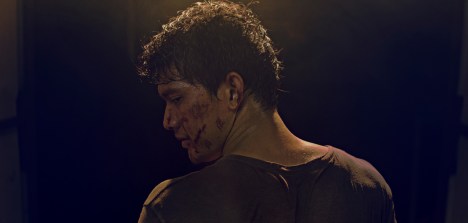
Part of that is down to the superficial similarities. Both are relatively straightforward Indonesian action movies starring Iko Uwais with an emphasis on martial arts. Even beyond that, The Raid was a breakout hit and exists as one of the defining modern martial arts movies for wider audiences. Even without the similar stuntwork and the combination of lead actor and genre, The Raid would be a stock point of comparison for Headshot. The film even seems to invite and encourage the comparison, with directors Kimo Stamboel and Timo Tjahjanto consciously evoking Gareth Evans’ style.

Headed into danger.

Headed into danger.

The comparison does Headshot no favours. For all the similarities between the two films, the differences are telling. Headshot has a style that consciously evokes The Raid, but it lacks its streamlined efficiency. It has a number of impressive prop-heavy set pieces that call to mind the impressive work in The Raid, but it never embraces the loose and freewheeling style that made The Raid so striking. More than that, Headshot never manages the delicate balance between rudimentary character work and a solid story, leading to a film that feels both paper-thin and over-developed.

Headshot is a solidly middle-of-the-road martial arts slugfest, but it lacks the sheer “wow!” factor that made The Raid pop.

Bar none.

Bar none.

Continue reading

Non-Review Review: Get Out

This film was seen as part of the Audi Dublin International Film Festival 2017.

Get Out is a fantastic horror comedy from Jordan Peele.

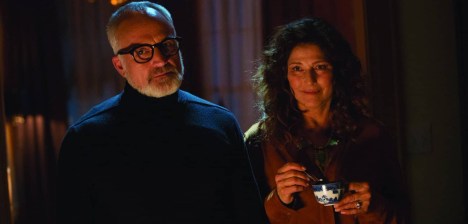
The premise of Get Out is relatively straightforward, with Rose taking her African American boyfriend Chris home to meet her wealthy white parents. What follows is essentially a twenty-first century horror movie twist on Guess Who’s Coming to Dinner?, in which Chris finds himself growing increasingly uncomfortable in the presence of Rose’s very liberal parents. There is an awkward unease to his visit with the family, beneath all the welcoming smiles and the mannered politeness.

Terrorvision.

Terrorvision.

Get Out is a brilliantly wry and ironic piece of film-making, building a very traditional horror movie around a very intangible discomfort. After all, racism is not always something that can be cleanly defined and measured, often reflected in implications and patterns more than individual statements and actions. Get Out masterfully plays on this tension of something so horrifying being rendered so ethereal, most notably through its repeated (effective) use of scare chords and horror angles making normal social interactions especially uncomfortable.

Get Out is a promising directorial debut from veteran comedian Jordan Peele, one that skilfully uses the flexibility and surrealism of conventional horror beats to build a well-observed and uncanny piece of social commentary.

Couldn't be Keener.

Couldn’t be Keener.

Continue reading

Non-Review Review: David Lynch – The Art of Life

This film was seen as part of the Audi Dublin International Film Festival 2017.

David Lynch: The Art of Life is a fairly conventional and straightforward affair as these sorts of documentaries go.

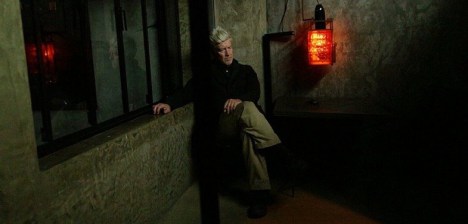
The documentary eschews a lot of the trapping of more adventurous entries in the genre. Indeed, most of David Lynch: The Art of the Life could have been filmed and recorded in David Lynch’s art studio, as the director talks at length about his life and the camera pans loving across his working space and intercuts his monologues with art work that seems to hit on some of the core themes of his narration at any given moment. There is something very standard about the way that David Lynch: The Art of Life is put together.

davidlynch1

Indeed, the film largely eschews any sense of outside context or material. The only voice heard over the course of the film is that of David Lynch himself, recording at his own home studio. Only rarely do the production team need to use material that doesn’t belong to Lynch to flesh out his dialogue, notably during his discussion of his time in Philadelphia. Those occasions are especially noticeable because the documentary takes great care to credit those sources, drawing attention to how much material comes from Lynch’s own archives and records.

However, there is a strong argument that Lynch is suited to this approach. Lynch is a surrealist artist, and it is very hard to argue that anybody has a stronger grip on or understanding of his work. Indeed, the most effective and striking aspect of David Lynch: The Art of Life is the way in which it allows Lynch to make his own arguments from his own perspective crafting a narrative that feels distinct and unique. For all that Lynch is a surrealist, David Lynch: The Art of Life allows him to make a strong case as the only sane man in an insane world.

davidlynch4

Continue reading

Non-Review Review: Free Fire

This film was seen as part of the Audi Dublin International Film Festival 2017.

Free Fire is probably best described as “Character Actor Death Match.”

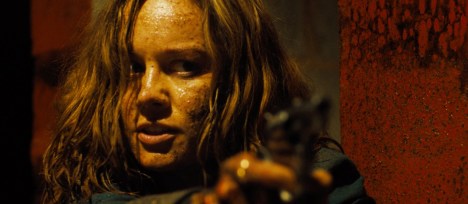
Director Ben Wheatley draws together a fine collection of recognisable and veteran character actors for his single-location thriller. Free Fire has a cast including Brie Larson, Armie Hammer, Cillian Murphy, Jack Raynor, Sam Riley, Sharlto Copley and Wheatley fixture Michael Smiley. The premise is remarkably straightforward. In Boston, in 1978, a bunch of Irish Republicans set out to buy some guns from an unreliable South African arms dealer, with various other parties caught in the crossfire.

All fired up.

All fired up.

The weapons deal gradually breaks down, whether due to mistrust between the parties or personal animosity between individuals. The abandoned industrial warehouse chosen to host the deal quickly descends into anarchy, with characters drawn into a sprawling (and intentionally muddled) fire-fight in which many of the participants seem entirely unclear about what is happening and which group to which their allegiance lies. “Sorry!” one character apologises over a cheap shot at a supposed ally. “I forgot which side I was on!”

Free Fire is a fast-moving free-wheeling absurdist action comedy that leans heavily upon a fantastic cast and on the director’s mischievous sense of fun.

Shooting the Brie-ze.

Shooting the Brie-ze.

Continue reading

Non-Review Review: Unless

This film was seen as part of the Audi Dublin International Film Festival 2017.

Unless is a film that woefully over-estimates its own profundity.

Unless is an indulgent, misguided, ill-judged, clumsy and offensive piece of work, a tone-deaf study of upper-middle-class ennui that laments the plight of characters at least two degrees of separation from an individual with an interesting perspective. Unless is a story about vicarious empathy, the tale of wealthy people whose response to horror and tragedy is to assume that they cannot feel true compassion for an individual’s suffering without embarking upon their own existential grief tourism.

Begging belief.

Begging belief.

All of this is compound by a script and direction that are suffocatingly heavy handed. As if afraid that its audience might somehow miss the subtle nuances of this tail of wealthy familial angst, Unless repeatedly trips into slow motion for the most mundane of moments as if hinting at some deeply-buried profundity. The music soars, even when the events of screen do not merit it, leading to a hilarious disconnect between the events happening and the movie’s estimation of them. And everything is ominously signposted, as characters muse endlessly in pseudo-evocative monologues about life.

Unless is, quite frankly, a terrible piece of film.

Norah battle to the strong.

Norah battle to the strong.

Continue reading

Non-Review Review: Their Finest

This film was seen as part of the Audi Dublin International Film Festival 2017.

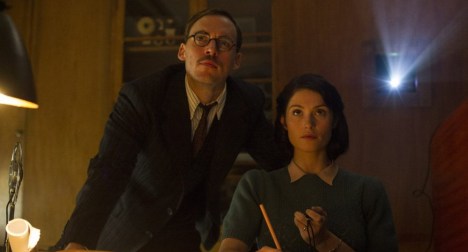
Their Finest is a charming, if somewhat overly schmaltzy, Second World War comedy drama.

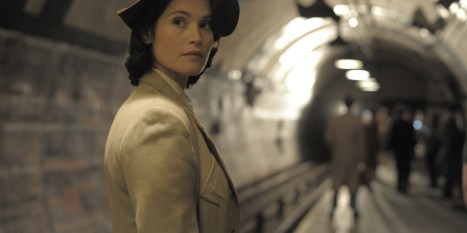
To be fair, the basic premise and setting do a lot to carry the film. The Second World still exerts a mythic power, particularly to the members of the United Kingdom that weathered the Blitz before marching (with American support) to victory. That moment is powerful and evocative, Britain serving as the “island fortress” holding Nazi German at bay. The imagery is striking, from the bombed out buildings to the rubble on the streets to the sounds of air raid sirens. It is a rich and evocative setting.

Projecting.

Projecting.

More than that, it is a setting that offers all manner of storytelling possibilities. As one of the defining moments of the twentieth century for Great Britain, it is the perfect fodder for telling smaller and more intimate tales. After all, everybody knows the basics of the Blitz, so there is more opportunity to explore the lives of those who exist at the fringe of the narrative. Those were extraordinary times, and so stories that might otherwise seem ordinary are elevated to be extraordinary by virtue of unfolding against those circumstances.

Their Finest is the tale of about one woman’s struggle to be heard and acknowledged as a writer against this backdrop, fighting the war at home in any number of ways. It is a fascinating premise, and one that feels relatively under-explored in the larger context of this defining historical moment. While Their Finest occasionally trips into cliché and melodrama, and occasionally even loses focus on the story that it is trying to tell. Still, a strong cast and a lot of charm carry Their Finest a long way.

Station keeping.

Station keeping.

Continue reading

Non-Review Review: The Rehearsal

This film was seen as part of the Audi Dublin International Film Festival 2017.

There’s a lot of dramatic weight to be derived from the idea that actors are fundamentally creepy.

Of course, this is a crass generalisation and in no way reflective of how the world actually works, but just conceptually there is something fascinatingly creepy in the idea of acting. At best, it is a form of grown-up make-believe, in which the performer conjures reality from imagination in a way that blurs the line between the tangible and the ethereal. At worst, it can seem almost predatory as these actors draw up real-life experiences to enhance the illusion; how must it feel for an actor to manifest something deeply personal or intimate?

ACTion man.

ACTion man.

This is perhaps why popular culture has grown so fascinated with tales of “method” actors who warp their bodies and bend their psyches in pursuit of some fundamental truth about the characters they have been asked to bring to life. It does not matter that the Stanislavski method is quite far removed from the sensationalist version that has seeped into public consciousness. After all, there is something fascinating about tales of Christian Bale’s remarkable physical transformation or that time Daniel Day Lewis saw the ghost of his father while playing Hamlet.

The Rehearsal really mines this popular notion of actors as an uncanny bunch blurring the lines between reality and fantasy, exploiting real emotions and stories so as to offer a more convincing simulacrum. The problem with The Rehearsal is in trying to wed this sensationalist and exaggerated approach to a more relaxed feel-good film and forcing to to conform to something approaching the form of a romantic comedy.

Courting controversy.

Courting controversy.

Continue reading

Non-Review Review: Without Name

This film was seen as part of the Audi Dublin International Film Festival 2017.

Without Name is a stunningly confident theatrical debut from director Lorcan Finnegan.

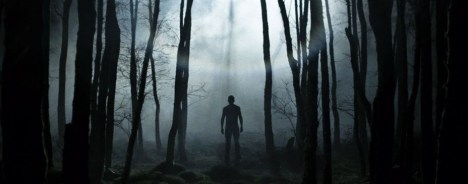
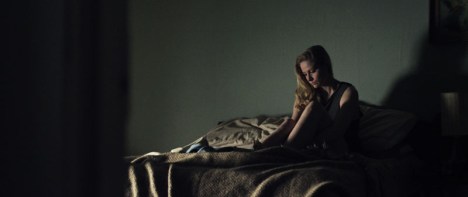
In theory, Without Name belongs that long-standing environmental horror genre, the fear that nature exists in opposition to mankind and that human beings are ultimately a hostile species not welcome in their surroundings. There are all manner of variations in that classic horror set-up, but it bubbles through any number of classic horror films, from The Shining to Jaws to The Birds. There is a recurring fear that the world is not a welcoming place for mankind, and that the wilderness might one day rebel against mankind’s desire to tame it.

If you go down to the woods today...

If you go down to the woods today…

Without Name takes that familiar premise and puts a uniquely Irish spin on it, distinguishing its own set of anxieties from those felt by the European Settlers in the United States or even those disconnected from their pagan roots in the United Kingdom. Without Name draws heavily upon the Western European pagan spirituality that informs films like The Wicker Man or A Field in England, but weds it to unique Irish anxieties about property and ownership that reflect both long-standing uncertainties and modern fears.

The result is a delightfully weird little environmental horror that feels very much of its time and place, a credit to its first-time director.

Sleep well...

Sleep well…

Continue reading

Non-Review Review: The Happiest Day in the Life of Olli Mäki (Hymyilevä mies)

This film was seen as part of the Audi Dublin International Film Festival 2017.

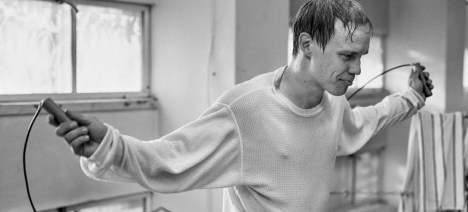
The Happiest Day in the Life of Olli Mäki plays almost like a mumblecore Raging Bull.

To be fair, that is a very facile description. Almost every boxing film stands in the shadow of Martin Scorsese’s 1980 biography of Jake LaMotta, but The Happiest Day in the Life of Olli Mäki invites those comparisons by filming its period-specific based-on-a-true-story boxing fable in black and white. It is hard not to think of Raging Bull in that context, and it is incredibly daring for The Happiest Day in the Life of Olli Mäki to actively invite the comparison.

Skipping to the point.

Skipping to the point.

However, in explicitly evoking that classic boxing movie, writers Juho Kuosmanen and Mikko Myllylahti are able to do something genuinely interesting. Taking all the iconography and expectations of the boxing movie genre, Kuosmanen and Myllylahti are able to tell a story that skews its perspective slightly. Channelling Raging Bull only underscores this subtle shift, with The Happiest Day in the Life of Olli Mäki not so much asking for a comparison as a contrast.

The Happiest Day in the Life of Olli Mäki is charming in the way that it embraces the clichés and expectations of the boxing movie only to subvert with a more naturalistic (and optimistic) love story about a boxer who largely eschews the conventions of the biography films that such sportsmen tend to inhabit.

On the ropes.

On the ropes.

Continue reading