• Following Us

  • Categories

  • Check out the Archives


  • Awards & Nominations

108. Slender Man – This Just In (-#57)

Hosted by Andrew Quinn and Darren Mooney, This Just In is a subset of the fortnightly The 250 podcast, looking at notable new arrivals on the list of the 250 best(and the 100 worst) movies of all-time, as voted for by Internet Movie Database Users.

This time, Sylvain White’s Slender Man.

Continue reading

Non-Review Review: Bird Box

Bird Box is a fascinating contemporary horror movie.

The stock comparison will be to something like A Quiet Place, another contemporary horror movie that plays a fairly standard set-up with a high-concept twist. In A Quiet Place, the characters were stalked by monsters that could not hear them, and so they had to move without generating any sound. In Bird Box, the characters find themselves confronted by supernatural monsters that drive any person who looks at them completely insane, often to the point of self-destructive suicide.

Carry on regardless.

However, Bird Box feels decidedly more abstract than A Quiet Place, more lyrical and more metaphorical in its construction. It was often difficult to read a strong central allegory into A Quiet Place, to see it as anything more than a very effective old-fashioned horror film that very effectively literalised one of the central tensions for horror movie audiences; the desire to scream with the need to keep quiet. Bird Box does something similar, effectively creating a horror movie where even the characters themselves must close their eyes when the scary parts happen.

However, there is much more going on in Bird Box, perhaps even too much. The central premise of the horror movie lends itself to any number of varied (and possibly contradictory) readings about the insanity of the modern world and the need to protect the family from chaos that might at any moment encompass them. Bird Box is an ambitious and effective horror, one that applies a variety of tried-and-tested horror formulas to bracing social commentary.

Life is anything but a dream.

Continue reading

Non-Review Review: The Favourite

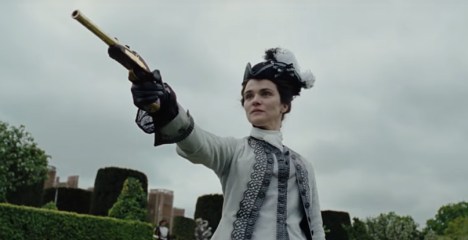
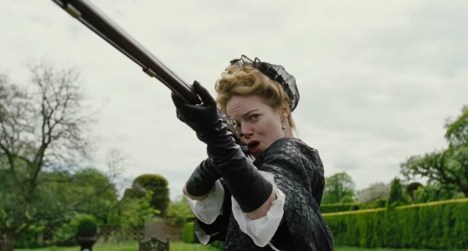
If the stock comparison to The Killing of a Sacred Deer is The Shining, then the obvious comparison to The Favourite is Barry Lyndon.

It is a stock comparison, bordering on facile. After all, there is a world of difference between Yorgos Lanthimos’ story of two women competing for the attention of Queen Anne and Stanley Kubrick’s story of the rise and fall of a roguish Irish gentleman. However, the similarities are striking. Both are eighteenth century period pieces that boldly eschew the conventions of period dramas. Both The Favourite and Barry Lyndon rely heavily on natural light and repeatedly draw the audience’s attention to the nature of the narrative of constructed.

You Only Live Weisz.

However, the most striking point of comparison might be thematic and philosophical rather than simply literal or textual. Just as The Killing of a Sacred Deer explored the collapse of a family unit through the prism of decaying masculinity in a manner that recalled The Shining, the world of The Favourite is defined by its study of power, pettiness and pomposity. As in Barry Lyndon, the fickleness of comfort and the arbitrary nature of security are a recurring fascination for The Favourite, which meditates repeatedly on how precarious such positions can be.

The Favourite is a story of cruelty, both human and natural.

A Stone-Cold Schemer.

Continue reading

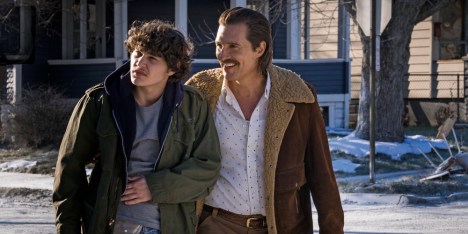
Non-Review Review: White Boy Rick

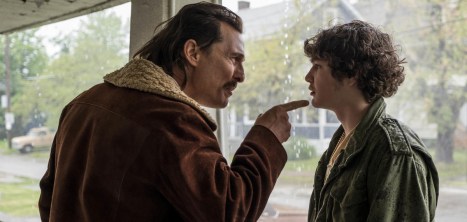
White Boy Rick struggles to articulate what it is actually saying.

The basic premise of White Boy Rick is quite clear from the outset. The film is set in Detroit. Barring a coda, the bulk of the action unfolds in the four years following on from 1984, during Ronald Reagan’s second term. Although the President himself is not directly discussed in the context of the narrative, there is an early conversation in which two agents of the Federal Bureau of Investigation and one member of the Detroit Police Department ruminate upon Nancy Reagan’s famous “just say no” appeal.

Ricked off.

White Boy Rick is an earnest and well-intentioned movie exploring the consequences of the so-called “War on Drugs” in eighties America, and the manner in which that campaign was both fruitless in terms of its nominal objectives and actively harmful to the communities in which it unfolded. White Boy Rick attempts to position itself as a tragedy about a young man – the eponymous character’s age is something of a recurring battle cry – who happens to get wrapped up in something much bigger than his own circumstances.

Unfortunately, White Boy Rick struggles to construct a strong and engaging narrative around this central thesis statement, repeatedly stumbling in trying to graft the character’s arc and decisions to the broader social commentary that it wants to make. The result is a deeply frustrating film that squanders potentially interesting subject matter.

Daddy’s home.

Continue reading

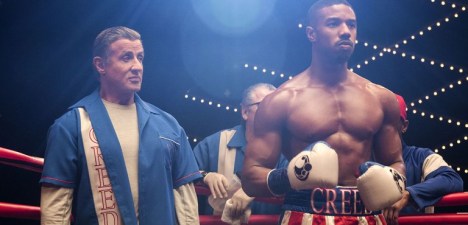
Non-Review Review: Creed II

Creed II is a much better sequel than Rocky IV deserves.

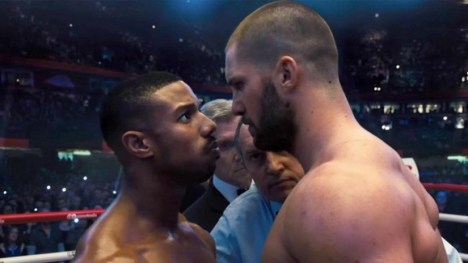
At the heart of Creed II is the grudge match that fans of the franchise had been anticipating since the core concept of this “legacy-quel” series was first suggested. Adonis Creed in the ring against Viktor Drago. The son of Apollo Creed squaring off against the son of Ivan Drago, a generational rematch of the bout that cost Apollo Creed his life in Rocky IV. Adonis Creed is haunted by the name that he inherited from a father that he never met, and so it seems only reasonable that his film series would circle back around to allowing him closure on this.

A Rocky Road Less Travelled.

There is an irony in all of this. One of the central themes of Creed was the challenge of this spin-off movie franchise existing in the shadow of the original beloved Rocky series. Co-writer and director Ryan Coogler rose to that challenge, and created one of the great franchise success stories of the twenty-first century. As a result, it occasionally feels like Creed II is not so much fighting to escape the shadow of Rocky IV as much as it is wrestling with the weight of Creed.

Creed II is a solid and sturdy sequel to Creed, although not a superior one. It isn’t necessarily the sequel that Creed deserves.

To the Viktor, the spoils…

Continue reading

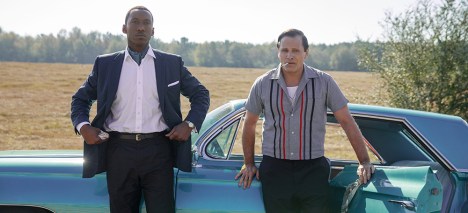
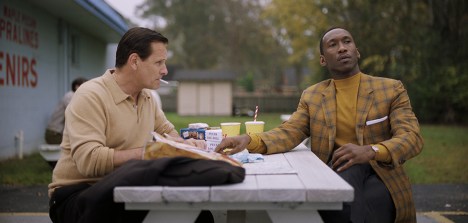
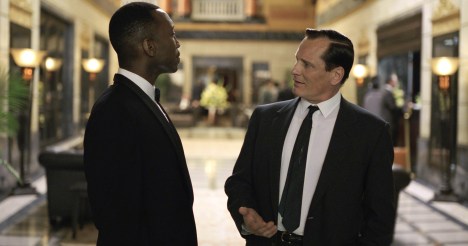
Non-Review Review: Green Book

Green Book feels like a movie lost in time.

If Green Book feels displaced, it is not from the early sixties backdrop against which the story unfolds. Instead, Green Book feels like an awards season movie that was produced in the early nineties, and which slipped gently under the radar until it was unearthed at some recent point. Green Book very much belongs to those early nineties awards fare meditations upon race and class in America – especially Driving Miss Daisy, the film it most strongly evoked.

Going by the Book.

As a piece of nineties awards fare, Green Book would be judged rather kindly. It is crowd pleasing. It is broad. It is earnest, without being unnecessarily confrontational. It is also appreciably smarter than many of those nineties commentaries on race in America, consciously subverting and even inverting a lot of the expectations of the form. it is designed in such a way as to leave the audience with a big grin on their face, playing with familiar sets of narrative logic that nests a classic “odd couple” movie inside an exploration of the prejudices of the Deep South in the sixties.

However, Green Book is not a lost piece of nineties awards fare. It is a product of the current era. While it might track ahead of similarly ill-judged (and sadly contemporaneous) awards season movies about race like The Blind Side or The Help, it is still far more clumsy than a movie tackling these ideas should be in a twenty-first century context. Green Book feels positively outmoded when compared to fellow high-profile films about race like BlacKkKlansman or Sorry to Bother You or If Beale Street Could Talk. Green Book feels like a relic.

Food for thought.

This is a paradox. Green Book is significantly better in terms of production than many of the films to which it consciously invites comparison, films by white directors inspired by true events and coloured by nostalgia. However, it is significantly weaker than many of the more vital and dynamic films grappling with the same subject matter. Green Book often feels caught between these two extremes, and this presents a challenge in properly assessing it.

Green Book is a very good example of the kind of movie that it wants to be. However, it leaves unanswered the question of whether movies like this still have a place in the modern cinematic landscape.

“Doctor Shirley, you can’t be serious?”

Continue reading

Non-Review Review: Roma

There’s a lyrical beauty to Roma, a decidedly intimate and personal project for director Alfonso Cuarón following on from his triptych of more mainstream fare.

Roma is a very different beast from Harry Potter and the Prisoner of Azkaban, Children of Men and Gravity. It is much smaller in scale, focusing on the life of a maid who works for a slightly-above-middle-class family in early seventies Mexico city. Shot in black and white, often favouring quiet scenes and still shots, there is an observational aspect to most of Roma, a sense in which the movie very gently and very elegantly watches life unfold in slow motion without any sense of hurry or panic. For most of its runtime, Roma is content to just be.

This is not a surprise. After all, Cuarón has been candid about how much of the film is drawn from his own childhood. Even without that outside knowledge creeping in, Roma seems to tacitly acknowledge it in the central role that the cinema plays in the story. At one point, the young children take a trip to the picturehouse to see the space thriller Marooned, with Cuarón making a point to showcase a sequence that evokes his own work in Gravity. As much as this is a story about a young woman who works as a maid to a privileged Mexican family, it is undoubtedly filtered through the lens of childhood.

Although nominally set against the backdrop of early seventies Mexico, Roma repeatedly suggests that the larger world is but the echo chamber for the uncertainty and tumult within a family unit; when earthquakes happen and revolutionaries march, they are simply expressions of more intimate traumas and challenges facing these characters. In the world of Roma, it is as below as above, reflecting the way in which a child might see the outside world as nothing more than an extrapolation of the home life that they know so well.

This lends Roma an almost magical quality. Although the film and its characters are complex and developed, there is something poetic in the way in which Cuarón chooses to tell this particular tale. Cuarón never rushes or hurries his characters, instead giving them room to breath. He finds a zen-like calm in the stability of the everyday, the safety of routine against the backdrop of larger anxieties and uncertainties. The characters in Roma repeatedly navigate life-changing events, but underscored with a childlike certainty that they can survive them.

Roma is a genuinely moving piece of cinema.

Continue reading

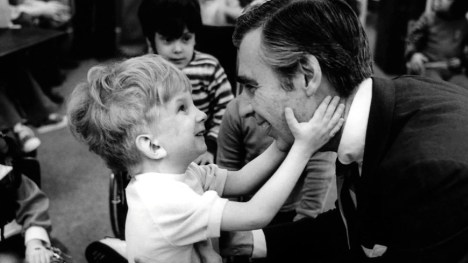
Non-Review Review: Won’t You Be My Neighbour?

Won’t You Be My Neighbour? is an affecting and thoughtful exploration of a key figure in American popular consciousness.

Documentary maker Morgan Neville has established himself as a masterful navigator of the history of popular culture, of the depth and shadow often obscured by memory. Neville is perhaps most famous for his fascinating exploration of the back-up singers who provided a foundation for more recognisable stars in 20 Feet from Stardom, and he was also responsible for the documentary They’ll Love Me When I’m Dead, which probably made a more coherent narrative of The Other Side of the Wind than the film itself.

Won’t You Be My Neighbour? tells the story of children’s entertainer Fred Rogers, a staple of American television since the late sixties. Although the performer passed away more than a decade and a half ago, he casts a long shadow. There has been a renewed interest in his persona. Jim Carrey is playing a fictionalised version of the present in Kidding, while Tom Hanks will play a more official version of the man in a biography directed by Marielle Heller. (The film was originally titled Are You My Friend?, but is reportedly in the process of being retitled.

It is interesting to wonder why Fred Rogers is of such great interest at this precise moment, something that Won’t You Be My Neighbour? skirts around without tackling directly. Instead, Won’t You Be My Neighbour? is a sweet and affecting documentary that maybe brushes a little too lightly against its subject in places, but speaks most convincingly to what he represented and why he is so beloved.

Continue reading

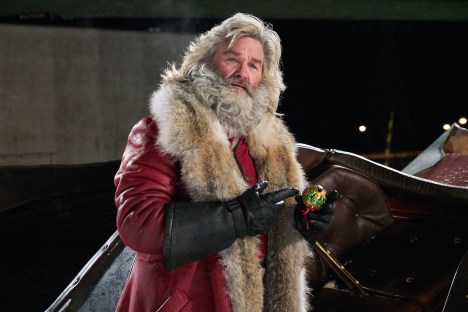
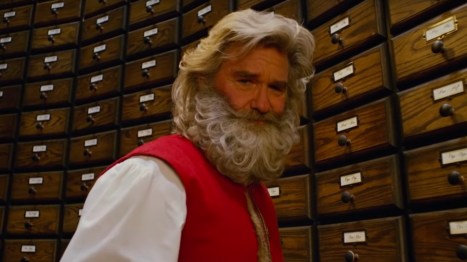
Non-Review Review: The Christmas Chronicles

The Christmas Chronicles is corny, clumsy, cheesy. It is more than a bit naff, to the point that it frequently seems to run on naff.

It is not especially inventive or creative with its premise, and often seems to have opted for the easiest manner of jumping from one set piece to the next. The Christmas Chronicles is incredibly broad, to the point where it even includes a weird castration joke about a computer-generated elf wielding a chainsaw in what had been (up until that point) a completely non-lethal. The film takes a fairly standard Christmas movie premise – what if a bunch of kids have to work with Santa to save Christmas? – and goes through the motions with it.

No Claus for concern.

Truthfully, that is about enough. It isn’t just that Christmas is a time for generosity and cheer, it is that Christmas is also a time to welcome very simple and very striaghtforward entertainment designed to be consumed by families with across a broad range of ages, in varying degrees of consciousness and sobriety. There is a time and a place for the broadly-drawn hijinx that drive The Christmas Chronicles, and Christmas itself would seem to be it. It is an affectionate old-fashioned family movie throwback to a time when emotional arcs could be drawn in crayon and a handful of creative juxtapositions could sustain a film.

The Christmas Chronicles pulls it off. Just about.

Filed by letter.

Continue reading

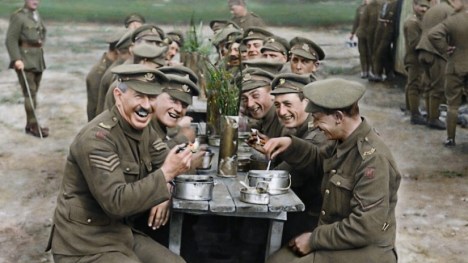
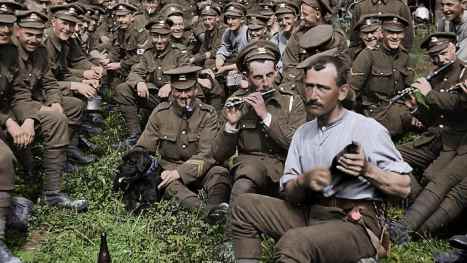
Non-Review Review: They Shall Not Grow Old

They Shall Not Grow Old is a marvelous technical accomplishment, and an adequate if flawed documentary.

A lot of the debate and discussion around They Shall Not Grow Old focuses on the manner in which director Peter Jackson has “updated” or “remastered” existing archival footage of the First World War to bring the documentary to life. They Shall Not Grow Old features real footage of the conflict shot at the same time, albeit digitally manipulated do that it could be rendered in high definition, in colour and widescreen. There are certain segments of film fandom that view this as an act of cinematic vandalism, of destruction of the historical record in a desperate populist bid.

However, this overlooks the substance of They Shall Not Grow Old as an actual documentary, reducing Jackson’s attempt to craft a visceral and tangible record of the First World War to a piece of trivia or a cinematic novelty. This is both a disservice to the documentary itself and also something of a boon. The narrative that Jackson is attempting to reconstruct with the materials available to him is interesting, perhaps much more interesting than debates about one particular facet of the movie’s production.

They Shall Not Grow Old is an ambitious effort, but it is also a deeply flawed one. Its flaws are in many cases interwoven with its virtues, with everything that makes it so unique also serving to impose rigid formal boundaries upon the work that Jackson cannot escape simply by reframing his footage.

Continue reading