• Following Us

  • Categories

  • Check out the Archives


  • Awards & Nominations

Non-Review Review: What Men Want

What Men Want is probably as solid an execution as the title premise could expect.

To be clear, What Men Want is very trite and straightforward. It is a movie that is largely defined by cliché. As the title implies, it’s essentially an exercise in broad gender stereotypes. There is very little novel and exciting in What Men Want. In fact, the most frustrating aspect of the whole film is the consistent refusal to work for a joke when the opportunity for a cheap lay-up presents itself. What Men Want is in no way an exceptional piece of work.

“Are you psychic?”
“No, I’ve just seen a rom-com before.”

At the same time, there is a certain charm to all of this. What Men Want is effectively an exercise in familiar formulas. Audience members will recognise all the stock romantic clichés employed here: the absurd lie that spirals into a brutal personal betrayal, the gay supporting character and sounding board, the third act separation and reunion, the protagonist’s journey towards realising that they need other people. However, there is something to be said for hitting those marks in a manner more effective than many modern films in the same subgenre.

It also helps that What Men Want is driven by a powerhouse central performance from Taraji P. Henson, who demonstrates a commitment and energy that the film can seldom match.

Catching up.

Continue reading

Non-Review Review: The Highwaymen

The Highwaymen is an uneven and clumsy piece of work.

In many ways, The Highwaymen positions itself as a logical extension of the modern deconstructive western, the tales of men on the edge of the frontier grappling with the challenges of modernity. Sometimes, those stories are set in the old west as it faces massive social shifts; The Sisters Brothers is a recent, effective example. Sometimes, these stories unfold in a more contemporary setting featuring characters still processing how the world has moved past them; Hell or High Water may be the best of the recent examples. The Highwaymen positions itself somewhere on the spectrum between the two; an early scene has the Governor of Texas offering an elevator pitch for the entire film, “It’s 1934, Lee, and you wanna put cowboys on Bonnie and Clyde?”

This is the basic premise of The Highwaymen, and it is a good one. It is two different American archetypes thrown into stark opposition with one another, a story that pits two of the last cowboys in the old west against a newer and hungrier breed of American outlaw. The Highwaymen is the story of the two Texas Rangers drafted out of retirement to hunt down Bonnie and Clyde. Forget Monsters vs. Aliens or Cowboys and Aliens or Alien vs. Predator, this is a pop cultural match-up for the ages. It is cowboys versus gangsters. (It might be more accurate to describe Bonnie Parker and Clyde Barrow as “public enemies”, but “cowboys versus public enemies” is not quite so evocative.)

With all of this in mind, it is disappointing that The Highwaymen feels so hollow.

Continue reading

New Podcast! Scannain Podcast (2019) #8! Live From VMDIFF!

It’s time for the latest Scannain podcast!

This time, coming live from the Virgin Media Dublin International Film Festival, recorded in the space between the showings of Another Day of Life and José on Saturday 2nd March. I join Jason Coyle, Ronan Doyle and Alex Towers of When Irish Eyes Are Watching discuss their own experience of the festival to this point, including highlights and otherwise.

Films discussed include: Loro, What Time is Death?, Happy as Lazzaro, Ash is Purest White, Rafiki, Jonathan Agassi Saved My Life, The Man Who Feels No Pain, Fighting With My Family, Angelo, Vox Lux, Her Smell, Dragged Across Concrete, Another Day of Life, Dub Daze, Out of Blue, A Girl From Mogadishu and She’s Missing.

Due to the unique constraints of the festival, this episode eschews the usual format (no top ten! no new releases!), moves at a much brisker and looser pace, and was recorded in the wild. As such, the sound includes ambient rainfall.

Non-Review Review: Triple Frontier

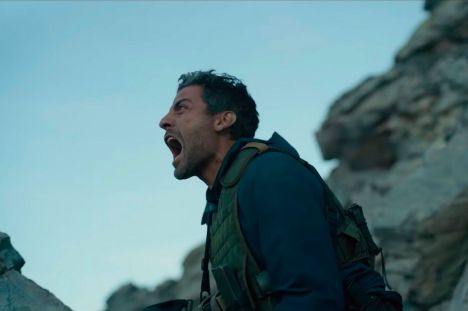
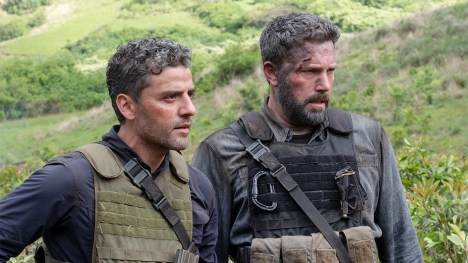
Triple Frontier feels very much like a J.C. Chandor grab bag. And that’s no bad thing of itself.

The film runs on a variety of different concepts and ideas that run through Chandor’s other films. On a purely plotting level, the idea of a story about five guys trapped alone in the wilderness trying to survive on hostile terrain evokes the survival drama of All is Lost, albeit with more men carrying more weapons. The thematic underpinnings of the story, particularly its preoccupations with the dangers of greed and the consequences of unchecked avarice, resonate with Chandor’s earlier work like Margin Call or A Most Violent Year. There is a sense in which Triple Frontier feels of a piece with the body of work that Chandor is building for himself.

Even more broadly, Triple Frontier feels like the kind of older sort of film that rarely gets made in the current studio system; an ensemble cast dropped into a fairly standard premise, anchored in the recognisability of the actors rather than the familiarity of the intellectual property. Triple Frontier is a film build around the closest thing that modern Hollywood has to star wattage. The film reunites Chandor with Oscar Isaac, who anchored A Most Violent Year and the secondary lead role is given over to Ben Affleck, who is arguably one of the rare remaining movie stars. There is no small irony in the fact that Triple Frontier should end up on Netflix, despite being the sort of mid-budget, actor-driven, basic-concept action thriller that studios used to churn out on a regular basis.

Triple Frontier is perhaps Chandor’s weakest film. It lacks the raw urgency of Margin Call, the desperate intimacy of All is Lost and the claustrophobic anxiety of A Most Violent Year. However, it is still a well-constructed survival parable driven by a likable cast and confident director with a clear affection for an older style of Hollywood film-making.

Continue reading

Non-Review Review: Serenity (2019)

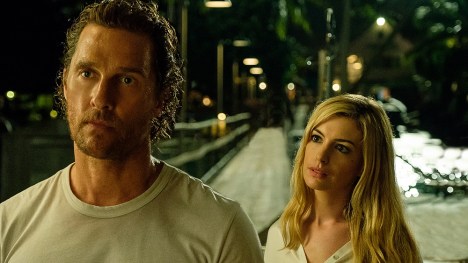
Serenity is the story of a grizzled middle aged man and a tuna fish. A tuna fish named “Justice.”

There are many, many problems with Serenity. Indeed, fixing the most obvious problems with Serenity would just reveal a whole new set of problems. It is all recursive. Serenity does not work in either broad stroke or finer detail. It is flawed from the foundation through to the finishing touches. The basic concept of the movie is spectacularly ill-judged, but this impulse towards poor-decision-making branches out to smaller and more intimate moments of dialogue. It is hard to think of a major cinematic release that has been this obviously and fundamentally broken since Book of Henry. Indeed, like Book of Henry, there is a sense that Serenity might possibly live on as a cult bad movie, the kind of film so committed and thoroughly wrong that it becomes a source of pleasure.

The most obvious thing to criticise about Serenity is the central twist, because that is the hinge upon which the movie turns and central point from which so many bad decisions flow. It is big and glaring, flashing like a beacon. Indeed, one of the characters in the film who identifies himself as “the Rules” might describe it as a lighthouse. However, the central twist often feels like a distraction. There have been successful movies that have pulled off bigger twists than Serenity, and which have worked. There are beloved movies that are built around nominally insane plotting developments, but which have managed to walk that finest of lines; The Sixth Sense, Memento, The Usual Suspects.

The issue with Serenity is not so much its admittedly endearingly insane central revelation. The issue is absolutely everything else, including what it does with that major plot twist.

Continue reading

Non-Review Review: Mard Ko Dard Nahi Hota (“The Man Who Feels No Pain”)

This film was seen as part of the Virgin Media Dublin International Film Festival 2019. Given the high volumes of films being shown and the number of reviews to be written, these may end up being a bit shorter than usual reviews.

The Man Who Feels No Pain is the best film at this year’s Virgin Media Dublin International Film Festival.

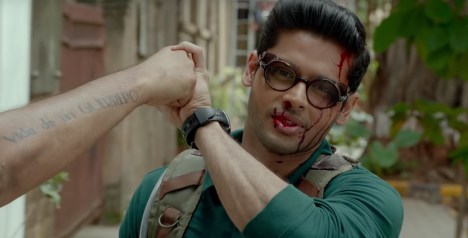
Written and directed by Vasan Bala, The Man Who Feels No Pain is a delightfully self-aware Hindu action comedy which focuses on a young man who – as the title suggests – was born without any capacity to feel pain. Surya has lived a sheltered life, raised by an over-protective father and an over-eager grandfather. Surya’s life has been shaped and defined by the steady stream of popular culture that his grandfather has fed him, in lieu of access to the outside world. Surya’s moral compass is shaped and defined by comic books and eighties action movies, instilling in the boy a very firm sense of right and wrong and giving him a moral certainty about how best to respond to injustice.

When Surya is thrown out into the world as a twenty-year-old adult, there is a serious question as to whether Surya or the world is ready for the experience. The Man Who Feels No Pain is many, many things. Most immediately and superficially, from its opening scenes, it is a loving and knowing parody of eighties action movies and the superhero cinema that they spawned. It works incredibly well on these terms, managing to expertly balance the demands of both the action sequences and the comedic beats. However, the most endearing and engaging aspect of The Man Who Feels No Pain is the way in which it blends this celebration of contemporary pop culture into a broader exploration of growing up.

At its core, The Man Who Feels No Pain is an exploration of that old C.S. Lewis adage that growing up means putting away childish things; including the fear of being seen as childish.

Continue reading

Non-Review Review: Greta

This film was seen as part of the Virgin Media Dublin International Film Festival 2019. Given the high volumes of films being shown and the number of reviews to be written, these may end up being a bit shorter than usual reviews.

Greta is a pure and pulpy delight.

In some ways, Greta could be seen as a follow-up to director Neil Jordan’s previous film, the under-appreciated Byzantium. Like Byzantium, Greta is also a tale of monstrous motherhood and of a young woman struggling with a prolonged and extended childhood. Indeed, both Byzantium and Greta are very much genre pieces. This is in keeping with Neil Jordan’s sensibilities as a filmmaker. It is dismissive of these stories to suggest that Jordan “elevates” them, but he has a very strong understanding of the mechanics of how stories like these work. He always has, going back to stories like The Company of Wolves or Interview with a Vampire. (Even other “genre” work, such as crime films like Mona Lisa or The Crying Game.)

Both Greta and Byzantium are monster stories, even if Greta is anchored by a much more modern sort of monster than Byzantium.  Whereas Byzantium explored this mother-daughter push-and-pull through the lens of the classic vampire story, Greta draws inspiration from a different sources. There are obvious classic gothic influences at work in this psychological horror – Edgar Allan Poe looms large over one of the film’s big reveals, to pick one example. However, Jordan is most obviously and most consciously evoking the popular trashy psychological horror genre of the late eighties and nineties, the dozens of the films that were legitimised by the success of Silence of the Lambs; films like The Cell or Kiss the Girls or The Hand That Rocks the Cradle.

Indeed, the easiest and most efficient way to describe Greta might be “Postnatal Attraction” meets “Single Hungarian Female.”

Continue reading

Non-Review Review: Ash is Purest White

This film was seen as part of the Virgin Media Dublin International Film Festival 2019. Given the high volumes of films being shown and the number of reviews to be written, these may end up being a bit shorter than usual reviews.

There’s something strangely hypnotic in Zhangke Jia’s Ash is Purest White.

The film is a (quasi-) love story stretched across seventeen years and told in a set of three vignettes as the lives of the lead characters intersect in a rapidly-changing China. There’s an epic sweep to Zhangke Jia’s otherwise intimate narrative, a tale of two characters whose circumstances are constantly changing but who very clearly exist in orbit of one another. At one point, Qiao describes herself as a “prisoner of the universe”, and there seems to be some truth in that. No matter what happens, no matter how far she travels, a rubber band always seems to snap back. Indeed, Ash is Purest White has a compelling symmetry to it, the first and final third reflecting one another and suggesting that no matter how hard the characters might push, they’ll end up back where they started.

There is an endearing dreamlike quality to Ash is Purest White, a sense of mood that runs through the film’s two hours and seventeen minutes. At one point in the middle section of the film, a supporting character monologues at length about the idea of unidentified flying objects reported in the skies above the region. It’s a strange intersection for what began as a crime-inflected love story about gang violence, but even stranger for how Ash is Purest White commits to this strange metaphysical tangent. Shortly after this conversation, Qiao has her own experience of mysteries wonder in the haunted skies over the region. a strangely moving and almost spiritual sequence.

Ash is Purest White is full of these sorts of images and moments, beats that capture the weirdness and eccentricity of life, and the strange beauty to be found in the smallest of pleasures.

Continue reading

120. Andhadhun – This Just In (#129)

Hosted by Andrew Quinn and Darren Mooney, and this week with special guests Giovanna Rampazzo and Babu Patel, This Just In is a subset of The 250 podcast, looking at notable new arrivals on the list of the 250 best movies of all-time, as voted for by Internet Movie Database Users.

This time, Sriram Raghavan’s Andhadhun.

At time of recording, it was ranked 129th on the list of the best movies of all time on the Internet Movie Database.

Non-Review Review: Ben is Back

This film was seen as part of the Virgin Media Dublin International Film Festival 2019. Given the high volumes of films being shown and the number of reviews to be written, these may end up being a bit shorter than usual reviews.

Ben is Back finds itself in a strange place in terms of weirdness.

At is core, Ben is Back is essentially the Key and Peele vehicle Keanu reimagined as an earnest prestige picture for the era of Beautiful Boy. It is an inherently absurd premise, an exploration of drug addiction that takes the form of an epic odyssey to rescue a beloved family pet. The incongruous pairing of a recovering addict with his suburban mother on this most unlikely Christmas adventure adds an extra layer of strangeness to the whole proceedings. There’s something very exciting about all of these elements thrown together, feeling incredibly unconventional.

Hug life.

Unfortunately, Ben is Back feels gun shy. It never commits to the inherent ridiculousness of using a trashy thriller template to tell a more intimate story about a pressing contemporary issue. Instead, Ben is Back compromises itself. It tries to have the best of both worlds. It tries to strike a balance between being a dogsploitation journey in to the heart of darkness with a more grounded and mundane portrait of a family struggling with the trauma that addiction has inflicted upon them. The two tones might work separately, but they jar as Ben is Back alternates between them.

This is a shame, as there’s a lot of potential in Ben is Back, and a few moments when it seems like it might actually deliver upon it.

Ben around the world, and I can’t find my baby.

Continue reading