• Following Us

  • Categories

  • Check out the Archives


  • Awards & Nominations

Millennium – The Mikado (Review)

This May and June, we’re taking a trip back in time to review the fifth season of The X-Files and the second season of Millennium.

Glen Morgan and James Wong famously pulled Millennium away from its “serial killer of the week” format in its second season. While the label might be a little harsh (and perhaps a little exaggerated), it did hint at a recurring formula in the first season. Frank Black would be called in to catch a serial killer with a unique and distinctive modus operandi. The first season was littered with episodes built around that core format, wildly varying in quality. For every Blood Relatives or Paper Dove, there was a Loin Like a Hunting Flame or Kingdom Come.

The second season largely moved away from all that. Although Morgan and Wong occasionally made nods towards the classic format in episodes like Beware of the Dog, 19:19 or Goodbye Charlie, the second season of the show was a lot less formulaic and familiar. This is was a show that could transition from The Hand of St. Sebastian to Jose Chung’s “Doomsday Defense” to Midnight of the Century to Goodbye Charlie to Luminary. It seemed quite reasonable to suggest that the second season of Millennium was not as firmly attached to the concept of serial killers as the first season had been.
This is Avatar calling...

This is Avatar calling…

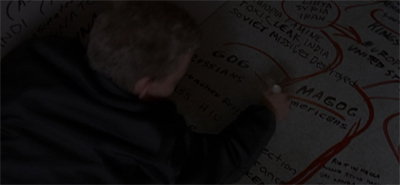
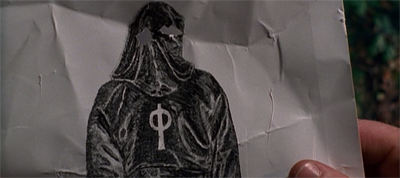
This makes The Mikado a rather unique instalment, arriving a little past half-way through the season. Written by Michael R. Perry, The Mikado is very much an archetypal serial killer story. There is a case from Frank Black’s past, lots of victims, some occult imagery, and even a ticking plot. In fact, The Mikado is probably the only episode of the second season that would arguably fit more comfortably in either the first or third seasons of the show. All you’d have to do is write out the character of Roedecker.

However, there is something decidedly big and bold about The Mikado. It is perhaps the most archetypal (and maybe the most successful) straight-down-the-middle “serial killer of the week” story that Millennium ever produced. After all, if you are only going to do produce one truly traditional “serial killer of the week” story in a season, you may as well go big. And you can’t go much bigger than the Zodiac.
It's all about the execution...

It’s all about the execution…

Continue reading

Millennium – Luminary (Review)

This May and June, we’re taking a trip back in time to review the fifth season of The X-Files and the second season of Millennium.

Why is Frank Black still involving himself with the Millennium Group?

The second season of Millennium is a fantastically constructed piece of television, but there are a number of fundamental criticisms that can be leveled at this particular incarnation of the show. To some viewers, it is too much to watch the Millennium Group transformed from a consultancy firm in the style of the Academy Group into an ancient Christian cult obsessed with doomsday. Other fans may not be particularly fond of the surreal eschatology of the second season, finding it a bit more “out there” than stories about serial killers and more mundane evil.

Cooling off period...

Cooling off period…

However, there are fans who have difficulty reconciling the version of Frank Black presented in the second season with the iteration who appeared throughout the first season of the show. The second season gave Frank a fondness for Bobby Darin and a sense of humour, but the change is more fundamental than that. The moral and righteous Frank was a pillar of certainty in an uncertain world. To some fans, it seems strange that Frank would remain involved in the Millennium Group as their paranoia and cultish behaviour became more and more apparent.

In many respects, Luminary seeks to answer that question. The second of Chip Johannessen’s three scripts for the second season ranks among his very best work for the show and the very best of the show in general. Johannessen has admitted that he was a little frustrated with the direction that Glen Morgan and James Wong took the show in its second year, and that scepticism bleeds through into Luminary. It is also what makes Luminary so compelling. It is a story about how Frank Black has lost himself over the last half-season, and needs to find his way back.

Night lights...

Night lights…

Continue reading

Millennium – Goodbye Charlie (Review)

This May and June, we’re taking a trip back in time to review the fifth season of The X-Files and the second season of Millennium.

Goodbye Charlie is an interesting oddity at this point in the season. It is the closest thing that the show has done to an old-fashioned “serial killer” story in quite some time, while still remaining quite unique and bizarre. It is a story about a man who may (or may not) be a serial killer, opening with shots of that (possible) killer serenading his victims with a dodgy karaoke version of the already dodgy Seasons in the Sun. It is memorable and striking, a strange hybrid of familiar trappings and completely bonkers absurdity.

There are points where Goodbye Charlie does not work. There are moments when the script seems a little too knowing or a little too heavy-handed. However, there moments are generally fleeting. When Goodbye Charlie falters, it is only a slight misstep; there is never a sense that it might implode in the same way that Sense and Antisense or A Single Blade of Grass threaten to collapse in on themselves. More than that, as with a lot of the bumps in the road during the second season, the show is generally ambitious and energetic enough that it’s hard not to get drawn in despite the flaws.

Sing with me now...

Sing with me now…

There are two elements of Goodbye Charlie that really sell it. The first is Richard Whiteley’s script. It is perhaps a little stilted in places – most notably in the way that it awkwardly plays up the ambiguity around the case by having Frank and Lara repeatedly draw attention to the ambiguity around the case – but it is clever, fast and witty. The episode also benefits from the casting of Tucker Smallwood as Steven Kiley, who turns in one of the best one-shot guest appearances of the season as a character who might be an altruistic helper or a manipulative sociopath.

Goodbye Charlie is perhaps a little too uneven to count among the very best of the season, but it is a fascinating little episode. It is also perhaps an indication of how profoundly the show has changed over this half-season that Goodbye Charlie manages to feel like one of the more conventional episodes of the year.

Nuts to that...

Nuts to that…

Continue reading

Millennium – Midnight of the Century (Review)

This May and June, we’re taking a trip back in time to review the fifth season of The X-Files and the second season of Millennium.

Midnight of the Century is a Millennium Christmas episode, as strange as that might sound.

In hindsight, it really should not seem so strange. After all, The X-Files had just done a big two-part Christmas episode with Christmas Carol and Emily. More than that, executive producers Glen Morgan and James Wong had demonstrated an affinity for holiday-themed episodes. The duo had written the Christmas-themed Beyond the Sea for the first season of The X-Files, and had commissioned The River of Stars while they were running Space: Above and Beyond. They had also written The Curse of Frank Black, a Halloween-themed Millennium episode.

Angels in America...

Angels in America…

Midnight of the Century is the second Millennium script credited to writers Kay Reindl and Erin Maher. The duo had been recruited by Morgan and Wong at the start of the second season, and had already produced A Single Blade of Grass. It was a messy episode, albeit one with flashes of genius. Midnight of the Century gives the two writers a much cleaner brief and a lot more room to work. As with The Curse of Frank Black, there is a wonderfully relaxed pace to Midnight of the Century, a sense it knows both where it’s going and how it wants to get there.

On paper, the idea of “a Millennium Christmas episode” sounds like the bleakest thing ever. However, while there are elements of melancholy involved, it is to the credit of everybody involved that Midnight of the Century feels so damn bittersweet.

A Black (family) Christmas...

A Black (family) Christmas…

Continue reading

Millennium – Jose Chung’s “Doomsday Defense” (Review)

This May and June, we’re taking a trip back in time to review the fifth season of The X-Files and the second season of Millennium.

Well, all’s well that ends well. Though that’s easy for Shakespeare to say – he’ll be around for another millennium. But what of our own millennium? Will it all end well? No one of course can know, but that of course doesn’t stop anyone from guessing. And the nature of these predictions always revolve around the usual suspects: salvation and/or self–satisfaction. With that in mind, I humbly add my own prophecy of what the dawn of the new millennium shall bring forth: one thousand more years of the same, old crap.

– Jose Chung

The write stuff...

The write stuff…

Continue reading

Millennium – The Hand of St. Sebastian (Review)

This May and June, we’re taking a trip back in time to review the fifth season of The X-Files and the second season of Millennium.

The Hand of St. Sebastian closes out the first third of the second season of Millennium. It also marks the half-way point in the episodes credited to Morgan and Wong as writers over the course of the season – it is the sixth of a phenomenal twelve scripts credited to the showrunners, even outside their responsibilities as executive producers. In many ways, The Hand of St. Sebastian represents the point at which the stage has been completely set. It establishes the last of the basic ideas that the team will play with across the rest of the season.

The Curse of Frank Black and 19:19 had affirmed that Christian eschatology would be a driving force for the show, as if that had ever been in doubt. After all, the first season’s big two-part epic had been Lamentation and Powers, Principalities, Thrones and Dominions, an epic story about demons and angels. More than that, Morgan and Wong had revised the opening credits sequence of the show so that it ended with the promise that “the time is near”, an obvious textual reference to Revelation.

Circle of trust...

Circle of trust…

The Hand of St. Sebastian confirms what was inferred in Beware of the Dog when Frank pointed out that the ouroboros was “used as a secret symbol on early Christian graves.” Here, the Millennium Group itself is identified as an ancient Christian organisation, one interested in ancient Christian relics for their spiritual and magical uses. There is a decidedly pulpy feel to the second season; one that is particularly evident in The Hand of St. Sebastian, as Frank and Peter go abroad to do a modern day Raiders of the Lost Ark on a nineties television budget. Ambition is not the worst vice.

However, The Hand of St. Sebastian is perhaps most notable for putting the focuse squarely on the character of Peter Watts. Naturally, Frank plays a pretty vital role in The Hand of St. Sebastian, but the episode does a lot to develop Peter as a character. It builds off his powerful speech in The Beginning and the End to portray a man of faith searching for validation and meaning in the world. The second season really capitalised on the presence of Terry O’Quinn, recognising the actor’s immense talent and helping to establish him as a televisual talent to watch.

This is who we were...

This is who we were…

Continue reading

Millennium – 19:19 (Review)

This May and June, we’re taking a trip back in time to review the fifth season of The X-Files and the second season of Millennium.

One of the interesting aspects of the second season of Millennium is just how carefully structured all the chaos actually is.

There is an endearing and infectious randomness to the plotting of episodes like Sense and Antisense or A Single Blade of Grass, with individual episodes often struggling to fit together on an act-by-act basis. However, things become a lot clearer from a distance. Pulling back, it appears quite clear that there is a method to the madness. The episodes in the season – particularly those positioned towards the beginning and the end – each serve a clear purpose in the larger arc of the second season.

Will he die for our sins?

Will he die for our sins?

The first third of the season is very much about establishing concepts that will be of use later in the story. The Beginning and the End removes Frank from the yellow house and starts him on a new journey. Beware of the Dog introduces the Old Man and teases the mythology of the Millennium Group. Monster introduces Lara Means. The Curse of Frank Black gives Frank his long dark midnight of the soul. 19:19 and The Hand of St. Sebastian were the last two episodes in this opening act, and they exist to affirm the show’s cosmology.

Both 19:19 and The Hand of St. Sebastian firmly establish the show’s apocalyptic worldview in a Christian theological framework. 19:19 does this by exploring biblical prophecy and eschatology, while The Hand of St. Sebastian reveals the Millennium Group to be a secret Christian sect who have existed for over a thousand years. Although the show has always taken a lot of its imagery and iconography from Christianity, 19:19 engages explicitly with the idea of biblical prophecy and millennialism.

All part of the plan...

All part of the plan…

Continue reading

Millennium – The Curse of Frank Black (Review)

This May and June, we’re taking a trip back in time to review the fifth season of The X-Files and the second season of Millennium.

The Curse of Frank Black is a phenomenal piece of television, and an episode that demonstrates the raw potential of the approach that Glen Morgan and James Wong have adopted towards Millennium, making the show feel (simultaneously and paradoxically) more intimate and more epic. It is a show about the end of the world, but where the end of the world can be conveyed through the late night wandering of an old man on Halloween. It is a superb piece of work on just about every level.

The Curse of Frank Black is, in a many ways, the perfect encapsulation of many of the themes and ideas that Morgan and Wong have played with over the years. It is constructed in the style of a classic horror film, but is driven by character. As with Scully in Beyond the Sea, Mulder in One Breath, and McQueen in The Angriest Angel, Frank Black finds himself facing an existential crisis at the darkest moment of his life. What will Frank do when faced with the most horrific of possibilities?

millennium-thecurseoffrankblack22

What does anybody do when they are confronted with the end of their world? Morgan and Wong are fond of putting their characters through the metaphorical crucible, seeing what happens when the foundations are eroded and the support framework is taken away. The Curse of Frank Black suggests that there are only two possible options when the world falls to pieces: either you stand safely on your side of the line and watch it happen, or you pick up a bucket of water and start cleaning up.

It is a simple choice, an elegant metaphor, and it sits at the heart of The Curse of Frank Black.

millennium-thecurseoffrankblack15

Continue reading

Millennium – A Single Blade of Grass (Review)

This May and June, we’re taking a trip back in time to review the fifth season of The X-Files and the second season of Millennium.

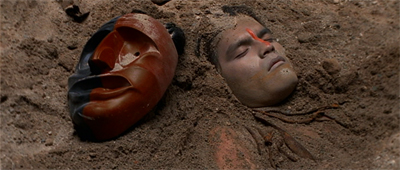
A Single Blade of Grass is one of those episodes of television that skirts a line. It is very much a companion to “subculture” episodes of The X-Files, shows that would see our white heroes wading into the world of an ethnic minority – be the Haitian refugees in Fresh Bones, Chinatown in Hell Money, African immigrants in Teliko or Mexican-Americans in El Mundo Gira. In the case of A Single Blade of Grass, Frank Black is wandering into the world of Native Americans in New York.

It goes without saying that these sorts of episodes have to be very careful. Both Millennium and The X-Files are very white television shows – they have exclusively white primary casts, and the vast majority of their supporting cast are also white. (Also, most of the writers’ rooms.) As such, telling a story about a subculture can be very tricky – it is easy to seem shallow or condescending, trite or exploitative. It is worth noting that some of the biggest misfires on The X-Files occurred when the production team got this horribly wrong – Excelsis Dei, Teso Dos Bichos, El Mundo Gira, Badlaa.

Burial mask...

Burial mask…

It is very easy to get caught up in mysticising and fetishising the Other, which can become quite problematic when “the Other” corresponds to a real-life minority that have – historically speaking – never been treated particularly well by those in authority. As such, A Single Blade of Grass feels like a very risky and very difficult story, particularly for a show that was already struggling in the ratings and trying to gain some traction with audiences. A Single Blade of Grass has the potential to go spectacularly wrong in places, and it is to the credit of all involved that it (mostly) doesn’t.

Then again, this is a large part of the appeal of the second season of Millennium – what makes even the year’s failures seem compelling in their own eccentric way. There is a sense that the second season of Millennium is completely unfazed by the possibility of failure, and so commits completely to what it wants to do. While A Single Blade of Grass might be a little muddled and unfocused in places, it retains a raw energy that makes for compelling viewing.

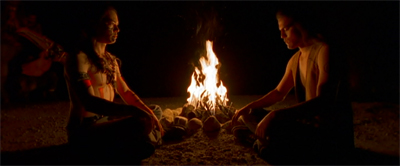
Let us sit upon the ground and tell sad stories about the death of worlds...

Let us sit upon the ground and tell sad stories about the death of worlds…

Continue reading

Millennium – Monster (Review)

This May and June, we’re taking a trip back in time to review the fifth season of The X-Files and the second season of Millennium.

Monster continues the process of laying the groundwork for the second season of Millennium. Glen Morgan and James Wong had very consciously shaken things up with The Beginning and the End, and the first third of the second season is clearly intended to construct a solid foundation for the rest of the year. Looking at the plot points and character beats from the various episodes, they read almost like a checklist of things to address or introduce before the series can really start moving under its own power again.

Even outside of the dramatic changes wrought by The Beginning and the End, the other episodes in this stretch of the season each have their own purpose. Beware of the Dog introduces us to the Old Man, affectionately riffs on the first season format, and outlines the refactored Millennium Group. In turn, Sense and Antisense riffs on The X-Files and helps to identify areas of overlap with Millennium. A Single Blade of Grass gives Frank back his psychic powers, albeit in a more powerful and abstract form. The Curse of Frank Black is a character-driven vehicle. 19:19 and The Hand of St. Sebastian get well and truly biblical.

Fire and brimstone...

Fire and brimstone…

The most dramatic aspect of Monster is the introduction of the character of Lara Means. Means becomes a pretty vital part of the second season of Millennium, and is introduced in Monster with an eye to her inevitable role in The Time is Now. Means is a vital cog in the workings of the second season, perhaps the most important part of the mythology explicitly created by Morgan and Wong, instead of simply repurposed and reinvented. Means is a fantastic creation, wonderfully brought to life by actor Kristen Cloke and well-realised by Morgan and Wong’s scripting.

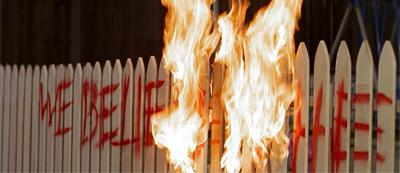
However, even outside of the important introduction of Lara Means to Millennium, Monster feels like an episode that exists to set up and outline the larger themes and ideas of the season in a way that foreshadows the larger arc. Like A Single Blade of Grass, it reiterates themes that will become a lot more important as the year goes on. Like Beware of the Dog, it uses the familiar template of a first-season Millennium episode to do this.

I believe in angels...

I believe in angels…

Continue reading