• Following Us

  • Categories

  • Check out the Archives


  • Awards & Nominations

Millennium – Omertà (Review)

This July, we’re taking a trip back in time to review the sixth season of The X-Files and the third (and final) season of Millennium.

It might not feel like it – particularly while actually watching the episode – but Omertà does represent something of a shift in the third season of the show.

Although it was the ninth episode of the third season to be broadcast, it was the eighth produced. It was held back so that it could be broadcast closer to Christmas, in keeping with the themes of the show. As a result, it was the first episode of the third season not to be produced by Michael Duggan. Chip Johannessen is the only “executive producer” listed before Chris Carter at the end of the episode. In a way, shuffling Michael Duggan’s script for Human Essence back earlier in the broadcast order might have been a good thing; it makes for a cleaner break.
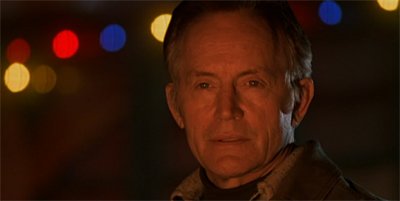
"Merry Christmas, Mr. Black."

“Merry Christmas, Mr. Black.”

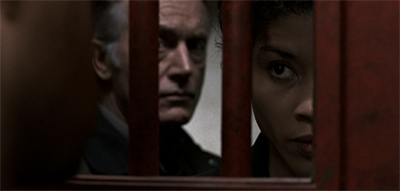
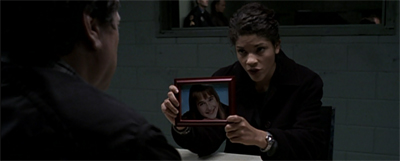
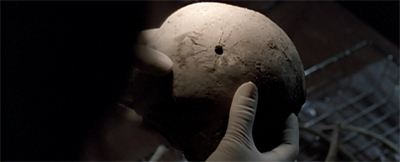
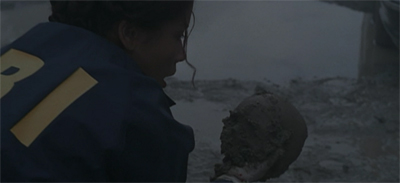
Omertà is not a great piece of television, by any measure. It is not even a good piece of television, by most measures. However, it does mark a point of transition for the third season of Millennium. Omertà begins a run of episodes that deal substantively with the legacy of the show’s second season, and which engage with grand themes of death and spiritual rebirth. The third season of Millennium is a thematic mess, but Omertà represents a point where it seems like the creative team might finally be getting a grip on things, almost half-way through the year.

None of this makes Omertà any easier to watch, but it does provide an intriguing prism through which the episode might be viewed.
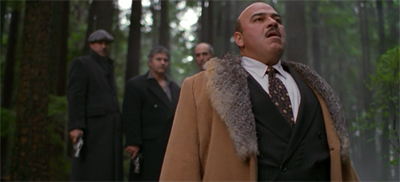
"Tonight, we're gonna party like it's 1989!"

“Tonight, we’re gonna party like it’s 1989!”

Continue reading

Millennium – Human Essence (Review)

This July, we’re taking a trip back in time to review the sixth season of The X-Files and the third (and final) season of Millennium.

Human Essence is the second (and final) script from Michael Duggan. It is also, notably, the first episode of the third season not to credit Duggan as an “executive producer” before the final credits.

Human Essence is a terrible episode of television. However, it is interesting to note that it is mostly terrible in ways that generic television can be terrible. The third season of Millennium is often terrible because of decisions or realities imposed by or resulting from creative decisions relating to the show itself. In the case of something like Through a Glass Darkly, the terribleness results from a perfect storm of vices associated with Millennium as a show. The Innocents and Exegesis are hobbled by choices made about the direction of the show.

Here there be monsters...

Here there be monsters…

Human Essence is terrible in a much more generic way. It would be a terrible episode of just about any television show. One of the problems with the episode is that it feels like it could easily be a terrible episode of just about any television show. With some light revisions, Human Essence could easily become a terrible episode of The X-Files or a terrible episode of Law & Order. Change the character names, tweak the dialogue a little. It wouldn’t take more than some light scrubbing to remove any hint of Millennium from the script.

However, it would take significantly more scrubbing to get the smell of crap off the script.

Yeah. We're hip.

Yeah. We’re hip.

Continue reading

Millennium – Through a Glass Darkly (Review)

This July, we’re taking a trip back in time to review the sixth season of The X-Files and the third (and final) season of Millennium.

Through a Glass Darkly is a terrible piece of television.

There is no nice way to say it. There is no excusing it. Through a Glass Darkly is an absolutely wretched script directed in a cloying manner. It is cliché, it is clumsy, it is trite. It is manipulative and cynical. There are no redeeming features to Through a Glass Darkly beyond the fact that it makes Human Essence and Omerta look significantly better than they actually are. This is an abysmal production, and one of the worst forty-five minutes of television that Ten Thirteen has broadcast to this point. It is up there with Excelsis Dei.

"You are a paedophile, you are a nonce, you're a perv, you're a slot badger, you're a two pin din plug, you're a bush dodger, you're a small bean regarder, you're an unabummer, you're a nut administrator, you're a bent ref, you're the crazy world of Arthur Brown, you're a fence foal, you're a free willy, you're a chimney bottler, you're a bunty man, you're a shrub rocketeer..."

“You are a paedophile, you are a nonce, you’re a perv, you’re a slot badger, you’re a two pin din plug, you’re a bush dodger, you’re a small bean regarder, you’re a unabummer, you’re a nut administrator, you’re a bent ref, you’re the crazy world of Arthur Brown, you’re a fence foal, you’re a free willy, you’re a chimney bottler, you’re a bunty man, you’re a shrub rocketeer…”

Child sex abuse is an absolutely horrific reality. The world is not always a nice place, and the world is not always a safe place. In the late nineties, film and television were growing more comfortable with exploring and addressing issues of child abuse. However, it was something that needed to be handled with a great deal of care and skill. Millennium had already learned how difficult it could be to tell a story about child abuse, with Chris Carter’s well-intentioned but clumsy The Well-Worn Lock.

Through a Glass Darkly manages to retroactively make The Well-Worn Lock seem like a work of genius.

 "...this paedophile has disguised himself as a school in Sheffield."

“…this paedophile has disguised himself as a school in Sheffield.”

Continue reading

Millennium – Skull and Bones (Review)

This July, we’re taking a trip back in time to review the sixth season of The X-Files and the third (and final) season of Millennium.

Skull and Bones brings a lot of the problems with the third season of Millennium to the fore.

Most obviously, the third season of Millennium is making a conscious effort to return to the aesthetic and style of the first season, with an emphasis on horrific crimes and abhorrent psychologies. In interviews around the launch of the third season, Chris Carter repeatedly suggested that something had been lost in the second season. TEOTWAWKI was an issue-driven episode about school shootings and Y2K. Closure was a story about how spree killers can engage in random patterns of violence and there is no way to reliably discern a pattern of logic in truly evil behaviour.

The hole in things...

The hole in things…

At the same time, the third season is struggling to deal with the legacy and impact of the second season. The Innocents and Exegesis rather clumsily attempted to write their way out of The Fourth Horseman and The Time is Now by downplaying the impact of the end of the world at the end of the second season. However, the third cannot completely erase what happened. The absence of Catherine Black and the presence of Peter Watts are constant reminders. The Millennium Group itself cannot revert back to its first season self.

Skull and Bones plays out this conflict, creating an impression of a show trapped at a crossroads with a problem it cannot resolve. Skull and Bones is an episode that attempts to both minimise the impact of the second season of Millennium while still acknowledging and building upon it. It is not an approach that lends itself to satisfactory or fulfilling storytelling. However, it does articulate just how confused the show must be at this point in its life cycle.

There are going to be a lot of Yorrick captions this time...

There are going to be a lot of Yorrick captions this time…

Continue reading

Millennium – … Thirteen Years Later (Review)

This July, we’re taking a trip back in time to review the sixth season of The X-Files and the third (and final) season of Millennium.

… Thirteen Years Later is infamously silly. That may not be such a bad thing.

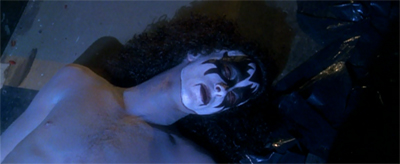
There are a lot of details that would seem to weigh against … Thirteen Years Later. It is the show’s first attempt at comedy since Darin Morgan left the staff at the end of the second season; any episode will suffer in comparison to Jose Chung’s “Doomsday Defense” or Somehow, Satan Got Behind Me. It is an episode built around a guest appearance from the rock band KISS to promote the release of their latest album, Psycho Circus. It is also an attempt to do wry self-aware meta-commentary and Hollywood satire, which could easily become indulgent.

KISS was 'ere...

KISS was ‘ere…

To be quite frank, … Thirteen Years Later doesn’t really work. It is messy and convoluted. A lot of the gags are obvious, and a lot of its satire of Hollywood feels somewhat stock. The framing device builds to a pretty lame (and entirely predictable) punchline. Some of the best gags in … Thirteen Years Later are shamelessly poached from better second season episodes – the idea of Frank Black in Hawaiian shirt comes from Jose Chung’s “Doomsday Defense” while the idea of Frank Black critiquing serial killer movies was hilarious in Midnight of the Century.

However, in spite of all that, … Thirteen Years Later has an energy and momentum that is sorely missing from much of the season around it. The third season has seen a return to the mood and aesthetic of the first season, which occasionally wallowed in gloom and self-importance. … Thirteen Years Later completely skewers that sense of self-importance. Its best jokes seem to be affectionate jabs at Millennium itself, demonstrating that the show still has a great sense of humour; even if it has gotten quite effective at hiding it.

The camera never lies...

The camera never lies…

Continue reading

Millennium – Closure (Review)

This July, we’re taking a trip back in time to review the sixth season of The X-Files and the third (and final) season of Millennium.

Closure is the first time that Emma Hollis has come into focus.

The character has been featured in the opening credits since The Innocents, but has mostly existed in the background. The Innocents and Exegesis made it clear that Hollis was a young agent who could act under her own initiative, but she was very much a secondary figure in a narrative largely about Frank trying to work through the loss of his wife. She played a significant role in TEOTWAWKI simply by virtue of being able to work with both Frank Black and Agent Barry Baldwin. It was hard to get a read on her character beyond the very basic elements.

"Closure" in one word.

“Closure” in one word.

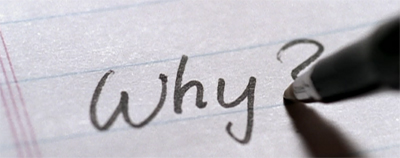
The opening scene of Closure makes it quite clear that his will be a Hollis-centric episode. While a senseless murder in a cheap hotel provides the sting leading into the credits, the teaser opens with Emma Hollis wandering through a graveyard and narrating to an unseen character. “I spend my days looking for reasons,” Hollis narrates. “The reasons people do what they do. It’s my job, it’s my way. I want to know why. Why it’s like this. Why good people die.” So it is quite clear where Closure is going from the outset.

Closure works reasonably well. It is much more modest episode than something like The Innocents, Exegesis, TEOTWAWKI, … Thirteen Years Later or Skull and Bones. It is an episode that feels like a conscious attempt to pull the show back towards the first season, hinting at an efficient serial killer procedural. Closure feels like a first season episode, and not just because of the procedural element. The decision to give Hollis a childhood trauma as motivation feels like a rather lazy way to flesh out her character. It is efficient, but it does feel a little too easy.

Smile!

Smile!

Continue reading

Millennium – TEOTWAWKI (Review)

This July, we’re taking a trip back in time to review the sixth season of The X-Files and the third (and final) season of Millennium.

The best thing that can be said about TEOTWAWKI is that it knocks quite a few items off Chris Carter’s “millennial anxieties” checklist – touching on issues of school shootings, gun control, Y2K, anarchy, survivalism, and a few more.

There are some good and interesting ideas in TEOTWAWKI. It is written by Chris Carter and Frank Spotnitz, the first script credited to either writer since the first season of the show. It seems like both writers were clearly thinking about Millennium while working on the fifth season of The X-Files, storing up ideas for late use. TEOTWAWKI is not a script suffering from a lack of ideas. In fact, it has too many ideas packed too tightly. The script isn’t particular graceful; none of the threads dovetail as neatly into one another as they really need to.

Blood money...

Blood money…

This is a recurring theme across the third season of Millennium. There are shows with interesting and compelling ideas, but they are mixed together in a way that doesn’t work – often mingling with some of the more unfortunate creative decisions driving the show. Episodes in the third season frequently feel like curate’s eggs – scrambled messes with good bits and bad bits that are ultimately impossible to separate. TEOTWAWKI might be an interesting mess, but it is still a mess.

TEOTWAWKI makes it clear that The Innocents and Exegesis were not a rough spell as Millennium tried to find its sea legs. This is the way that things will be going forward, at least for a while.

"Doomsday Defense" was a better read...

“Doomsday Defense” was a better read…

Continue reading

Millennium – Exegesis (Review)

This July, we’re taking a trip back in time to review the sixth season of The X-Files and the third (and final) season of Millennium.

It is odd to think of The Innocents and Exegesis as a two parter, despite the explicit “to be continued” that bridges the two episodes.

The Innocents is very much a straightforward procedural episode, with Frank rejoining the FBI and investigating a string of mysterious occurrences that are all connected. As Frank tries to pull himself back together after the death of his wife, various parties insist that he is more lost than ever before. There is a sense that Frank needs to work though what happened to him, regardless of the doubts expressed by his embittered father-in-law or his friendly supervisor at the FBI. Of course others doubt him, and of course he works through those doubts.

"I can see it all clearly..."

“I can see it all clearly…”

It is very much a standard “lead character gets his life back together” story, complete with obligatory sequence where Frank demonstrates he has made his peace with the loss of Catherine by using his story as emotional leverage to ply a confession (or, at least, an explanation) from a person of interest in the on-going investigation. The Innocents is a very banal and paint-by-numbers episode of television. Underneath all those biohazard warnings and eerie blue-eyed siblings, there is a strong procedural element to The Innocents. It feels trite and coy.

At the very least, Exegesis is more unique. It feels like an episode of Millennium, rather than some generic dime-a-dozen procedural. This is likely down to the fact that The Innocents was written by Michael Duggan and Exegesis was written by Chip Johannessen. Michael Duggan was a writer who had a lot of experience on procedurals (Law & Order and C-16: FBI), but who had no prior experience writing Millennium. Hired to run the show in its third year, he would only write two scripts for the show before departing seven episodes into the season.

Go fly a kite...

Go fly a kite…

In contrast, Chip Johannessen had helped to define Millennium’s identity in its first year. In fact, with a group of nearly identical female sisters working towards a mysterious goal (based on vague prophecy), Exegesis owes a great deal to Johannessen’s earlier script Force Majeure. While it does illustrate how Exegesis feels like a more traditional Millennium episode than The Innocents, it is not a comparison that does Exegesis any favours. Force Majeure was one of the best episodes the show ever produced; Exegesis is… not.

As with The Innocents, Exegesis is handicapped by a lot of the clumsy production decisions made at the start of the third season. It feels curiously disconnected from what came before; it plays a little too much like a reheated leftover from The X-Files; a lot of the nuance and development given to Peter Watts and the Millennium Group over the second season is washed away. Nevertheless, it does have a clearer sense of purpose and energy than The Innocents. It feels like Johannessen knows what he wants to say, even if the show is still tripping over itself.

Welcome back, Frank.

Welcome back, Frank.

Continue reading

Millennium – The Innocents (Review)

This July, we’re taking a trip back in time to review the sixth season of The X-Files and the third (and final) season of Millennium.

So, how do you write your way out of the end of the world?

To be fair, it is not an easy assignment. The Fourth Horseman and The Time is Now are two spectacular pieces of television, but they arguably work better as a series finalé than a season finalé. Once Fox decided to renew Millennium for a third season, the biggest problem facing the staff was the challenge of writing around the apocalypse that had arrived at the end of the second season. It is a problem that hobbled the third season of Millennium coming out of the gate. However, it was not the only such problem.

Guess who's Black?

Guess who’s Black?

Millennium is a show that feels particularly disjointed from year-to-year. It has been argued – quite convincingly – that Millennium was really three different shows, and that no two seasons of Millennium convincingly resemble one another. The third season of Millennium would be a different beast than the second. The Innocents and Exegesis demonstrate that clearly and quite articulately. The two-part season premiere made it quite obvious that Millennium was no longer a show particularly interested in ideas of apocalypse – whether global or personal.

Unfortunately, it seemed like the show had no real idea of what it wanted to be.

"Yep, this is what Chris Carter found when he took the show back."

“Yep, this is what Chris Carter found when he took the show back.”

Continue reading

Millennium – Season 2 (Review)

This May and June, we’re taking a trip back in time to review the fifth season of The X-Files and the second season of Millennium.

The second season of Millennium is understandably polarising.

It is returned from its summer hiatus as what was, on the surface, a radically different television show. The Millennium Group was no longer simply a forensic consultancy firm, but had transformed into a secret society dating back millennia; it had become, as Frank would concede in The Fourth Horseman, “a cult.” More than that, the show had changed around the Millennium Group. Serial killers had been the show’s bread and butter in its first season, prompting some critics to describe it as a “serial killer of the week” procedural; now they were a rare occurrence.

millennium-thebeginningandtheend2

More than that, Frank Black had also changed. In interviews around the first season, Lance Henriksen had been very proud to play a hero who solved problems with his mind rather than with a gun. In contrast, the second season opened with Frank Black brutally murdering the man who kidnapped his wife. The yellow house had been a symbol of everything pure and good in the world of Frank Black, of the family he worked hard to protect. The second season had exiled Frank Black from this family and had him move deeper and deeper into the Millennium Group itself.

However, there were other changes that were less profound, but just as striking. Frank Black was suddenly a fan of the music of Bobby Darin. He suddenly had a sense of humour that led him to crack more than two jokes in a season. at the same time, he was also more short-tempered and grouchy. The first season had presented Frank Black as a rock in the middle of otherwise chaotic seas; in the second season, it was clear that Frank himself was feeling the strain and the stress. In short, Frank Black felt a lot more human.

millennium-aroomwithnoview9

The entire mood of the show changed around Frank. Millennium was suddenly a lot weirder. Though the first season had largely moved away from the classic “Frank hunts a serial killer” formula by the end of the year, the second season abandoned any sense of formula altogether. Watching the second season of Millennium on a week-to-week basis, it was almost impossible to predict what the next show would be like. Although there was a very strong thematic continuity between episodes, there was less of a rigid structure to their construction.

The second season of Millennium was a radical departure from what had come before. It was also the best season of television ever produced by Ten Thirteen.

millennium-luminary28

Continue reading