• Following Us

  • Categories

  • Check out the Archives


  • Awards & Nominations

Star Trek: The Next Generation – The Defector (Review)

This January and February, we’ll be finishing up our look at the second season of Star Trek: The Next Generation and moving on to the third year of the show, both recently and lovingly remastered for high definition. Check back daily for the latest review.

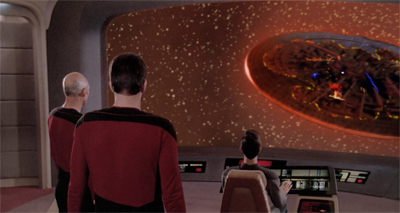
The Defector is the script that earned Ronald D. Moore his place on the writing staff of Star Trek: The Next Generation. The writer had contributed the first script produced by Michael Piller, The Bonding, but it was his second pitch – improvised in the heat of the moment – that cemented Moore’s place with the franchise. He would stay on The Next Generation until it finished, before moving on to Star Trek: Deep Space Nine and eventually Star Trek: Voyager, although he departed Voyager quite quickly.

Although Moore retains the credit on the finished episode, apparently – like so many third season scripts – the final draft of The Defector was a collaborative effort involving the whole writing staff. The episode, the first instalment of The Next Generation to air in the nineties, turned out surprisingly well. Indeed, The Defector is one of the strongest episodes of a very strong season.

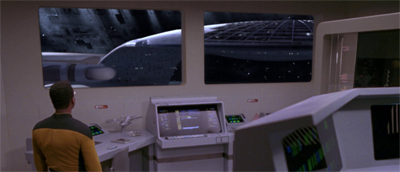
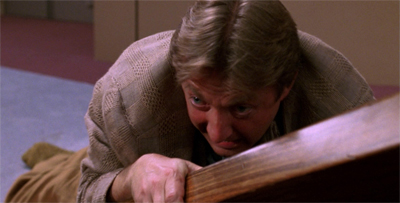
A defective defector?

A defective defector?

Continue reading

Star Trek: The Next Generation – Booby Trap (Review)

This January and February, we’ll be finishing up our look at the second season of Star Trek: The Next Generation and moving on to the third year of the show, both recently and lovingly remastered for high definition. Check back daily for the latest review.

Booby Trap is a bit of a mess. The writing credits for the episode, featuring four different writers credited with getting the idea from basic story to finished script. This wasn’t at all unusual in the show’s third season – consider the writing credits for Yesterday’s Enterprise – but it gives an indication of the chaos unfolding behind the scenes on the third season of Star Trek: The Next Generation.

It’s Michael Piller’s second credited script, and his first writing credit since he took over the writers’ room. (Although he did, along with Melinda Snodgrass, do a pass on Ronald D. Moore’s script for The Bonding.) As such, it is written with a very clear idea of where Piller wants to take the show, one that shines through a somewhat uneven and all-over-the-place plot, which often feels like several different scripts blended into one.

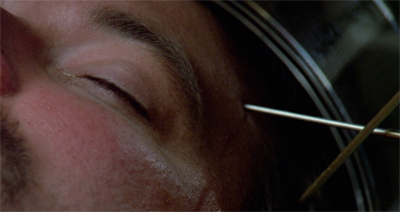
Building on what came before...

Building on what came before…

Continue reading

Star Trek: The Next Generation – The Bonding (Review)

This January and February, we’ll be finishing up our look at the second season of Star Trek: The Next Generation and moving on to the third year of the show, both recently and lovingly remastered for high definition. Check back daily for the latest review.

The Bonding is a pretty pivotal and momentous episode for Star Trek: The Next Generation. On one hand, it’s the first episode overseen by incoming executive producer Michael Piller. Piller would go on to become one of the most influential producers to work on Star Trek. Aside from steering The Next Generation towards success, he also created Star Trek: Deep Space Nine and Star Trek: Voyager, as well as overseeing the production of the first three Next Generation films.

However, The Bonding is also the first script written by Ronald D. Moore. Obviously, the version that made it to screen had been revised and tweaked by Melinda Snodgrass and Michael Piller, but The Bonding still feels like a Moore script. Ronald D. Moore would go on to be one of the more influential writers on The Next Generation and Deep Space Nine. He also worked (very) briefly on Voyager, before departing and heading up his own reboot of Battlestar Galactica.

So The Bonding is the beginning of something new, an original direction for The Next Generation. Featuring a powerful and wonderful opening half, The Bonding suffers a bit from falling into conventional Star Trek tropes towards the end of the episode. However, it’s still a clever and powerful piece of television.

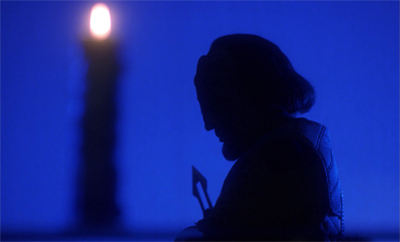
A bit of shadow...

A bit of shadowplay…

Continue reading

Star Trek: The Next Generation – Who Watches the Watchers? (Review)

This January and February, we’ll be finishing up our look at the second season of Star Trek: The Next Generation and moving on to the third year of the show, both recently and lovingly remastered for high definition. Check back daily for the latest review.

Who Watches the Watchers? continues a strong start to the third season of Star Trek: The Next Generation. It is the last episode of the third season produced by Michael Wagner. He would depart the show and leave Michael Piller in charge of the scripts for the rest of the season. It’s also the third-to-last credit for writers Hans Beimler and Richard Manning, who had both been around from the first season.

The writing duo would work on Yesterday’s Enterprise with Ira Steven Behr and Ronald D. Moore, but also finish Allegiance before departing the show at the end of the third season. (They were rather enraged by Piller’s tactless “writing 101” memo, sent later in the season.) Manning and Beimler would go on to write Paradise for Star Trek: Deep Space Nine, and Behr would convince Beimler to return to the franchise for the fourth season of Deep Space Nine. Beimler would be Behr’s most faithful writing partner on that spin-off, teaming with Behr throughout the sixth and seventh seasons in particular.

In many ways, Who Watches the Watchers? returns to some of the themes that the duo had touched upon in their strongest script of the first season, Symbiosis. It’s a complicated morality tale about the ethics of Starfleet and the burden of the Prime Directive.

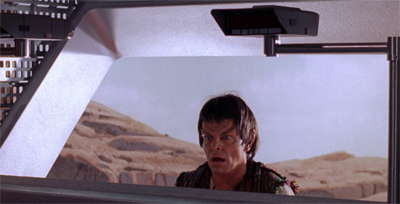
The answer, apparently, is Liko.

The answer, apparently, is Liko.

Continue reading

Star Trek: The Next Generation – The Survivors (Review)

This January and February, we’ll be finishing up our look at the second season of Star Trek: The Next Generation and moving on to the third year of the show, both recently and lovingly remastered for high definition. Check back daily for the latest review.

Michael Wagner remains something of a forgotten figure among Star Trek fans. While anybody familiar with the behind-the-scenes workings on Star Trek: The Next Generation is aware of the contributions made by the wonderful Michael Piller, and quite a few would be familiar with the work of Maurice Hurley during the first two seasons, Wagner’s four-episode tenure as executive producer and head writer is something of a mystery.

Situated right in the middle of that four-episode run, and the only Star Trek script on which Wagner does not share a credit, The Survivors seems like the most obvious indicator of what Wagner’s version of The Next Generation might have looked like. Of course, it’s impossible to extrapolate from a single episode of television, let alone a single episode of an era that was over before it already began, but it is interesting to look at how Wagner’s work here differs from the style that would be imposed by Piller.

The Survivors is a decidedly high-concept science-fiction mystery, feeling almost like an episode of an anthology featuring the regular cast. Built around a guest star, The Survivors is very much radically opposed to Piller’s vision of character-driven Star Trek.

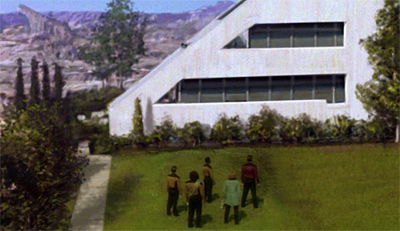
"Nice house. Can't see much about the neighbourhood, though."

“Nice house. Can’t see much about the neighbourhood, though.”

Continue reading

Star Trek: The Next Generation – Evolution (Review)

This January and February, we’ll be finishing up our look at the second season of Star Trek: The Next Generation and moving on to the third year of the show, both recently and lovingly remastered for high definition. Check back daily for the latest review.

Evolution kicks off the third season of Star Trek: The Next Generation, and marks the point at which the spin-0ff really comes into its own. It’s remarkable how consistent in quality the third season is, despite the trouble brewing behind the scenes. It’s also remarkable how quickly the show finds its footing after two years of stumbling clumsily in the right direction. Within the first five episodes of the third season, The Next Generation has clearly found its voice.

However, a change is obvious even from Evolution. Michael Piller would take over the reigns four episodes into the season, but he also co-wrote the script to the season premiere. While Piller polished quite a few of the scripts passing through The Next Generation‘s third season, it is interesting that his credited work book-ends the season, setting the tone and leaving a clear impression.

While Evolution is not the strongest episode of the season to come, it does have a much stronger sense of self and purpose than anything that has really come before. It isn’t a bold or ground-breaking script by any measure; it’s actually a relatively simple story. It just tells that story with a wonderful resonance, clarity and efficiency, commodities that have been sorely lacking from The Next Generation to date.

Hold on, it's time for a change...

Hold on, it’s time for a change…

Continue reading

Star Trek: The Next Generation – Shades of Grey (Review)

This January and February, we’ll be finishing up our look at the second season of Star Trek: The Next Generation and moving on to the third year of the show, both recently and lovingly remastered for high definition. Check back daily for the latest review.

Well. That’s over now. Star Trek: The Next Generation limps across the finish line of its second season with a compilation clip show designed to save money and keep the season’s episode count up. Shades of Grey is frequently cited as the worst episode not just of the second season of The Next Generation, but of the show as a whole. While it’s hard to entirely agree with this assessment – Shades of Grey is cynical and lazy, but it’s neither as sexist as Angel One or The Child nor as racist as Code of Honour or Up the Long Ladder – it is possible to see where that argument comes from.

Like the first season before it, there’s a sense that the second season of The Next Generation might have been better had it ended an episode earlier. Indeed, the second season could have ended with Q Who? and the only episode anybody would really miss would be The Emissary. Unfortunately, one imagines the syndication agreements and network policy made this impossible. While one suspects many of those involved would be happy if Shades of Grey simply faded from existence, it remains part of the show’s syndication package.

This is a little like what this episode feels like...

This is a little like what this episode feels like…

Continue reading

Star Trek: The Next Generation – Manhunt (Review)

This January and February, we’ll be finishing up our look at the second season of Star Trek: The Next Generation and moving on to the third year of the show, both recently and lovingly remastered for high definition. Check back daily for the latest review.

There’s a strange sense of fatigue as we come towards the end of the second season of Star Trek: The Next Generation, as if the effort of producing Q Who? has really just drained the show of any ambition or drive. To be fair, there are probably more banal motivations at play. The 1988 Writers’ Strike had taken the entire industry by surprise and has been credited with dropping television ratings by ten percent. It damaged the tail end of the first season, causing an improvised conclusion to We’ll Always Have Paris and is probably responsible for the mess that was The Neutral Zone.

The damage also bled into the second season. Even closing with a clip show, Shades of Grey, the second season wasn’t able to meet the average quota of twenty-six episodes per season. The season premiere, The Child, had to be hastily repurposed from an aborted script for Star Trek: Phase II. Even with the shortened orders, the second season of The Next Generation frequently saw episodes coming in behind schedule and above budget. This is one of the reasons that Rob Bowman, despite being responsible for two of the season’s strongest episodes (Elementary, Dear Data and Q Who?), did not become a regular director.

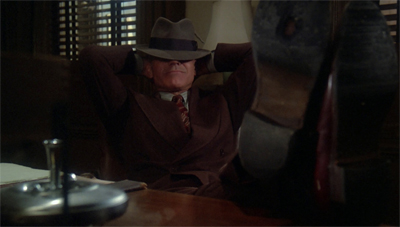
"It's a good time for nap time..."

“It’s a good time for nap time…”

Behind the scenes, the show seemed to be threatening to pull itself apart. Tracy Tormé and Maurice Hurley were frequently at loggerheads with one another over all manner of issues. Tormé was only allowed to register two pseudonyms with the Writers’ Guild of America, he used both on the second season of The Next Generation, protesting over modifications made to his script. It’s no wonder that the writers’ room pretty much exploded at the end of the season, with both Tormé and Hurley departing. When Michael Piller was put in charge on the third season, he had to pretty much start from scratch.

All of which explains why the tail end of the second season seems so lifeless and limp. The Emissary is really the only second season script with any life in it once the show gets past Q Who? Most of the rest of the season seems to trying to limp across the finish line. Still, even with all of that in mind, Manhunt feels a little mean-spirited. It’s an episode designed to mock at Lwaxana Troi, to reduce a middle-aged woman going through a process explicitly compared to menopause to the butt of some particularly harsh joke. It’s hard to find that all that amusing.

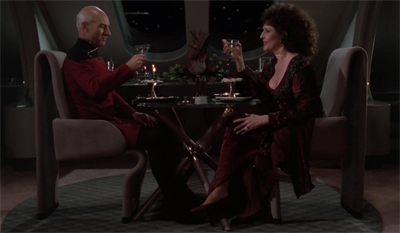
Starlit dinner...

Starlit dinner…

Continue reading

Star Trek: The Next Generation (DC) Annual #2 – Thin Ice (Review)

This January and February, we’ll be finishing up our look at the second season of Star Trek: The Next Generation and moving on to the third year of the show, both recently and lovingly remastered for high definition. Check back daily for the latest review.

We’ll be supplementing our coverage of the episodes with some additional materials – mainly novels and comics and films. This is one such entry.

Riker is a character caught between a rock and a hard place. According to the series bible, Riker was imagined as one of the “dual lead characters” for the show and clearly envisioned as an impulsive and brilliant Kirk to Picard’s more rational and stoic Spock. However, it didn’t quite work out that way, for a number of reasons. For one thing, the writing on the early years of Star Trek: The Next Generation tended to be a bit more sterile and bland, so Riker was never really allowed to step too far out of Picard’s shadow.

Instead, we got lots of characters talking about how ambitious Riker was, without seeing it for ourselves. It’s implied that Riker’s career led him to separate from Troi, something Peter David ran with in Imzadi. Everybody is constantly telling everybody else how Riker desperately wants to be a starship commander. And yet, when it come to the actual characterisation of Riker on the show, none of this shines through.

Due to the constraints imposed on the early years, interpersonal conflict was impossible in early Next Generation scripts, putting Riker in a paradoxical position as a character. We’re repeatedly told how ambitious and career-orientated he is, but none of that shines through.

Dead space...

Dead space…

Continue reading

Star Trek: The Next Generation – Contagion (Review)

This January and February, we’ll be finishing up our look at the second season of Star Trek: The Next Generation and moving on to the third year of the show, both recently and lovingly remastered for high definition. Check back daily for the latest review.

Contagion is a nice reminder that the average quality of Star Trek: The Next Generation is improving. While the stand-out episodes of the second season of The Next Generation tend to attract a lot of attention, the more solid episodes tend to get a bit lost in the discussion. Contagion doesn’t rank alongside Elementary, Dear Data, A Matter of Honour, The Measure of a Man or Q Who?, but it’s still demonstrating that we’ve reached a point where the show can churn out a pretty good episode without it feeling like a special occasion.

It’s a bit of a shame, then, that Contagion comes from two individuals outside the show’s writers’ room.

The Yamato rests in pieces...

The Yamato rests in pieces…

Continue reading